Award-Winning Pre-Calculus Tutors
serving Scranton, PA
Pre-Calculus
Tutors in Scranton
Private 1-on-1 tutoring, weekly live classes for academic support, test prep & enrichment, practice tests and diagnostics, and more to elevate grades and test scores.
Based on 3.4M Learner Ratings
UniversitiesSchools & Universities
DeliveredHours Delivered
ProficiencyGrowth in Proficiency
Who needs tutoring?
No obligation. Takes ~1 minute.
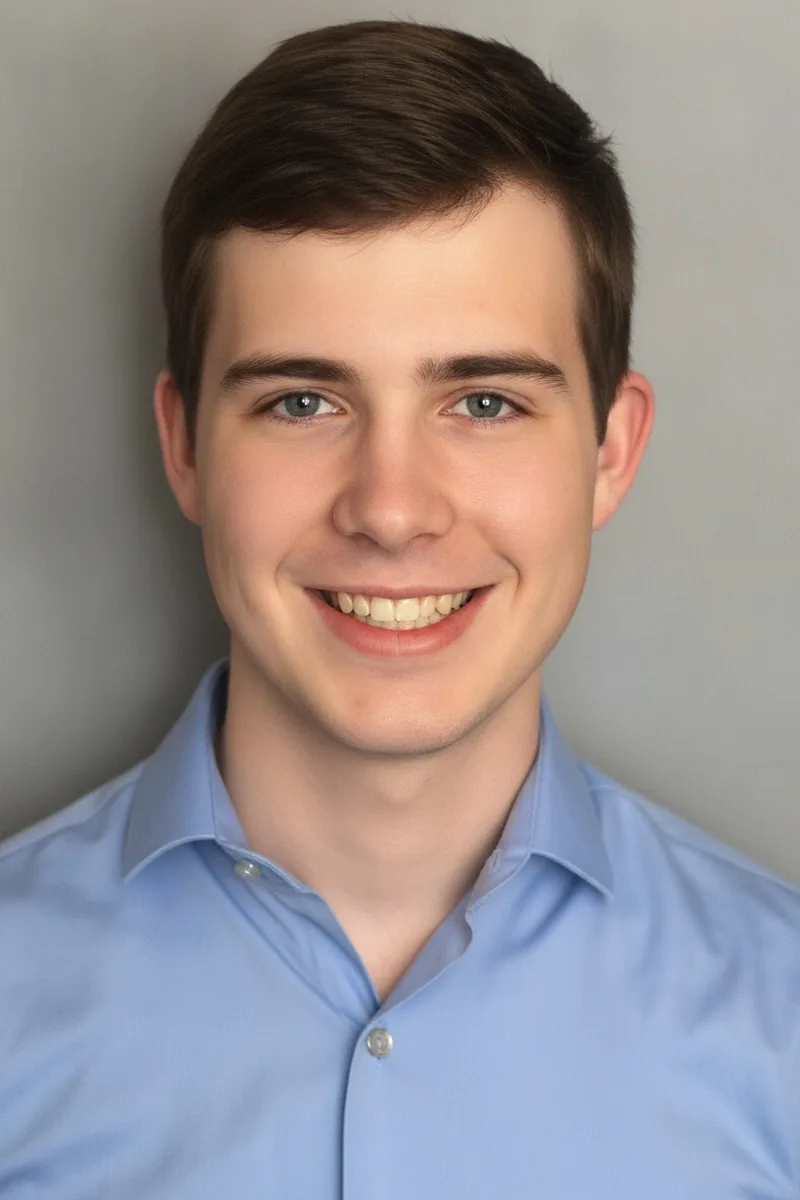
A math degree from Penn means Ben didn't just pass through pre-calculus — he built everything that came after on top of it, from linear algebra to multivariable calculus. That depth lets him teach topics like rational functions and trigonometric identities by revealing the structural logic underneath, so students carry real understanding into calculus instead of a fragile set of memorized steps. Holds a 5.0 rating.
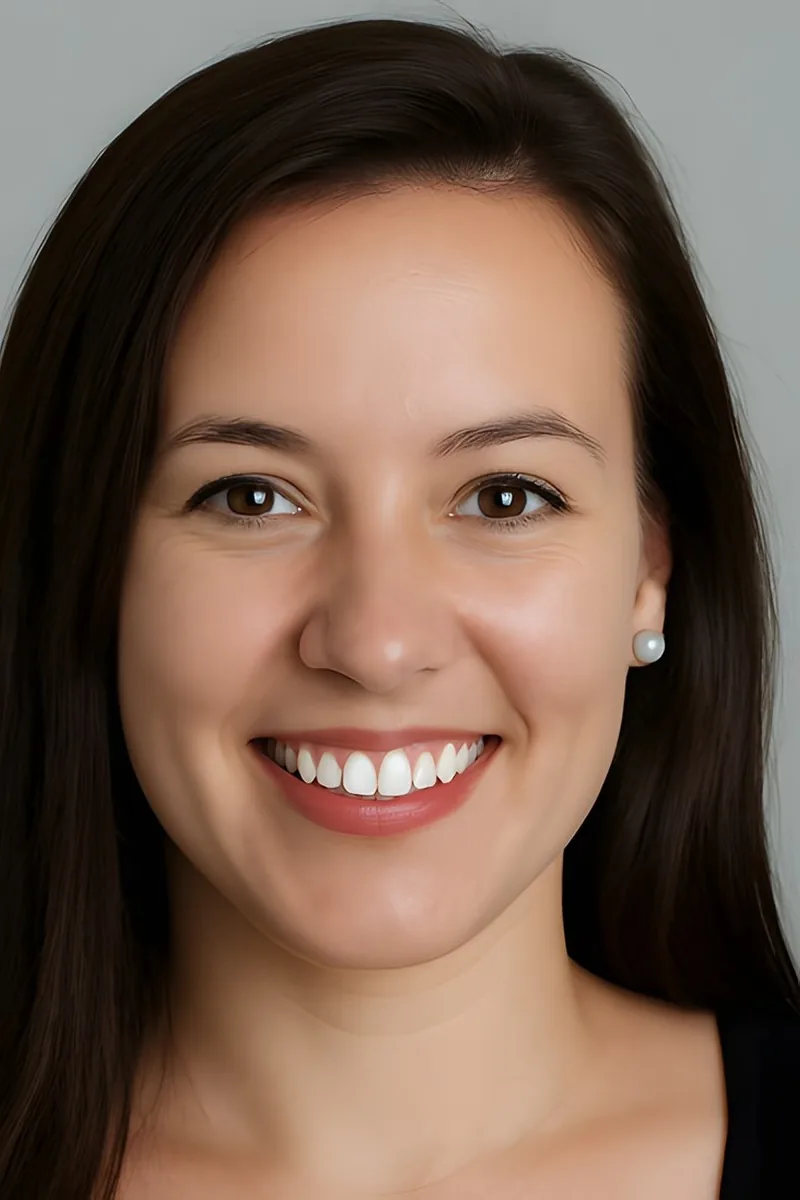
Environmental engineering coursework — modeling pollutant dispersion, watershed flow rates, decay of contaminants — runs on exactly the exponential, logarithmic, and trigonometric functions that pre-calculus introduces. Kate teaches these topics with the instinct of someone who's built real models around them through both her bachelor's and master's work, connecting each function family to the physical behavior it describes. Her 1580 SAT and 4.9 rating confirm the precision she brings to every session.
Doing research in Spectral Graph Theory at MIT means Enrico encounters the full toolkit of pre-calculus — eigenvalue behavior, polynomial roots, matrix transformations — at a level where shaky fundamentals would be immediately exposed. He teaches the course by making definitions click intuitively, so that concepts like composite functions or rational expressions feel like natural extensions of algebra rather than arbitrary new rules. His 36 ACT, 1570 SAT, and 5.0 rating confirm the depth behind that intuition.
Materials science relies heavily on the mathematics pre-calculus teaches — modeling crystal lattice structures with trigonometry, describing diffusion rates through exponential functions, analyzing stress-strain curves as polynomial behavior. Jennifer brings that applied perspective to her tutoring, connecting abstract function families to the physical phenomena they actually describe. Her 1550 SAT and 5.0 rating confirm the quantitative depth behind her explanations.
Holding degrees in both mechanical and electrical engineering, Steve has spent years in the territory where pre-calculus stops being coursework and starts being the toolkit — trigonometric analysis for signal processing, polynomial modeling for system dynamics, vectors and complex numbers for circuit design. He teaches the course knowing exactly which skills will matter most when students hit calculus and engineering-track courses, and builds each lesson around that forward view. Rated 4.9 by students.
Everything in Pre-Calculus — trigonometric identities, rational functions, limits intuition — exists to set students up for calculus, but most courses don't make that connection explicit. Annie does, because she's already on the other side of it: her engineering program at Cornell showed her exactly which Pre-Calc skills matter most and where gaps tend to cause trouble later.
Cognitive science at Penn blends psychology, philosophy, and a surprising amount of mathematical modeling — Samantha's coursework has kept her actively working with the function families, transformations, and analytical reasoning that define pre-calculus. She's especially sharp at bridging the gap between algebraic mechanics and the conceptual shift pre-calc demands, like understanding why a rational function behaves near its asymptotes or how composite functions layer operations in a specific order. Her 1460 SAT reflects the quantitative grounding behind that clarity.
The jump into Pre-Calculus often feels like juggling — trigonometric identities, limits intuition, and function transformations all land at once. Eliza approaches each topic by connecting it back to the algebra and geometry students already know, so new material builds logically instead of feeling random. Rated 5.0 by students, she keeps sessions structured without making them feel rigid.
Civil engineering at Cornell means Ryan is constantly applying the pre-calculus toolkit — trigonometric functions for force resolution, logarithmic models for material behavior, vectors for structural loads — so he teaches these topics with the instinct of someone who builds on them daily. He's particularly sharp at bridging the gap between algebraic manipulation and the functional thinking that calculus will demand, making sure concepts like domain restrictions and composite functions actually make sense rather than just get memorized. His 35 ACT and 4.7 rating back that up.
Philosophy trained Keenan to construct rigorous logical arguments; computer science at Penn trained him to think in functions, recursion, and formal systems — and pre-calculus sits right at that intersection, where algebraic intuition has to become precise functional reasoning. He's especially sharp on the discrete math side of things like sequences and series, and he connects topics like composite and inverse functions to the programming concepts that make them feel less abstract. Holds a 5.0 rating from students.
Mechanical engineering at Penn means Larkin solves problems daily where pre-calculus is the entry point — parametric curves for motion analysis, trigonometric decomposition for force diagrams, and conic sections for structural geometry. His physics degree built the habit of treating each function family as a tool with specific behavior rather than a formula to memorize, which makes topics like transformations and inverse functions click faster. Holds a 5.0 rating and a 35 ACT.
The leap from Algebra 2 to calculus is where most students lose their footing, and pre-calculus is supposed to build the bridge. Amanda zeroes in on the concepts that trip students up most — function transformations, limits intuition, and the behavior of rational and logarithmic graphs. Her own path through advanced math in a STEM-focused high school and a biology degree gave her a clear sense of which pre-calc skills actually pay off later.
Sarah's math degree from Penn covered the full arc from algebra through analysis, so she teaches pre-calculus as the course where all the earlier algebraic skills finally converge — rational expressions become rational functions, basic trig becomes the unit circle, and isolated skills start behaving like a connected toolkit. She's particularly sharp at demystifying function transformations and composite functions, two areas where students often memorize steps without seeing the underlying pattern. Rated 4.9 by students, with a 35 ACT confirming the quantitative depth.
Biomedical engineering at Yale means Jonathan spends most of his time in the territory just beyond pre-calculus — differential equations, signal processing, biomechanical modeling — so he knows exactly which skills from this course actually carry weight later and which are just procedural filler. He zeroes in on building real intuition around function transformations and trigonometric reasoning, connecting each topic back to the calculus and physics applications waiting on the other side. His 1550 SAT and 5.0 rating back that up.
Pursuing a doctorate in music might seem unrelated to pre-calculus, but Jackson's work in music theory runs on the same structures — periodic waveforms, harmonic series, and the function transformations that describe how sound behaves. That mathematical intuition, backed by a 1460 SAT, means he teaches topics like trigonometric graphs and sequences by drawing out the patterns students can hear before they see them on paper. He's especially sharp at bridging the gap between algebraic mechanics and the more abstract functional thinking pre-calc demands.
Having earned a 34 ACT and a 1510 SAT, Ade brings sharp quantitative instincts to the specific pre-calculus skills that trip students up most — particularly the shift from manipulating equations to reasoning about how functions behave, transform, and combine. His biology background means he's used exponential and logarithmic models in scientific contexts, so he teaches those function families as tools with real meaning rather than abstract formulas on a page. He digs into the why behind each topic so students walk into calculus already thinking like mathematicians.
What makes pre-calculus tricky isn't any single topic — it's that the course asks students to juggle trigonometry, logarithms, sequences, and function analysis all at once, often without showing how they connect. Matthew is a math and computer science student at Harvard who teaches the throughlines between these topics, particularly how function composition and transformation logic carry forward into the calculus sequence he's already deep into. His 34 ACT and 4.9 rating reflect the clarity students get from someone still close to the material.
When students ask why they need to learn rational functions or trigonometric identities, Samuel — an applied mathematics major who scored a 1590 SAT — can point to exactly where each concept reappears in differential equations, computer science algorithms, and real-world modeling problems. He teaches pre-calculus as the bridge it actually is, breaking down topics like function transformations and logarithmic properties by showing the intuition underneath rather than just the procedure. That forward-looking perspective keeps students engaged because every lesson has a clear payoff.
The jump from Algebra 2 to Pre-Calculus trips up students who never fully internalized function behavior — domains, transformations, compositions, and especially limits as an intuitive concept. Vaughn approaches these topics the way his physics training demanded: by connecting every algebraic manipulation to a visual or physical meaning. His 1590 SAT score speaks to the depth of his mathematical fluency.
Georgetown's math program trains students to think about functions structurally — not just evaluating them, but understanding how compositions, inverses, and transformations connect across different function families. Peter brings that structural lens to pre-calculus, particularly when untangling the relationship between exponential and logarithmic forms or building intuition for why certain trigonometric identities work. His 1580 SAT and 5.0 rating back up the depth he brings to every session.
Double-majoring in biology and philosophy at Boston College means Andrew regularly toggles between quantitative modeling and logical argumentation — a combination that pays off when tackling pre-calculus topics like polynomial end behavior or the reasoning behind trigonometric identities. He approaches each concept by building the logical scaffolding first, then layering in the computation, which keeps students from falling into the trap of memorizing formulas they don't actually understand. Holds a 5.0 rating from students.
Five years of tutoring every math level from elementary through calculus means Joyce has watched hundreds of students hit the same pre-calc walls — the moment rational functions stop behaving like anything they saw in algebra, or the first time a trig identity requires working backward. She teaches those pivot points by making the algebraic scaffolding explicit, so students see exactly which earlier skills carry forward and which habits need upgrading. Her 1590 SAT reflects the kind of precision that catches the small errors pre-calc punishes most.
A double major in economics and mathematics at Boston College means Patrick spends his coursework toggling between the theoretical and the applied — building economic models that depend on the same polynomial, exponential, and logarithmic functions pre-calculus students are just starting to wrestle with. He zeroes in on how function families connect to each other, so topics like compositions and transformations feel like natural extensions of algebra rather than a wall of new rules. His 32 ACT reflects the quantitative grounding behind that approach.
The jump from algebra to pre-calculus trips up a lot of students because suddenly they're juggling trigonometric identities, polar coordinates, and limit intuition all at once. Conor's math degree from the University of Pittsburgh means he teaches these topics knowing exactly where they lead — so when he covers rational functions or conic sections, he connects them to the calculus concepts waiting on the other side.
Having taught pre-calculus at both the high school and university level, Madhura knows exactly where students stall — typically at the shift from memorizing trig values to actually reasoning with identities and inverse functions. Her master's in chemistry means she's spent years relying on the same mathematical tools her students are building: rate equations demand logarithmic fluency, spectral analysis requires comfort with periodic functions, and reaction modeling depends on solid function composition. Rated 4.7 by students.
Computational biology at MIT means Theresa spends her coursework translating biological systems into mathematical language — fitting growth data to polynomial and exponential models, decomposing periodic phenomena with trig functions, and chaining transformations together through function composition. She teaches pre-calculus with that modeling instinct, showing students how each function family behaves and why, so the jump to calculus feels like a natural next step rather than a cliff. Her 33 ACT confirms the quantitative rigor behind the approach.
Mechanical engineering at Northwestern means Zach lives in the world pre-calculus is preparing students for — parametric equations describe motion, trigonometric functions model vibrations, and sequences show up in numerical methods. He teaches pre-calc by grounding each topic in that forward context, so concepts like composite functions and series aren't abstract exercises but tools students will actually use. Rated 5.0 by students.
Pre-calc sits at an awkward crossroads — part review, part brand-new abstraction — and the jump to limits and series notation catches a lot of students off guard. Felipe's approach is to anchor each new concept (composite functions, conic sections, sequences) in concrete examples before layering on the formal notation, so students arrive at calculus already comfortable with the language.
Full-time tutor, former Chemistry graduate student at University of Pennsylvania, BS Chemistry with Math Minor from Rochester Institute of Technology. My philosophy is that students learn best when they can understand why they're learning the material. I aim to help students effectively utilize and seek out tools for learning concepts while also practicing examples and building knowledge of the concepts themselves. I have a passion for mentoring students in chemistry and mathematics and giving them the knowledge and tools they need to comprehensively understand the foundations and applications of the material they're learning and to succeed in their education.
Cognitive science trains you to think in systems — how inputs transform into outputs, how variables interact across layers of complexity — and Kimberly brings that same structural thinking to pre-calculus topics like function composition and graph transformations. She's especially sharp at making the leap from algebraic mechanics to the kind of abstract functional reasoning that trips students up right before calculus. Her 34 ACT and 5.0 rating back it up.
Rishi is currently studying mathematics at Yale, which means the jump from algebraic thinking to the function-centric reasoning pre-calculus demands is territory he navigates constantly in his own coursework. He's particularly sharp at demystifying the unit circle and connecting it to the broader logic of trigonometric graphs and identities — the piece that tends to feel most alien to students coming out of Algebra 2. A 1590 SAT and 5.0 rating from students back that up.
I am happy when my student completely understands the material. I highly discourage memorization.
The jump into pre-calculus demands comfort with function behavior — transformations, compositions, and especially the unit circle in trigonometry. Cathy's engineering background means she's used these tools extensively in real applications, so she can explain not just how to evaluate a limit expression or graph a rational function, but why the underlying logic matters. She holds a 5.0 client rating.
With both a bachelor's and master's in mathematics, Daniel has taught the full arc from elementary math through differential equations and multivariable calculus — which means he knows exactly which pre-calculus skills actually matter when the stakes get higher. He zeroes in on the conceptual jumps that trip students up, like moving from memorizing trig ratios to genuinely understanding how the unit circle generates them, or seeing why composite and inverse functions aren't just notation tricks. Holds a 5.0 rating across his students.
The jump to pre-calculus trips up a lot of students because it demands fluency with function behavior, trigonometric identities, and limits — all at once. Ian tackles these topics by connecting them back to the algebra and geometry concepts students already know, making the transition feel less like a leap. His structured, preparation-first approach keeps students from falling behind as the material accelerates.
Three semesters teaching ESL gave Danielle an unusual skill for pre-calculus tutoring: the ability to spot exactly where understanding breaks down and rebuild from that point, whether it's the leap from polynomial algebra to rational function behavior or the first encounter with trigonometric graphs. Her 36 ACT and Tufts biology degree confirm the quantitative depth, but it's her instinct for meeting confusion head-on — honed while teaching complex material across language barriers — that makes her effective with the abstract function work pre-calc demands. Rated 5.0 by students.
Tom's neurobiology concentration at Penn meant daily encounters with the mathematical scaffolding pre-calculus provides — modeling action potentials with sinusoidal functions, tracking neural decay through exponential equations, and interpreting dose-response relationships on logarithmic scales. He tackles the course by connecting each function family to the biological phenomena that make them intuitive, turning abstract graph behavior into something students can visualize and reason through.
Steven's biology degree at Drexel had him knee-deep in organismal physiology, where modeling growth rates, decay curves, and oscillatory systems meant pre-calculus wasn't just a prerequisite — it was the mathematical language of his entire concentration. He teaches the course by zeroing in on how polynomial and rational functions actually behave, building intuition for end behavior and asymptotes so students aren't just memorizing rules they'll forget by exam day. His 34 ACT and 5.0 rating back that up.
Trig identities, complex numbers, and rational functions all converge in pre-calculus, and it's the course where many students first feel genuinely lost. Vincent tackles each of these topics by tying them to the calculus concepts they're building toward — something his engineering background at Carnegie Mellon makes second nature.
I am committed to making tutoring fun and beneficial for all my students. I graduated magna cum laude from my high school as salutatorian in 2018, with distinction from Duke University with a B.S. in neuroscience in 2022 and am an incoming graduate student at Columbia University. Although each of my academic experiences posed different challenges, one thing made me successful at each stage- my zeal for learning. In my experience as a tutor and in my future endeavors, I want to impart this excitement for learning to each of my students. In tutoring sessions, I introduce topics in fun and engaging ways while thoroughly teaching key concepts and important skills. I then give students the opportunity to personally engage with the material by exploring and problem-solving. I adapt my approaches for each students' particular learning style, strengths, and weaknesses to make them excel in their desired subjects and excited about learning.
Testimonials
Because the right Pre-Calculus tutor makes all the difference.
Average Session Rating – Based on 3.4M Learner Ratings
Practice Pre-Calculus
Free practice tests, flashcards, and AI tutoring for Pre-Calculus
Other Scranton Tutors
Related Math Tutors in Scranton
Frequently Asked Questions
Varsity Tutors matches Scranton students with expert Pre-Calculus tutors for 1-on-1 instruction. We pair each student with a tutor based on their specific needs, learning style, and goals.
Whether you need homework help, exam prep, or want to get ahead, our Pre-Calculus tutors are ready to help.
Common challenges include gaps from earlier material, difficulty with specific concepts, and trouble applying learning to new problems. These issues can snowball quickly in Pre-Calculus.
A tutor identifies where you're stuck, fills in gaps, and provides targeted practice. The 1-on-1 format means you get help exactly where you need it.
Tutors work with your student's actual coursework—homework assignments, class notes, and upcoming tests. This keeps tutoring directly relevant to what's happening in the classroom.
When you share information about your student's school and curriculum, we can match you with a tutor who has relevant experience.
All tutors complete background checks, credential verification, and teaching evaluation. Many of our Pre-Calculus tutors hold advanced degrees or have years of teaching experience.
You can review tutor profiles to find someone with the right background for your student's level and needs.
Many students see improved grades within a few weeks, along with better understanding of Pre-Calculus concepts and more confidence tackling challenging material.
Tutors track progress and adjust their approach to ensure continued improvement.
Most students benefit from 1-2 sessions per week. More frequent sessions help if your student is significantly behind or has an important exam coming up.
Your tutor can recommend a schedule based on your student's specific situation and goals.
Tutoring is purchased in packages of hours, with rates varying by tutor experience. Varsity Tutors offers several options to fit different budgets and needs.
You can discuss pricing during your consultation to find what works best.
Your tutor will assess where your student is, discuss goals, and start working on priority areas. Most students bring current homework or upcoming test material to focus on.
By the end, you'll have a clear sense of how the tutor can help and a plan for moving forward.
Let’s find your perfect tutor
Answer a few quick questions. We’ll recommend the right plan and match you with a top 5% tutor.