Award-Winning AP Statistics Tutors
serving Concord, NC
AP Statistics
Tutors in Concord
Private 1-on-1 tutoring, weekly live classes for academic support, test prep & enrichment, practice tests and diagnostics, and more to elevate grades and test scores.
Based on 3.4M Learner Ratings
UniversitiesSchools & Universities
DeliveredHours Delivered
ProficiencyGrowth in Proficiency
Who needs tutoring?
No obligation. Takes ~1 minute.
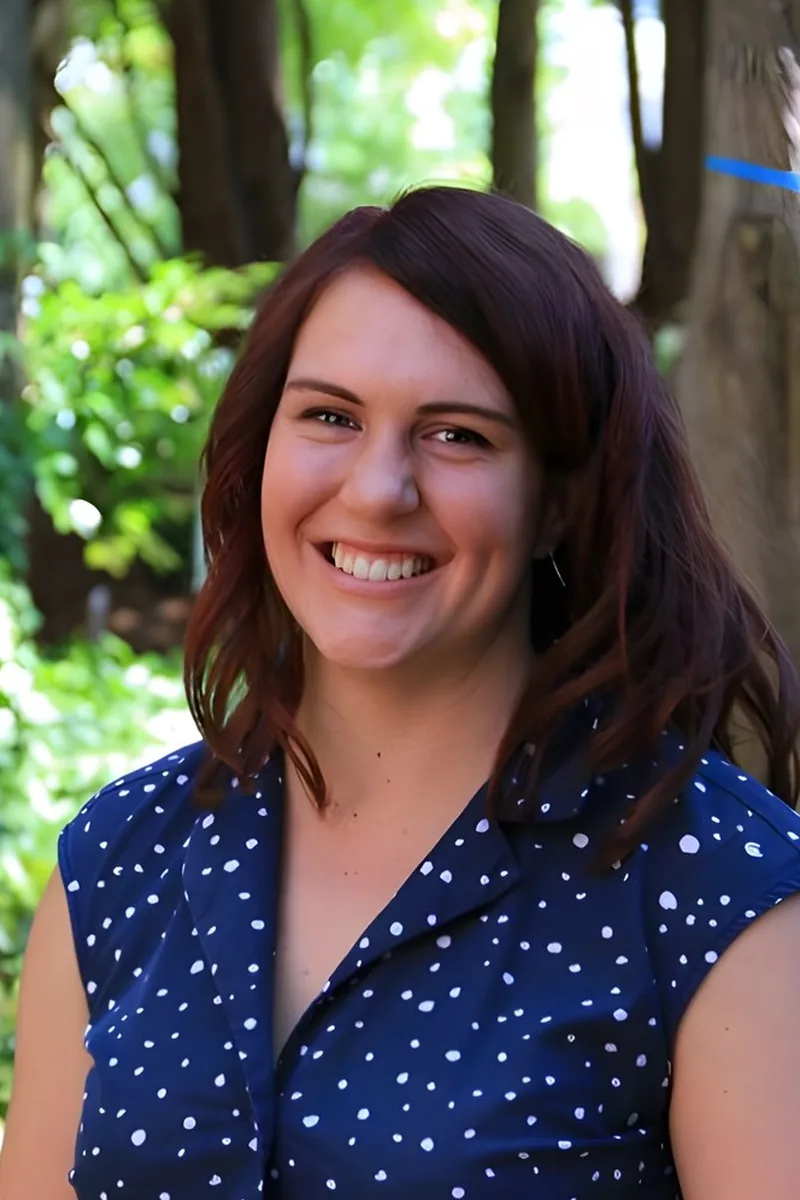
Engineering PhD programs at Georgia Tech don't let you hand-wave through data — Jordan's biomedical research required designing experiments, validating sensor measurements, and running the kind of statistical inference that AP Stats builds its entire curriculum around. That lab experience makes him especially sharp on the exam's trickiest conceptual pieces, like distinguishing between observational studies and experiments or explaining why a particular confidence level changes an interval's width. Rated 5.0 by students.

Computer science students deal with data constantly — and James's CS coursework means he approaches AP Statistics through the lens of data analysis and pattern recognition rather than rote formula application. He's especially effective at teaching students how to read output tables and translate statistical results into the precise written interpretations the AP exam demands. Rated 5.0 by students.
Psychology research runs on statistics — chi-square tests, confidence intervals, regression analysis — and Isabella spent her undergraduate years at UT applying these tools to real behavioral data. That experience means she teaches AP Statistics concepts like experimental design and inference not as abstract formulas but as tools that answer actual questions. Rated 5.0 by students.
Most AP Stats students come in expecting another algebra class and hit a wall when the exam asks them to explain *why* a Normal model applies or *what* a 95% confidence level actually means in context. Shourya's physics training at UNC Chapel Hill gives him a natural entry point here — physics labs demand exactly this kind of reasoning about uncertainty, variability, and whether a result is real or just random scatter. He breaks down the interpretive language the free-response section rewards, connecting it to the kind of data reasoning students already do intuitively but haven't yet learned to articulate.
As a statistics major at UNC Chapel Hill, Akshay doesn't just know AP Stats — he's immersed in it daily, from probability distributions and inference testing to experimental design. He breaks down tricky concepts like Type I and Type II errors or interpreting confidence intervals in plain language that clicks. Rated 5.0 by students.
Jenna's bachelor's degree in Statistics makes AP Statistics one of her strongest subjects — she doesn't just teach the formulas for chi-square tests or confidence intervals but explains the reasoning behind choosing one inference method over another. She also knows how the AP exam's free-response questions are scored, so she coaches students on how to justify conclusions in the precise language the rubric rewards.
Cognitive science trains you to think about how people reason under uncertainty — which is surprisingly close to what AP Stats actually tests, from interpreting conditional probabilities to explaining why a particular sampling method can skew results. Kimberly uses that background to teach the mental models behind concepts like normal distributions and inference, so the logic clicks before students ever touch a calculator. Rated 5.0 by students.
Most AP Stats students come in expecting another formula-driven math class, then hit a wall when the exam asks them to explain *why* a normal model applies or *what* a 95% confidence level actually means in context. JF's math and CS background at Stanford means he thinks in both precise computation and logical argumentation — exactly the combination the free-response section rewards. Rated 5.0 by students.
Kyle's statistics degree means he didn't just learn AP Stats concepts — he kept going, building the theoretical framework underneath topics like sampling distributions, expected value, and the normal model that the course only scratches the surface of. That deeper fluency makes him especially effective at explaining why a particular inference procedure applies in a given scenario, not just how to execute it on a calculator. Rated 4.9 by students.
Computer science at UCLA means David regularly codes simulations involving probability distributions and data analysis — skills that translate directly to the conceptual side of AP Statistics. He tackles the interpretation-heavy free-response questions by teaching students to think about what a dataset's shape and spread reveal before jumping to any inference procedure. Rated 4.8 by students.
Twenty-five years teaching science in Massachusetts public schools means Jacques has walked hundreds of students through the messy reality of collecting lab data, spotting outliers, and deciding whether results actually mean something — which is the interpretive core of AP Statistics. His Princeton chemical engineering training leaned heavily on statistical modeling and differential equations, giving him a quantitative backbone that makes concepts like normal distributions and expected value click in context rather than in isolation. Rated 4.8 by students.
Studying statistics as an actual major at UVA — not just taking a service course — means Benjamin has gone well beyond the AP curriculum into multivariate methods, probability theory, and statistical computing, giving him a deep bench to draw from when explaining why, say, a sampling distribution behaves the way it does or when a normal model applies. He's particularly sharp on the inference units, where students need to move from calculator output to writing conclusions that use the specific contextual language the free-response rubric demands. Rated 4.7 by students.
Most AP Stats students come in expecting another calculation-heavy math class, then hit a wall when the exam asks them to explain *why* they chose a particular test or *what* a confidence interval actually captures in context. Elena's Child Development background gives her sharp instincts for identifying exactly where that conceptual shift stalls out for each student, and her 1540 SAT confirms the quantitative chops to back it up. She breaks down the free-response writing demands — describing distributions, justifying inference choices — as a communication skill, not just a math skill.
Philosophy trained Calin to dissect arguments and spot logical gaps — skills that translate directly to the interpretive reasoning AP Stats demands, where students must justify why a particular test applies or explain what a confidence interval actually captures. His math and computer science background means he also handles the quantitative side fluently, from probability distributions to regression mechanics. Rated 5.0 by students.
Heather minored in Quantitative Methods at Vanderbilt, which means AP Statistics isn't a side subject for her — it's core to her academic training. She breaks down inference procedures, experimental design, and probability distributions with the kind of fluency that comes from applying statistics daily, not just teaching it from a textbook. Rated 4.9 by students.
Carnegie Mellon's biology program is lab-intensive, and Puja spent semesters designing experiments, collecting messy real-world data, and determining whether results were meaningful — skills that map directly onto AP Stats topics like experimental design, sampling methods, and inference reasoning. She's particularly sharp at teaching students how to translate calculator output into the precise written explanations the free-response section demands, since her science training required the same kind of defend-your-conclusion thinking. Rated 4.7 by students.
Game Theory for advanced middle schoolers at Johns Hopkins CTY required Carter to make probability, expected value, and strategic reasoning click for students years ahead of the typical curve — experience that translates directly to the combinatorics and probability units in AP Stats. His economics training at Brown also means he's comfortable with regression and inference in applied contexts, so he can ground abstract concepts like sampling variability in real decision-making scenarios rather than just calculator routines. Rated 5.0 by students.
Most AP Stats students come in expecting another algebra class and get blindsided when the exam asks them to explain *why* a normal model applies or *what* a 95% confidence level actually means in context. Kenneth's applied math background gives him the conceptual fluency to teach that interpretive shift — connecting the formal probability theory underneath to the plain-language reasoning the free-response rubric demands. Rated 4.7 by students.
Testimonials
Because the right AP Statistics tutor makes all the difference.
Average Session Rating – Based on 3.4M Learner Ratings
Practice AP Statistics
Free practice tests, flashcards, and AI tutoring for AP Statistics
Other Concord Tutors
Related Math Tutors in Concord
Frequently Asked Questions
Varsity Tutors matches Concord students with expert AP Statistics tutors for 1-on-1 instruction. We pair each student with a tutor based on their specific needs, learning style, and goals.
Whether you need homework help, exam prep, or want to get ahead, our AP Statistics tutors are ready to help.
Common challenges include gaps from earlier material, difficulty with specific concepts, and trouble applying learning to new problems. These issues can snowball quickly in AP Statistics.
A tutor identifies where you're stuck, fills in gaps, and provides targeted practice. The 1-on-1 format means you get help exactly where you need it.
Tutors work with your student's actual coursework—homework assignments, class notes, and upcoming tests. This keeps tutoring directly relevant to what's happening in the classroom.
When you share information about your student's school and curriculum, we can match you with a tutor who has relevant experience.
All tutors complete background checks, credential verification, and teaching evaluation. Many of our AP Statistics tutors hold advanced degrees or have years of teaching experience.
You can review tutor profiles to find someone with the right background for your student's level and needs.
Many students see improved grades within a few weeks, along with better understanding of AP Statistics concepts and more confidence tackling challenging material.
Tutors track progress and adjust their approach to ensure continued improvement.
Most students benefit from 1-2 sessions per week. More frequent sessions help if your student is significantly behind or has an important exam coming up.
Your tutor can recommend a schedule based on your student's specific situation and goals.
Tutoring is purchased in packages of hours, with rates varying by tutor experience. Varsity Tutors offers several options to fit different budgets and needs.
You can discuss pricing during your consultation to find what works best.
Your tutor will assess where your student is, discuss goals, and start working on priority areas. Most students bring current homework or upcoming test material to focus on.
By the end, you'll have a clear sense of how the tutor can help and a plan for moving forward.
Let’s find your perfect tutor
Answer a few quick questions. We’ll recommend the right plan and match you with a top 5% tutor.