Award-Winning College Physics Tutors
serving Concord, NC
College Physics
Tutors in Concord
Private 1-on-1 tutoring, weekly live classes for academic support, test prep & enrichment, practice tests and diagnostics, and more to elevate grades and test scores.
Based on 3.4M Learner Ratings
UniversitiesSchools & Universities
DeliveredHours Delivered
ProficiencyGrowth in Proficiency
Who needs tutoring?
No obligation. Takes ~1 minute.
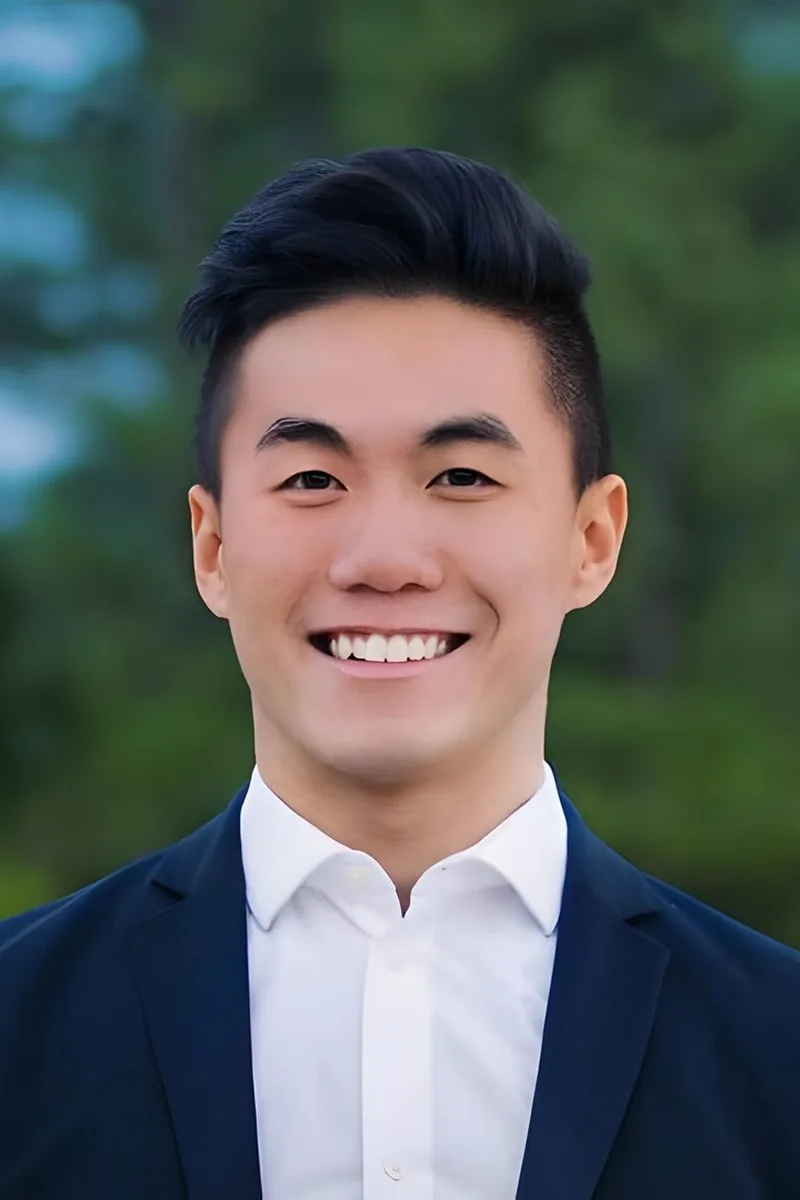
Between earning a mechanical engineering bachelor's and pursuing his master's, Aaron has taken calculus-based physics from every angle — statics, dynamics, thermodynamics, fluid mechanics — and now applies those principles daily in graduate-level research and coursework. He breaks down problems by teaching students to sketch the physical situation first, identify constraints, and only then select the right conservation law or force equation. Holds a 5.0 rating.

Biomedical engineering at Duke means Eric solves physics problems daily — modeling forces on prosthetic joints, analyzing fluid flow through artificial vessels, calculating electrical signals in biosensors — so the mechanics and electromagnetism in a college physics course map directly onto work he's already doing. He breaks multi-step problems into their physical components first, making sure the reasoning is solid before any math hits the page. Holds a 5.0 rating.
Serving as a TA for Duke's Electricity and Magnetism course means Florence has graded the exact types of problems — Gauss's law applications, RC circuits, Faraday's law scenarios — that make college physics students sweat, and she knows precisely where the reasoning breaks down. Her computer science background also gives her a knack for teaching the systematic, step-by-step problem decomposition that turns a wall of physics into something solvable. Holds a 5.0 rating.
Neuroscience gave Julie a deep working knowledge of the physics that governs biological systems — membrane capacitance, electrical potentials across ion channels, fluid dynamics in neural vasculature — so she brings a concrete, applied lens to college physics topics that other tutors treat purely abstractly. Her strong quantitative background (1480 SAT, dual B.S. in Neuroscience) means she's comfortable walking through the calculus-based derivations in mechanics and E&M without losing sight of what the physics actually describes. Rated 5.0 by students.
Circuit theory, power systems, and electronics — Prakash didn't just study these as textbook topics but taught them as a university instructor and TA, walking undergrad students through the exact calculus-based physics (Kirchhoff's laws, AC/DC analysis, electromagnetic induction) that makes college physics courses demanding. His industry experience as a practicing electrical engineer means he can ground abstract force and field problems in real systems, showing students how equations translate into physical behavior. Rated 4.8 by students.
Dance training might seem unrelated to physics, but Alisha's choreography work at VCU demands constant intuitive reasoning about momentum, rotational inertia, and force vectors — she literally feels what happens when a dancer's center of mass shifts mid-leap. She pairs that kinesthetic understanding with strong quantitative skills (a 34 ACT backs this up) to walk students through the mechanics and energy problems that dominate introductory college physics, translating abstract equations into something physically real.
A PhD in bioengineering from Georgia Tech means Jordan has spent years applying physics to biological systems — modeling fluid flow through tissues, analyzing mechanical forces on implants, solving heat transfer problems in living systems. That engineering depth makes the leap from textbook concepts like kinematics and thermodynamics to actual problem-solving feel natural, because Jordan has done it professionally. Rated 5.0 by students.
Studying physics at NC State while minoring in both computer science and mathematics means Gatlin is actively sitting in the same lecture halls and grinding through the same problem sets his students are — from projectile motion and torque to circuits and wave optics. That real-time immersion keeps him sharp on exactly which derivations and conceptual leaps cause the most confusion in introductory and intermediate courses. Rated 4.8 by students.
Engineering coursework at NC State put Catrina through the full gauntlet of university-level physics, from electromagnetism and thermodynamics to fluid mechanics. She tackles college physics by walking through the conceptual reasoning behind each derivation so that students can set up novel problems confidently, not just replicate worked examples from lecture.
During her astrophysics program, Paige was a peer learning assistant for a college physics course designed for non-majors — an experience that taught her to explain electromagnetism, thermodynamics, and rotational dynamics without assuming a deep math background. She now applies that same clarity to college-level mechanics, waves, and modern physics. Students consistently rate her 5.0 for making dense material approachable.
Danielle teaches across both physics and economics, which means she's comfortable with the kind of quantitative modeling — setting up equations, interpreting graphs, tracking how variables interact — that college physics problem sets demand. She zeroes in on the problem-setup phase, getting students to sketch force diagrams and identify constraints before jumping to formulas, especially in mechanics topics where a rushed start usually means a wrong answer.
That moment in college physics where a problem suddenly requires combining free-body diagrams with energy methods and kinematics all at once — David knows exactly where students stall, because his physics degree means he's worked through those multi-concept collisions from both the theoretical and problem-solving sides. He breaks down the transition from plug-and-chug high school problems to the layered reasoning college courses demand, especially in mechanics where students need to choose between Newton's laws and Lagrangian-style thinking on the fly.
I graduated from the University of North Carolina at Chapel Hill with a Bachelor of Science in Physics. I work with students in a variety of subjects, including Math, Physics, and Chemistry. I have experience working with students on the Autism spectrum and with ADHD.
Kathleen's neuroscience background means she's already internalized the physics that governs biological systems — action potentials as RC circuits, diffusion as a thermodynamic process, imaging technologies built on wave mechanics and electromagnetic principles. She pairs that applied knowledge with serious math chops (her subject list runs from pre-algebra through multivariable calculus and biostatistics), so she can walk through both the conceptual reasoning and the calculus-heavy problem solving that college physics demands. Rated 4.9 by students.
Every problem set in calculus-based physics eventually comes down to translating a physical scenario into math — and as an electrical and computer engineering major, Artem does that translation daily across circuits, fields, and signal analysis. He breaks problems into their physical components first, teaching students to identify whether they're dealing with a conservation law, a force balance, or a field interaction before touching an equation. Rated 5.0 by students.
Currently studying at UNC Chapel Hill with AP Physics 1 and calculus in his teaching repertoire, Jeffrey tackles college physics problems by grounding them in the math fundamentals that make force diagrams, projectile motion, and energy conservation actually solvable. His 33 ACT reflects strong quantitative reasoning, and he breaks down multi-step mechanics problems into manageable pieces — isolating variables, checking units, and building intuition for when an answer makes physical sense.
Preparing for medical school means Bria is actively working through the physics that underpins the MCAT — mechanics, optics, fluids, and electrostatics — so she knows which concepts feel deceptively simple until you hit a multi-step problem. Her Yale psychology background also gives her a sharp read on how students actually learn under pressure, which she channels into breaking down force diagrams and energy calculations step by step. Rated 5.0 by students.
Civil engineering coursework at Clemson put Matthew through the full sequence of calculus-based physics — statics, dynamics, fluid mechanics, structural loading — and his professional engineering experience means he's applied those principles to real designs, not just homework sets. He breaks down free-body diagrams and equilibrium problems with the practicality of someone who's had to get them right on actual projects. Rated 5.0 by students.
Studying chemistry means Amanda spends most of her time inside the physics that chemistry depends on — thermodynamics governing reaction spontaneity, electrostatics driving molecular interactions, and wave mechanics underlying spectroscopy. She brings that cross-disciplinary fluency to college physics problem sets, especially when students need to connect the math (she scored a 33 ACT) to the physical intuition behind concepts like energy conservation and force analysis.
College-level physics ramps up quickly, especially once calculus-based mechanics and electromagnetism enter the picture. Richard's time as a course assistant in Harvard's math department gave him deep comfort with the calculus underpinning topics like electric flux integrals and differential equations of motion. He teaches the physics and the math simultaneously, so students aren't left wondering where a derivation came from.
MIT's core physics sequence is calculus-heavy and fast — Vania not only survived it but tutored other students through it via the university's Seminar XL program, which means she's seen firsthand where classmates stall on topics like rotational motion, wave mechanics, and Gauss's law. Her mechanical engineering major keeps her applying those physics principles daily in coursework on statics, dynamics, and thermodynamic systems, so her explanations stay rooted in how the concepts actually get used. Rated 5.0 by students.
A physics degree means Nima didn't just pass college physics — he built his entire undergraduate education on top of it, from classical mechanics through electromagnetism and modern physics. He breaks down multi-step problems by teaching students to identify the governing principle first, then translate it into math, which is where a 1580 SAT and deep comfort with calculus-based reasoning pay off.
When a college physics problem looks like pure abstraction — a block on a frictionless ramp, a charge in a uniform field — Dylan's instinct is to sketch it out, graph it, and show what's physically happening before touching an equation. That visual, graphical approach comes from his physics major at Vanderbilt, where he's simultaneously studying classics and computer science, giving him an unusual ability to translate dense quantitative reasoning into clear, intuitive language. He holds a 4.5 rating and a 36 ACT composite.
Studying mechanical engineering at Harvard means Christopher applies physics daily — from free-body diagrams and torque calculations to thermodynamic cycles and fluid dynamics. He breaks down multi-step problems by identifying which conservation law applies and walking through the math from there, so the problem-solving process becomes repeatable rather than mysterious.
Graduate work in Chemical and Physical Biology at Vanderbilt meant Dennis spent years applying thermodynamics, fluid dynamics, and electromagnetism to biological systems — the same core physics concepts that fill college problem sets, just in a research context where getting the physics wrong meant failed experiments. He breaks down force, energy, and field problems by connecting them to the physical intuition behind the math, which is especially useful for pre-med and life science students navigating calculus-based physics for the first time. Holds a 5.0 rating.
Dylan has taken both college mechanics and electricity/magnetism at Northwestern's engineering school, so he's worked through the exact problem sets — free-body diagrams, circuit analysis, wave optics — that trip up most college physics students. His computer science background also means he's comfortable walking through the math-heavy derivations that make physics click rather than feel like guesswork. Rated 5.0 by students.
Working at an ExxonMobil refinery before MIT Sloan meant Caroline spent years applying thermodynamics, fluid mechanics, and force analysis to real industrial systems — the same physics that fills college problem sets, except with actual consequences for getting the math wrong. Her mechanical engineering M.S. from WashU (magna cum laude) gave her deep fluency with calculus-based derivations, so she can walk through everything from torque problems to heat transfer without skipping the steps that textbooks gloss over. Rated 5.0 by students.
Three science-focused bachelor's degrees — including biology — meant Garrett sat through the full calculus-based physics sequence and kept coming back to it in physiology and physical chemistry, where concepts like fluid dynamics, pressure gradients, and energy transfer show up again and again. That repeated exposure across disciplines gives him an intuitive feel for when to apply conservation of energy versus momentum, or how to reason through a thermodynamics problem without getting lost in the formalism. His 1530 SAT speaks to the quantitative sharpness he brings to each session.
Bidyut's biomedical engineering coursework at Johns Hopkins means he tackles college physics problems — from rotational dynamics to electromagnetic induction — with the applied perspective of someone who uses these principles in lab and design work daily. He connects abstract force diagrams and circuit analyses to real engineering scenarios so the physics actually clicks. Rated 5.0 by students.
Three physics-related bachelor's degrees give Avram an unusually deep undergraduate perspective on the subject — he's worked through mechanics, electromagnetism, and modern physics multiple times across different programs, which means he knows exactly where the conceptual gaps tend to hide. He breaks down wave phenomena and optics problems by connecting the math back to physical intuition, so equations feel like descriptions of real behavior rather than symbols to manipulate. His 1520 SAT reflects the quantitative precision he brings to problem solving.
Between simulating supernova shock fronts at Princeton and building optical filters at Norfolk State, Dennis has applied college-level physics across mechanics, electromagnetism, thermodynamics, and wave optics in real research settings. He unpacks difficult problem sets by connecting each concept to the physical scenario it describes — an approach that's especially effective for students transitioning from plug-and-chug to genuine problem-solving.
Testimonials
Because the right College Physics tutor makes all the difference.
Average Session Rating – Based on 3.4M Learner Ratings
Nearby College Physics Tutors
Other Concord Tutors
Related Science Tutors in Concord
Frequently Asked Questions
Varsity Tutors matches Concord students with expert College Physics tutors for 1-on-1 instruction. We pair each student with a tutor based on their specific needs, learning style, and goals.
Whether you need homework help, exam prep, or want to get ahead, our College Physics tutors are ready to help.
Common challenges include gaps from earlier material, difficulty with specific concepts, and trouble applying learning to new problems. These issues can snowball quickly in College Physics.
A tutor identifies where you're stuck, fills in gaps, and provides targeted practice. The 1-on-1 format means you get help exactly where you need it.
Tutors work with your student's actual coursework—homework assignments, class notes, and upcoming tests. This keeps tutoring directly relevant to what's happening in the classroom.
When you share information about your student's school and curriculum, we can match you with a tutor who has relevant experience.
All tutors complete background checks, credential verification, and teaching evaluation. Many of our College Physics tutors hold advanced degrees or have years of teaching experience.
You can review tutor profiles to find someone with the right background for your student's level and needs.
Many students see improved grades within a few weeks, along with better understanding of College Physics concepts and more confidence tackling challenging material.
Tutors track progress and adjust their approach to ensure continued improvement.
Most students benefit from 1-2 sessions per week. More frequent sessions help if your student is significantly behind or has an important exam coming up.
Your tutor can recommend a schedule based on your student's specific situation and goals.
Tutoring is purchased in packages of hours, with rates varying by tutor experience. Varsity Tutors offers several options to fit different budgets and needs.
You can discuss pricing during your consultation to find what works best.
Your tutor will assess where your student is, discuss goals, and start working on priority areas. Most students bring current homework or upcoming test material to focus on.
By the end, you'll have a clear sense of how the tutor can help and a plan for moving forward.
Let’s find your perfect tutor
Answer a few quick questions. We’ll recommend the right plan and match you with a top 5% tutor.