Award-Winning Trigonometry Tutors
serving Gulfport, MS
Trigonometry
Tutors in Gulfport
Private 1-on-1 tutoring, weekly live classes for academic support, test prep & enrichment, practice tests and diagnostics, and more to elevate grades and test scores.
Based on 3.4M Learner Ratings
UniversitiesSchools & Universities
DeliveredHours Delivered
ProficiencyGrowth in Proficiency
Who needs tutoring?
No obligation. Takes ~1 minute.
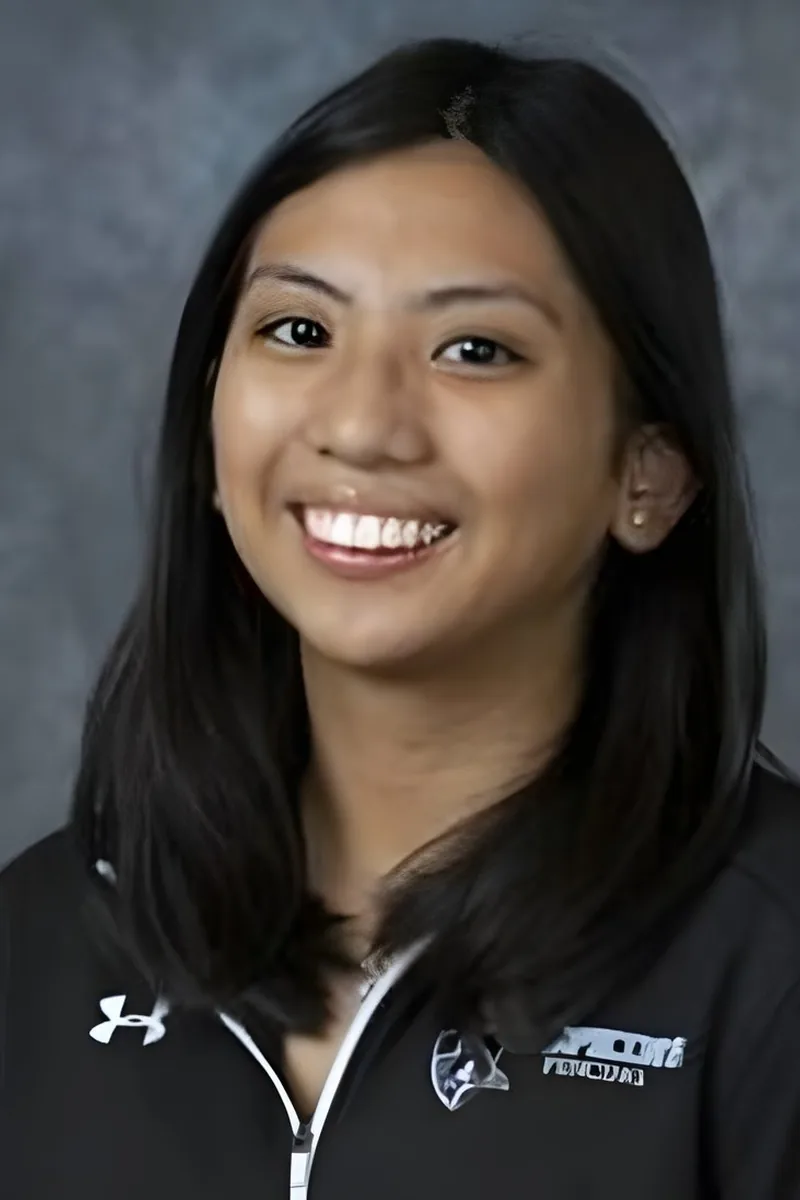
Trig identities and unit circle values click faster when a student understands *why* sine and cosine behave the way they do, not just where to look on a reference sheet. Czarina's biophysics coursework at Johns Hopkins means she uses trigonometric functions constantly — in wave equations, vector decomposition, and signal analysis — so she teaches them with real context baked in.

The unit circle tends to be the make-or-break moment in trigonometry, and Amber teaches it as a visual tool rather than a table to memorize. From there she connects identities, inverse functions, and graphing transformations so each new topic feels like an extension of something students already understand. Her 5.0 rating speaks to how well that structured approach clicks.
Trig is where math stops being about numbers and starts being about relationships — and that shift trips up a lot of students. Ben breaks down the unit circle, identities, and inverse functions by connecting each concept back to the geometric intuition behind it, so formulas feel logical rather than arbitrary. Rated 5.0 by students.
Trig identities and unit circle values tend to feel like random facts until someone shows you the structure underneath them. Derek approaches trigonometry by connecting sine, cosine, and tangent to their geometric origins, then building up to graphing transformations and solving equations — the same progression that prepared him for advanced math at Harvard.
Trig identities stop feeling like arbitrary formulas once you see them on the unit circle — why sine and cosine shift the way they do, how the double-angle formulas actually derive from geometry. Kevin connects these visual intuitions to the algebraic manipulations students need for proofs and equations. Rated 5.0 by students, he's particularly strong at bridging trig into the calculus and physics contexts where it matters most.
Unit circles, identities, and inverse trig functions tend to feel like a wall of formulas to memorize — Benjamin teaches the underlying logic so students can derive what they need instead of relying on rote recall. His approach leans on visual intuition and shortcut strategies he developed through years of math coursework, turning problems like law of sines applications and radian conversions into second nature.
Trig identities and unit circle values can feel like arbitrary things to memorize, but Samantha approaches them visually — sketching triangles, drawing reference angles, and connecting each identity back to geometric intuition. Her Cornell chemistry background required constant use of trigonometric relationships in spectroscopy and molecular geometry, giving her a practical fluency that translates well to teaching.
Trig identities start making sense once a student sees the unit circle not as something to memorize but as a geometric machine that generates every sine, cosine, and tangent value. Justin teaches trigonometry by connecting it back to the geometry and physics where it originated — an approach that comes naturally from his dual degrees in physics and mathematics. His 5.0 rating speaks to how well that perspective lands with students.
The unit circle doesn't have to be a memorization exercise. Enrico teaches trig identities and sinusoidal functions by showing where they come from geometrically, so that formulas like the angle addition identities or the law of cosines feel like things students can derive on the spot rather than recall under pressure.
The unit circle tends to feel like arbitrary memorization until someone shows you the geometry driving it. Sanjana unpacks trig identities, inverse functions, and sinusoidal modeling by building each concept visually, so students understand why sin²θ + cos²θ = 1 instead of just accepting it. Her 5.0 rating speaks to how well that approach lands.
Trig is where math stops being purely numerical and starts being deeply visual — unit circles, wave behavior, identities that transform one expression into another. Charlie, a University of Chicago grad with a math teaching background that spans several years, breaks down concepts like the law of sines and radian measure so they feel intuitive rather than formulaic.
The unit circle, inverse trig functions, and identity proofs tend to feel like arbitrary memorization until someone shows you the geometric logic underneath. Caroline breaks trig down through the engineering lens she developed earning her M.S. in Mechanical Engineering magna cum laude — where sine and cosine aren't abstract but describe real oscillations and forces. That applied perspective turns a notoriously frustrating subject into something intuitive.
Testimonials
Because the right Trigonometry tutor makes all the difference.
Average Session Rating – Based on 3.4M Learner Ratings
Practice Trigonometry
Free practice tests, flashcards, and AI tutoring for Trigonometry
Nearby Trigonometry Tutors
Other Gulfport Tutors
Related Math Tutors in Gulfport
Frequently Asked Questions
Varsity Tutors matches Gulfport students with expert Trigonometry tutors for 1-on-1 instruction. We pair each student with a tutor based on their specific needs, learning style, and goals.
Whether you need homework help, exam prep, or want to get ahead, our Trigonometry tutors are ready to help.
Common challenges include gaps from earlier material, difficulty with specific concepts, and trouble applying learning to new problems. These issues can snowball quickly in Trigonometry.
A tutor identifies where you're stuck, fills in gaps, and provides targeted practice. The 1-on-1 format means you get help exactly where you need it.
Tutors work with your student's actual coursework—homework assignments, class notes, and upcoming tests. This keeps tutoring directly relevant to what's happening in the classroom.
When you share information about your student's school and curriculum, we can match you with a tutor who has relevant experience.
All tutors complete background checks, credential verification, and teaching evaluation. Many of our Trigonometry tutors hold advanced degrees or have years of teaching experience.
You can review tutor profiles to find someone with the right background for your student's level and needs.
Many students see improved grades within a few weeks, along with better understanding of Trigonometry concepts and more confidence tackling challenging material.
Tutors track progress and adjust their approach to ensure continued improvement.
Most students benefit from 1-2 sessions per week. More frequent sessions help if your student is significantly behind or has an important exam coming up.
Your tutor can recommend a schedule based on your student's specific situation and goals.
Tutoring is purchased in packages of hours, with rates varying by tutor experience. Varsity Tutors offers several options to fit different budgets and needs.
You can discuss pricing during your consultation to find what works best.
Your tutor will assess where your student is, discuss goals, and start working on priority areas. Most students bring current homework or upcoming test material to focus on.
By the end, you'll have a clear sense of how the tutor can help and a plan for moving forward.
Let’s find your perfect tutor
Answer a few quick questions. We’ll recommend the right plan and match you with a top 5% tutor.