Award-Winning College Chemistry Tutors
serving Flint, MI
College Chemistry
Tutors in Flint
Private 1-on-1 tutoring, weekly live classes for academic support, test prep & enrichment, practice tests and diagnostics, and more to elevate grades and test scores.
Based on 3.4M Learner Ratings
UniversitiesSchools & Universities
DeliveredHours Delivered
ProficiencyGrowth in Proficiency
Who needs tutoring?
No obligation. Takes ~1 minute.

Studying chemical and biological engineering means Suzie has been stress-tested on gen chem material — thermodynamics, reaction kinetics, stoichiometry — in courses that demanded she actually use it to solve mass and energy balances, not just reproduce it on an exam. She's now pursuing an MD/PhD at Michigan Medical School, so she teaches college chemistry with a clear picture of how each concept threads into biochemistry, physiology, and beyond. Rated 5.0 by students.
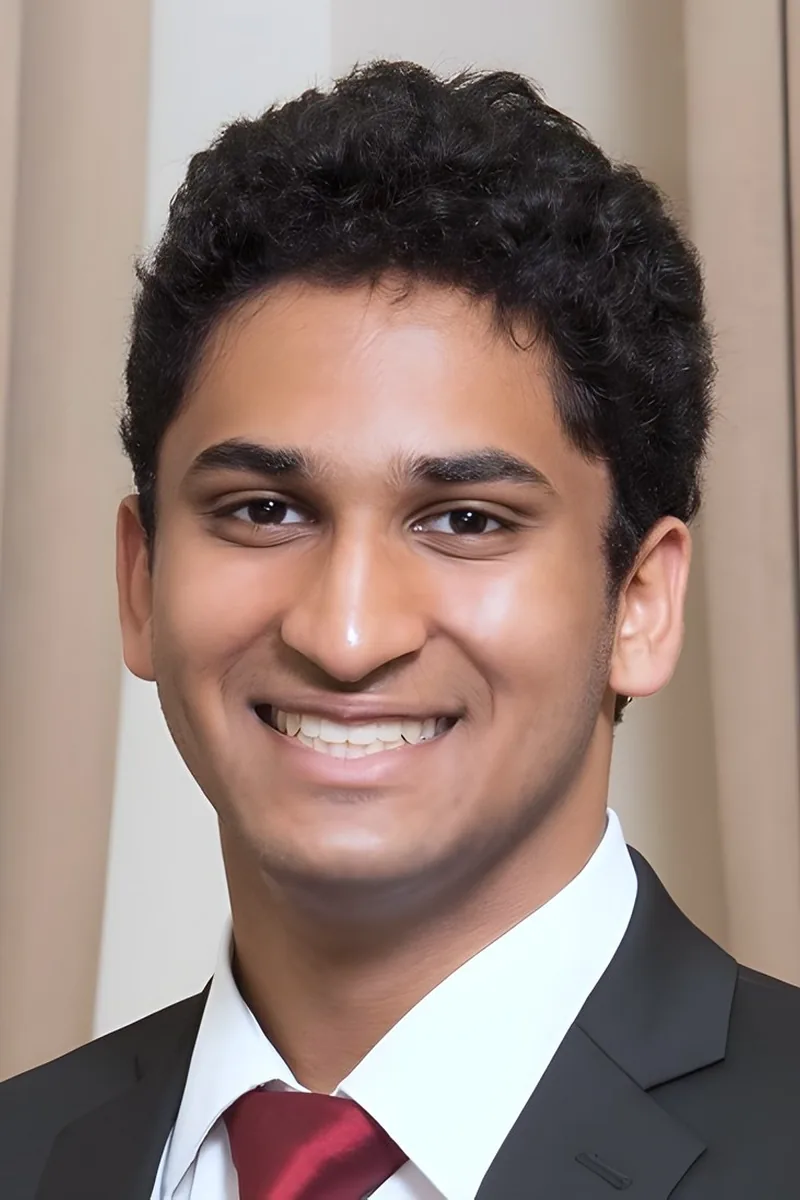
Organic mechanisms, thermodynamics, equilibrium — college chemistry covers an enormous range, and Pratik has tutored it extensively at both the high school and undergraduate level. He digs into the reasoning behind reaction trends and periodic properties so that students can predict behavior on exams rather than relying on memorized examples.
Dartmouth's pre-med track put Arianna through a rigorous gen chem sequence where topics like electronegativity, VSEPR theory, and solution stoichiometry had to stick — not just for exams, but for every upper-level neuroscience and biology course that followed. She teaches college chemistry by anchoring abstract ideas to the biological systems where they resurface, which clicks especially well for life-science majors who need a reason to care about electron configurations. Rated 4.8 by students.
Heading to the University of Michigan to major in Mathematics, Phil brings serious quantitative chops to the parts of college chemistry that are really algebra in disguise — equilibrium expressions, rate law calculations, stoichiometric ratios, and gas law derivations. He also has hundreds of hours tutoring chemistry specifically, so he knows when a student's real problem is the concept and when it's the math tripping them up. That distinction matters in gen chem, where the two get tangled together fast.
Transitioning from high school to college chemistry means grappling with thermodynamics, equilibrium constants, and orbital theory at a much deeper level. Surina tackled these topics throughout her microbiology coursework at Barrett Honors College and knows where the conceptual gaps from general chem tend to show up in organic and biochemistry courses down the line.
Chemical engineering at UW-Madison meant Morgan didn't just take college chemistry — she relied on it daily through courses in reactor kinetics, mass transfer, and process thermodynamics, where sloppy understanding of equilibrium or enthalpy calculations would tank an entire problem set. That engineering context gives her a sharp eye for the specific conceptual gaps that cause students to lose points, especially in topics like solution stoichiometry and calorimetry where the chemistry and the math have to work in lockstep.
A PhD in Chemistry with research time at both Windsor and Cornell means Alaaeddeen has taught college chemistry topics — electron configurations, chemical kinetics, solution stoichiometry — across every level from introductory lectures to graduate seminars. He digs into the reasoning behind each step of a problem rather than letting students default to formula-plugging, a teaching approach he's refined since 2011. Rated 5.0 by students.
Biochemistry at Michigan meant Kirby didn't just take college chemistry — she kept using it, applying concepts like reaction thermodynamics, acid-base equilibria, and molecular interactions through upper-level coursework in organic chemistry, physical chemistry, and biochemistry. That layered exposure gives her a clear sense of which gen chem topics students need to truly internalize versus which ones they can afford to revisit later. Rated 4.9 by students.
Pursuing a chemistry doctorate at the University of Michigan after completing his bachelor's at Truman State, Tyler has lived college chemistry from both sides of the classroom — learning the material and then teaching it at the undergraduate level. He's particularly sharp on the topics where students quietly fall behind, like electron configurations feeding into bonding theory or how equilibrium math depends on getting ICE tables set up correctly before touching the calculator. Rated 5.0 by students.
Quantum numbers, molecular orbital theory, kinetics — college chemistry demands a level of abstraction that a general chemistry course only hints at. Vazrik earned his B.S. in Chemistry before moving into a materials science doctoral program, so he can walk through concepts like crystal field theory or electrochemistry with the depth of someone who applies them in active research.
Working as a research assistant in transplant surgery at Johns Hopkins School of Medicine, Jonathan applies chemistry daily — from understanding drug interactions to the biochemistry of tissue preservation. That hands-on lab experience means he can ground tricky gen chem topics like stoichiometry and solution chemistry in real scenarios rather than leaving them as abstract textbook exercises. Rated 5.0 by students.
I am passionate about. Throughout my education, even in elementary school, I would love helping my friends do better in their schooling, whether that be by just answering a few questions they had, some one-on-one time, or a group study session.
I am eternally grateful! I minored in Chemistry after getting interested in the inner workings of organic chemistry. While going to college I earned money by tutoring classes I had already taken. I also offered "supplemental instruction" which were informal classroom question and answer sessions. I worked in a research lab after earning an undergraduate research fellowship and explored Physiology at the School of Medicine. Then went on to study Toxicology at the University of Wisconsin, Madison. While there a decision appeared clear between focusing on research or teaching. I like teaching better. I truly enjoy spreading knowledge about Biology and Chemistry and finding fun ways to introduce people to these (often difficult) subjects.
Having studied biology alongside organic chemistry and physical chemistry, Ade knows how college chemistry concepts like electron configuration, molecular geometry, and reaction stoichiometry thread through the rest of a science degree — and where students lose the plot when those ideas get abstract. He tackles the subject by anchoring each new topic to concrete examples from the lab bench, making the jump from Lewis structures to real molecular behavior feel less like a leap of faith.
Neuroscience at Brown meant Crony couldn't just skim gen chem — courses in neurochemistry and cellular biology demanded real fluency with topics like electrochemistry, molecular interactions, and reaction energetics long after the introductory sequence ended. That background gives him a sharp sense of which college chemistry concepts actually need to be internalized versus merely memorized, especially for students heading into upper-level STEM work. Rated 4.6 by students.
Fourth-year med student at Albert Einstein College of Medicine, Michael has been applying gen chem principles — acid-base chemistry, reaction thermodynamics, solution behavior — in clinical and biochemical contexts for years, which means he can explain not just how to solve a problem but where that concept resurfaces later. His biology degree from Yeshiva College (summa cum laude) and time teaching MCAT prep for Kaplan gave him practice breaking down the exact topics that trip up college chemistry students: stoichiometry setups, equilibrium expressions, and the leap from qualitative reasoning to quantitative problem-solving.
When college chemistry students feel overwhelmed, it's usually because topics like gas laws, equilibrium, and stoichiometry are piling up faster than they can organize the connections between them — and untangling that clutter is where Rachel excels. Her science background across biology, anatomy, and physiology means she's applied gen chem principles in multiple contexts, so she can show how a concept like acid-base behavior or molecular polarity actually functions beyond the textbook chapter it first appears in.
I've been working with students for over seven years, from middle school all the way through college, across subjects like math, calculus, statistics, linear algebra, chemistry, and physics, with a lot of SAT and ACT prep mixed in. My background is perhaps a little unconventional. I have two bachelor's degrees, one in Engineering and one in Communication Studies, plus a Master's in Design. That combination means I can guide you through challenging technical material and communicate it in a way that is easy to grasp. What I care most about is helping students get to a place where they don't need me anymore. I know that sounds like a strange thing for a tutor to say, but I think it's the right goal. I'm not here to walk you through steps to copy down. I want you to understand why something works, because that's what holds up under pressure, on a test you haven't seen before. If you're ready to ace that test or prove that theorem that's been bugging you, reach out and let's work together
Having scored 1580 on the SAT and completed AP Chemistry coursework, Kendall brings sharp quantitative instincts to the trickiest parts of gen chem — the unit conversions buried inside equilibrium problems, the logarithmic reasoning behind pH calculations, the algebra hiding inside rate law expressions. She also knows that college chemistry often overwhelms students not because the concepts are impossibly hard, but because the pace is relentless, so she zeroes in on the specific spots where understanding broke down rather than re-teaching entire chapters. Rated 4.9 by students.
Studying chemistry at Harvard while preparing for Columbia Medical School means James has taken college chemistry far past the introductory level — he knows which early concepts like electron configurations, VSEPR theory, and reaction stoichiometry quietly become load-bearing walls for everything from organic mechanisms to biochemical pathways. He teaches gen chem by flagging those high-stakes fundamentals early, so students aren't blindsided when later courses assume fluency. Rated 4.9 by students.
Samantha studied Chemistry & Chemical Biology at Cornell with a food science concentration, so she's tackled everything from organic reaction mechanisms to thermodynamics and spectroscopy at the college level. She teaches tricky concepts like equilibrium constants, electrochemistry, and molecular orbital theory by building visual models that connect the math to what's physically happening at the molecular scale.
Computer science at Cornell Engineering required Ravnoor to grind through the same rigorous gen chem sequence that gates so many STEM majors — and his 5.0 rating suggests he retained more than enough to teach it. He tackles calculation-dense topics like stoichiometry and gas laws by decomposing them the way a programmer would: isolate the variables, track the units, and debug each step before moving forward.
Going through med school means Amanda has seen what happens when gen chem concepts like acid-base equilibria and reaction thermodynamics aren't truly understood — they unravel in biochemistry, pharmacology, and every clinical science that follows. She teaches college chemistry by grounding each topic in the bigger picture of where it leads, using her biology degree and 4.2 GPA from Alabama to zero in on the quantitative reasoning — electron configurations, enthalpy calculations, equilibrium expressions — that students need to own rather than just survive.
Having TA'd general chemistry at Cornell — running problem-solving sessions and later training other TAs in teaching techniques — Alec knows exactly which concepts derail students: electron configurations that don't match periodic trends, buffer problems where the Henderson-Hasselbalch equation gets misapplied, or enthalpy calculations where sign conventions silently flip answers. His genetics and pre-med coursework means he's also seen how gen chem principles resurface in biochemistry and organic chemistry, so he teaches each topic with an eye toward where it's headed. Rated 4.8 by students.
General chemistry at the college level demands comfort with both conceptual reasoning and quantitative problem-solving — balancing redox half-reactions one day, then interpreting molecular orbital diagrams the next. Kate's master's work in environmental engineering required deep fluency in chemical thermodynamics and kinetics, and she brings that applied perspective to topics like enthalpy calculations, acid-base equilibria, and electrochemistry.
Testimonials
Because the right College Chemistry tutor makes all the difference.
Average Session Rating – Based on 3.4M Learner Ratings
Other Flint Tutors
Related Science Tutors in Flint
Frequently Asked Questions
Varsity Tutors matches Flint students with expert College Chemistry tutors for 1-on-1 instruction. We pair each student with a tutor based on their specific needs, learning style, and goals.
Whether you need homework help, exam prep, or want to get ahead, our College Chemistry tutors are ready to help.
Common challenges include gaps from earlier material, difficulty with specific concepts, and trouble applying learning to new problems. These issues can snowball quickly in College Chemistry.
A tutor identifies where you're stuck, fills in gaps, and provides targeted practice. The 1-on-1 format means you get help exactly where you need it.
Tutors work with your student's actual coursework—homework assignments, class notes, and upcoming tests. This keeps tutoring directly relevant to what's happening in the classroom.
When you share information about your student's school and curriculum, we can match you with a tutor who has relevant experience.
All tutors complete background checks, credential verification, and teaching evaluation. Many of our College Chemistry tutors hold advanced degrees or have years of teaching experience.
You can review tutor profiles to find someone with the right background for your student's level and needs.
Many students see improved grades within a few weeks, along with better understanding of College Chemistry concepts and more confidence tackling challenging material.
Tutors track progress and adjust their approach to ensure continued improvement.
Most students benefit from 1-2 sessions per week. More frequent sessions help if your student is significantly behind or has an important exam coming up.
Your tutor can recommend a schedule based on your student's specific situation and goals.
Tutoring is purchased in packages of hours, with rates varying by tutor experience. Varsity Tutors offers several options to fit different budgets and needs.
You can discuss pricing during your consultation to find what works best.
Your tutor will assess where your student is, discuss goals, and start working on priority areas. Most students bring current homework or upcoming test material to focus on.
By the end, you'll have a clear sense of how the tutor can help and a plan for moving forward.
Let’s find your perfect tutor
Answer a few quick questions. We’ll recommend the right plan and match you with a top 5% tutor.