Award-Winning Math Tutors
serving Lexington, KY
Math
Tutors in Lexington
Private 1-on-1 tutoring, weekly live classes for academic support, test prep & enrichment, practice tests and diagnostics, and more to elevate grades and test scores.
Based on 3.4M Learner Ratings
UniversitiesSchools & Universities
DeliveredHours Delivered
ProficiencyGrowth in Proficiency
Who needs tutoring?
No obligation. Takes ~1 minute.
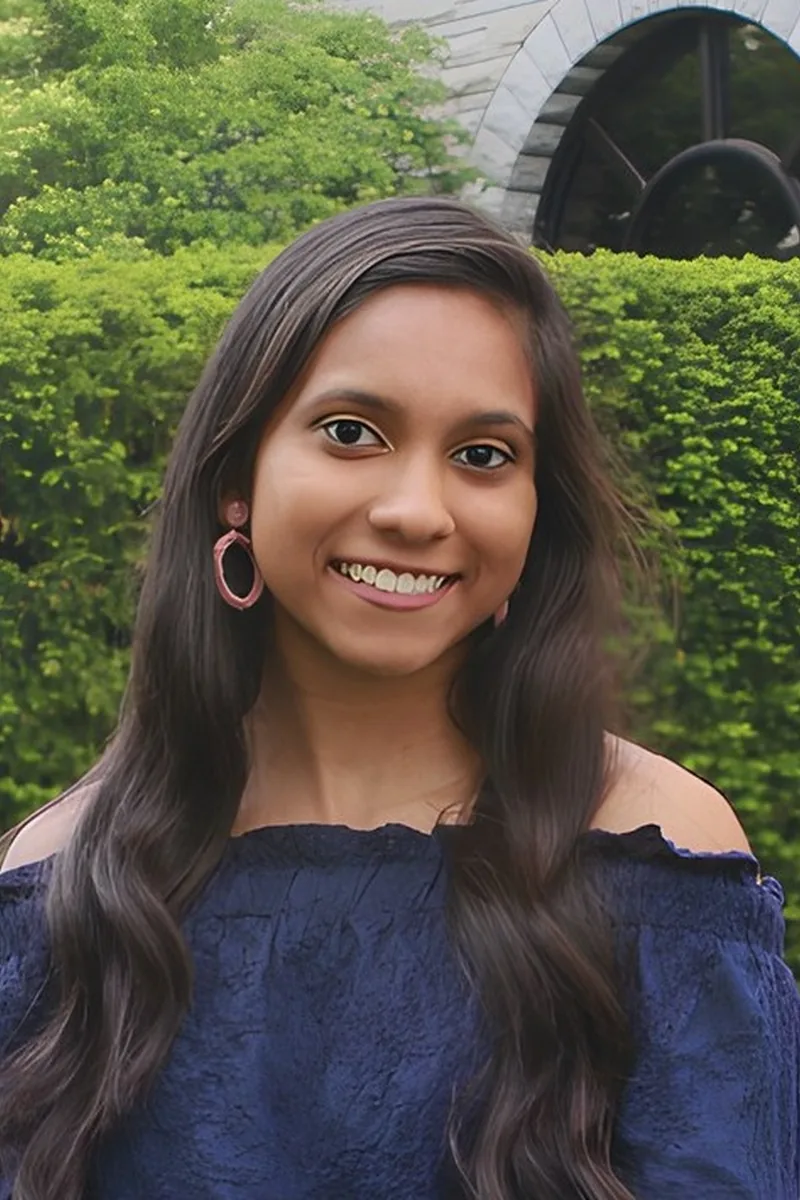
From fraction operations in middle school to limits in calculus, Dharani has spent four years teaching math at every level and spotting the exact concept gaps that hold students back. Her math minor at the University of Kentucky means she doesn't just demonstrate procedures — she explains the reasoning behind them, so a student who masters solving systems of equations actually understands why elimination works, not just when to use it.
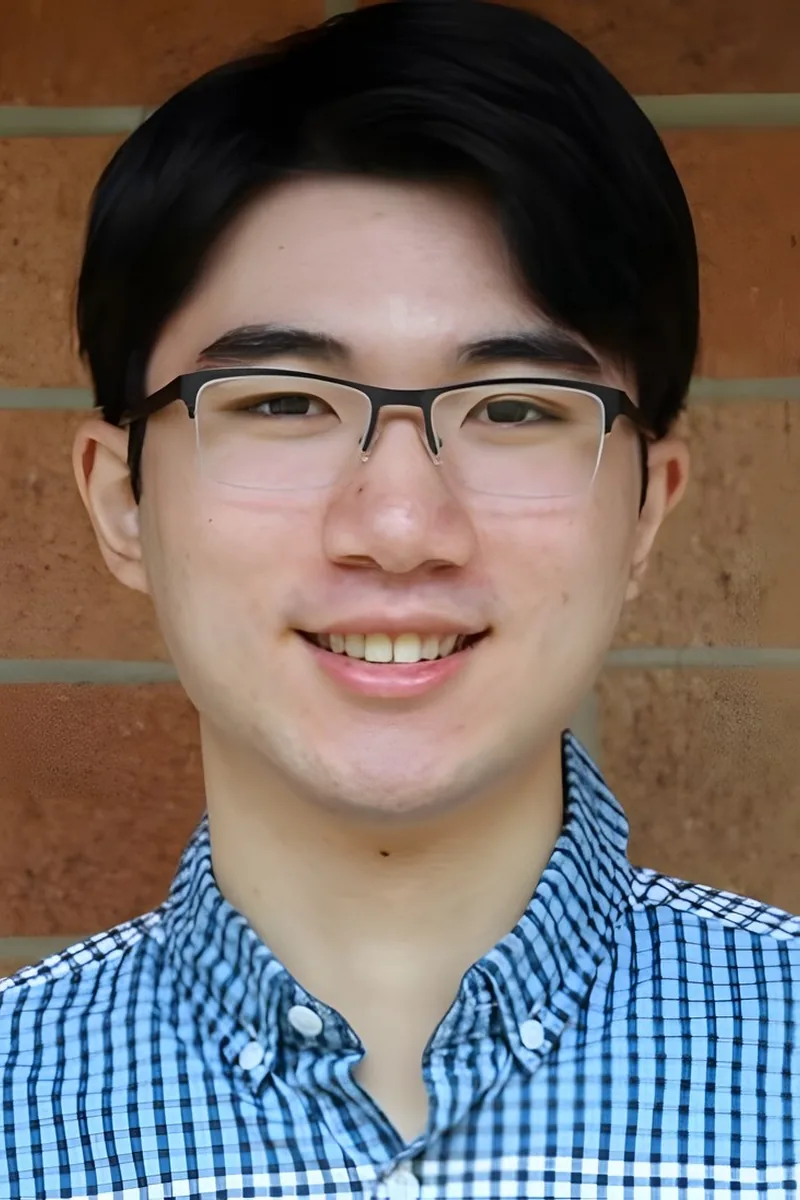
From arithmetic through calculus, Jason's biology and pre-med coursework kept him immersed in applied math — calculating concentrations, modeling growth rates, interpreting graphs. He breaks down word problems by teaching students to identify what a question is actually asking before touching any numbers, a skill that transfers across every math level.
A science-heavy degree at the University of Kentucky keeps Isabella immersed in applied math daily, from solving equations in chemistry coursework to working through calculus problems tied to real data. She breaks down arithmetic, fractions, ratios, and algebraic thinking in ways that connect to problems students actually encounter outside the classroom.
Faith's primary expertise is in reading and writing, but she brings something underrated to math tutoring: the ability to slow down and unpack word problems, translate confusing instructions, and teach students how to organize multi-step solutions clearly. For students who understand the concepts but freeze when problems are worded strangely, that skill matters more than raw computation speed.
Whether a student is stuck on fraction operations or pushing through limits and derivatives, Kevin adapts his explanations to match the specific concept causing trouble. His background spans competition math through college-level calculus, and his 1590 SAT and 35 ACT scores show he can break quantitative problems down quickly and accurately.
Computer science is applied math, and Evan has spent years translating between the two — calculating vectors for game physics, using linear algebra for 3D transformations, and debugging formulas in code. That cross-disciplinary instinct makes him especially effective at showing students why a math concept matters, whether they're working through algebra, functions, or early calculus.
Scoring a 36 on the ACT required Logan to master everything from proportional reasoning to trigonometric identities under serious time pressure — and he brings that same structured, efficient problem-solving approach to his math tutoring. He breaks down word problems and multi-step equations by teaching students to identify what a question is actually asking before jumping into calculations. Rated 5.0 by students.
Jenna's biochemistry coursework kept her deep in applied math — stoichiometric calculations, logarithmic pH scales, statistical analysis of lab data — so she's comfortable translating abstract operations into problems that feel tangible. She scored a 36 ACT composite and brings that same precision to arithmetic, pre-algebra, and early algebra concepts where building number sense matters most.
Janki's math background spans algebra through calculus, shaped by the quantitative demands of a neuroscience degree — statistics, modeling, and applied problem-solving. She unpacks word problems and abstract concepts by connecting them to concrete reasoning, so students understand the logic behind each step rather than just following a memorized procedure.
Chemistry and biochemistry are math-heavy disciplines, and Troy has spent years applying algebra, dimensional analysis, and calculus concepts to real scientific problems — from stoichiometry calculations to enzyme kinetics equations. He explains mathematical reasoning by grounding abstract procedures in concrete applications, so formulas and operations feel purposeful rather than arbitrary.
Not every math tutor comes from a pure math background, but Kelsey's experience teaching second graders means she knows exactly where foundational gaps in number sense, place value, and basic operations tend to hide. She walks through each concept with concrete examples before moving to abstract procedures, making sure the reasoning clicks first.
Kinesiology coursework at Rice University meant Addison spent semesters applying calculus and algebra to biomechanics problems — force vectors, rates of change in motion, angular velocity — so the jump between abstract math and something physical is second nature to her. She teaches across the full range from pre-algebra through calculus, and her Film Studies background gives her a storytelling instinct for structuring explanations so each step feels like it leads somewhere instead of floating in isolation.
Three years of tutoring math to students ranging from elementary-age kids in Beijing to adult learners online taught Wilson how to explain the same concept ten different ways until one clicks. He zeroes in on fundamentals like number sense, fractions, and word-problem translation — the building blocks that make higher math possible later.
From foundational algebra through multivariable calculus, Matthew covers a wide range of math and understands how each level builds on the last. His engineering training means he constantly uses math as a tool for solving real problems, which gives him a practical way of explaining concepts like function behavior or rate of change that makes abstract ideas tangible.
Benjamin treats math as a language of abstractions rather than a set of rigid procedures — when a student struggles with, say, factoring or function composition, he digs into the conceptual logic underneath so the technique actually sticks. His background spans arithmetic through calculus, and his 4.8 rating speaks to how well that approach clicks with students across skill levels.
Anthony's background is firmly in English and writing — two master's-level degrees' worth — so he's not the tutor for advanced calculus proofs. But that deep literacy training makes him genuinely useful for math courses where word problems, story-based reasoning, or translating English into equations is the real bottleneck. He's especially effective when the issue isn't the arithmetic itself but figuring out what the question is actually asking.
Dietetics coursework is quietly math-heavy — calculating macronutrient ratios, converting units across measurement systems, building meal plans around precise numerical targets — so Amy's degree gave her steady practice applying algebra and arithmetic to real problems with real stakes. She's especially good at showing students how to set up proportions and work through unit conversions, skills that tend to click faster when tied to something concrete like a recipe or a nutrition label.
While Spanish and English are Nicole's primary teaching areas, she also tutors algebra and calculus, approaching math with the same structured, step-by-step clarity she uses in language instruction. She's particularly effective at breaking down word problems and translating abstract concepts into concrete procedures students can follow.
From pre-algebra through differential equations and discrete math, Jacob has covered nearly every rung of the math ladder — first as a mathematics major at Rose-Hulman, then as a tutor working with both high schoolers and returning college students. That range means he can pinpoint exactly where a gap in understanding started and rebuild the reasoning from there.
I am a graduate of a liberal arts university, with majors in both Spanish and Studio Arts. As a Teach for America alumni I have worked as a Spanish and Art teacher in elementary, middle, and high school settings in both public and private schools. Additionally I have worked with nonprofit organizations to provide arts education. I primarily tutor Spanish, English, Reading and ACT prep. I believe everyone deserves access to a quality education, and I look forward to working with you to meet and exceed your goals!
Diana's primary expertise is in English and the humanities, but she also tutors math and brings the same structured, step-by-step approach she uses in writing instruction. She's especially effective at translating word problems into mathematical language — a skill that draws directly on her strength in reading comprehension and logical reasoning.
I am no longer needed.
From basic arithmetic through calculus, Jesse's BS in Mathematics gives him the full picture of how each concept feeds into the next — why fraction fluency matters for algebra, why algebra matters for trig, and so on. He pinpoints exactly where a gap formed and rebuilds understanding from that point forward, so students stop struggling with the same mistakes.
Whether a student is struggling with fractions, tackling proportions, or making sense of word problems, Grace pinpoints the specific concept causing confusion before piling on new material. Her patient, step-by-step approach turns math from a source of anxiety into something students can reason through on their own.
Growing up with a learning disability meant Kaylee had to find her own ways into math — breaking word problems into smaller pieces, drawing out fractions, and building number sense through repetition that actually made sense. That experience gives her a sharp eye for where a student is getting stuck and why. She's especially effective with elementary and middle school learners who need someone willing to try a different explanation, not just a louder one.
An accounting degree is essentially applied mathematics, and Sowmya uses that foundation to teach math concepts through a practical lens — fractions become ratios, percentages become markup calculations, and variables become real quantities worth solving for. She's spent years working with K-12 students at programs like Mathnasium, so she knows exactly where common mistakes happen in arithmetic, pre-algebra, and beyond.
Chemical Physics at Centre College means Carter lives in math daily — from algebraic manipulation to the calculus underpinning thermodynamics and quantum mechanics. He's particularly good at showing students how a single concept like slope connects arithmetic, algebra, and eventually derivatives, so each new topic feels like a natural extension rather than a disconnected rule to memorize.
While Patty's primary expertise is in language and humanities, she teaches foundational math concepts — arithmetic operations, fractions, basic word problems — with the same structured, step-by-step clarity she brings to her ESL lessons. Her approach is especially useful for students who struggle with math word problems, where reading comprehension and computation intersect.
From fraction operations in middle school to polynomial division and beyond, Nick identifies the exact concept where a student's understanding breaks down and rebuilds from that point. His tutoring spans pre-algebra through calculus, so he connects each new topic to what's coming next — showing, for instance, how mastering proportional reasoning now makes algebra significantly easier later.
Alexander's strength in math comes from the same place as his strength in history — he's good at taking a complicated sequence of events and making each step feel inevitable rather than random. His history degree trained him to build logical chains of reasoning, which turns out to be exactly what students need when they're staring at a multi-step algebra or calculus problem and can't figure out what to do next. He's particularly effective at slowing down the problem-solving process so students can see the structure hiding inside messy questions.
Biochemistry coursework is basically applied math — Andrew's degree required everything from differential equations to statistical analysis of molecular data, so he's comfortable across the full algebra-to-calculus pipeline and knows which techniques actually recur in higher-level work. His 34 ACT and programming background in languages like Python and Java reinforce a problem-solving style that's methodical and step-driven, which translates well to teaching students how to set up and organize complex multi-step problems. Rated 5.0 by students.
From fractions and proportions through quadratics and beyond, math confidence usually hinges on a handful of foundational concepts that didn't fully click the first time. Haileigh identifies exactly where those gaps are and rebuilds understanding from there, connecting arithmetic reasoning to the algebraic thinking students will need next.
From simplifying fractions in middle school to solving systems of equations in algebra, math builds on itself — one shaky concept can quietly derail everything that follows. Mark graduated with a 4.0 in mathematics and has a knack for spotting the exact moment a topic stopped making sense, then rebuilding understanding from that point forward.
A University of Chicago graduate with a 1530 SAT and 35 ACT, Asta brings sharp quantitative instincts to math topics from fractions and ratios through functions and graphing. She breaks problems into logical steps so students see the reasoning behind each procedure, not just the answer.
Between competition math experience and a Stanford cognitive science degree that included heavy quantitative coursework, David approaches math problems by teaching the reasoning behind each step — whether that's factoring polynomials or setting up related rates in calculus. His 1570 SAT speaks to the precision he brings to mathematical thinking at every level.
Law school at the University of Chicago sharpened Elena's ability to dissect complex arguments into logical steps — a habit she now applies to walking through multi-step math problems where students need to see exactly where their reasoning breaks down. Her approach is Socratic: she listens to a student talk through a problem, then asks the precise question that exposes the gap, rather than jumping straight to the correct method. She scored a 1600 on the SAT and is rated 4.9 by students.
A Caltech economics and computer science graduate, Brian treats math as a unified subject — connecting the logic behind arithmetic patterns in middle school to the algebraic reasoning those patterns become later. His 1580 SAT and experience across competition math, calculus, and discrete math mean he can meet a problem at any level and explain it multiple ways until it clicks.
Pursuing a certificate in Statistics and Machine Learning alongside her philosophy degree at Princeton, Julie brings both computational rigor and clear logical thinking to math at every level. She breaks down problems — whether it's fraction operations or function analysis — into reasoning steps students can follow and replicate on their own. Rated 4.9 by students.
Logic is the backbone of both philosophy and mathematics, and Justin leans on that connection when tackling everything from algebraic manipulation to introductory calculus concepts. He's especially effective at translating word problems into mathematical expressions — a skill sharpened by years of breaking down complex arguments into formal structures at the University of Chicago.
A triple Bachelor of Science holder, Sung has spent years working through math at every level — from proportional reasoning and equation-solving in middle school to the limit definitions and derivative rules of calculus. He breaks problems into smaller logical steps so students can see the reasoning behind each move, not just follow a memorized procedure.
Testimonials
Because the right Math tutor makes all the difference.
Average Session Rating – Based on 3.4M Learner Ratings
Practice Math
Free practice tests, flashcards, and AI tutoring for Math
Nearby Math Tutors
Other Lexington Tutors
Related Math Tutors in Lexington
Frequently Asked Questions
Varsity Tutors matches Lexington students with expert Math tutors for 1-on-1 instruction. We pair each student with a tutor based on their specific needs, learning style, and goals.
Whether you need homework help, exam prep, or want to get ahead, our Math tutors are ready to help.
Common challenges include gaps from earlier material, difficulty with specific concepts, and trouble applying learning to new problems. These issues can snowball quickly in Math.
A tutor identifies where you're stuck, fills in gaps, and provides targeted practice. The 1-on-1 format means you get help exactly where you need it.
Tutors work with your student's actual coursework—homework assignments, class notes, and upcoming tests. This keeps tutoring directly relevant to what's happening in the classroom.
When you share information about your student's school and curriculum, we can match you with a tutor who has relevant experience.
All tutors complete background checks, credential verification, and teaching evaluation. Many of our Math tutors hold advanced degrees or have years of teaching experience.
You can review tutor profiles to find someone with the right background for your student's level and needs.
Many students see improved grades within a few weeks, along with better understanding of Math concepts and more confidence tackling challenging material.
Tutors track progress and adjust their approach to ensure continued improvement.
Most students benefit from 1-2 sessions per week. More frequent sessions help if your student is significantly behind or has an important exam coming up.
Your tutor can recommend a schedule based on your student's specific situation and goals.
Tutoring is purchased in packages of hours, with rates varying by tutor experience. Varsity Tutors offers several options to fit different budgets and needs.
You can discuss pricing during your consultation to find what works best.
Your tutor will assess where your student is, discuss goals, and start working on priority areas. Most students bring current homework or upcoming test material to focus on.
By the end, you'll have a clear sense of how the tutor can help and a plan for moving forward.
Let’s find your perfect tutor
Answer a few quick questions. We’ll recommend the right plan and match you with a top 5% tutor.