Award-Winning ACT Reading Tutors
serving Lexington, KY
ACT Reading
Tutors in Lexington
Private 1-on-1 tutoring, weekly live classes for academic support, test prep & enrichment, practice tests and diagnostics, and more to elevate grades and test scores.
Based on 3.4M Learner Ratings
UniversitiesSchools & Universities
DeliveredHours Delivered
ProficiencyGrowth in Proficiency
Who needs tutoring?
No obligation. Takes ~1 minute.
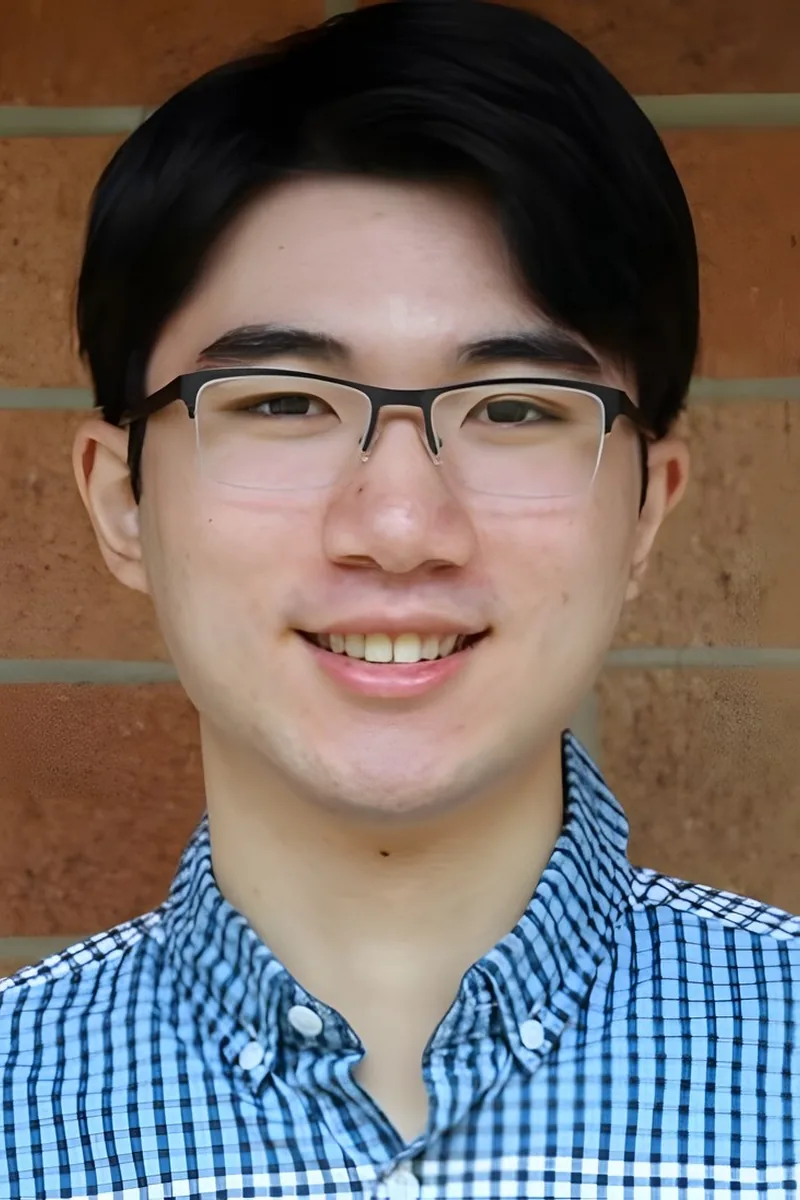
I am medical student attending the University of Kentucky. My experience tutoring has both informal and formal components. Informally, I have tutored fellow students in classes that we share. Formally, I teach an organic chemistry recitation at UK. Subjects that I tutor are organic chemistry, mathematics, and biology. I do not have a favorite subject to tutor because I find there to be something very interesting about each subject. My philosophy to teaching is to look at it with the perspective of an enjoyable intellectual conversation. Learning is life-long so let us find the enjoyment in learning. My hobbies outside of academia include listening to music, cooking, and badminton.

I am currently a rising senior at the University of Kentucky. I am working towards my Bachelor of Science in Biology with a minor in math and neuroscience. I have been tutoring students from elementary to high school for four years in math. I enjoy working with students, of course to provide academic support, but also to build an environment that encourages them to think outside the box and feel comfortable in doing so. I do tutor high school chemistry, but my primary focus is on various levels of math. From my experience, teaching mathematical concepts can be challenging without being able to adapt to the strengths of weaknesses of every individual. I believe it is crucial that students are given an opportunity to learn that adheres to their individual characteristics. Aside from academia, I enjoy staying physically active, volunteering throughout my community, and being a huge sports fanatic.
Most ACT Reading mistakes come from spending too long on passages and rushing through questions — or the reverse. Logan, who earned a 36 composite, teaches a deliberate passage-mapping technique that lets students locate evidence for inference and detail questions without rereading entire paragraphs. His communication background also sharpens how students interpret tone and author's-purpose questions.
I am 22 years old and just graduated from the University of Kentucky with a double degree in French and Biochemistry. I have been a tutor for over a year now at UK's tutoring center. I believe that anyone can learn anything with enough practice and encouragement, and I love helping students overcome challenges and gain more self-confidence!
I am no longer needed.
I'm a coterminal master's student at Stanford University in California majoring in Computer Science (Biocomputation). Throughout high school and college, I've taken many courses in computer science, the life sciences (biology and chemistry), and math; and I've been through a lot of standardized tests. For computer science in particular, I have a lot of experience writing software in Python and C++ for AI and systems classes, and I'll be interning as a software engineer at Facebook this summer. I got a lot of great tips and mentorship from tutors along the way, and would love to pass along what I know!
I am a graduate of UofL with a BS degree in Biochemistry and minor in Biology, heading to medical school at UVA this fall. I have spent 5 semesters as a teaching assistant for the Chemistry Department, spending three semesters teaching general chemistry and two semesters teaching organic chemistry. I have also spent a year as a small-group tutor, helping individual students through tough chemistry topics. While I have a strong background in biology, I am most passionate about tutoring chemistry I love its order, set in rules and mathematics. Outside of academics, I spend my time outdoors, bouldering, or playing couch co-op video games.
Most ACT Reading mistakes come from spending too long on passages and too little time verifying answers against the text. Matthew teaches a passage-mapping technique — annotating main ideas and tone shifts on the first read — that cuts down on re-reading and keeps students within the tight time limit. With a 35 ACT composite, he's refined this approach through his own test experience.
I am a graduate of the University of Kentucky with a Bachelor of Science in Computer Science and a minor in Art Studio. I am currently working toward my Masters of Arts in Game Development at the Savannah College of Art and Design. I am deeply passionate about helping students unleash their full potential. Witnessing the "aha" moments when they grasp a challenging concept is very rewarding. I tutor a range of subjects from computer science principles and programming languages (C, C++, Java, etc.) to game development in Unity and 3D art in various software.
I'm looking forward to putting my knowledge to work for you!
Most students lose points on ACT Reading not because they can't read, but because they spend too long hunting for answers in the passage. Janki teaches an active-reading method — annotating for argument structure and author tone on the first pass — that cuts down on re-reading and speeds up the detail questions. With a 34 ACT composite and experience across both STEM and humanities subjects, she's comfortable coaching students through every passage type, from prose fiction to natural science.
The ACT Reading section punishes students who read passively, and Richard's training in philosophy of science taught him to dissect arguments and identify evidence structures quickly. He teaches students to attack each passage with a specific annotation strategy so they can answer inference and main-idea questions without re-reading entire paragraphs.
Years of reading dense biochemistry research papers — where a single misread of a methods section can derail an entire lab protocol — trained Andrew to distinguish what a text actually states from what it merely suggests, which is the core skill behind ACT Reading's trickiest inference questions. He teaches students to attack the natural science and social science passages by isolating the author's claim first and treating each answer choice as a hypothesis to verify against specific lines. His 34 ACT composite and 5.0 student rating back that up.
Most students lose points on ACT Reading not because they can't read, but because they spend too long hunting for answers in the passage. Diana teaches a strategic approach to the four passage types — prose fiction, social science, humanities, and natural science — that prioritizes identifying main ideas and locating evidence quickly. Her 32 ACT composite backs up the method.
The ACT Reading section isn't really testing how well you read — it's testing how quickly you can locate specific evidence in passages you've never seen before. Sreya scored a 36 composite and developed a systematic approach to dual passages and inference questions that cuts through the time pressure. She teaches students to identify what each question is actually asking before they go back to the text.
Medical school at the University of Arizona means Alex reads hundreds of pages of dense, unfamiliar material every week — the same core skill the ACT Reading section tests under a 35-minute clock. With a perfect 36 ACT composite, he teaches students to attack the paired viewpoints and natural science passages by isolating each author's claim before looking at answer choices, which eliminates the subtle scope-shift traps that cost most test-takers points. Rated 4.8 by students.
I am excited to help anyone who might need it!
After scoring a perfect 36 ACT composite, Anna developed a question-first approach to the Reading section — previewing what each question demands before touching the passage, so every line read serves a purpose. Her medical education background means she's used to processing dense, unfamiliar material quickly and extracting exactly what matters, a skill that translates directly to the natural science and social science passages. Rated 5.0 by students.
Tracy's strategy for ACT Reading starts with the dual-passage comparison questions, which she considers the section's biggest point opportunities once students learn to read structurally. Instead of re-reading entire passages, she teaches a targeted annotation method — marking tone shifts, key claims, and concession language on the first pass so answers come faster on the second. Her 36 composite reflects how well this approach scales across all four passage types.
I am an undergraduate of the Johns Hopkins University, majoring in Biomedical Engineering and Computer Science. I have years of experience tutoring and teaching math and various sciences from an elementary to a college level. I primarily tutor college level courses such as physics and biochemistry, but also have extensive experience in social sciences, biology, and higher mathematics such as Calculus and Differential Equations. I believe that demonstrating the various real-world applications of a given concept is the best method to increase a student's understanding.
The ACT Reading section punishes students who read passively — four passages in 35 minutes requires a deliberate strategy for extracting main ideas and locating evidence fast. David, who scored a 36 composite, teaches a structured approach to each passage type so students spend less time rereading and more time answering confidently.
I'm a recent college graduate with degrees in Biological Sciences and Russian from Ohio University. During my time there, I tutored students in a variety of subjects, including biology, chemistry, and Spanish. In addition, I worked as both a peer advisor and teaching assistant, which gives me insight into the learning strategies and study skills that students need to succeed. As a tutor, I like to focus on doing actual problems with students because it is the most effective way to immediately identify their strengths and weaknesses and to address them. In my free time, I like to lift weights, read books, and spend time with my friends.
I am an undergraduate at Washington University in St. Louis majoring in Philosophy-Neuroscience-Psychology on the Premed track. I have two years worth of experience peer tutoring. I feel the most confident tutoring ACT preparation. During my time as a high school student, I worked from an ACT score of 25 to a 36 and developed many effective strategies that I will tailor to the students I tutor and understand the ins and outs of the test. In addition to working with high school peers, I have also enjoyed teaching private piano and violin lessons for elementary students. Helping people knock down their roadblocks is a passion of mine. Standardized tests and basic education may feel removed from our passions, but developing those foundations are essential for opening up opportunities and becoming capable of taking on our pursuits.
I am an aspiring applied mathematician, with particular interest in image processing and climate science. I graduated in May 2017 from Washington University in St. Louis with a bachelor's in physics and mathematics, and am beginning a PhD program in September 2017 at the University of Chicago in Computational and Applied Mathematics. I've tutored introductory physics students for three years and enjoyed it thoroughly, as a chance to help other students while revisiting fundamental concepts to enhance my own knowledge. I'm eager to continue reaching out and helping students of math and physics to succeed and, furthermore, to appreciate the beauty and power of these subjects.
I'm a sophomore at Vanderbilt University, majoring in Physics and Classics and minoring in Mathematics and Computer Science. I'm qualified to teach a wide variety of subjects, but prefer to focus on the fields I'm studying in school listed above; I have a passion for those areas that I want to share with everyone, no matter the education level or confidence. I believe that no one is "bad at math," but many people haven't been taught math and science concepts in a way that matches how they best learn. As a result, I try to tailor my teaching style to be the best it can be for each individual student. With regard to math and physics, I myself prefer a physical, graphical understanding of different concepts, so I do best at explaining what seemingly abstract concepts actually mean in the real world and how they act on a graph.
I'm Lizz, a middle school math teacher working in Chicago Public Schools. I love to see students go from describing themselves as "not a math person" to feeling like they meet exciting challenges in math and other parts of their lives. Even though I love working in the classroom, I feel like tutoring allows me to make more of an impact and connect with students.
Testimonials
Because the right ACT Reading tutor makes all the difference.
Average Session Rating – Based on 3.4M Learner Ratings
Practice ACT Reading
Free practice tests, flashcards, and AI tutoring for ACT Reading
Nearby ACT Reading Tutors
Other Lexington Tutors
Related Test Prep Tutors in Lexington
Frequently Asked Questions
Varsity Tutors matches Lexington students with expert ACT Reading tutors for 1-on-1 instruction. We pair each student with a tutor based on their specific needs, learning style, and goals.
Whether you need homework help, exam prep, or want to get ahead, our ACT Reading tutors are ready to help.
Common challenges include gaps from earlier material, difficulty with specific concepts, and trouble applying learning to new problems. These issues can snowball quickly in ACT Reading.
A tutor identifies where you're stuck, fills in gaps, and provides targeted practice. The 1-on-1 format means you get help exactly where you need it.
Tutors work with your student's actual coursework—homework assignments, class notes, and upcoming tests. This keeps tutoring directly relevant to what's happening in the classroom.
When you share information about your student's school and curriculum, we can match you with a tutor who has relevant experience.
All tutors complete background checks, credential verification, and teaching evaluation. Many of our ACT Reading tutors hold advanced degrees or have years of teaching experience.
You can review tutor profiles to find someone with the right background for your student's level and needs.
Many students see improved grades within a few weeks, along with better understanding of ACT Reading concepts and more confidence tackling challenging material.
Tutors track progress and adjust their approach to ensure continued improvement.
Most students benefit from 1-2 sessions per week. More frequent sessions help if your student is significantly behind or has an important exam coming up.
Your tutor can recommend a schedule based on your student's specific situation and goals.
Tutoring is purchased in packages of hours, with rates varying by tutor experience. Varsity Tutors offers several options to fit different budgets and needs.
You can discuss pricing during your consultation to find what works best.
Your tutor will assess where your student is, discuss goals, and start working on priority areas. Most students bring current homework or upcoming test material to focus on.
By the end, you'll have a clear sense of how the tutor can help and a plan for moving forward.
Let’s find your perfect tutor
Answer a few quick questions. We’ll recommend the right plan and match you with a top 5% tutor.