Award-Winning Spanish Tutors
serving South Bend, IN
Spanish
Tutors in South Bend
Private 1-on-1 tutoring, weekly live classes for academic support, test prep & enrichment, practice tests and diagnostics, and more to elevate grades and test scores.
Based on 3.4M Learner Ratings
UniversitiesSchools & Universities
DeliveredHours Delivered
ProficiencyGrowth in Proficiency
Who needs tutoring?
No obligation. Takes ~1 minute.

Having studied Spanish through the advanced level, Victoria tackles tricky grammar concepts like subjunctive mood, preterite vs. imperfect distinctions, and complex sentence construction with clear, structured explanations. She connects new grammar rules to patterns students already recognize, which makes conjugation tables and irregular verbs feel less like rote memorization. Her 5.0 rating speaks to how well that approach clicks with students.
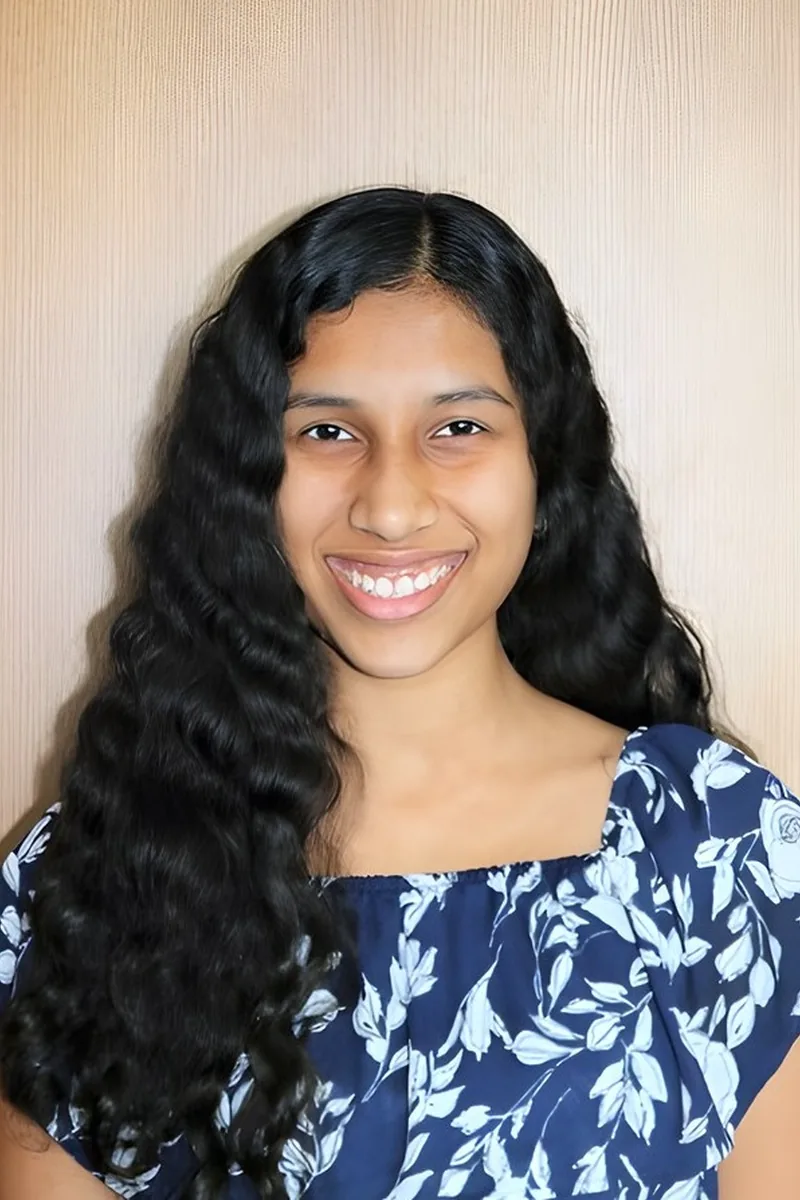
Four levels of Spanish coursework gave Amy the grammar depth and vocabulary range to tackle everything from preterite vs. imperfect distinctions to subjunctive mood triggers. She explains conjugation patterns with the same logical precision she applies to her science courses, making Spanish grammar feel like a system to master rather than a list to memorize.
Emily majored in Spanish alongside biology at Indiana University and worked for IU's Department of Spanish, so her fluency goes well beyond classroom basics. She unpacks tricky grammar concepts like the subjunctive mood and ser-versus-estar distinctions by connecting them to how native speakers actually think about the language, making rules intuitive rather than arbitrary.
Kristen is a certified Spanish-English medical interpreter, which means her Spanish goes far beyond classroom grammar drills — she uses the language under pressure in real clinical settings every day. She teaches verb conjugation, subjunctive mood, and reading comprehension by grounding them in practical usage, giving students both the structural knowledge and the confidence to actually communicate.
Payal picked up practical Spanish through her global health work in rural Guatemala, where she communicated directly with local communities and healthcare providers. She applies that real-world fluency to grammar topics like preterite vs. imperfect, subjunctive mood, and vocabulary building, making the language feel purposeful rather than like a set of conjugation drills.
Lauren speaks fluent Spanish — not classroom Spanish, but the kind built through real conversation and sustained use across all four skill levels she teaches. She digs into subjunctive mood, ser vs. estar distinctions, and idiomatic expressions that textbooks often gloss over, making the jump from translating sentences to actually thinking in Spanish.
Fluent in Spanish from years of professional use — including working with Spanish-speaking clients as a paralegal — Lauren teaches the language as a living communication tool, not a conjugation worksheet. She digs into verb moods, pronoun placement, and idiomatic expressions that textbooks often gloss over, connecting grammar rules to how native speakers actually talk.
I am a professional tutor with years of experience. I have helped students jump letter grades and improve as much as 8 composite points on the ACT and 200 points on the SAT. I have over 6 years and 1000 hours of test prep experience and over 6 years of experience tutoring math up to and including calculus, various science subjects, English, and Spanish. I like to meet all the tutoring needs of a student. This includes covering not only the academic subjects (including math, science, and language) and test prep (ACT and SAT) but also assisting with study skills and organization. I also have experience in working with students with various learning disabilities, including ADD/ADHD. I have helped students in all levels of courses, including honors and AP levels.
I am a mentor because I wish for others to have the same opportunity for motivation and success as I had from my teachers in high school. My mentoring experience has been primarily in three different areas. First, I have had direct involvement mentoring middle school students in mathematics through my local dentist's office. From there, I quickly learned that no experience is quite as unique or as rewarding as seeing a child have that light bulb moment when they finally understand a difficult problem or concept. Additionally, the lesson does not stop with just academics either. I have found that, in developing relationships with these students, I got to better understand them as people and adjust my methods accordingly. My second experience mentoring comes directly from teaching English to children of all ages in Oudong, Cambodia. Due to my limited understanding of the local language and teaching multiple levels of English at once, I was compelled to be creative to ensure all of my students understood our lessons. I developed lesson plans around the curriculum that featured games, singing, and dancing, finding alternative methods of expressing meaning to be very important in learning difficult concepts. This has had important ramifications for my style of mentoring; creativity and being able to think of ideas in different matters are useful to everyone trying to learn something new. Lastly, I have had the opportunity to extend my understanding of others in my work as a Democracy Fellow. Part of the mission of my university's Democracy and Public Discourse Initiative is to teach constructive practices of engagement and communication on topics of community concern. Through such projects as our freshman mental health conversations and our forum on substance abuse in in the county, I have learned that the best work is done on the grounds of a common understanding amongst diverse viewpoints. Ultimately, I hope to extend my training and the basic philosophy of freedom of expression as a method of making my mentees feel welcome in conversing with me.
Between serving as a Spanish AT for both introductory and conversational courses, teaching second graders weekly, and interning at a bilingual school in Spain, Anya has taught the language from nearly every angle. She leans heavily on real-world conversation to reinforce grammar concepts like ser vs. estar or preterite vs. imperfect — making the rules stick because students actually use them out loud.
Conjugation tables are easy to memorize and easy to forget — Dalton instead teaches Spanish grammar through pattern recognition, showing students how verb tenses relate to each other so that irregular forms start making sense. He covers everything from foundational topics like ser vs. estar to more advanced concepts like the subjunctive mood. His approach builds reading and writing skills alongside speaking confidence.
Having studied Spanish as part of her undergraduate degree, Elena brings both academic grammar knowledge and real conversational fluency to lessons. She digs into tricky areas like subjunctive mood triggers, ser versus estar distinctions, and preterite-imperfect contrasts — the concepts that separate intermediate learners from truly proficient speakers.
Public policy work in Washington, DC means Noel reads, writes, and communicates across cultural contexts daily — a professional habit that translates naturally into language instruction. He approaches Spanish as a communication tool first, connecting vocabulary and grammar concepts like direct object pronouns and verb tenses to practical reading and writing tasks rather than rote drills. Rated 4.9 by students.
Living and running a nonprofit in Ecuador has given Vanessa the kind of everyday Spanish fluency that classroom instruction alone can't replicate. She uses that immersion experience to teach grammar, vocabulary, and verb conjugations through real-world context — ordering food, reading local news, navigating conversations — so the language sticks instead of feeling like an abstract exercise.
Natalie minors in Spanish at Penn and has studied through advanced-level coursework, giving her a strong command of grammar, verb tenses, and conversational fluency. She tackles tricky concepts like the subjunctive mood and ser-versus-estar distinctions by connecting them to patterns students already recognize in English. Her approach keeps vocabulary and grammar practice grounded in real usage rather than rote conjugation charts.
Conjugation tables only get you so far — Ian builds Spanish skills by connecting grammar rules to actual usage patterns so students can construct sentences on the fly, not just recognize them on a worksheet. He's comfortable covering everything from foundational Spanish 1 vocabulary through the more complex subjunctive and preterite-vs-imperfect distinctions in Spanish 3. His structured, patient approach keeps the material from feeling overwhelming.
Simon teaches Spanish across four levels, from foundational conjugation patterns in the present tense to navigating subjunctive mood and complex reading passages at the advanced level. His approach treats grammar as a logical system — once a student sees why irregular preterite verbs follow certain patterns, retention improves dramatically.
Richard has studied Spanish through the SAT Subject Tests — including the Listening exam — and tutored high school students in the language before college. He tackles grammar structures like the subjunctive and preterite-vs-imperfect distinctions by connecting them to patterns rather than rote conjugation charts, making the rules easier to internalize.
Jane tutors Spanish 1 and 2 students on the grammar fundamentals that trip most English speakers up — ser versus estar, preterite versus imperfect, and pronoun placement in different sentence structures. Her analytical approach to language, sharpened by studying English at Princeton, gives her a knack for explaining why Spanish grammar rules work the way they do rather than just listing them.
Having studied Spanish formally at Columbia University and earned a degree in the subject, Molly approaches the language through both grammar mechanics and real-world usage. Whether a student is working through verb conjugation patterns, navigating subjunctive mood, or building reading comprehension skills, she connects each concept to practical communication so the rules actually stick.
Though French is Daniel's primary language specialty, his experience with Romance language grammar gives him a practical framework for teaching Spanish fundamentals like ser vs. estar, preterite vs. imperfect, and pronoun placement. He approaches Spanish 1-level concepts by drawing parallels between the two languages, which accelerates pattern recognition for students.
Lisa teaches Spanish with an emphasis on building grammar systematically — verb conjugations across tenses, pronoun placement, ser versus estar — so that students can construct sentences on their own rather than translating word-by-word from English. She covers Spanish 1 through Spanish 2 material and tailors sessions to whether a student needs help with classroom assignments, conversational fluency, or exam prep. Her background in anthropology also brings cultural context into language learning, which makes vocabulary and idiomatic expressions easier to retain.
Testimonials
Because the right Spanish tutor makes all the difference.
Average Session Rating – Based on 3.4M Learner Ratings
Nearby Spanish Tutors
Other South Bend Tutors
Related Languages Tutors in South Bend
Frequently Asked Questions
Varsity Tutors matches South Bend students with expert Spanish tutors for 1-on-1 instruction. We pair each student with a tutor based on their specific needs, learning style, and goals.
Whether you need homework help, exam prep, or want to get ahead, our Spanish tutors are ready to help.
Common challenges include gaps from earlier material, difficulty with specific concepts, and trouble applying learning to new problems. These issues can snowball quickly in Spanish.
A tutor identifies where you're stuck, fills in gaps, and provides targeted practice. The 1-on-1 format means you get help exactly where you need it.
Tutors work with your student's actual coursework—homework assignments, class notes, and upcoming tests. This keeps tutoring directly relevant to what's happening in the classroom.
When you share information about your student's school and curriculum, we can match you with a tutor who has relevant experience.
All tutors complete background checks, credential verification, and teaching evaluation. Many of our Spanish tutors hold advanced degrees or have years of teaching experience.
You can review tutor profiles to find someone with the right background for your student's level and needs.
Many students see improved grades within a few weeks, along with better understanding of Spanish concepts and more confidence tackling challenging material.
Tutors track progress and adjust their approach to ensure continued improvement.
Most students benefit from 1-2 sessions per week. More frequent sessions help if your student is significantly behind or has an important exam coming up.
Your tutor can recommend a schedule based on your student's specific situation and goals.
Tutoring is purchased in packages of hours, with rates varying by tutor experience. Varsity Tutors offers several options to fit different budgets and needs.
You can discuss pricing during your consultation to find what works best.
Your tutor will assess where your student is, discuss goals, and start working on priority areas. Most students bring current homework or upcoming test material to focus on.
By the end, you'll have a clear sense of how the tutor can help and a plan for moving forward.
Let’s find your perfect tutor
Answer a few quick questions. We’ll recommend the right plan and match you with a top 5% tutor.