Award-Winning AP Human Geography Tutors
serving Rockford, IL
AP Human Geography
Tutors in Rockford
Private 1-on-1 tutoring, weekly live classes for academic support, test prep & enrichment, practice tests and diagnostics, and more to elevate grades and test scores.
Based on 3.4M Learner Ratings
UniversitiesSchools & Universities
DeliveredHours Delivered
ProficiencyGrowth in Proficiency
Who needs tutoring?
No obligation. Takes ~1 minute.

Todd's biology degree from UIUC and social work graduate training at UChicago give him an unusual combination for AP Human Geography — he understands population dynamics and environmental systems scientifically, and he thinks about migration, urbanization, and cultural change through a social sciences lens. That crossover is especially useful when students need to unpack how the demographic transition model or Malthusian theory connects biological resource constraints to human settlement patterns. Rated 5.0 by students.
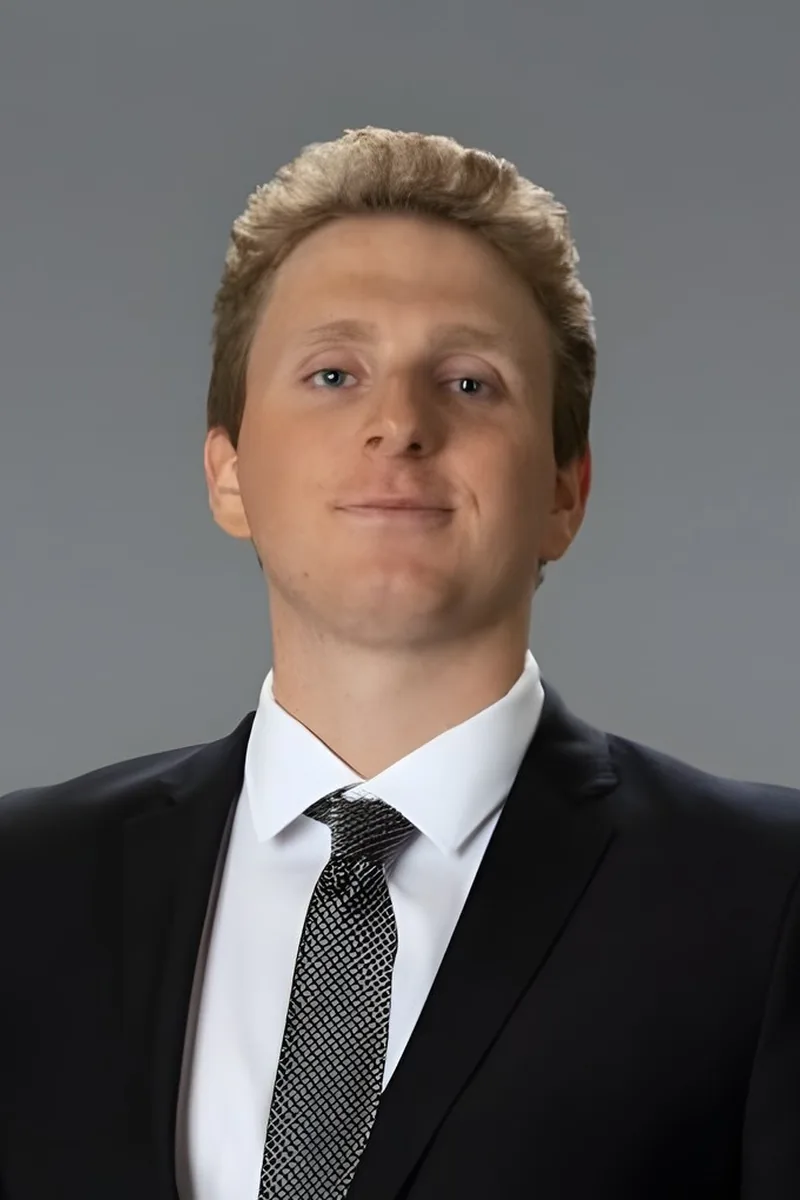
Economics and finance training at Notre Dame means Benjamin already thinks in the spatial and systems-level frameworks AP Human Geography demands — trade networks, development models like Rostow's stages, and how economic forces reshape urban and agricultural landscapes. He's especially useful for students who struggle to connect the course's vocabulary to the data-interpretation and stimulus-based questions on the exam. Holds a 5.0 rating.
Twelve AP classes and a math-focused mind at UChicago mean Felix approaches AP Human Geography's models — things like the von Thünen agricultural model or gravity model — with the quantitative intuition most social studies tutors lack. He's sharp at teaching students to decode the exam's data-heavy stimulus questions, reading population pyramids and development indicators with precision rather than guesswork. Rated 5.0 by students.
Population pyramids, Ravenstein's laws of migration, and the Wallerstein world-systems model can feel abstract until someone ties them to actual places and patterns. Kshitij approaches AP Human Geography by grounding each model in concrete examples — why Rostow's stages look different in Sub-Saharan Africa versus East Asia, or how gerrymandering reshapes political boundaries. That real-world anchoring makes the free-response questions far less intimidating on exam day.
Christopher's PhD in History of American Civilization from Harvard — where he studied how political power, migration, and cultural identity reshaped the American landscape — maps almost perfectly onto AP Human Geography's core units on political organization, population dynamics, and cultural patterns. He treats concepts like Ratzel's organic state theory or Ravenstein's migration laws as historical arguments rather than flashcard fodder, grounding each model in the real civilizational shifts that produced it. His additional Yale training in religious and intellectual history adds unusual depth to Unit 3's coverage of cultural hearths, language diffusion, and religious landscapes.
Steve's English and Global Studies degree means he spent years analyzing how language, culture, and political systems interact across borders — the kind of cross-regional thinking that AP Human Geography rewards on every FRQ. He's particularly strong at teaching students to write clear, argument-driven responses for units on political organization and cultural patterns, where connecting vocabulary to real-world processes matters more than memorizing definitions. Rated 4.6 by students.
Population pyramids, the Demographic Transition Model, spatial diffusion — AP Human Geography throws a lot of vocabulary at students and expects them to apply it to real-world scenarios on the FRQs. Liraz teaches students to think geographically, connecting concepts like urbanization patterns and cultural landscapes to places they already know about.
Yale's History of Science, Medicine, and Public Health program immerses Stephanie in exactly the kind of cross-regional analysis AP Human Geography rewards — tracing how disease, technology, and institutional power reshape populations and landscapes across time. She applies that training to units on population dynamics, political organization, and development models, unpacking concepts like the epidemiological transition or supranational governance with real case studies rather than textbook definitions. Rated 5.0 by students.
Courtney's French Language and Literature degree means she spent years studying how language, colonialism, and cultural identity intersect across Francophone regions — from West Africa to the Caribbean to Quebec — which maps neatly onto AP Human Geography's units on cultural diffusion, political boundaries, and language patterns. As a freelance writer, she also brings practical clarity to FRQ responses, teaching students to construct tight geographic arguments instead of listing vocabulary. Rated 5.0 by students.
Few tutors bring a more natural fit to AP Human Geography than someone trained in social anthropology at Harvard. Jorge digs into the spatial patterns behind migration, urbanization, and cultural diffusion with the same analytical lens he used studying human communities academically. He teaches students to think like geographers — reading landscapes, interpreting demographic models, and building arguments with data.
Spatial thinking trips up a lot of AP Human Geography students — understanding why cities develop where they do, how migration reshapes cultural landscapes, or what Ravenstein's laws actually predict. Amena tackles the free-response questions by teaching students to link geographic models to real-world examples, which is where most exam points are won or lost.
I am very interested in a career in the medical field, so I am apart of some pre-medical organizations. I really enjoy playing all different sports, from soccer to volleyball to tennis.
Spatial patterns, demographic models, and the way human activity reshapes landscapes — AP Human Geography covers a surprising amount of ground. Muse connects abstract concepts like Ravenstein's migration laws or the Von Thünen model to real-world examples, making the material stick for both multiple-choice and free-response sections of the exam.
Mechanical engineering at Purdue trains Austin to think in systems — how inputs, constraints, and feedback loops shape outcomes — which is exactly how AP Human Geography expects students to reason about topics like industrial development, agricultural land use, and urban planning models. He draws on his broader history background (he also tutors AP US History and AP European History) to ground abstract geographic concepts in the real political and economic forces behind them. Rated 4.9 by students.
Elena's Child Development studies at Vanderbilt give her a sharp understanding of how population dynamics, family structures, and cultural practices vary across regions — concepts that map directly onto AP Human Geography units covering population, migration, and cultural patterns. She pairs that with strong SAT performance (1540) and a knack for teaching younger students complex ideas in accessible ways, which translates well to breaking down dense models like the demographic transition or Zelinsky's migration framework for exam prep. Rated 5.0 by students.
The IB program's interdisciplinary structure — connecting science, politics, and cultural analysis across a global curriculum — mirrors exactly how AP Human Geography asks students to think about spatial patterns and human decision-making. Rithika draws on that IB training and her Science, Technology, and Society coursework to unpack how technological change drives urbanization, agricultural shifts, and industrial development across Units 5 through 7. She's especially sharp at helping students see connections between models rather than treating each unit as a separate vocabulary list.
Jenna's AP background spans multiple disciplines — AP English, AP Calculus, AP Environmental Science, AP U.S. Government — which means she's familiar with the cross-subject thinking AP Human Geography actually rewards, where a single question might pull from economics, politics, and environmental science simultaneously. She's particularly sharp at helping students decode the exam's multiple-choice stimulus materials, drawing on the same analytical reading skills that earned her a 1400 SAT and 31 ACT. Rated 4.9 by students.
Testimonials
Because the right AP Human Geography tutor makes all the difference.
Average Session Rating – Based on 3.4M Learner Ratings
Practice AP Human Geography
Free practice tests, flashcards, and AI tutoring for AP Human Geography
Nearby AP Human Geography Tutors
Other Rockford Tutors
Related Social Studies Tutors in Rockford
Frequently Asked Questions
Varsity Tutors matches Rockford students with expert AP Human Geography tutors for 1-on-1 instruction. We pair each student with a tutor based on their specific needs, learning style, and goals.
Whether you need homework help, exam prep, or want to get ahead, our AP Human Geography tutors are ready to help.
Common challenges include gaps from earlier material, difficulty with specific concepts, and trouble applying learning to new problems. These issues can snowball quickly in AP Human Geography.
A tutor identifies where you're stuck, fills in gaps, and provides targeted practice. The 1-on-1 format means you get help exactly where you need it.
Tutors work with your student's actual coursework—homework assignments, class notes, and upcoming tests. This keeps tutoring directly relevant to what's happening in the classroom.
When you share information about your student's school and curriculum, we can match you with a tutor who has relevant experience.
All tutors complete background checks, credential verification, and teaching evaluation. Many of our AP Human Geography tutors hold advanced degrees or have years of teaching experience.
You can review tutor profiles to find someone with the right background for your student's level and needs.
Many students see improved grades within a few weeks, along with better understanding of AP Human Geography concepts and more confidence tackling challenging material.
Tutors track progress and adjust their approach to ensure continued improvement.
Most students benefit from 1-2 sessions per week. More frequent sessions help if your student is significantly behind or has an important exam coming up.
Your tutor can recommend a schedule based on your student's specific situation and goals.
Tutoring is purchased in packages of hours, with rates varying by tutor experience. Varsity Tutors offers several options to fit different budgets and needs.
You can discuss pricing during your consultation to find what works best.
Your tutor will assess where your student is, discuss goals, and start working on priority areas. Most students bring current homework or upcoming test material to focus on.
By the end, you'll have a clear sense of how the tutor can help and a plan for moving forward.
Let’s find your perfect tutor
Answer a few quick questions. We’ll recommend the right plan and match you with a top 5% tutor.