Award-Winning IB Chemistry Tutors
serving Tallahassee, FL
IB Chemistry
Tutors in Tallahassee
Private 1-on-1 tutoring, weekly live classes for academic support, test prep & enrichment, practice tests and diagnostics, and more to elevate grades and test scores.
Based on 3.4M Learner Ratings
UniversitiesSchools & Universities
DeliveredHours Delivered
ProficiencyGrowth in Proficiency
Who needs tutoring?
No obligation. Takes ~1 minute.
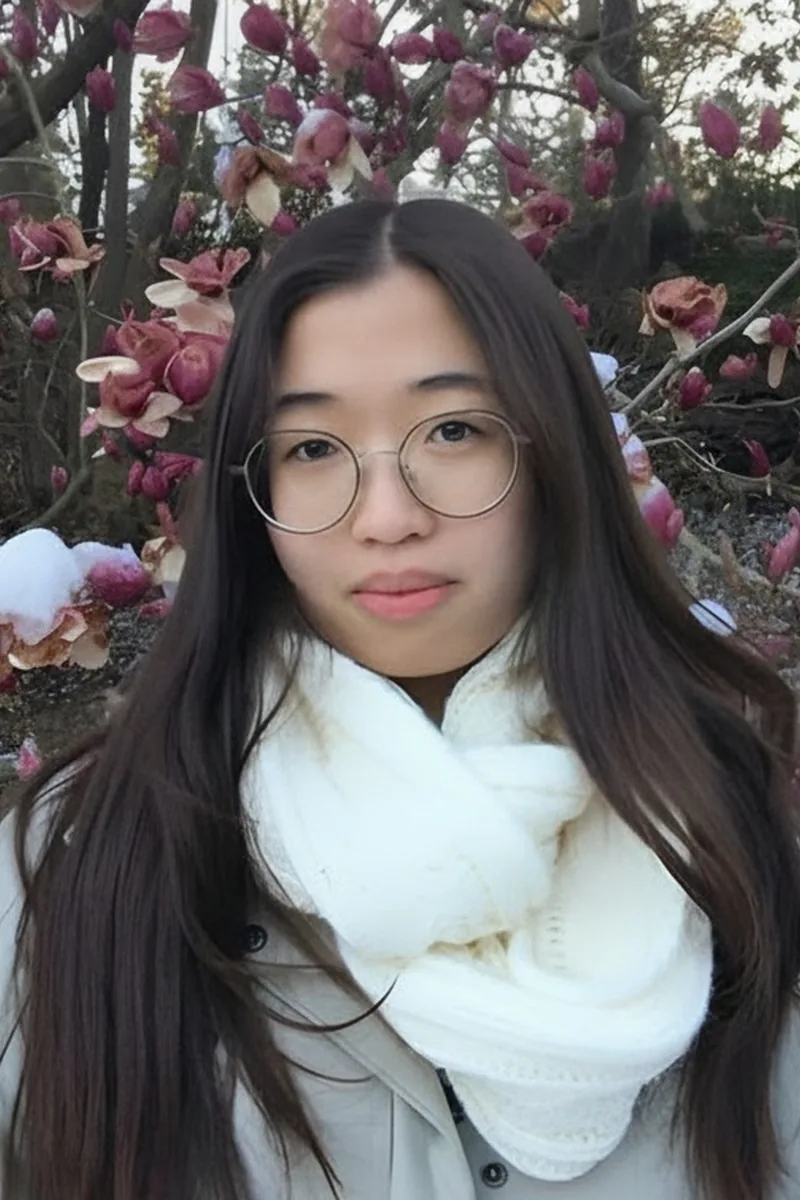
Neuroscience at Duke means Michelle spends her coursework deep in the chemistry that underpins biological systems — reaction kinetics, thermodynamics, and the molecular interactions that IB Chemistry tests heavily at both SL and HL. She brings that applied perspective to topics like equilibrium and energetics, connecting abstract calculations to the biological contexts that make them easier to internalize. Rated 5.0 by students.
Periodic trends, VSEPR theory, redox reactions — IB Chemistry covers an enormous range, and Emerson treats each topic as a building block for the next rather than an isolated unit to memorize. He completed IB coursework himself and understands how the program's internal assessments and exam papers reward conceptual depth over rote recall. His biology and psychology double major at UChicago reinforces the chemical foundations he teaches.
IB Chemistry's internal assessment alone can make or break a final grade, and the HL content on energetics, equilibrium, and redox demands precise quantitative reasoning. Juan's strength here comes from his statistics and engineering math training — he's comfortable with the calculations behind Hess's law, electrode potentials, and rate-order analysis. He approaches each topic by tying the math to the chemistry so neither half feels disconnected.
As a medical student with a biology degree, Kaitlyn has worked through the full chemistry sequence that IB Chemistry draws from — and she knows which concepts, like stoichiometry and acid-base equilibria, need to be second nature before the SL or HL exam hits. She tackles the quantitative side by connecting calculations to the biological systems she studies daily, which makes abstract formulas feel less like busywork and more like tools with a purpose. Rated 4.8 by students.
IB Chemistry's depth — particularly in energetics, equilibrium, and organic chemistry — demands more than surface-level memorization, and Rick has taught exactly these topics as a Supplemental Instruction leader for General and Organic Chemistry at UCF. He knows the IB exam's data-based question format rewards students who can interpret experimental results quickly and reason through unfamiliar scenarios. His structured, step-by-step teaching style is well-suited to the rigor IB expects.
IB Chemistry's internal assessment alone can feel overwhelming before students even get to the thermodynamics and kinetics on the exam. Priya tackles both sides — she teaches the conceptual depth IB expects on topics like enthalpy cycles and redox electrochemistry while also coaching students through designing and writing up their experimental investigations. Her 4.8 rating speaks to that dual approach.
IB Chemistry's internal assessment alone can make or break a final score, and the jump from stoichiometry to thermodynamics to organic chemistry requires more than rote memorization. Rithika completed the full IB Diploma program herself and tackles each topic by breaking down the underlying logic — why equilibrium shifts, how electron configurations predict reactivity — so the exam's data-response questions feel manageable rather than overwhelming.
IB Chemistry's internal assessments and multi-step equilibrium problems trip up even strong science students, especially at Higher Level. Daniel studied chemistry at the U.S. Naval Academy and has tutored the subject since 2017, so he knows how to walk through thermodynamics calculations, redox balancing, and the data-analysis style IB examiners reward. His structured approach to lab report writing and exam technique keeps the workload from feeling overwhelming.
Going through the full IB programme from middle school through diploma gave Maria firsthand experience with the curriculum's unique demands — the way IB Chemistry weaves together stoichiometry, bonding theory, and redox into layered exam questions that test understanding, not just recall. She unpacks multi-part problems by isolating each concept so students can see exactly where their reasoning needs tightening. Her biological sciences degree also means she naturally connects chemical principles to biochemical applications students encounter in other IB courses.
IB Chemistry's internal assessment alone can feel overwhelming before you even get to stoichiometry, equilibrium, or thermochemistry on the exam. Alec studied chemistry as a minor at the University of Miami, so he can unpack everything from periodicity trends to organic reaction pathways at the depth IB expects. He also teaches structured approaches to data-based questions that tend to trip students up on Papers 2 and 3.
I am a law student, but I took an unusual route to get there. I used to attend medical school but had a change of heart in my career path. Part of this was due to my political science major (double major with biology) in college as well as a number of Spanish and other courses that I took. Tutoring is something, I feel, that has come naturally to me, even back to my high school days. My goal is to help you learn as much as you can and reach your true potential. I will work hard to make sure that this happens, as long as you put in the work, too! We will work together to tailor your learning experience to your needs.
Nicholas's PhD work in genetics required heavy coursework in physical chemistry and biochemistry, which means the thermodynamic and kinetic principles underlying IB Chemistry's HL topics — energetics, equilibrium, and reaction rates — are concepts he's applied in actual research contexts. He also teaches biostatistics and quantitative reasoning, so when IB questions demand interpreting experimental data or working through multi-step calculations, he can walk through the logic behind each number rather than just the procedure. Rated 4.8 by students.
IB Chemistry's internal assessment alone can overwhelm students before they even get to equilibrium constants or redox titrations. Evan approaches the course by tying abstract chemical principles back to real-world systems — how bonding governs material properties, how thermodynamics predicts what actually happens in a reaction. His science background across biology, chemistry, and engineering means he can pull examples from multiple fields to make tough concepts land.
A physics degree builds the kind of quantitative instinct that translates directly to IB Chemistry's toughest areas — energetics calculations, kinetics rate expressions, and the mathematical modeling behind equilibrium constants. Payal uses that foundation to break down problems where the math and the chemistry intersect, which is exactly where most IB students lose marks. Rated 5.0 by students.
I am also very patient and persistent. I put a great effort into explaining concepts until they are well understood.
I am a student at the Georgia Institute of Technology studying Chemical Engineering. For the past several years, I have worked with students extensively. Through hosting events for younger kids to learn about STEM and for older teens to practice empathetic design, I know the importance of teaching students in ways that engage them rather than frustrate them, which I apply to my teaching. I have tutored high school students in a drop-in resource center in various subjects including math of all levels, chemistry, and English, making me adequately equipped in a variety of topics. I have also tutored several students long-term. Establishing relationships with students and exploring their unique learning styles is my favorite part of tutoring. I prioritize helping students discover HOW to learn in a manner that is the most effective for them, so they can begin to use those skills on their own throughout their education. Learning is a lifelong skill that requires practice for improvement; I strive to help my students gain confidence in their ability to learn.
Completing the full IB diploma herself — with Chemistry at higher level — means Brittany knows the program from the inside: the IA expectations, the Paper 2 pacing, and the specific way examiners want multi-step answers structured. Her chemistry and environmental science degree at UVA deepened that foundation, particularly in areas like stoichiometry, atomic theory, and the data-response questions where students often lose marks by skipping logical steps. Rated 5.0 by students.
Completing premed requirements at UPenn meant Jessi spent serious time with general and organic chemistry — the same foundational concepts that IB Chemistry tests through stoichiometry, bonding theory, and energetics. She approaches IB-specific challenges like Paper 3 options and internal assessments with firsthand knowledge of the program's structure from her own IB diploma. Students get someone who can connect abstract chemical principles to the exact way IB examiners phrase their questions.
Earth and environmental engineering at Columbia means Shin works daily with the chemistry that governs real systems — thermodynamics driving energy cycles, equilibrium in geochemical reactions, redox processes in water treatment — all of which map directly onto IB Chemistry's most point-heavy HL topics. That applied engineering lens gives him a way to make abstract concepts like enthalpy changes and Le Chatelier's principle feel concrete, which is exactly the kind of contextual understanding IB Paper 2 rewards. Rated 5.0 by students.
IB Chemistry's higher-level topics — energetics, equilibrium, redox — demand the kind of quantitative reasoning Brian sharpened through his Caltech science and engineering training. He approaches the IB curriculum by connecting chemical concepts to their underlying math, so students can tackle both the structured problems and the data-analysis questions the IB loves to include.
Between a biochemistry degree and a Ph.D. in environmental science, Karista has worked through chemistry at every level — from general stoichiometry and bonding up through the kinetics and thermodynamic modeling that IB HL leans on hardest. She's also taught undergraduate biology, genetics, and molecular biology labs, so she's used to translating dense quantitative material into something students can actually reason through on exam day. Rated 5.0 by students.
Having TA'd general chemistry at Cornell and taught genetics through applied problem-solving, Alec knows how to bridge the gap between memorizing content and actually using it under exam conditions — which is exactly what IB Chemistry's Paper 2 and Paper 3 demand. His genetics and genomics focus gives him a natural edge on the Biochemistry option and HL topics where organic structures and biological context overlap. Rated 4.8 by students.
Eric holds a master's in inorganic chemistry, which means topics like periodicity, bonding models, and transition metal chemistry — areas that trip up many IB students — are squarely in his wheelhouse. He teaches the underlying "why" behind trends and reactions so that when an IB Paper 2 question asks students to "explain" rather than "state," they can construct answers that actually earn full marks. Rated 5.0 by students.
The IB Chemistry syllabus packs in everything from stoichiometry and equilibrium to organic reaction pathways, and the exam expects students to move fluidly between calculation and conceptual explanation. Lloyd tutors the quantitative side of chemistry — enthalpy cycles, rate expressions, pH calculations — with the mathematical confidence that comes from his data science coursework at Rochester.
IB Chemistry's internal assessment and data-analysis questions demand more than content knowledge — they require scientific reasoning and clear written explanations. Fay digs into both the conceptual side (energetics, bonding, redox) and the practical skills like error analysis and graph interpretation that IB examiners specifically look for in HL and SL responses.
Lab work at Columbia has Matthew performing titrations, analyzing reaction yields, and troubleshooting chemical protocols on a regular basis — exactly the kind of applied chemistry knowledge that strengthens IB exam performance. He digs into stoichiometry, periodicity, and organic chemistry with an emphasis on understanding why reactions behave the way they do, which makes IA lab reports and data-analysis questions far more manageable.
Tackling IB Chemistry — whether SL or HL — requires juggling quantitative problem-solving with conceptual essay writing, and many students are strong at one but struggle with the other. Jared's science training at Cornell covered general, organic, and biochemistry in depth, so he can unpack everything from enthalpy calculations to periodicity trends. He also knows how IB mark schemes reward specific language, and he coaches students to write answers that earn full credit.
Testimonials
Because the right IB Chemistry tutor makes all the difference.
Average Session Rating – Based on 3.4M Learner Ratings
Nearby IB Chemistry Tutors
Other Tallahassee Tutors
Related Science Tutors in Tallahassee
Frequently Asked Questions
Varsity Tutors matches Tallahassee students with expert IB Chemistry tutors for 1-on-1 instruction. We pair each student with a tutor based on their specific needs, learning style, and goals.
Whether you need homework help, exam prep, or want to get ahead, our IB Chemistry tutors are ready to help.
Common challenges include gaps from earlier material, difficulty with specific concepts, and trouble applying learning to new problems. These issues can snowball quickly in IB Chemistry.
A tutor identifies where you're stuck, fills in gaps, and provides targeted practice. The 1-on-1 format means you get help exactly where you need it.
Tutors work with your student's actual coursework—homework assignments, class notes, and upcoming tests. This keeps tutoring directly relevant to what's happening in the classroom.
When you share information about your student's school and curriculum, we can match you with a tutor who has relevant experience.
All tutors complete background checks, credential verification, and teaching evaluation. Many of our IB Chemistry tutors hold advanced degrees or have years of teaching experience.
You can review tutor profiles to find someone with the right background for your student's level and needs.
Many students see improved grades within a few weeks, along with better understanding of IB Chemistry concepts and more confidence tackling challenging material.
Tutors track progress and adjust their approach to ensure continued improvement.
Most students benefit from 1-2 sessions per week. More frequent sessions help if your student is significantly behind or has an important exam coming up.
Your tutor can recommend a schedule based on your student's specific situation and goals.
Tutoring is purchased in packages of hours, with rates varying by tutor experience. Varsity Tutors offers several options to fit different budgets and needs.
You can discuss pricing during your consultation to find what works best.
Your tutor will assess where your student is, discuss goals, and start working on priority areas. Most students bring current homework or upcoming test material to focus on.
By the end, you'll have a clear sense of how the tutor can help and a plan for moving forward.
Let’s find your perfect tutor
Answer a few quick questions. We’ll recommend the right plan and match you with a top 5% tutor.