Award-Winning Elementary Math Tutors
serving Hialeah, FL
Elementary Math
Tutors in Hialeah
Private 1-on-1 tutoring, weekly live classes for academic support, test prep & enrichment, practice tests and diagnostics, and more to elevate grades and test scores.
Based on 3.4M Learner Ratings
UniversitiesSchools & Universities
DeliveredHours Delivered
ProficiencyGrowth in Proficiency
Who needs tutoring?
No obligation. Takes ~1 minute.

Getting multiplication tables, place value, and basic fractions right early on shapes how a student handles every math class that follows. David zeroes in on building number sense through hands-on problem solving so that arithmetic feels logical, not just memorized. His patient, step-by-step approach keeps younger learners engaged and confident.
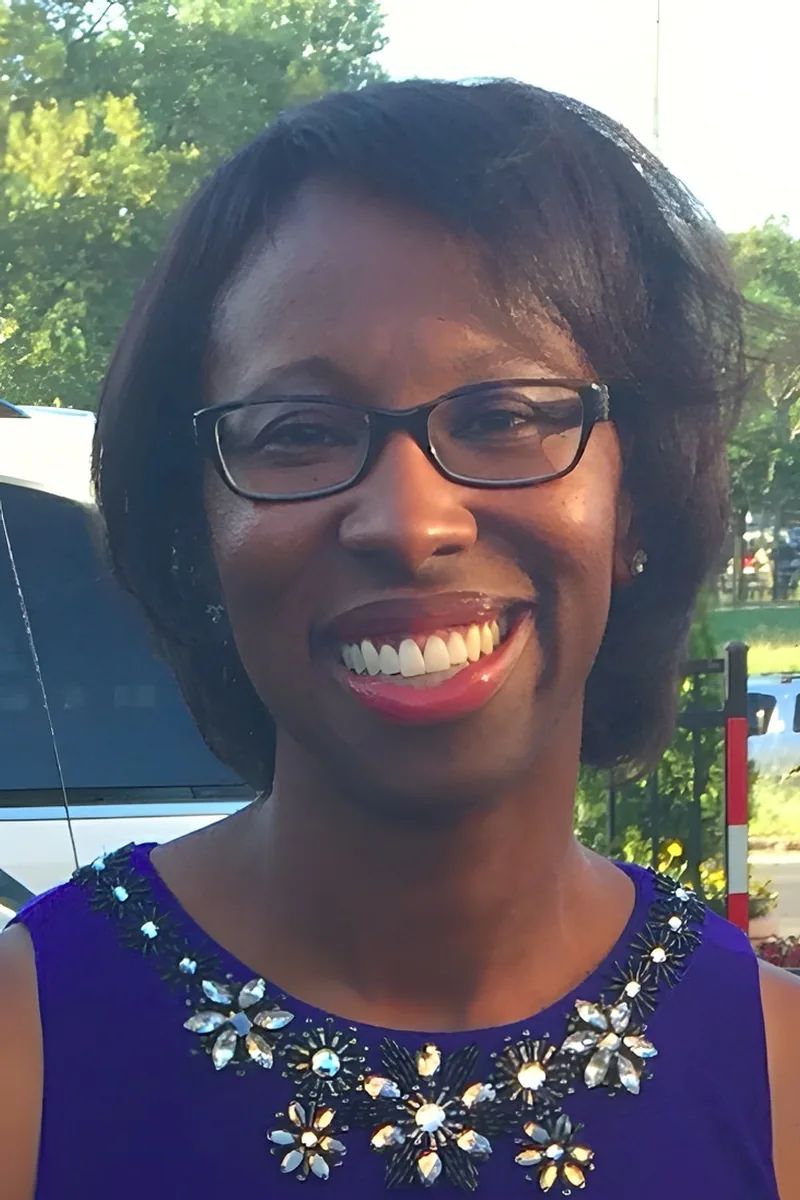
Building number sense early — understanding place value, basic fractions, and what multiplication actually means — shapes how a child thinks about math for years. Shellee makes these concepts tangible through games, real-world scenarios, and plenty of patience. Her 5.0 rating speaks to how well she connects with younger learners while keeping lessons structured and productive.
Building number sense early changes everything about how a student handles math later on. Paulkey tackles place value, basic multiplication strategies, and word problem comprehension by turning abstract ideas into concrete, repeatable steps. His years of classroom teaching across elementary grade levels give him a sharp eye for when a student is memorizing procedures without actually understanding them.
Getting multiplication facts, place value, and basic fractions right at this stage matters more than most people realize — these are the building blocks everything else sits on. Mariam makes these early concepts tangible and intuitive, using visual strategies and real-world examples that stick. Her own experience learning in a completely new language as a young student gives her genuine patience with kids who need a different way in.
Fractions, long division, and place value aren't just procedures to memorize — they're the building blocks every future math course depends on. Andrew excels at turning these topics into something tangible, using real-world scenarios like measuring ingredients or splitting groups to anchor the concepts. His patient, plain-language teaching style keeps younger learners engaged instead of frustrated.
Early math concepts like place value, fractions, and basic multiplication form the scaffolding for everything that comes later — and Benjamin treats them with the same rigor he brought to his graduate research. His two math degrees from Iowa State and the University of Essex mean he understands exactly where each elementary concept is headed, so he teaches it in a way that builds real number sense rather than rote counting.
Getting a young learner comfortable with multiplication strategies, place value, or basic fractions requires someone who genuinely enjoys working at that level. Emerson has tutored elementary-age students in multiple settings — from a volunteer learning center to private one-on-one sessions — and brings a calm, encouraging approach that builds number sense and confidence together.
Building number sense early matters more than speed with flash cards. Muriel teaches young learners to understand place value, basic operations, and simple fractions through concrete examples and hands-on reasoning. Her years of experience working with elementary-age students give her a clear sense of how to make abstract math ideas tangible.
Building number sense early makes every future math class easier, and that's exactly what Adam zeroes in on — place value, basic operations, fractions, and the reasoning behind carrying and borrowing. He explains these concepts using concrete language shaped by his training in linguistics, which makes abstract ideas accessible to younger learners. His patience with foundational skills means students walk away confident, not confused.
Early math confidence matters more than most people realize, and Marina zeroes in on the conceptual gaps that slow kids down — place value, basic multiplication facts, or understanding what a word problem is actually asking. Her state teaching certification and experience across multiple grade levels mean she adapts quickly to each child's learning style.
Fractions, place value, and multi-digit multiplication can feel like a maze of rules if a student doesn't understand the logic behind them. Kelsey breaks these concepts down using real-world examples that tap into a kid's natural curiosity — exactly the approach she developed while volunteering with younger students. Her 34 ACT composite reflects the kind of mathematical fluency she brings even to foundational topics.
Early math is all about building number sense — understanding what multiplication actually means, why borrowing works in subtraction, and how fractions relate to division. Jessica's year working directly in a school environment taught her how to read when a young learner is confused but not saying so, and she adjusts her explanations on the fly to match how each child thinks.
Fractions, long division, and place value can feel like arbitrary rules if nobody explains the logic underneath them. Jairo takes a patient, step-by-step approach that turns these foundational skills into something that actually clicks, giving younger learners the number sense they'll rely on for years.
Building number sense early — understanding place value, regrouping in subtraction, or seeing why multiplication is repeated addition — sets up everything that comes later. Zachary's training in linguistics makes him especially attentive to how kids interpret math vocabulary, which is often where confusion hides. He turns tricky word problems into conversations that make the underlying math obvious.
Early math is about building number sense — understanding that 47 is four tens and seven ones, or that multiplication is really repeated grouping. Joscelyn uses hands-on strategies like base-ten blocks and simple visual models to make these ideas tangible, giving young learners the kind of deep understanding that pays off for years.
Getting multiplication facts and place value right in elementary school shapes how a student handles every math class that follows. Brittany uses structured practice and creative problem-solving activities to make concepts like regrouping, basic fractions, and word problems feel approachable rather than intimidating.
Teaching a second grader to regroup in subtraction requires a completely different explanation than teaching a fifth grader long division — and Jiwen gets that distinction. Her work with elementary-age students at the Tufts Literacy Corps and Tufts Community Music Program taught her how to read a young learner's confusion and adjust on the spot. She pairs that instinct with formal training in education from Harvard.
Getting multiplication tables, fractions, and place value right at the elementary level shapes how a student thinks about math for years. Melissa uses creative, multi-step approaches — visual models, real-world scenarios like measuring fabric or splitting recipes — that make number sense intuitive rather than rote. Her 5.0 client rating speaks to how well this clicks with younger learners.
Multiplication tables, long division, and fractions form the scaffolding for every math class that comes later, so getting them right early matters. Jake approaches elementary math by building number sense — not just drilling procedures but making sure a student understands why borrowing works in subtraction or what a fraction actually represents. His patience with complex material at the college level carries over to making young learners feel confident with the basics.
Aqsa turns early math concepts like place value, basic multiplication, and fractions into something tangible by using everyday examples kids can actually picture. Her experience coaching and mentoring younger learners means she knows how to keep sessions patient and encouraging while still pushing toward real progress.
Building number sense early — understanding place value, basic operations, and how to reason through word problems — sets the trajectory for everything that comes after in math. Mary treats elementary math as a chance to make young learners feel confident with numbers rather than anxious about them. Her 5.0 rating speaks to an approach that keeps sessions engaging while making sure core skills stick.
Getting multiplication facts, place value, and basic fractions right early on shapes how a child feels about math for years. Rachel teaches these foundational concepts through structured practice that builds genuine number sense, not just rote memorization. Her experience across elementary subjects means she knows how to keep younger learners engaged and confident.
Building number sense early — understanding place value, basic multiplication facts, and simple fractions — sets up everything that comes later in math. Nicole studied child development as part of her Children's Studies minor at Washington University, so she knows how to match explanations to the way younger learners actually process new ideas. She uses concrete examples and visual models to make abstract concepts click.
Teaching elementary school every day near Boston means Emily isn't guessing about how young learners think about place value, fractions, or multi-digit multiplication — she watches it happen in real time. She uses multiple representations (number lines, area models, manipulatives) to find the approach that makes a concept stick for each child.
Running a writing program for elementary students and teaching Algebra I at a community center gave Katherine a clear picture of how kids at different stages relate to numbers — and where confusion tends to start. She zeroes in on the mental models behind addition, subtraction, and early multiplication so that a student's grasp of arithmetic actually holds up when problems get harder.
Victoria taught first, second, and third graders for three years through Teach for America, building lessons around place value, basic operations, and early problem-solving every single day. That classroom experience — not just tutoring, but full-time teaching — means she knows how young learners develop number sense and where common misconceptions around regrouping or fractions tend to take root.
Abby tutored elementary students in math before finishing her Education Studies degree at Brown, so she knows that a second grader struggling with place value and a fourth grader stuck on fractions need very different approaches. She uses visual models and hands-on strategies — number lines, arrays, fraction bars — to make arithmetic click. Her background in teaching visual art also gives her a knack for making lessons feel creative rather than repetitive.
Place value, basic fractions, and multi-digit multiplication all click faster when a student understands *why* the steps work, not just what to do next. Kenan breaks these building-block concepts into visual, concrete explanations that give younger learners real number sense they can carry forward.
Multiplication tables, basic fractions, and place value aren't just rote skills — they're the building blocks that determine how a student handles every math class that follows. Jean teaches elementary math by making these foundational concepts tangible, using step-by-step problem solving that gives young learners genuine confidence with numbers.
I am an Atlanta native. I hold an undergraduate degree in Business from Tennessee State University and graduated degree in Education from Cambridge College. I am a Georgia and Texas certified teacher. I have always enjoyed working with kids. I have taught kindergarten, first, second and fourth grade. I am a hard-worker, team player and passionate about my students succeeding in whatever they set their minds too. I currently hold endorsements in K-5 Mathematics, Teacher Support Specialist, and ESOL (English for Speakers of Other Languages). I am able to provide instruction that meets the needs of all students. I have the ability to differentiate instruction so that I cater to all learning styles and levels.
Building number sense early — really understanding place value, basic operations, and how fractions relate to division — changes a student's entire math trajectory. Vania has tutored across every level from elementary through college at MIT, so she knows where young learners' misconceptions tend to hide and how to address them before they compound. She makes math feel like a puzzle worth solving, not a chore.
Multiplication strategies, place value, and early fraction concepts all click faster when a student understands the 'why' behind each step. Jessi's psychology background gives her insight into how younger learners process new information, and she uses that to tailor explanations — whether a kid needs manipulatives, drawings, or word-problem storytelling to make a concept stick.
Testimonials
Because the right Elementary Math tutor makes all the difference.
Average Session Rating – Based on 3.4M Learner Ratings
Nearby Elementary Math Tutors
Other Hialeah Tutors
Related Math Tutors in Hialeah
Frequently Asked Questions
Varsity Tutors matches Hialeah students with expert Elementary Math tutors for 1-on-1 instruction. We pair each student with a tutor based on their specific needs, learning style, and goals.
Whether you need homework help, exam prep, or want to get ahead, our Elementary Math tutors are ready to help.
Common challenges include gaps from earlier material, difficulty with specific concepts, and trouble applying learning to new problems. These issues can snowball quickly in Elementary Math.
A tutor identifies where you're stuck, fills in gaps, and provides targeted practice. The 1-on-1 format means you get help exactly where you need it.
Tutors work with your student's actual coursework—homework assignments, class notes, and upcoming tests. This keeps tutoring directly relevant to what's happening in the classroom.
When you share information about your student's school and curriculum, we can match you with a tutor who has relevant experience.
All tutors complete background checks, credential verification, and teaching evaluation. Many of our Elementary Math tutors hold advanced degrees or have years of teaching experience.
You can review tutor profiles to find someone with the right background for your student's level and needs.
Many students see improved grades within a few weeks, along with better understanding of Elementary Math concepts and more confidence tackling challenging material.
Tutors track progress and adjust their approach to ensure continued improvement.
Most students benefit from 1-2 sessions per week. More frequent sessions help if your student is significantly behind or has an important exam coming up.
Your tutor can recommend a schedule based on your student's specific situation and goals.
Tutoring is purchased in packages of hours, with rates varying by tutor experience. Varsity Tutors offers several options to fit different budgets and needs.
You can discuss pricing during your consultation to find what works best.
Your tutor will assess where your student is, discuss goals, and start working on priority areas. Most students bring current homework or upcoming test material to focus on.
By the end, you'll have a clear sense of how the tutor can help and a plan for moving forward.
Let’s find your perfect tutor
Answer a few quick questions. We’ll recommend the right plan and match you with a top 5% tutor.