Award-Winning SAT Tutors
serving Norwich, CT
SAT
Tutors in Norwich
Private 1-on-1 tutoring, weekly live classes for academic support, test prep & enrichment, practice tests and diagnostics, and more to elevate grades and test scores.
Based on 3.4M Learner Ratings
UniversitiesSchools & Universities
DeliveredHours Delivered
ProficiencyGrowth in Proficiency
Who will be getting tutoring?
No obligation. Takes ~1 minute.
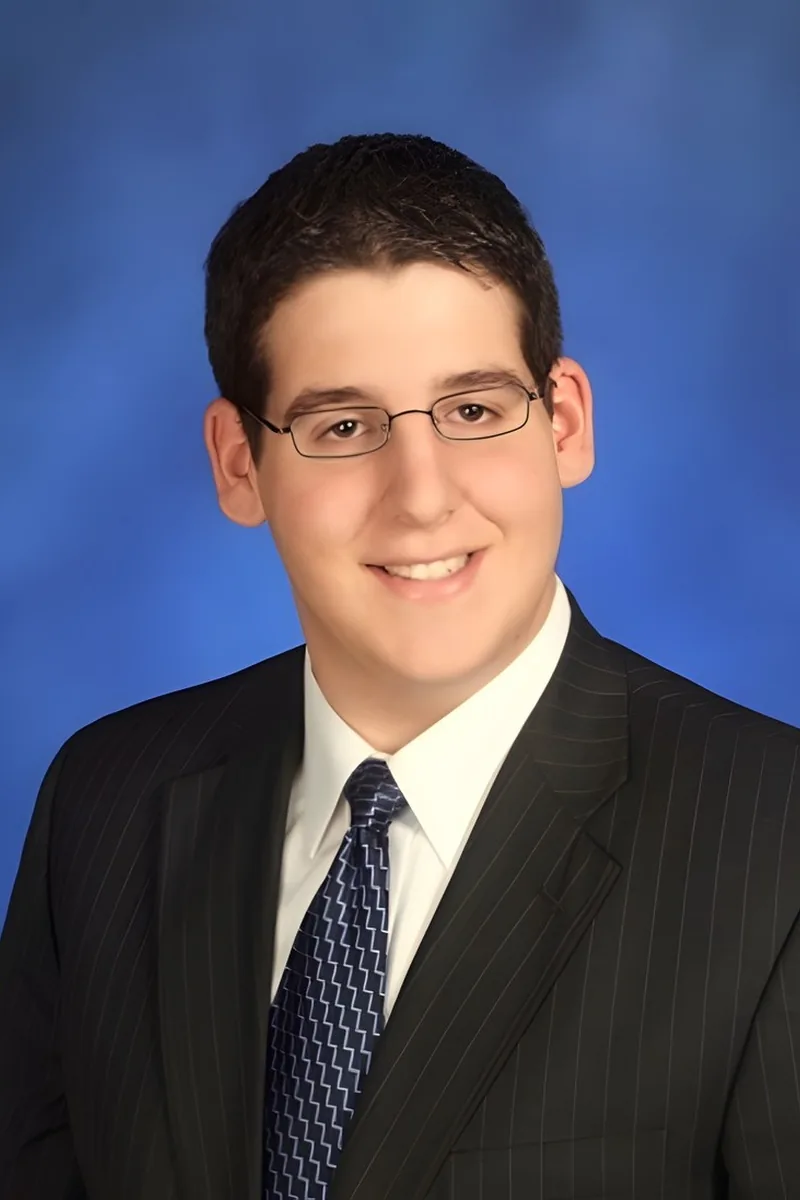
Students who score well on individual SAT sections but struggle to maintain stamina across the full exam benefit from Ethan's approach — he treats the test as a pacing and energy-management problem, not just a content problem. His own 1510 SAT and 36 ACT reflect a cross-section strategy he now teaches: knowing when to slow down on evidence-based reading pairs and when to move quickly through algebra you've already mastered. His environmental science and policy background also means data interpretation and graph-based questions on the Math section come naturally.

Forensic science training builds a specific kind of test-taking mind — Elizabeth learned to read dense technical material under pressure, extract relevant data, and reason through problems methodically, all skills that map directly onto SAT Reading passages and Math word problems. She scored a 1470 on the SAT herself and uses her cross-disciplinary background in biology, chemistry, and history to demystify the range of passage topics students encounter on test day.
Yale's economics PhD program demands the same blend of quantitative precision and dense reading comprehension that the SAT rewards — and Anthony lives in that intersection daily, pulling apart data-heavy research papers and building mathematical models. He scored a 1560 on the SAT and uses that experience to teach concrete strategies for the algebra and data-analysis problems on the Math section alongside efficient passage-reading techniques for the verbal side. Rated 5.0 by students.
A 1590 SAT is the kind of score that makes students ask, "What's the trick?" — and Ryan's answer is that there isn't one, just a disciplined approach to eliminating wrong answers, managing pacing across Reading passages, and catching the grammar patterns the Writing section recycles. His economics background also means he's sharp on the data-interpretation and word-problem questions that trip up strong math students. Rated 5.0 by students.
Studying mathematics and history at Yale means Tessa spends her days toggling between proofs and primary-source analysis — exactly the split the SAT demands between its Math and Evidence-Based Reading sections. She scored a 1590, and her approach leans on teaching students to recognize the underlying logic of each question type rather than relying on surface-level tricks. Rated 4.9 by students.
What sets Christina apart for SAT prep is her genuine love of decoding standardized tests — she treats the exam like a puzzle with learnable patterns, from the algebra-heavy math questions to the evidence-based reading traps. Her 1550 SAT score backs up that approach, and her MBA work at Yale means she brings serious analytical rigor to pacing strategy and section-by-section game plans. Rated 4.8 by students.
What sets James apart on the SAT is genuine versatility — his humanities focus at Yale sharpens his approach to evidence-based reading and writing questions, while his math background means he can walk students through the trickiest algebra and data-analysis problems without skipping a beat. He scored a 1590 and knows exactly where those last few points hide, from subtle grammar traps in the Writing section to time-saving shortcuts on Heart of Algebra questions. Rated 5.0 by students.
Yale's economics program demands the kind of fast, precise reading and quantitative reasoning that mirrors the SAT almost exactly — Max applies those same skills to teach students how to navigate data-heavy math problems and parse dense reading passages under time pressure. He scored a 1580 on the SAT himself and holds a 5.0 tutoring rating, with particular strength in showing students how to spot the algebraic shortcuts and evidence-based answer patterns that separate a good score from a great one.
Government and Latin American Studies might sound like an unusual foundation for SAT prep, but Reta's coursework demands exactly the kind of close reading and argument analysis that drives the Evidence-Based Reading section — and her 1530 SAT score proves she can execute under test conditions. She teaches students to treat each passage like a policy brief, identifying the author's claim and supporting evidence before touching the answer choices, while her comfort with algebra and data interpretation keeps the Math section covered too.
Two years at Yale sharpened Louie's reading and analytical skills, while his lifelong love of math means he can tackle both sides of the SAT with equal confidence — his own 1540 composite backs that up. He breaks the exam into repeatable strategies, from eliminating trap answers in Evidence-Based Reading to recognizing the handful of algebra and data-analysis patterns that drive most math questions. His background in spoken word poetry also gives him a unique ear for the grammar and rhetoric questions that trip up many test-takers.
Debate coaching taught Bradley something most SAT tutors learn the hard way — that reading comprehension and persuasive reasoning aren't separate skills, and the Evidence-Based Reading section rewards students who can trace an author's argument the way a debater dissects an opponent's case. His 1530 SAT score backs up the approach, and his business coursework at Babson keeps his math-section strategies grounded in the data analysis and algebra the test emphasizes most.
Yale's biology program demanded the kind of precise, detail-oriented reading that shows up constantly on SAT evidence-based questions — parsing dense material, identifying key claims, and distinguishing supported conclusions from plausible-sounding distractions. Zach pairs that analytical training with a 1590 SAT score and a structured approach to the math sections rooted in his strong quantitative background. Rated 4.9 by students, he builds section-specific strategies around each student's scoring patterns rather than running through generic practice sets.
Valerie scored a 1540 on the SAT and built particular strength in the Reading and Writing sections, where her background as a Classics major at the University of Chicago — and winner of 20 writing prizes before age eighteen — translates directly into the kind of close textual analysis and evidence-based reasoning the test demands. She also tackles the Math section with confidence, drawing on UChicago's rigorous core curriculum. Her approach breaks each section into repeatable strategies so students walk into test day knowing exactly how to manage pacing and question types.
James holds degrees in both mathematics and physics, which means the SAT Math section — from heart-of-algebra problems through advanced data analysis and passport-to-advanced-math questions — plays directly to his academic strengths. He also teaches the Reading and Writing sections by treating each passage as a logical argument to dismantle, applying the same structured reasoning his science training demands. His 1510 SAT score confirms he knows the test inside and out.
A 1510 SAT scorer with a humanities-heavy background, Jordan is especially sharp on the Evidence-Based Reading and Writing sections — breaking down how the test uses paired passages, command-of-evidence questions, and rhetoric analysis to trip students up. He also tackles the math side with a focus on the word-problem-heavy questions where reading comprehension and algebra intersect, which is exactly where many students leave points on the table.
Published novelist and law school graduate, Ardis brings a rare combination of literary close-reading and legal argumentation skills to SAT prep — exactly the kind of analytical precision the Evidence-Based Reading section rewards. She scored a 1480 on the SAT and teaches students to treat Writing and Language questions like editing exercises, spotting structural and grammatical errors the way she would in a manuscript draft. Her math coverage rounds out the full test, but the verbal sections are where her background really pays off.
Because Isaac tutors both biology and literacy skills at the college level, he covers the SAT's full range — from algebraic reasoning and data interpretation on the Math section to the evidence-based reading and grammar patterns on the verbal side — without compartmentalizing them into separate skill sets. His 1500 SAT score and 5.0 tutoring rating back up an approach rooted in close reading and analytical thinking, whether a question involves a science passage or a system of equations.
Kenneth's applied mathematics degree powers the SAT Math section, but what sets his prep apart is that he also tutors literature, grammar, and essay writing — so he coaches both halves of the exam with equal fluency instead of leaning on one side. He scored a 1570 and teaches students to spot the recurring algebraic structures in the math section and the rhetorical patterns in Reading and Writing that make questions predictable under time pressure. Rated 4.7 by students.
Yale trained Brittany to read like a scholar and argue like a lawyer — skills she now channels into SAT prep, where her 1510 score and college-level teaching experience back up her command of both the verbal and math sections. She builds individualized test-day strategies around each student's specific weak points, whether that's pacing on evidence-based reading questions or translating word problems into clean algebra. Rated 4.9 by students.
Claire's triple major in Classics, Political Science, and History at Columbia meant years of close reading dense primary sources and constructing tight arguments — exactly the skills that separate good SAT verbal scores from great ones. She scored a 1520 on the SAT herself and applies that same analytical rigor to the math sections, where translating word problems into solvable equations comes naturally to someone trained in Latin grammar and formal logic.
Teaching ancient history to fifth graders through Teach for America sharpened Julia's ability to make dense, complex texts accessible — exactly the skill that pays off on the SAT's Evidence-Based Reading passages, where students need to quickly parse arguments from unfamiliar sources. Her 1510 SAT score and background in European history at Smith give her particular command of the passage types and rhetorical structures the College Board favors. She also covers the Writing and Language section by teaching grammar as a set of logical rules rather than a list to memorize.
Studying psychology and education at Yale taught Stephen how to read dense, argument-driven texts quickly and extract exactly what matters — the same skill that separates a good SAT Reading score from a great one. He scored a 1500 on the SAT and uses that experience to teach students how to spot evidence-pair traps, tighten pacing on the Writing and Language section, and avoid the algebraic missteps that cost easy points on the Math side.
Having earned his math degree through Central Connecticut State's School of Education, AJ knows both the content and the teaching side of SAT prep — particularly the algebra, data analysis, and problem-solving questions that make up the bulk of the Math section. He scored a 1430 on the SAT himself and uses that experience to teach students specific pacing and elimination strategies across both sections. His education training also means he adapts explanations on the fly rather than running through a one-size-fits-all script.
I love participating in learning with other people. This is why I have been a high school teacher for 20 years and why I am a tutor now. One of my major skills as a tutor is breaking down skills and concepts into small parts to identify exactly where someone is struggling. I can do this with organization and learning needs, too, not just math and English content. I am also versatile and flexible; I can work on all sorts of content and handle unknown problems. I can teach you how to do that, too. I also have a great deal of experience working with students with special needs. I have been trained in some workshops, but I have only experience, not a license, in this area.
Scoring a perfect 1600 on the SAT while studying sociology and anthropology means Lisa developed the verbal reasoning and data interpretation skills the test demands across both sections — not just one. She teaches students to recognize the grammar and rhetoric patterns that repeat in the Writing and Language module, then applies the same pattern-recognition mindset to Heart of Algebra and Problem Solving questions on the math side.
MIT's math program builds exactly the kind of quantitative reasoning the SAT Math section demands — from algebraic manipulation to data analysis under time pressure — and Enrico pairs that with a 1570 SAT score of his own. He teaches students to recognize the underlying structure of each problem type so they can work efficiently rather than re-deriving every solution from scratch. His 5.0 tutoring rating and experience across subjects from pre-algebra through linear algebra mean he can meet gaps in foundational skills without losing sight of test-day strategy.
A perfect 1600 on the SAT gives Katie the credibility to break down every section — from evidence-based reading passages to no-calculator math — with the precision of someone who's mastered each one. She builds targeted strategies around timing, question types, and the specific traps the College Board designs into answer choices. Rated 5.0 by students, she also draws on her experience advising BS/MD applicants to put SAT prep in the context of a bigger admissions picture.
A 1560 SAT scorer with a Master's in Education from Harvard, Mimi brings a structured yet creative approach to test prep — particularly the evidence-based reading passages, where her art history and literary analysis background makes dissecting complex texts second nature. She teaches students to identify argument structure and eliminate trap answers systematically across both the reading and writing sections.
Classics and philosophy trained Austin to read dense, argument-heavy texts with precision — exactly the skill that separates good SAT Reading scores from great ones. He scored a 1570 and teaches students to trace an author's reasoning through evidence-based questions rather than relying on surface-level comprehension. His grammar and writing chops carry over to the Writing and Language section, where he unpacks the punctuation and syntax rules the test recycles in every form.
Going from a 25 ACT to a perfect 36 taught Astoria something most tutors never learn firsthand: how to reverse-engineer a standardized test and build strategies section by section. She applies that same diagnostic approach to the SAT — breaking down question types in Evidence-Based Reading, pinpointing grammar patterns in Writing and Language, and identifying the algebra and data analysis concepts that appear most frequently on test day. Her 1530 SAT score and 4.8 rating speak to how well those strategies translate.
Physics PhD work at Michigan required Michael to read dense technical passages, interpret data under pressure, and solve multi-step quantitative problems — which maps almost exactly onto what the SAT demands across both sections. He scored a 1570 and uses that experience to teach students how to navigate the math section's algebra and data analysis questions with the same systematic reasoning he applies to physics problems. His comfort with both verbal analysis and quantitative logic means students get full-test coaching without switching gears.
Dennis's finance and statistics coursework at NYU means the SAT Math section plays to his strengths — he teaches students to spot the underlying algebra and data-analysis patterns that repeat across every practice test, turning unfamiliar-looking problems into familiar setups. His 1550 SAT score backs up a prep approach built on efficiency: knowing which questions to attack first, where to double-check, and how to manage the clock so careless errors don't eat into a strong performance.
Planning is where Sharan's SAT prep starts — she maps out exactly which question types a student is losing points on, then builds a week-by-week practice schedule targeting those gaps first. Her premed coursework at Cornell keeps her math and data-analysis skills sharp for the quantitative sections, while her 1540 SAT score confirms she knows the test inside and out. Rated 5.0 by students.
Neuroscience coursework at Vanderbilt trained Eileen to process dense, data-heavy passages quickly — exactly the skill that separates good SAT scores from great ones on the Evidence-Based Reading section. She scored a 1550 and built her own prep strategy around identifying question patterns across both the verbal and math sides, so students walk into test day with a repeatable system rather than vague instincts. Rated 4.7 by students.
Nina's biostatistics training at Columbia and Northwestern means the SAT Math section — especially data analysis, scatterplot interpretation, and multi-step algebra — plays directly to her strengths. She scored a 1550 and knows how to teach the quantitative reasoning patterns that separate a good math score from a great one, while her experience with college essays and literature gives her practical tools for the Reading and Writing sections too.
Jenna's double major in French and Biochemistry means she's equally comfortable coaching the verbal and quantitative sides of the SAT — she reads passages like a humanities student and attacks the math section like a scientist. Her own 1570 puts her in the top fraction of test-takers, and she uses that experience to teach specific pacing and elimination techniques rather than generic advice. Rated 5.0 by students.
Testimonials
Because the right SAT tutor makes all the difference.
Average Session Rating – Based on 3.4M Learner Ratings
Practice SAT
Free practice tests, flashcards, and AI tutoring for SAT
Nearby SAT Tutors
Other Norwich Tutors
Related Test Prep Tutors in Norwich
Frequently Asked Questions
Varsity Tutors matches Norwich students with expert SAT tutors for 1-on-1 instruction. We pair each student with a tutor based on their specific needs, learning style, and goals.
Whether you need homework help, exam prep, or want to get ahead, our SAT tutors are ready to help.
Common challenges include gaps from earlier material, difficulty with specific concepts, and trouble applying learning to new problems. These issues can snowball quickly in SAT.
A tutor identifies where you're stuck, fills in gaps, and provides targeted practice. The 1-on-1 format means you get help exactly where you need it.
Tutors work with your student's actual coursework—homework assignments, class notes, and upcoming tests. This keeps tutoring directly relevant to what's happening in the classroom.
When you share information about your student's school and curriculum, we can match you with a tutor who has relevant experience.
All tutors complete background checks, credential verification, and teaching evaluation. Many of our SAT tutors hold advanced degrees or have years of teaching experience.
You can review tutor profiles to find someone with the right background for your student's level and needs.
Many students see improved grades within a few weeks, along with better understanding of SAT concepts and more confidence tackling challenging material.
Tutors track progress and adjust their approach to ensure continued improvement.
Most students benefit from 1-2 sessions per week. More frequent sessions help if your student is significantly behind or has an important exam coming up.
Your tutor can recommend a schedule based on your student's specific situation and goals.
Tutoring is purchased in packages of hours, with rates varying by tutor experience. Varsity Tutors offers several options to fit different budgets and needs.
You can discuss pricing during your consultation to find what works best.
Your tutor will assess where your student is, discuss goals, and start working on priority areas. Most students bring current homework or upcoming test material to focus on.
By the end, you'll have a clear sense of how the tutor can help and a plan for moving forward.
Let’s find your perfect tutor
Answer a few quick questions. We’ll recommend the right plan and match you with a top 5% tutor.