Award-Winning Middle School Math Tutors
serving Norwich, CT
Middle School Math
Tutors in Norwich
Private 1-on-1 tutoring, weekly live classes for academic support, test prep & enrichment, practice tests and diagnostics, and more to elevate grades and test scores.
Based on 3.4M Learner Ratings
UniversitiesSchools & Universities
DeliveredHours Delivered
ProficiencyGrowth in Proficiency
Who needs tutoring?
No obligation. Takes ~1 minute.
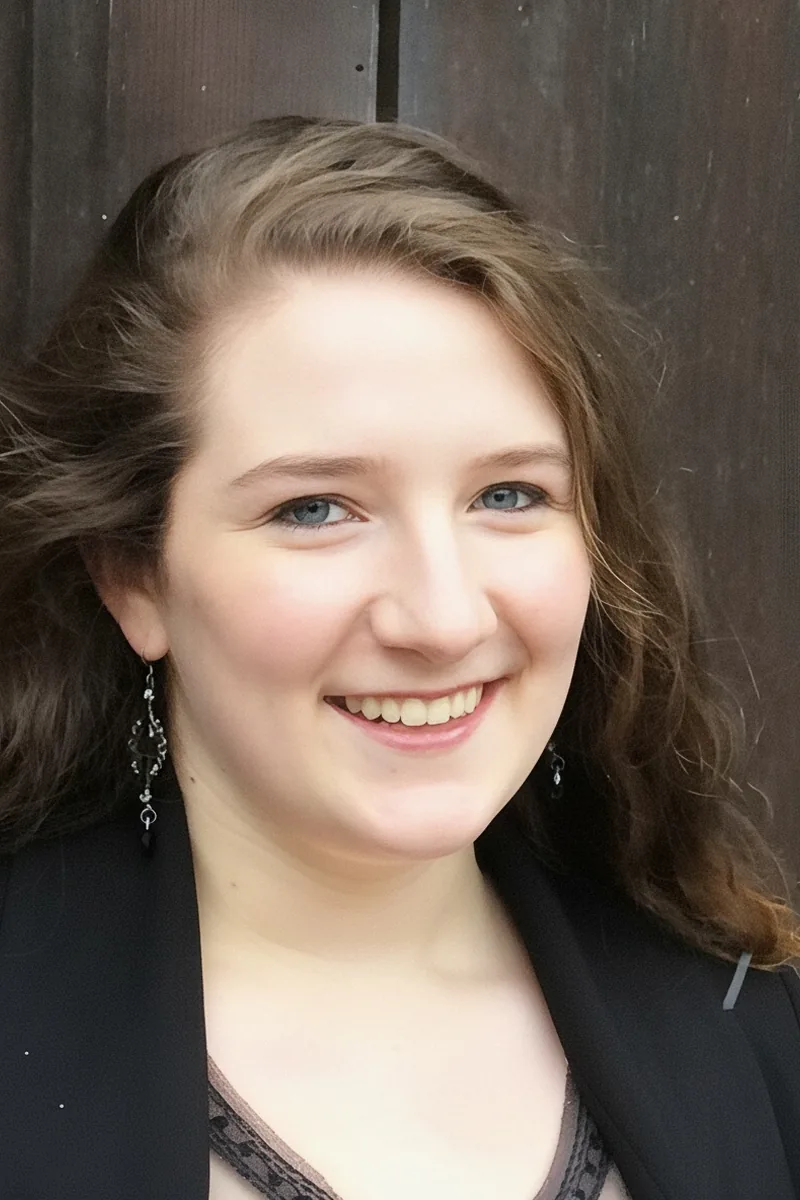
Fractions, decimals, and proportional reasoning are the concepts that either build a student's confidence in math or quietly undermine it for years. Valerie's background spans subjects from classics to emergency medicine, and she channels that range into finding the analogy or explanation that makes a tricky middle school concept land for each learner.
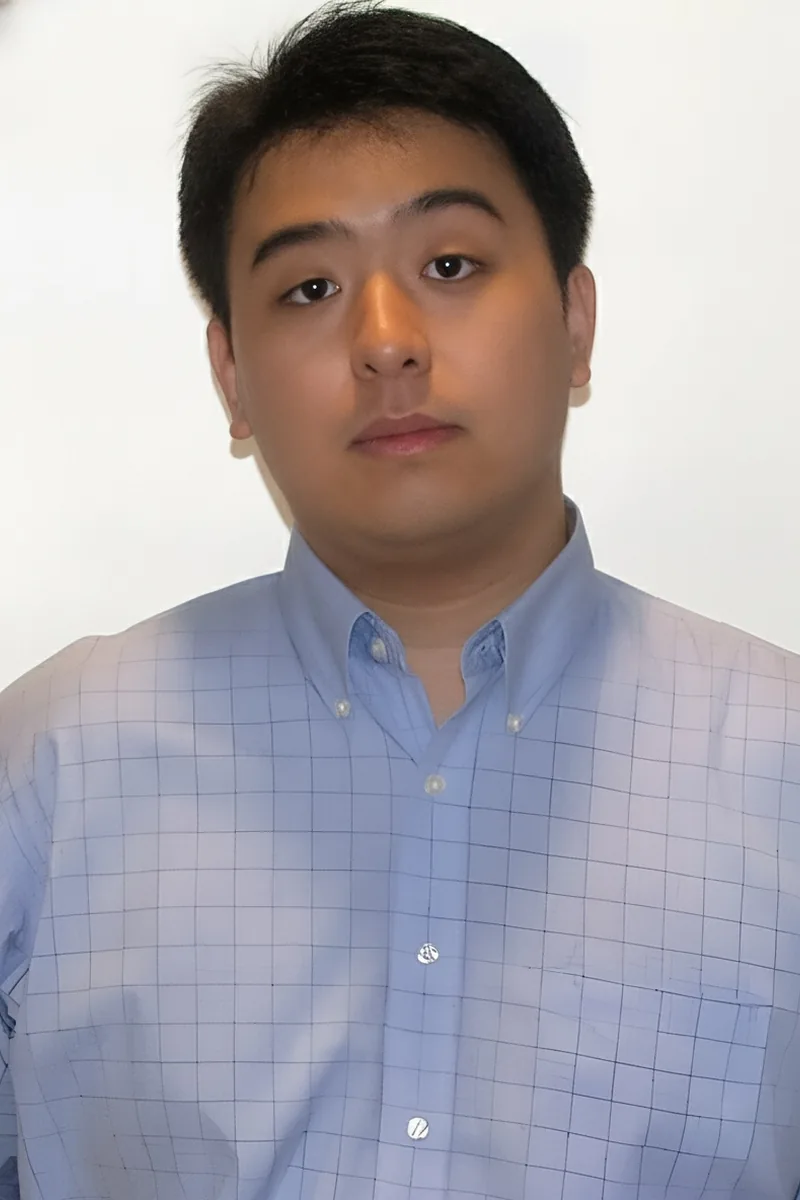
Economics training at the undergraduate level is essentially applied algebra — modeling supply and demand, solving for equilibrium, interpreting graphs — so Ryan brings a fluency with variables, equations, and coordinate planes that maps directly onto what middle schoolers are learning. His 1590 SAT score speaks to serious quantitative chops, and his 5.0 rating suggests he communicates that knowledge clearly rather than just possessing it. He's particularly strong at showing students how to translate a word problem into an equation, since that's what economists do all day.
Stephanie volunteered as a math tutor at a local middle school during high school, working through everything from proportional reasoning to coordinate graphing with students at different skill levels. Now a Yale senior studying neuroscience, she brings that same hands-on approach to topics like linear equations, geometry basics, and data analysis. Her 5.0 rating speaks to how well she keeps middle schoolers engaged with material that can otherwise feel abstract.
The math concepts students encounter in middle school — ratios, proportional reasoning, introductory equations — quietly set the trajectory for everything that follows in high school. Tessa treats each topic as worth understanding deeply rather than rushing through, taking time to show a sixth or seventh grader why integer operations or fraction rules work the way they do. She's a Yale math major who genuinely believes curiosity matters more than speed.
As a teaching assistant for a program that introduces middle and high school girls to coding, Patrycja regularly breaks down logical and mathematical concepts for younger learners. She applies that same step-by-step clarity to middle school math topics like ratios, proportions, and introductory geometry. Her computer science background at Yale also means she can show students how math concepts connect to real-world problem solving.
The jump from arithmetic to proportional reasoning, basic statistics, and introductory equation-solving can be disorienting for middle schoolers who were previously comfortable with math. Daria (5.0-rated) tackles this transition by showing students how each new concept builds directly on something they already know. Her engineering background means she's fluent in finding real-world hooks — ratios in recipes, percentages in sports stats — that make abstract ideas land.
Fractions, ratios, and pre-algebra concepts click faster when someone explains the reasoning behind each step instead of just demonstrating a procedure. Mia breaks down problems involving proportions, integers, and basic geometry into manageable pieces, making sure the logic sticks before moving on to the next topic.
Fractions, ratios, and pre-algebra concepts click faster when students see how the numbers connect to real situations — something Jordan emphasizes by pulling examples from everyday contexts. His American Studies background means he's used to breaking down complex material for different audiences, and he applies that same clarity to walking through integer operations and proportional reasoning.
The jump from arithmetic to middle school math trips up a lot of students, especially when ratios, proportions, and basic equation-solving all show up at once. Max tackles each concept by connecting it to something concrete — percentages as real discounts, negative numbers as temperature drops — so the abstraction actually clicks. His 5.0 rating speaks to how well that approach lands.
Fractions, ratios, and proportional reasoning trip up a lot of middle schoolers because the problems start requiring multi-step thinking for the first time. Diana breaks these concepts into smaller logical pieces, connecting each step to real-world scenarios — splitting a recipe, calculating a discount — so the reasoning clicks. Her patience and humanistic background make her especially effective with students who've started to feel like they're "just not math people."
Government majors spend more time with data than most people expect — Reta's coursework in policy analysis and polling means she's comfortable with percentages, ratios, and interpreting graphs, all of which sit at the core of middle school math. Her 1530 SAT score backs up that quantitative fluency, and she brings a no-nonsense clarity to breaking down multi-step problems into pieces a sixth or seventh grader can actually follow.
I am a musician, educator, and philosopher based in New Haven, Connecticut. I studied at UCLA graduating Cum Laude with degrees in Music Performance, Education, and Philosophy. I have been tutoring private music lessons and academic subjects for over 5 years now, and I work as a substitute teacher across Connecticut. My favorite subjects to tutor are Music, English, and Reading/Writing Skills, but I am capable of tutoring various Historical subjects, Math, and Science as well.
The jump from elementary math to middle school math catches a lot of students off guard, especially when fractions, decimals, and negative numbers start appearing in the same problem. Louie treats each of these as a skill that can be built through pattern recognition and practice, not just memorization of rules. His spoken word background also means he's good at explaining ideas in ways that actually land.
Fractions, ratios, and proportional reasoning trip up more middle schoolers than almost any other topic — Stephen tackles these by connecting them to real situations students actually encounter. His psychology background at Yale gives him sharp insight into how younger learners process abstract number relationships, so he adjusts explanations until the concept genuinely clicks.
Ratios, proportional reasoning, and early equation-solving form the backbone of middle school math, and getting them right now pays off for years. As a mechanical engineering student at Yale, Yossi uses every one of these skills daily and can show students exactly why the math they're learning matters beyond the worksheet.
Having led peer tutoring at Phillips Exeter Academy and taught math to younger students through a summer camp he created, Richard knows how to meet middle schoolers at their level without talking down to them. He tackles topics like ratios, proportions, and introductory geometry by tying them to real-world scenarios that make the logic click. His approach turns the jump from elementary math into something that feels manageable rather than overwhelming.
I am a senior at the University of New Haven working on a B.S. in Forensic Science-Biology with a Pre-Medical designation who hopes to go to medical school in the future. I am most passionate about biology and chemistry but have a strong personal interest in history, especially topics overlooked in the past study of history. To me, learning is a life long process and leads to the development of a well-rounded individual. Seeing understanding of a difficult topic and creating enthusiasm for learning is what draws me to tutoring.
The jump from elementary to middle school math is where students first encounter ratios, proportional reasoning, and basic geometry proofs — and where confidence often dips. Shana's elementary education training gives her a sharp eye for exactly which foundational gaps are causing the confusion, so she can address the real problem rather than just re-explaining the surface-level topic.
Cracking standardized tests — Christina scored a 1550 SAT and 34 ACT — requires spotting exactly which foundational skills a problem is really testing, and she brings that same diagnostic eye to middle school math topics like fraction operations, decimals, and early equation work. Her MBA training at Yale sharpened her ability to break quantitative problems into clean, logical steps, which translates surprisingly well to teaching a twelve-year-old how to organize a multi-step solution. Rated 4.8 by students.
Bowen's finance degree means he spent years doing rapid mental math with percentages, ratios, and proportional relationships — the same concepts middle schoolers are formalizing for the first time. He zeroes in quickly on the gap between what a student already handles confidently and where things start to wobble, then builds from that exact boundary so no session time gets wasted on material that's already solid. His SAT score of 1380 backs up the quantitative chops, but it's his diagnostic instinct that parents notice most.
Throughout the ages, the religious and philosophical leaders of the Far East considered teaching the noblest occupation-- one of true wisdom and selflessness. Having had the great fortune to experience the transformative power of wonderful teachers, I've come to agree with this viewpointI've found my calling in education. I haven't always known that teaching was the vocation for me. Even though I've always taught, on some level, as a T.A., a private tutor, a classroom teacher, or a friend, I tried different jobs in the private sector for several years. However, upon much introspectionmy own enlightenmentI realized that teaching is my true calling. I have a passion for teaching, which is unmatched by any other field. Why do I teach? I teach because I know that I will learn something new from each teaching experience, with every student, with every day, without exception, and because this path is one that I know is beneficial to others and to society as a whole. I teach, because I believe I can do it well. I approach the job with a balance of both diligence and patience, and confidence and humility, with extreme focus and an open mind. I am very patient, which is incredibly important, because learning takes time and involves challenges. When I teach I project a sense of confidence, because as a lifelong perfectionist, I really do my homework! Before each lesson, I make sure I am thoroughly prepared so that I can teach lucidly and coherently and know how to anticipate questions and readily answer them. My confidence helps establish my authority in the classroom. I also strive to make what I teach relevant to my students' lives by drawing on my experiences as a student and teacher. I strive to be an educator like my own favorite teachersa teacher who is passionate about and has profound knowledge of his specialty, who believes in the unparalleled importance of education, and who inspires his students with his devotion.
The jump from arithmetic to pre-algebraic thinking — variables, proportional reasoning, integer operations — trips up a lot of middle schoolers who were previously confident in math. Chantel is unusually patient with that transition, walking students through each conceptual shift rather than rushing to the next worksheet.
AJ's math degree from Central Connecticut State came through their School of Education, which means he studied both the mathematics itself and how to teach it — a combination that matters when a seventh grader can do arithmetic but freezes up the moment a variable appears. He's spent years in actual math classrooms alongside teachers, so he knows the pacing and common sticking points of middle school curricula firsthand, especially around the transition from number sense into early algebraic reasoning. That classroom experience shows in how he breaks down multi-step problems into a sequence a student can follow independently.
Fractions, decimals, ratios, and proportional reasoning — middle school math is where students either build genuine number sense or start relying on shortcuts that break down later. Francis has spent his entire career teaching this age range and up, so he sees exactly which conceptual gaps cause trouble in algebra the following year. He tackles each topic by grounding it in concrete examples before moving to abstract procedures.
I believe every person has potential, which must be drawn out of them. With over 4 years of leading workshops, being a Teaching Assistant and creating curriculum, and nearly two years of private tutoring, I know how to help students and people of all ages easily understand concepts in Science, Technology, Engineering, and Mathematics. Having graduated from Vanderbilt University with a Bachelors degree in Engineering Science, I know how to move from not understanding a subject to understanding it well. The subjects I tutor include: - Math (Algebra 1, Geometry, Algebra 2, Pre-Calculus**, Calculus 1**, Calculus 2** and Statistics**) - Computer Science (AP CSP / AP Comp SciA, Python, ReactJS/JavaScript, HTML/CSS, Powershell/Bash Scripting) - Science (Physics**) ** - tutor subject at high school/AP/college level My teaching style includes completely modeling a problem on the board. Then, I would guide a student through solving a problem before having them solve it independently.
From fractions and ratios to introductory geometry, middle school math covers a huge range of topics in a short time, and gaps at this stage snowball fast. Jess tackles each concept methodically, making sure students understand the "why" behind procedures like cross-multiplying or finding area — not just the steps to get an answer.
Fractions, proportions, and early equation-solving are the concepts that shape whether a student feels confident or anxious about math for years to come. Kathleen is especially good at diagnosing the specific gap — maybe it's place value, maybe it's negative numbers — and addressing that root issue rather than just re-explaining the current homework problem. Her four years of tutoring students across all ages give her a sharp sense of how younger learners think.
A year as a teaching assistant for introductory science courses at Cornell gave Annie practice explaining foundational concepts to students encountering them for the first time. She applies that same patience to middle school math topics like fractions, ratios, proportions, and early equation-solving, building the numerical reasoning skills that make algebra feel approachable when it arrives.
Teaching math to middle schoolers at gifted summer programs taught Isabella that this age group thrives when they understand the "why" behind a procedure, not just the steps. She digs into topics like ratios, proportional reasoning, and introductory linear relationships with the depth you'd expect from someone who earned a math degree at MIT. Her 5.0 rating speaks to how well that approach lands with younger students.
Scoring a 35 ACT and 1570 SAT means Amber has the quantitative chops to teach middle school math cold, but her theater background is what makes her especially effective — she knows how to read an audience, adjust on the fly, and make a concept land. She zeroes in on the specific spot where a student's understanding breaks down, whether that's negative number operations or setting up basic equations, and rebuilds from there. Rated 5.0 by students.
The jump from fifth-grade math to pre-algebra and early geometry catches many middle schoolers off guard, especially when proportional reasoning and negative numbers enter the picture. Asta tackles these transitional concepts by connecting them to patterns students already recognize, making ratios, percents, and coordinate graphing feel less abstract. She holds a 5.0 client rating.
At the middle school level, math starts asking students to think abstractly for the first time — proportional reasoning, negative numbers, introductory geometry, and basic equation solving. Brian brings a calm, structured style to these topics, breaking each problem into small logical steps so younger students build genuine confidence instead of just copying procedures.
The jump from arithmetic to middle school math — ratios, proportions, negative numbers, basic graphing — is where a lot of students quietly lose confidence. Ayako spots those shaky spots early and rebuilds them with concrete examples before moving into more abstract territory. She's taught across math and standardized test prep, so she knows exactly which foundational skills matter most going forward.
The jump from elementary math to middle school math introduces fractions, decimals, ratios, and negative numbers all at once, and it's easy for gaps to snowball. Maggie has spent years working with middle schoolers on exactly this transition, pinpointing where a concept broke down and rebuilding fluency from that point forward. Her 5.0 rating speaks to how well that approach lands with students and families.
A year as a course assistant in Harvard's math department — teaching introductory calculus to undergraduates — gave Richard an unusual vantage point on middle school math: he knows exactly which arithmetic and pre-algebraic habits (especially around fractions, negative numbers, and variable expressions) need to be rock-solid before higher math stops making sense. He scored a 36 ACT and 1600 SAT, but more relevantly, he's spent time volunteering to teach a weekly course to middle schoolers through Harvard's Leadership Institute, so he's comfortable matching his explanations to how younger students actually think.
The jump from arithmetic to algebraic thinking is one of the biggest shifts in a student's math life, and middle school is exactly when it happens. Ava has spent years tutoring students as young as seven, building their comfort with fractions, ratios, proportional reasoning, and early equation-solving so that high school math feels like a natural next step.
The jump from arithmetic to proportional reasoning, basic geometry, and introductory equations is where many students either build momentum or start to disengage. Kaylah's approach leans on making each concept visual and concrete — turning ratios into real comparisons, graphing relationships on a coordinate plane — before introducing abstract notation. Her statistics and math minors from the University of Florida give her deep fluency with the fundamentals.
Fractions, ratios, and proportional reasoning click faster when students see how they connect to real-world problems — something Mica's Stanford background in Science, Technology, and Society makes second nature. She breaks down pre-algebra concepts like integer operations and basic equation solving into clear, repeatable steps that build genuine confidence.
Testimonials
Because the right Middle School Math tutor makes all the difference.
Average Session Rating – Based on 3.4M Learner Ratings
Nearby Middle School Math Tutors
Other Norwich Tutors
Related Math Tutors in Norwich
Frequently Asked Questions
Varsity Tutors matches Norwich students with expert Middle School Math tutors for 1-on-1 instruction. We pair each student with a tutor based on their specific needs, learning style, and goals.
Whether you need homework help, exam prep, or want to get ahead, our Middle School Math tutors are ready to help.
Common challenges include gaps from earlier material, difficulty with specific concepts, and trouble applying learning to new problems. These issues can snowball quickly in Middle School Math.
A tutor identifies where you're stuck, fills in gaps, and provides targeted practice. The 1-on-1 format means you get help exactly where you need it.
Tutors work with your student's actual coursework—homework assignments, class notes, and upcoming tests. This keeps tutoring directly relevant to what's happening in the classroom.
When you share information about your student's school and curriculum, we can match you with a tutor who has relevant experience.
All tutors complete background checks, credential verification, and teaching evaluation. Many of our Middle School Math tutors hold advanced degrees or have years of teaching experience.
You can review tutor profiles to find someone with the right background for your student's level and needs.
Many students see improved grades within a few weeks, along with better understanding of Middle School Math concepts and more confidence tackling challenging material.
Tutors track progress and adjust their approach to ensure continued improvement.
Most students benefit from 1-2 sessions per week. More frequent sessions help if your student is significantly behind or has an important exam coming up.
Your tutor can recommend a schedule based on your student's specific situation and goals.
Tutoring is purchased in packages of hours, with rates varying by tutor experience. Varsity Tutors offers several options to fit different budgets and needs.
You can discuss pricing during your consultation to find what works best.
Your tutor will assess where your student is, discuss goals, and start working on priority areas. Most students bring current homework or upcoming test material to focus on.
By the end, you'll have a clear sense of how the tutor can help and a plan for moving forward.
Let’s find your perfect tutor
Answer a few quick questions. We’ll recommend the right plan and match you with a top 5% tutor.