Award-Winning Chemistry Tutors
serving Norwich, CT
Chemistry
Tutors in Norwich
Private 1-on-1 tutoring, weekly live classes for academic support, test prep & enrichment, practice tests and diagnostics, and more to elevate grades and test scores.
Based on 3.4M Learner Ratings
UniversitiesSchools & Universities
DeliveredHours Delivered
ProficiencyGrowth in Proficiency
Who needs tutoring?
No obligation. Takes ~1 minute.
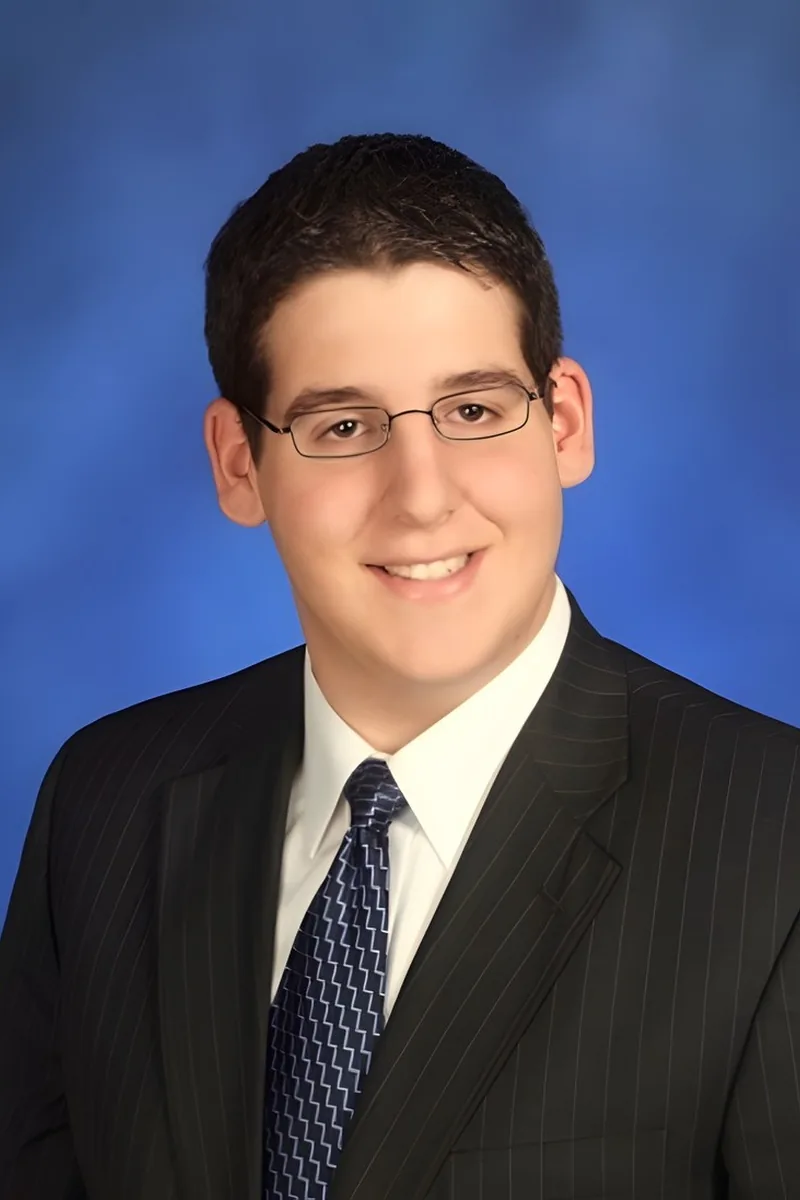
Getting comfortable with chemistry means seeing the logic behind it — why electrons behave the way they do in bonding, how that explains solubility, and how solubility connects to reaction predictions. Ethan walks through these cause-and-effect chains so that students build intuition instead of relying on memorized rules that fall apart on unfamiliar problems.

Double-majoring in mathematics and history at Yale, Tessa tackles chemistry problems by emphasizing the quantitative reasoning underneath them — setting up equilibrium expressions, working through stoichiometry ratios, and interpreting rate law data all come naturally when the math isn't a barrier. Her 36 ACT composite reflects the same kind of cross-disciplinary precision she brings to breaking down why a reaction proceeds the way it does, not just what happens.
Balancing equations, stoichiometry, and periodic trends all demand a different kind of thinking than most students are used to. Max approaches chemistry by connecting the math to the molecular-level picture — moles aren't just a conversion factor, they're a way of counting atoms. He's a 5.0-rated tutor currently studying at Yale.
I am a PhD student in Inorganic Chemistry at Yale University. I've been spreading my love of chemistry for the past several years as a TA for general chemistry, and I'm excited to share my passion with you! Prior to Yale, I got my B.S. in chemistry from Caltech, where I also served as a TA for both general chemistry lab and advanced inorganic chemistry. Outside of teaching and research, I enjoy fencing, reading, and playing piano.
I am a senior at the University of New Haven working on a B.S. in Forensic Science-Biology with a Pre-Medical designation who hopes to go to medical school in the future. I am most passionate about biology and chemistry but have a strong personal interest in history, especially topics overlooked in the past study of history. To me, learning is a life long process and leads to the development of a well-rounded individual. Seeing understanding of a difficult topic and creating enthusiasm for learning is what draws me to tutoring.
From building a summer chemistry camp for younger students at Domus Stamford to coaching a Chemistry Olympiad team, Richard has taught this subject at every level. He digs into the "why" behind stoichiometry, electron configurations, and reaction types so that problem-solving becomes intuitive rather than formulaic. That range means he can adjust explanations on the fly depending on whether a student needs the basics or competition-level depth.
Most chemistry questions come down to the same core skill: understanding what's happening at the atomic level and translating that into math. Noah earned a biochemistry degree magna cum laude and is now deep into a medicinal chemistry PhD, so he can take topics like stoichiometry, gas laws, or acid-base equilibria and explain the 'why' behind each calculation. He makes the periodic table feel like a tool students actually know how to read.
A molecular biology degree means Chantel didn't just take chemistry — she lived in it, from balancing redox reactions to understanding thermodynamics in biological systems. She teaches stoichiometry, equilibrium, and acid-base chemistry by linking each concept to the larger question of why matter behaves the way it does.
Stoichiometry, equilibrium, acid-base titrations — Lily tackles these by building up from the atomic-level reasoning that makes chemistry click instead of feel like a grab bag of formulas. Her neuroscience degree required deep coursework in general and organic chemistry, so she's comfortable moving between conceptual explanations and quantitative problem-solving.
Sabine earned her B.S. in Chemistry, so topics like acid-base theory, reaction kinetics, and molecular polarity aren't just textbook chapters — they're the core of her training. She explains the logic driving chemical behavior at the atomic level, making it easier for students to predict outcomes rather than memorize them. Rated 5.0 by students.
Stoichiometry, electron configurations, acid-base equilibria — chemistry has a way of stacking concepts so that one shaky idea undermines everything that follows. Kaitlin tackles this by identifying exactly where a gap exists and rebuilding understanding from that point forward. Her premed training at Yale gave her deep fluency with these foundational topics.
Understanding chemistry means building a mental model of what atoms are actually doing — not just balancing equations on autopilot. Patrick digs into the reasoning behind stoichiometry, molecular geometry, and reaction energetics so that students can predict outcomes instead of memorizing steps. His background spans general chemistry through graduate-level coursework, giving him range across the entire discipline.
Stoichiometry, electron configurations, equilibrium — chemistry demands comfort with both abstract models and precise calculations. Priya's math background at Vanderbilt gives her a natural advantage when it comes to the quantitative side, and her experience tutoring science since high school means she can unpack the conceptual reasoning behind things like why certain reactions are spontaneous or how molecular geometry shapes polarity.
A solid grasp of mole conversions, Lewis structures, and acid-base equilibria sets the stage for everything else in chemistry. Abrahim earned his biology degree cum laude from UCLA with heavy chemistry coursework and now applies that knowledge in medical school, so he explains foundational concepts with precision and quickly identifies which specific skill — whether it's dimensional analysis or electron geometry — needs attention.
Stoichiometry, molecular bonding, and reaction mechanisms are the backbone of Aimee's entire academic career in chemical engineering. She explains concepts like mole ratios and electron configurations by grounding them in the lab and industrial processes she's studied at Georgia Tech, which gives students a concrete anchor for material that can otherwise feel purely theoretical. Rated 4.9 by students.
Stoichiometry, equilibrium, acid-base reactions — chemistry rewards students who can think in ratios and relationships, not just memorize formulas. Sydny's triple-science undergraduate background and medical training mean she can explain why a reaction behaves the way it does at the molecular level, then connect that understanding to the math on the page.
Substitute teaching STEM to college-prep high schoolers gave Noel a front-row seat to the exact moments chemistry loses people — usually when the logic of electron configuration or periodic trends has to translate into actual problem-solving with moles and reactions. His public policy background at UChicago might seem unrelated, but it trained him to break complex systems into cause-and-effect chains, which is exactly how chemistry works at every level. Rated 4.9 by students.
Stoichiometry, equilibrium, and thermodynamics all demand comfort with both the math and the conceptual model behind it, which is exactly where a biomedical engineering background pays off. Annie connects chemical principles to real applications — reaction kinetics in biological systems, acid-base balance in the body — making abstract ideas tangible. She holds a 4.9 rating from past students.
Whether it's balancing redox reactions or figuring out why gases behave the way they do, chemistry clicks once students stop treating it as memorization and start seeing the patterns. Aditi unpacks topics like mole conversions, periodic trends, and acid-base chemistry by tying each one back to a few core principles. Her premed track at Rice means she's working through advanced chemistry herself right now.
As a pre-med student at Duke, Camille completed a full chemistry sequence — general through organic — and knows firsthand how abstract concepts like stoichiometry and electron configuration can feel before they finally click. She unpacks each topic by connecting molecular-level ideas to tangible examples students can actually visualize.
As a certified chemistry teacher running a 12th-grade course at one of Philadelphia's top magnet schools, Kathleen tackles everything from stoichiometry and gas laws to electrochemistry and organic functional groups. She connects each concept to lab-scale reasoning — predicting what should happen, explaining what actually did, and figuring out why they sometimes differ.
Studying Chemical and Biomolecular Engineering at Johns Hopkins means Joshitha lives inside chemistry — thermodynamics, reaction kinetics, stoichiometry — every semester. She brings that depth to tutoring by walking through the reasoning behind each concept rather than handing students formulas to memorize. Whether it's balancing redox reactions or predicting molecular geometry, she connects the 'how' to the 'why.'
Stoichiometry, equilibrium, and acid-base reactions each demand a slightly different way of thinking, which is exactly what trips students up when a single exam covers all three. Aidan completed a full premed chemistry sequence at Notre Dame and breaks each problem type down to its core logic — dimensional analysis for stoich, ICE tables for equilibrium — so students know which tool to reach for and when.
Balancing equations and predicting reaction products require a kind of pattern recognition that doesn't come naturally to most students. Erica digs into stoichiometry, equilibrium, and acid-base chemistry by connecting each concept to a tangible example — something her predentistry background makes second nature. She graduated with high honors from Harvard and is entering Columbia's dental program, so she's lived the chemistry-heavy coursework her students are navigating.
Testimonials
Because the right Chemistry tutor makes all the difference.
Average Session Rating – Based on 3.4M Learner Ratings
Practice Chemistry
Free practice tests, flashcards, and AI tutoring for Chemistry
Nearby Chemistry Tutors
Other Norwich Tutors
Related Science Tutors in Norwich
Frequently Asked Questions
Varsity Tutors matches Norwich students with expert Chemistry tutors for 1-on-1 instruction. We pair each student with a tutor based on their specific needs, learning style, and goals.
Whether you need homework help, exam prep, or want to get ahead, our Chemistry tutors are ready to help.
Common challenges include gaps from earlier material, difficulty with specific concepts, and trouble applying learning to new problems. These issues can snowball quickly in Chemistry.
A tutor identifies where you're stuck, fills in gaps, and provides targeted practice. The 1-on-1 format means you get help exactly where you need it.
Tutors work with your student's actual coursework—homework assignments, class notes, and upcoming tests. This keeps tutoring directly relevant to what's happening in the classroom.
When you share information about your student's school and curriculum, we can match you with a tutor who has relevant experience.
All tutors complete background checks, credential verification, and teaching evaluation. Many of our Chemistry tutors hold advanced degrees or have years of teaching experience.
You can review tutor profiles to find someone with the right background for your student's level and needs.
Many students see improved grades within a few weeks, along with better understanding of Chemistry concepts and more confidence tackling challenging material.
Tutors track progress and adjust their approach to ensure continued improvement.
Most students benefit from 1-2 sessions per week. More frequent sessions help if your student is significantly behind or has an important exam coming up.
Your tutor can recommend a schedule based on your student's specific situation and goals.
Tutoring is purchased in packages of hours, with rates varying by tutor experience. Varsity Tutors offers several options to fit different budgets and needs.
You can discuss pricing during your consultation to find what works best.
Your tutor will assess where your student is, discuss goals, and start working on priority areas. Most students bring current homework or upcoming test material to focus on.
By the end, you'll have a clear sense of how the tutor can help and a plan for moving forward.
Let’s find your perfect tutor
Answer a few quick questions. We’ll recommend the right plan and match you with a top 5% tutor.