Award-Winning Trigonometry Tutors
serving Aurora, CO
Trigonometry
Tutors in Aurora
Private 1-on-1 tutoring, weekly live classes for academic support, test prep & enrichment, practice tests and diagnostics, and more to elevate grades and test scores.
Based on 3.4M Learner Ratings
UniversitiesSchools & Universities
DeliveredHours Delivered
ProficiencyGrowth in Proficiency
Who needs tutoring?
No obligation. Takes ~1 minute.

Trig identities and the unit circle trip up most students because they try to memorize everything at once instead of understanding how sine, cosine, and tangent relate geometrically. Colton unpacks those relationships visually, then builds toward graphing transformations and solving equations — an approach shaped by years of applying trig concepts in his biomedical engineering program at UVA.
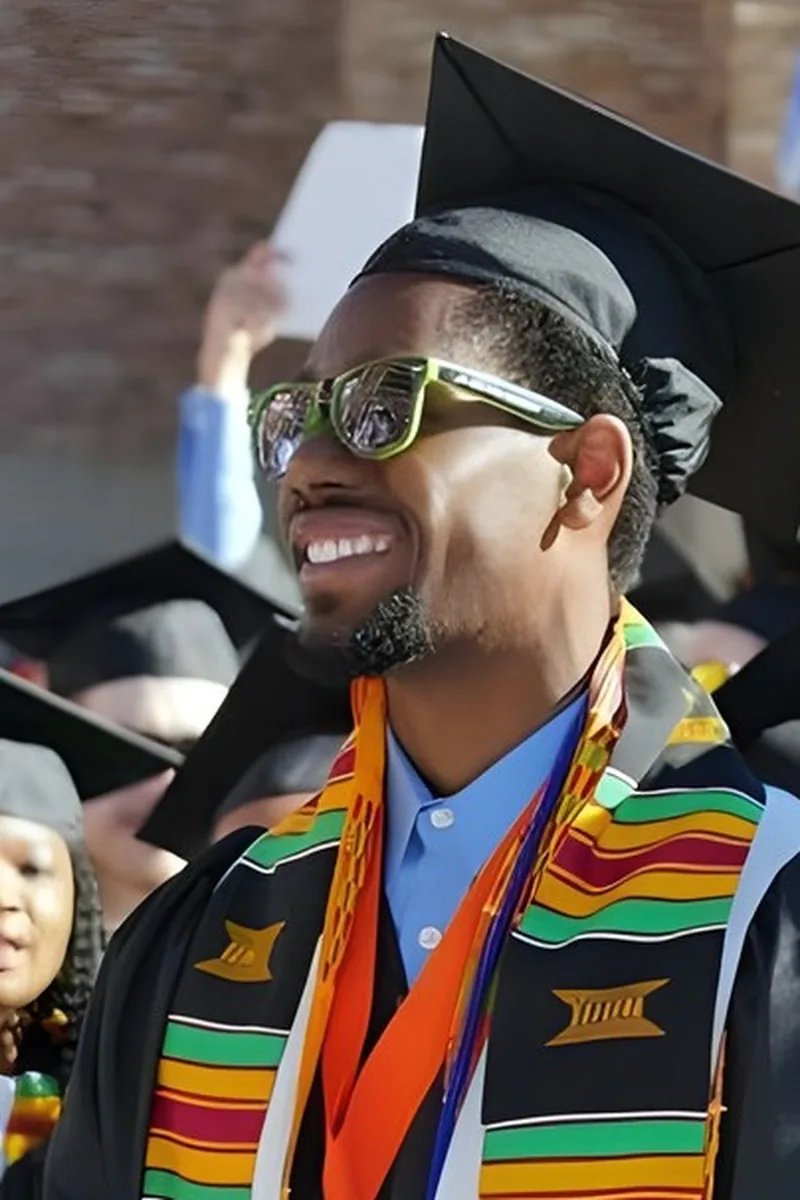
Trig clicks once a student can actually see what sine, cosine, and tangent represent on the unit circle instead of treating them as buttons on a calculator. Anthony's engineering background means he teaches identities, phase shifts, and the law of cosines through real applications — signal analysis, force decomposition, orbital mechanics — so the formulas carry meaning. His 5.0 client rating speaks to how well that approach lands.
The jump from memorizing SOH-CAH-TOA to actually applying sine, cosine, and tangent in proofs and real-world contexts trips up a lot of students. Paul teaches trig by building intuition around the unit circle first, so that identities and inverse functions feel like natural extensions rather than disconnected formulas. His background spans the full math curriculum from pre-algebra through calculus, so he knows exactly where trig fits in the bigger picture.
The jump from memorizing SOH-CAH-TOA to actually applying sine, cosine, and tangent in word problems and unit circle contexts is where most trig students struggle. Lena teaches students to visualize what's happening geometrically — connecting triangle ratios to circular motion — so identities and equations start to make intuitive sense rather than feeling like arbitrary formulas.
Trig identities, unit circle values, and the law of cosines all start to blur together if students learn them as isolated formulas to memorize. Jude connects each identity back to the geometry it comes from, showing why sin²θ + cos²θ = 1 is obvious once you see the right triangle inside the unit circle. His engineering physics coursework at Mines keeps trigonometry in constant use, from wave equations to force decomposition.
Trig identities can feel like an endless list to memorize, but they actually follow a tight internal logic once you see how the unit circle generates all of them. Cody approaches trigonometry through that structural lens — connecting sine and cosine definitions to wave behavior and angular motion, concepts he used daily in his engineering physics program. The result is that identities and equations start making sense rather than just looking like formulas to recall on a test.
An astrophysics and chemistry major at CU Boulder, Graham uses trigonometry every day — calculating orbital mechanics, resolving force vectors, analyzing wave spectra — so he teaches it as something functional rather than theoretical. He digs into how the core angle relationships generate the full set of identities, giving students a way to rebuild any formula from scratch during an exam. Rated 5.0 by students, with a 33 ACT to back up his quantitative chops.
The jump from memorizing SOH-CAH-TOA to actually applying sine and cosine in identities, equations, and graphing is where most trig students stall out. Rosemary tackles unit circle fluency first, building the intuition that makes everything from law of sines to inverse trig functions feel like extensions of the same core idea. Her science background means she's comfortable showing how these functions describe real periodic phenomena, not just abstract curves.
The unit circle doesn't have to be a memorization nightmare. Brenna teaches trig identities and angle relationships by building them from a few core ideas, so students can derive what they need instead of relying on flash cards. Her four years in a university math lab means she's seen every version of the confusion that sine, cosine, and tangent graphs can cause.
Trig identities and the unit circle can feel like a foreign language, which is exactly why Carson's background as an English major is surprisingly useful — he's trained to find patterns in complex systems and explain them clearly. He walks students through sine, cosine, and tangent relationships by building intuition about what the functions actually describe rather than just drilling formulas.
Trig identities start making sense once a student sees the unit circle not as something to memorize but as a geometric machine that generates every sine, cosine, and tangent value. Justin teaches trigonometry by connecting it back to the geometry and physics where it originated — an approach that comes naturally from his dual degrees in physics and mathematics. His 5.0 rating speaks to how well that perspective lands with students.
Trig identities and the unit circle can feel like a wall of arbitrary formulas until someone shows you the geometric intuition underneath. Heather's quantitative background at Vanderbilt gives her the tools to unpack why sine and cosine behave the way they do, turning memorization into understanding.
The unit circle, identities, and graphing sinusoidal functions all become more manageable when a student sees the patterns connecting them. Valerie approaches trig by linking each new identity back to geometric intuition, making it easier to derive formulas on the fly instead of memorizing a sheet of disconnected equations.
Trig identities and the unit circle click faster when a student sees them as patterns rather than formulas to memorize. Samuel's applied math training at Caltech means he uses trigonometric functions constantly — in wave equations, Fourier analysis, and modeling — so he can show exactly where sine, cosine, and tangent show up beyond the textbook.
The unit circle, inverse trig functions, and identity proofs tend to feel like arbitrary memorization until someone shows you the geometric logic underneath. Caroline breaks trig down through the engineering lens she developed earning her M.S. in Mechanical Engineering magna cum laude — where sine and cosine aren't abstract but describe real oscillations and forces. That applied perspective turns a notoriously frustrating subject into something intuitive.
Trig identities stop feeling like arbitrary formulas once you see them on the unit circle — why sine and cosine shift the way they do, how the double-angle formulas actually derive from geometry. Kevin connects these visual intuitions to the algebraic manipulations students need for proofs and equations. Rated 5.0 by students, he's particularly strong at bridging trig into the calculus and physics contexts where it matters most.
Unit circle values, inverse trig functions, and identity proofs tend to feel disconnected until someone shows how they all link back to a single rotating radius. Rhamy's computer engineering background at Vanderbilt keeps him deep in signal analysis and wave functions, so trig identities are part of his daily toolkit. That real-world fluency makes his explanations concrete rather than formulaic.
Trig is where many students first encounter math that feels genuinely spatial — unit circles, radian measure, sinusoidal graphs that actually describe physical phenomena. Allen breaks down identities and transformations by tying them back to their geometric origins, making it easier to see why an identity holds instead of just memorizing the formula.
The unit circle is where most students either click with trigonometry or start drowning in formulas. Julie teaches trig identities, inverse functions, and angle relationships by showing the geometric logic underneath them, so students can reconstruct what they need instead of relying on memorized sheets. Rated 4.9 by students.
Trig identities can feel like an endless list of formulas to memorize, but Judah breaks them down by showing how each one derives from the unit circle. His strong math background — including a 1580 SAT — means he can walk through everything from law of sines applications to graphing phase shifts with clarity and precision.
The unit circle doesn't have to be a memorization nightmare. Tim teaches trig identities and sinusoidal functions by connecting them back to the geometry students already know, building intuition for why these relationships exist — an approach sharpened by his computational science coursework at MIT, where trigonometric functions show up constantly in modeling and signal analysis.
Trig identities can feel like an endless list of formulas until someone shows you the handful of core relationships everything else derives from. Alex tackles trigonometry by anchoring unit circle reasoning first, then building out to law of sines, inverse functions, and identity proofs from that single framework. His applied math training at Stanford means he sees trig as a language for describing real phenomena, not just an exercise in memorization.
Testimonials
Because the right Trigonometry tutor makes all the difference.
Average Session Rating – Based on 3.4M Learner Ratings
Practice Trigonometry
Free practice tests, flashcards, and AI tutoring for Trigonometry
Nearby Trigonometry Tutors
Other Aurora Tutors
Related Math Tutors in Aurora
Frequently Asked Questions
Varsity Tutors matches Aurora students with expert Trigonometry tutors for 1-on-1 instruction. We pair each student with a tutor based on their specific needs, learning style, and goals.
Whether you need homework help, exam prep, or want to get ahead, our Trigonometry tutors are ready to help.
Common challenges include gaps from earlier material, difficulty with specific concepts, and trouble applying learning to new problems. These issues can snowball quickly in Trigonometry.
A tutor identifies where you're stuck, fills in gaps, and provides targeted practice. The 1-on-1 format means you get help exactly where you need it.
Tutors work with your student's actual coursework—homework assignments, class notes, and upcoming tests. This keeps tutoring directly relevant to what's happening in the classroom.
When you share information about your student's school and curriculum, we can match you with a tutor who has relevant experience.
All tutors complete background checks, credential verification, and teaching evaluation. Many of our Trigonometry tutors hold advanced degrees or have years of teaching experience.
You can review tutor profiles to find someone with the right background for your student's level and needs.
Many students see improved grades within a few weeks, along with better understanding of Trigonometry concepts and more confidence tackling challenging material.
Tutors track progress and adjust their approach to ensure continued improvement.
Most students benefit from 1-2 sessions per week. More frequent sessions help if your student is significantly behind or has an important exam coming up.
Your tutor can recommend a schedule based on your student's specific situation and goals.
Tutoring is purchased in packages of hours, with rates varying by tutor experience. Varsity Tutors offers several options to fit different budgets and needs.
You can discuss pricing during your consultation to find what works best.
Your tutor will assess where your student is, discuss goals, and start working on priority areas. Most students bring current homework or upcoming test material to focus on.
By the end, you'll have a clear sense of how the tutor can help and a plan for moving forward.
Let’s find your perfect tutor
Answer a few quick questions. We’ll recommend the right plan and match you with a top 5% tutor.