Award-Winning AP Calculus AB Tutors
serving Fremont, CA
AP Calculus AB
Tutors in Fremont
Private 1-on-1 tutoring, weekly live classes for academic support, test prep & enrichment, practice tests and diagnostics, and more to elevate grades and test scores.
Based on 3.4M Learner Ratings
UniversitiesSchools & Universities
DeliveredHours Delivered
ProficiencyGrowth in Proficiency
Who needs tutoring?
No obligation. Takes ~1 minute.
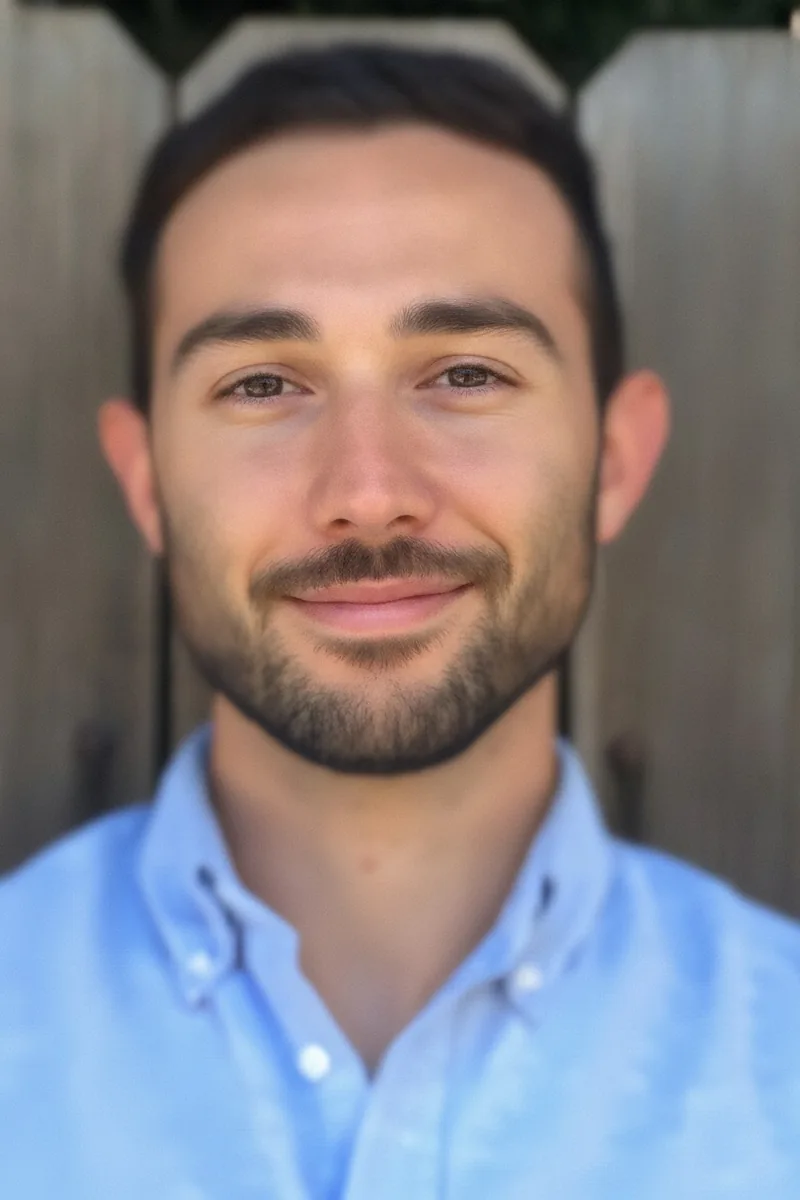
Psychobiology at UCLA required Shant to work through calculus-heavy coursework in biological modeling — population growth curves, enzyme kinetics, pharmacokinetics — where derivatives and integrals describe systems that actually matter. That science-first perspective gives him a practical angle on the AB curriculum's trickiest conceptual jumps, particularly interpreting what a rate of change means in a word problem before writing a single equation. Rated 5.0 by students.

The jump from memorizing derivative rules to actually applying them — related rates, optimization, accumulation functions — is where most AP Calc AB students stall. Milan tackles these application problems by connecting each one back to the underlying concept, so students build intuition instead of hunting for formulas. His double major in computer science and English gives him a rare ability to explain abstract math in plain language.
Limits, derivatives, and integrals each build on the last in AP Calculus AB, and Alexander's math degree from La Sierra University means he can trace that progression clearly — showing, for instance, why the chain rule works rather than just how to apply it. His approach to the related rates and accumulation problems that dominate the AP exam ties abstract rules back to concrete, visual reasoning.
Limits, derivatives, and integrals each build on the last, and one shaky concept early in AP Calculus AB can snowball fast. Michael tackles that chain of dependencies head-on, making sure students can explain *why* the chain rule works before drilling dozens of practice problems. His 35 ACT and deep comfort across math subjects mean he can meet a tricky related-rates problem from multiple angles until one clicks.
I'm an affable chemistry-loving person whose joy come from delivering knowledge :D
Studying physics and mathematics simultaneously means Drew encounters every AB concept twice — limits and derivatives in his math courses, then those same tools applied to motion and force in his physics lectures. That double exposure makes him especially good at explaining why, say, the derivative of position gives velocity, turning the abstraction of differentiation into something students can visualize and reason about on exam day.
The jump from memorizing derivative rules to actually applying them — related rates, optimization, accumulation functions — is where most AB students stall. Daniel's engineering background at Harvey Mudd means he's solved hundreds of real applied-calculus problems, and he brings that concrete, problem-solving mindset to every AB concept from limits through the Fundamental Theorem.
The jump from memorizing derivative rules to applying them — related rates, optimization, accumulation functions — is where most AB students stall. Alain teaches each application type as its own problem-solving framework, connecting the calculus back to the graphical and numerical reasoning the AP exam actually tests. His plan to pursue graduate work in mathematical game theory reflects how deeply he thinks about the logic underneath the procedures.
Two physics doctorates mean Zhengdong has spent years where calculus isn't a course — it's the language, used daily to describe everything from quantum wavefunctions to classical motion equations. That deep fluency shows up most when teaching limits and the Fundamental Theorem, where he can explain the ideas from multiple angles until the underlying logic genuinely connects. Rated 4.8 by students.
Limits, derivatives, and integrals become far more intuitive when a student sees why they matter, not just how to compute them. Dennis's physics background means he can ground every AB Calculus concept — from the chain rule to Riemann sums — in tangible problems involving motion, area, and rates of change.
The jump from memorizing derivative rules to applying them on AP free-response questions is where most Calc AB students lose points. Adam breaks down each problem type — related rates, accumulation functions, slope fields — by teaching the reasoning behind setups so students can handle unfamiliar prompts on exam day.
Teaching calculus at Harvard as a Course Assistant gives Sanjana a front-row seat to the mistakes students make most often — and the explanations that actually click. She breaks down AB topics like related rates, the Fundamental Theorem, and integration techniques by connecting each one back to the graphical intuition behind it.
The jump from "find the derivative" to "explain what the derivative means on this graph" is where most AP Calculus AB students lose points on free-response questions. Justin bridges that gap by teaching limits, Riemann sums, and the Fundamental Theorem as connected ideas rather than isolated procedures — an approach shaped by his dual background in physics and mathematics at Washington University in St. Louis.
Pre-med biology and chemistry at Northwestern means Kade is constantly using calculus to make sense of other disciplines — enzyme kinetics, population growth models, dose-response curves — which keeps the AB material grounded in something tangible. He's especially good at walking through limit definitions and continuity arguments, the early-course concepts that quietly determine whether the rest of the year clicks or collapses. His 1550 SAT reflects the kind of precise, methodical thinking that pays off on AP free-response questions.
Studying chemical engineering and math at Vanderbilt means Greg lives in calculus — using derivatives to model reaction rates and integrals to balance mass and energy flows — so the AB curriculum's toughest concepts have a concrete anchor in his everyday coursework. His 1550 SAT and 5.0 tutoring rating back up an approach that emphasizes building each problem's setup from the physics or chemistry it describes, which is exactly the skill that separates strong free-response scores from mediocre ones.
Studying Applied and Computational Mathematics at Caltech, Samuel lives in the world of calculus daily — limits, derivatives, integrals, and the Fundamental Theorem aren't abstract ideas to him but tools he actively uses. He breaks down AP Calculus AB concepts like related rates and Riemann sums by connecting them to the intuition behind why each technique works, not just the mechanical steps.
Caleb's statistics degree at Duke means he doesn't just teach AP Calculus AB procedures — he understands where concepts like limits, derivatives, and the Fundamental Theorem of Calculus lead in higher math. That perspective lets him explain *why* the chain rule or related rates problems work the way they do, giving students a conceptual grip that pays off on the AP exam.
Cognitive science at Penn might not scream calculus, but Samantha's coursework required enough mathematical modeling — derivatives for rate-of-change problems, integrals for cumulative distributions — that she teaches AP Calculus AB with real fluency. She's especially effective at walking through optimization and curve-sketching problems, where translating a word problem into the right function is half the battle. Her 1460 SAT reflects the quantitative precision she brings to exam prep.
Limits, derivatives, and the Fundamental Theorem of Calculus all require a shift in mathematical thinking that trips up even strong algebra students. Jake's quantitative training at Northwestern gives him a clear framework for walking through each concept step by step, connecting the graphical intuition to the formal rules. His 5.0 rating speaks to how well that approach lands.
Brett spent his senior year at Syracuse tutoring student athletes through AP-level calculus, breaking down limits, derivatives, and integration techniques for students who needed concepts explained more than once and in more than one way. His engineering background at Penn means he can show exactly how the chain rule or a Riemann sum connects to real problems in science and design.
Testimonials
Because the right AP Calculus AB tutor makes all the difference.
Average Session Rating – Based on 3.4M Learner Ratings
Practice AP Calculus AB
Free practice tests, flashcards, and AI tutoring for AP Calculus AB
Nearby AP Calculus AB Tutors
Other Fremont Tutors
Related Math Tutors in Fremont
Frequently Asked Questions
Varsity Tutors matches Fremont students with expert AP Calculus AB tutors for 1-on-1 instruction. We pair each student with a tutor based on their specific needs, learning style, and goals.
Whether you need homework help, exam prep, or want to get ahead, our AP Calculus AB tutors are ready to help.
Common challenges include gaps from earlier material, difficulty with specific concepts, and trouble applying learning to new problems. These issues can snowball quickly in AP Calculus AB.
A tutor identifies where you're stuck, fills in gaps, and provides targeted practice. The 1-on-1 format means you get help exactly where you need it.
Tutors work with your student's actual coursework—homework assignments, class notes, and upcoming tests. This keeps tutoring directly relevant to what's happening in the classroom.
When you share information about your student's school and curriculum, we can match you with a tutor who has relevant experience.
All tutors complete background checks, credential verification, and teaching evaluation. Many of our AP Calculus AB tutors hold advanced degrees or have years of teaching experience.
You can review tutor profiles to find someone with the right background for your student's level and needs.
Many students see improved grades within a few weeks, along with better understanding of AP Calculus AB concepts and more confidence tackling challenging material.
Tutors track progress and adjust their approach to ensure continued improvement.
Most students benefit from 1-2 sessions per week. More frequent sessions help if your student is significantly behind or has an important exam coming up.
Your tutor can recommend a schedule based on your student's specific situation and goals.
Tutoring is purchased in packages of hours, with rates varying by tutor experience. Varsity Tutors offers several options to fit different budgets and needs.
You can discuss pricing during your consultation to find what works best.
Your tutor will assess where your student is, discuss goals, and start working on priority areas. Most students bring current homework or upcoming test material to focus on.
By the end, you'll have a clear sense of how the tutor can help and a plan for moving forward.
Let’s find your perfect tutor
Answer a few quick questions. We’ll recommend the right plan and match you with a top 5% tutor.