Award-Winning High School Computer Science Tutors
serving Scottsdale, AZ
High School Computer Science
Tutors in Scottsdale
Private 1-on-1 tutoring, weekly live classes for academic support, test prep & enrichment, practice tests and diagnostics, and more to elevate grades and test scores.
Based on 3.4M Learner Ratings
UniversitiesSchools & Universities
DeliveredHours Delivered
ProficiencyGrowth in Proficiency
Who needs tutoring?
No obligation. Takes ~1 minute.

Learning to code for the first time can feel like learning a foreign language where every typo crashes the conversation. John, who pivoted from law into software engineering to build his own startup, remembers exactly what it's like to struggle with loops, conditionals, and arrays as a beginner. He teaches the reasoning behind each concept so students can debug their own thinking, not just their syntax.
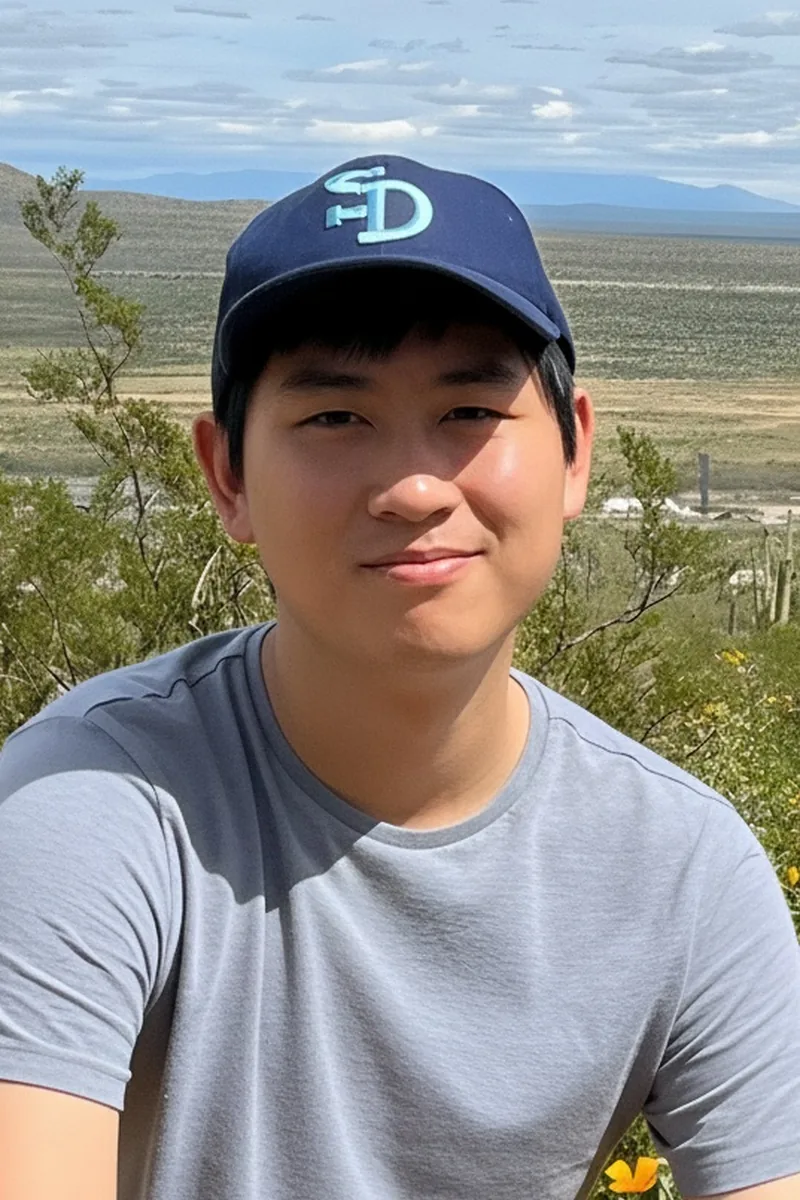
I am a graduate student currently working on my Master's Degree in Big Data Systems.
For students just encountering loops, conditionals, and arrays for the first time, Geoffrey makes programming feel like solving a puzzle rather than memorizing syntax. His engineering background at ASU means he can show exactly where these introductory concepts lead — from simple print statements to controlling real hardware.
AP Computer Science and introductory CS courses throw a lot at students simultaneously — loops, arrays, recursion, object design — and it's easy to fall behind once one concept doesn't land. Mehek teaches each building block through small, runnable programs so students can see exactly what their code does at every step. Her fluency in Java, Python, and C++ lets her adapt explanations to whatever language the class uses.
High school CS courses often move fast from basic loops and conditionals straight into data structures and recursion, and that jump is where most students get stuck. Ajay breaks recursion down by tracing through the call stack step by step, building intuition before writing a single line of code. His experience teaching both Java and general programming means he adapts to whatever language the class uses.
Spencer's strength is translating between disciplines — his international relations and MBA background trained him to take unfamiliar systems, find the underlying logic, and map it out step by step, which is exactly what students need when they're staring at their first function or trying to trace how data moves through a program. He treats coding concepts like a new language (and he's already learned Russian), building vocabulary and grammar before asking students to write full paragraphs. Rated 4.9 by students.
High school CS courses often jump from basic loops to object-oriented programming without enough scaffolding in between. Ayushi, who tutored computer science students at Arizona State's engineering center, knows how to slow down at those transition points — explaining how variables actually live in memory, or why a for-loop and a while-loop aren't interchangeable. She connects each new concept back to something the student already understands.
Most high school CS courses move fast from basic loops and conditionals into more abstract territory like recursion and sorting algorithms, and that's exactly where students tend to lose the thread. Alan's background as both an MIT-trained engineer and a longtime software developer lets him explain why code behaves the way it does, not just what syntax to type.
As experienced and passionated educator with a Bachelor's degree in Computer Science from Rice University, I am passionate about empowering students to achieve their academic goals. With over 3 years of tutoring experience in subjects such as AP Computer Science A, Machine Learning, and SAT Math, I adapt to different learning styles and create a supportive learning environment. My teaching philosophy centers on personalized instruction, where I connect with each student to understand their unique learning styles and challenges. I take pride in guiding students through the complexities of computer science and college application essays, equipping them with the skills they need for future success. Outside of tutoring, I enjoy exploring new technologies and engaging in coding projects to improve my teaching approach.
A Princeton postdoctoral researcher in machine learning, Firas brings PhD-level computer science depth to high school topics that often get taught superficially — things like how recursion actually works under the hood, or why an O(n²) sort matters even in an intro course. He teaches Python, Java, and JavaScript across his tutoring practice, so he can match whatever language a student's class uses and still keep the focus on the conceptual reasoning underneath. Rated 5.0 by students.
I'm a recent college graduate with degrees in Biological Sciences and Russian from Ohio University. During my time there, I tutored students in a variety of subjects, including biology, chemistry, and Spanish. In addition, I worked as both a peer advisor and teaching assistant, which gives me insight into the learning strategies and study skills that students need to succeed. As a tutor, I like to focus on doing actual problems with students because it is the most effective way to immediately identify their strengths and weaknesses and to address them. In my free time, I like to lift weights, read books, and spend time with my friends.
For students encountering loops, conditionals, and arrays for the first time, the leap from "I typed the code" to "I understand why it works" can be steep. Jonathan bridges that gap by walking through each concept with concrete examples and building up to small projects that make the logic tangible. His CS coursework at Cornell keeps him sharp on the fundamentals that matter most at the high school level.
Robotics competitions and hackathons have given June a hands-on fluency with programming that translates directly to high school CS topics like loops, conditionals, data structures, and algorithm design. As an electrical engineering student at Brown, she writes code that has to actually run on hardware — so she's used to debugging methodically and explaining why a program behaves the way it does.
The jump from writing your first loop to actually thinking like a programmer is where most high schoolers get stuck — and it's exactly where Brice thrives. He breaks down concepts like conditionals, arrays, and basic algorithm design by connecting them to projects students actually want to build. His CS coursework at MIT keeps him sharp on both fundamentals and where the field is heading.
The jump from "I can write a for-loop" to "I understand why this algorithm is efficient" is where most high school CS students get stuck. Jack bridges that gap by connecting introductory programming concepts — conditionals, arrays, functions — to the deeper logic underneath, drawing on his own CS studies at UNC Chapel Hill.
Getting comfortable with loops, conditionals, and functions early makes every future CS course easier — and Justin explains these building blocks by tying them to problems students can visualize, like simulating physics or processing data. His background spans physics, applied math, and programming, so he can show high schoolers why the code they're writing actually matters beyond the assignment.
That first encounter with loops, conditionals, and arrays can feel overwhelming — but it's really an exercise in precise logical thinking. Calin studied both mathematics and computer science formally, so he connects programming concepts to the kind of step-by-step reasoning students already use in algebra and geometry. He's especially effective at making abstract ideas like functions and scope concrete through hands-on coding examples.
Between AP Computer Science A prep and general programming fundamentals, Clive covers the full scope of what high school CS courses demand — from writing clean loops and conditionals to understanding recursion and sorting algorithms. He codes in multiple languages and adapts explanations to whatever environment a student's class uses. His approach is to build each concept through small, testable programs so students can see results immediately.
High school CS courses often jump quickly from basic syntax to projects involving loops, arrays, and object-oriented design — and that's where students get lost. Jeff breaks down each programming concept into its logical components, showing how a for-loop actually iterates or why a function needs a return statement, so the code starts making sense instead of feeling like memorized spells.
Testimonials
Because the right High School Computer Science tutor makes all the difference.
Average Session Rating – Based on 3.4M Learner Ratings
Nearby High School Computer Science Tutors
Other Scottsdale Tutors
Related Technology and Coding Tutors in Scottsdale
Frequently Asked Questions
Varsity Tutors matches Scottsdale students with expert High School Computer Science tutors for 1-on-1 instruction. We pair each student with a tutor based on their specific needs, learning style, and goals.
Whether you need homework help, exam prep, or want to get ahead, our High School Computer Science tutors are ready to help.
Common challenges include gaps from earlier material, difficulty with specific concepts, and trouble applying learning to new problems. These issues can snowball quickly in High School Computer Science.
A tutor identifies where you're stuck, fills in gaps, and provides targeted practice. The 1-on-1 format means you get help exactly where you need it.
Tutors work with your student's actual coursework—homework assignments, class notes, and upcoming tests. This keeps tutoring directly relevant to what's happening in the classroom.
When you share information about your student's school and curriculum, we can match you with a tutor who has relevant experience.
All tutors complete background checks, credential verification, and teaching evaluation. Many of our High School Computer Science tutors hold advanced degrees or have years of teaching experience.
You can review tutor profiles to find someone with the right background for your student's level and needs.
Many students see improved grades within a few weeks, along with better understanding of High School Computer Science concepts and more confidence tackling challenging material.
Tutors track progress and adjust their approach to ensure continued improvement.
Most students benefit from 1-2 sessions per week. More frequent sessions help if your student is significantly behind or has an important exam coming up.
Your tutor can recommend a schedule based on your student's specific situation and goals.
Tutoring is purchased in packages of hours, with rates varying by tutor experience. Varsity Tutors offers several options to fit different budgets and needs.
You can discuss pricing during your consultation to find what works best.
Your tutor will assess where your student is, discuss goals, and start working on priority areas. Most students bring current homework or upcoming test material to focus on.
By the end, you'll have a clear sense of how the tutor can help and a plan for moving forward.
Let’s find your perfect tutor
Answer a few quick questions. We’ll recommend the right plan and match you with a top 5% tutor.