Award-Winning Science Tutors
serving Anchorage, AK
Science
Tutors in Anchorage
Private 1-on-1 tutoring, weekly live classes for academic support, test prep & enrichment, practice tests and diagnostics, and more to elevate grades and test scores.
Based on 3.4M Learner Ratings
UniversitiesSchools & Universities
DeliveredHours Delivered
ProficiencyGrowth in Proficiency
Who needs tutoring?
No obligation. Takes ~1 minute.

An economics degree means Simon spent years building and testing models — controlling for variables, interpreting data sets, and figuring out whether the numbers actually support a conclusion or just look like they do. That same process underpins every science class, from setting up a controlled experiment to reading a graph and explaining what it reveals. His 1540 SAT confirms the quantitative and analytical chops to back it up.
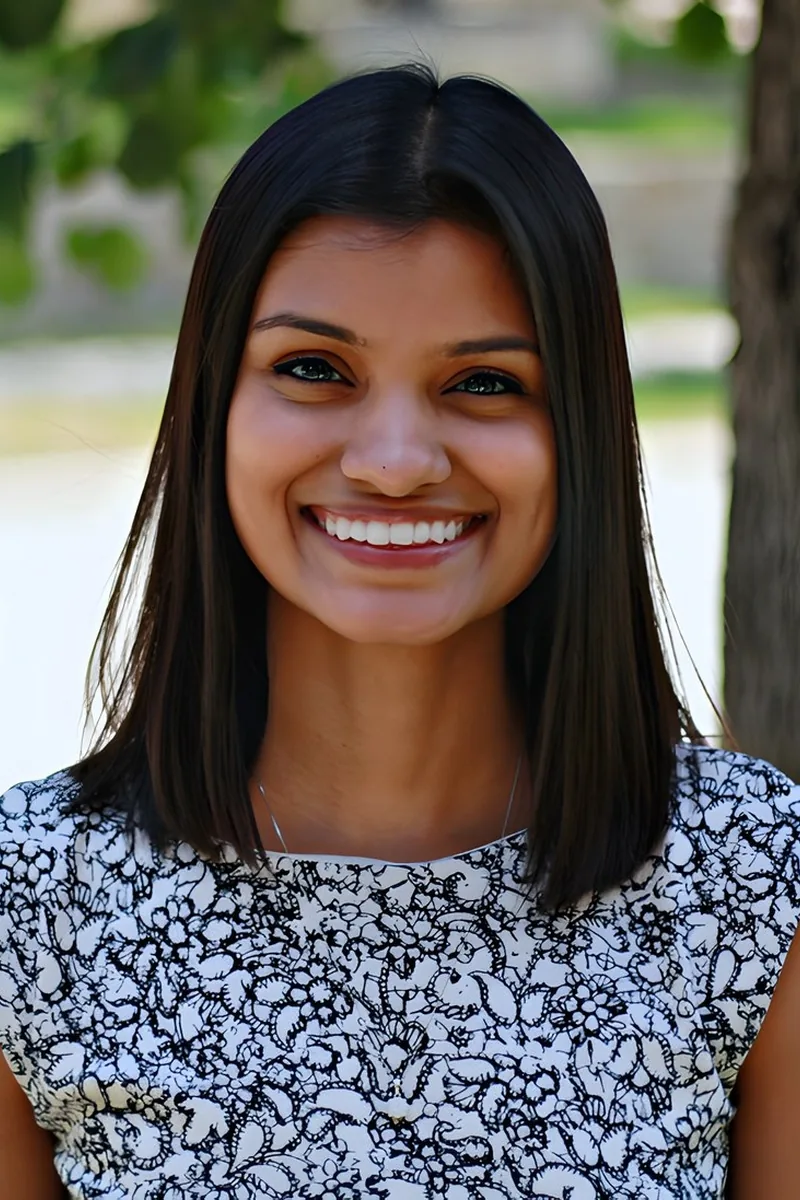
Biochemistry, cell biology, neuroscience, physical chemistry — Sugi didn't just take these courses, she built a medical career on top of them. When a student struggles with something like cellular respiration or chemical equilibrium, she connects the textbook version to the larger story of why that process matters, which turns rote memorization into genuine understanding.
A statistics and machine learning certificate at Princeton means Julie spends her coursework building models, testing hypotheses against real data, and evaluating whether results are statistically meaningful — all of which is applied scientific reasoning. She brings that quantitative rigor to science tutoring, especially when students need to move from memorizing definitions to actually interpreting experiments, reading graphs, and explaining what their data means. Her 4.9 rating suggests the approach lands.
Biology was Joseph's undergraduate focus at UCLA, and his public health master's at Yale keeps him immersed in how scientific concepts apply to real problems like disease transmission and environmental health. He unpacks topics like the scientific method, cell structure, and ecosystems by connecting them to questions students encounter outside the classroom.
A philosophy grad student at UNM with a 34 ACT, Justin treats science the way he treats an argument in formal logic — isolating each claim, checking whether the evidence actually supports it, and identifying where the reasoning breaks down. That approach is especially useful when students need to evaluate hypotheses, interpret graphs, or explain why an experiment's results do or don't match a prediction. His 5.0 rating suggests the method lands.
Andrew holds a BS in Physics and a PhD in Biomedical Engineering, which means he's spent over a decade thinking scientifically — designing experiments, interpreting data, and connecting abstract principles to measurable outcomes. He unpacks concepts in mechanics, electricity, and biology-adjacent topics like biomechanics with the kind of depth that comes from genuine research experience. Students get explanations rooted in understanding, not just memorized definitions.
Speech-language pathology graduate training at Columbia is surprisingly science-heavy — anatomy, neuroscience, research design — and Sherry brings that clinical lens to teaching students how biological systems work and how experiments should be structured. Her UChicago psychology and linguistics background also means she's comfortable with everything from statistical reasoning to breaking apart dense scientific terminology using morphological roots. Rated 5.0 by students.
Law school at the University of Chicago drills a specific kind of reasoning — isolating what the evidence actually proves versus what you assume it proves — and Elena applies that same discipline when walking students through scientific concepts like experimental design, variable control, and data interpretation. Her government and Spanish double major means she's used to synthesizing dense, unfamiliar material quickly, which is exactly the skill students need when a science unit throws new terminology and complex diagrams at them simultaneously.
Having studied biology and chemistry alongside her political science degree at the University of Chicago, Asta can walk students through core science concepts — from cell structure to chemical reactions — with genuine content knowledge rather than just test-taking tricks. Her 35 ACT confirms she handled the Science section's rapid-fire data interpretation at a near-perfect level, and she brings that same ability to teach students how to read graphs, pull patterns from tables, and connect evidence to conclusions. Rated 5.0 by students.
Running a tutoring program at a charter middle school meant Liz wasn't just teaching science content — she was figuring out how to make vocabulary-heavy units on cells, ecosystems, and states of matter land for students with dyslexia, ADHD, and other learning differences. Her special education master's gave her a toolkit of concrete strategies for breaking down dense nonfiction text and multi-step processes, which is where most science students actually get stuck. She holds a 4.7 rating across her subjects.
As a mechanical engineering student at Harvard, Christopher lives at the intersection of physics and chemistry daily — calculating forces, analyzing material properties, and modeling energy systems. That applied perspective makes him especially effective at showing students why scientific concepts matter beyond the textbook, turning abstract formulas into concrete, intuitive ideas.
A chemistry major headed to Columbia Medical School, James treats science tutoring as an exercise in building intuition — understanding why a reaction proceeds a certain way or how energy flows through a biological system, not just memorizing diagrams. He's especially sharp at bridging the gap between introductory courses and the more rigorous thinking that AP or IB-level science demands.
Testimonials
Because the right Science tutor makes all the difference.
Average Session Rating – Based on 3.4M Learner Ratings
Practice Science
Free practice tests, flashcards, and AI tutoring for Science
Other Anchorage Tutors
Related Science Tutors in Anchorage
Frequently Asked Questions
Varsity Tutors matches Anchorage students with expert Science tutors for 1-on-1 instruction. We pair each student with a tutor based on their specific needs, learning style, and goals.
Whether you need homework help, exam prep, or want to get ahead, our Science tutors are ready to help.
Common challenges include gaps from earlier material, difficulty with specific concepts, and trouble applying learning to new problems. These issues can snowball quickly in Science.
A tutor identifies where you're stuck, fills in gaps, and provides targeted practice. The 1-on-1 format means you get help exactly where you need it.
Tutors work with your student's actual coursework—homework assignments, class notes, and upcoming tests. This keeps tutoring directly relevant to what's happening in the classroom.
When you share information about your student's school and curriculum, we can match you with a tutor who has relevant experience.
All tutors complete background checks, credential verification, and teaching evaluation. Many of our Science tutors hold advanced degrees or have years of teaching experience.
You can review tutor profiles to find someone with the right background for your student's level and needs.
Many students see improved grades within a few weeks, along with better understanding of Science concepts and more confidence tackling challenging material.
Tutors track progress and adjust their approach to ensure continued improvement.
Most students benefit from 1-2 sessions per week. More frequent sessions help if your student is significantly behind or has an important exam coming up.
Your tutor can recommend a schedule based on your student's specific situation and goals.
Tutoring is purchased in packages of hours, with rates varying by tutor experience. Varsity Tutors offers several options to fit different budgets and needs.
You can discuss pricing during your consultation to find what works best.
Your tutor will assess where your student is, discuss goals, and start working on priority areas. Most students bring current homework or upcoming test material to focus on.
By the end, you'll have a clear sense of how the tutor can help and a plan for moving forward.
Let’s find your perfect tutor
Answer a few quick questions. We’ll recommend the right plan and match you with a top 5% tutor.