Award-Winning Middle School Math Tutors
serving Anchorage, AK
Middle School Math
Tutors in Anchorage
Private 1-on-1 tutoring, weekly live classes for academic support, test prep & enrichment, practice tests and diagnostics, and more to elevate grades and test scores.
Based on 3.4M Learner Ratings
UniversitiesSchools & Universities
DeliveredHours Delivered
ProficiencyGrowth in Proficiency
Who needs tutoring?
No obligation. Takes ~1 minute.
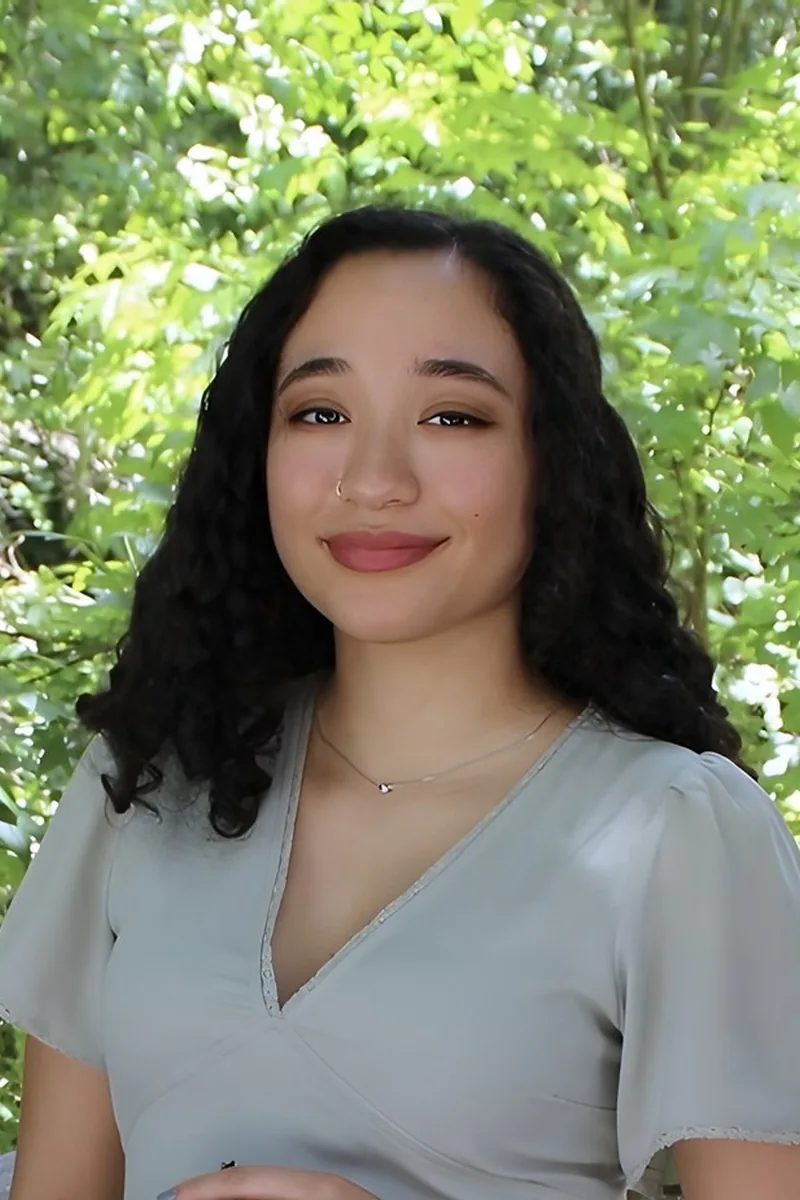
The jump from arithmetic to proportional reasoning, basic geometry, and introductory equations is where many students either build momentum or start to disengage. Kaylah's approach leans on making each concept visual and concrete — turning ratios into real comparisons, graphing relationships on a coordinate plane — before introducing abstract notation. Her statistics and math minors from the University of Florida give her deep fluency with the fundamentals.
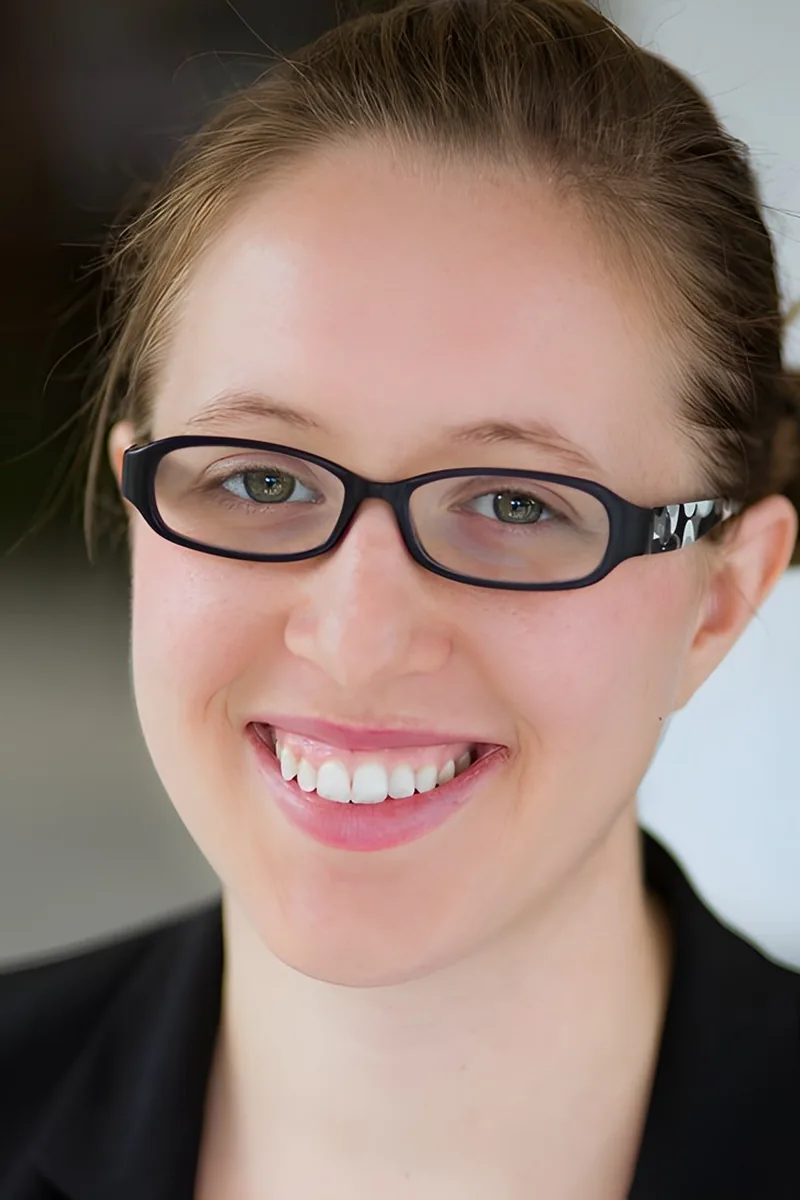
Scoring a 35 ACT and 1570 SAT means Amber has the quantitative chops to teach middle school math cold, but her theater background is what makes her especially effective — she knows how to read an audience, adjust on the fly, and make a concept land. She zeroes in on the specific spot where a student's understanding breaks down, whether that's negative number operations or setting up basic equations, and rebuilds from there. Rated 5.0 by students.
The jump from elementary math to middle school math means juggling ratios, proportions, and introductory geometry all at once. Daniel keeps each topic grounded in practical scenarios — splitting a bill, scaling a recipe, measuring a room — so the reasoning clicks before the formulas pile up.
Fractions, decimals, and proportional reasoning are the concepts that either build a student's confidence in math or quietly undermine it for years. Valerie's background spans subjects from classics to emergency medicine, and she channels that range into finding the analogy or explanation that makes a tricky middle school concept land for each learner.
A year as a course assistant in Harvard's math department — teaching introductory calculus to undergraduates — gave Richard an unusual vantage point on middle school math: he knows exactly which arithmetic and pre-algebraic habits (especially around fractions, negative numbers, and variable expressions) need to be rock-solid before higher math stops making sense. He scored a 36 ACT and 1600 SAT, but more relevantly, he's spent time volunteering to teach a weekly course to middle schoolers through Harvard's Leadership Institute, so he's comfortable matching his explanations to how younger students actually think.
Akarsh's cellular and molecular biology training — both undergrad and master's level — means he's been doing math in the service of science for years, from calculating dilution ratios to interpreting growth curves. That gives him a practical vocabulary for showing middle schoolers how decimals, fractions, and basic equations actually function outside a textbook. His 1560 SAT score speaks to the fundamentals being rock-solid underneath the advanced science.
Matt's neuroscience and chemistry training means he's been doing math in context for years — unit conversions, data analysis, interpreting graphs — and he brings that same practical mindset to middle school topics like order of operations, expressions, and coordinate graphing. He's especially effective at showing students how to set up a problem before solving it, a habit that prevents the careless errors that pile up once pre-algebra kicks in. Rated 5.0 by students.
The jump from arithmetic to middle school math — ratios, proportions, negative numbers, basic graphing — is where a lot of students quietly lose confidence. Ayako spots those shaky spots early and rebuilds them with concrete examples before moving into more abstract territory. She's taught across math and standardized test prep, so she knows exactly which foundational skills matter most going forward.
Having completed the full IB diploma program and scored a 35 on the ACT, Dalton knows what it takes to build the kind of mathematical fluency that carries through high school and beyond — and he can trace that back to the fundamentals middle schoolers are working on now, like operations with integers and setting up simple equations. His Mass Communications degree sharpened his ability to explain ideas clearly and concisely, which turns out to be exactly what a confused seventh grader needs when a concept like negative number arithmetic suddenly stops making sense.
I am a graduate of the University of Pennsylvania with a Masters degree in Education and have been an Elementary and Middle School educator for over thirty years. I have worked with students in the inner city, suburbs, Appalachia, and Deep South. I love teaching and children, and have discovered my passion in tutoring students who are struggling in Reading and Math. I have taught children with learning disabilities to read, and coached students with dyscalculia in math and reading. I worked as a principal for the past eight years, so was working with students from Pre-K to 8th grade, coaching teachers, analyzing data, and tutoring individual students in math and reading. I have worked as a national park ranger in the past, so social studies and history are areas of strength. Students that I teach respond well to my teaching style and enjoy working with me. I believe that education is extremely important for children's futures and do everything that I can to help them be successful.
The jump from arithmetic to proportional reasoning, integer operations, and basic equation-solving is one of the biggest conceptual leaps in all of K-12 math. Simon tackles middle school math by making sure students understand the reasoning behind each step — why dividing by a negative flips an inequality sign, or how a ratio actually describes a relationship. His 1540 SAT speaks to the kind of foundational fluency he builds at this level.
Ratios, proportions, and early equation-solving can feel abstract to middle schoolers who've only ever worked with straightforward arithmetic. Marisa bridges that gap by connecting each new concept to something concrete — turning word problems into stories and fractions into visual models that actually click.
Testimonials
Because the right Middle School Math tutor makes all the difference.
Average Session Rating – Based on 3.4M Learner Ratings
Other Anchorage Tutors
Related Math Tutors in Anchorage
Frequently Asked Questions
Varsity Tutors matches Anchorage students with expert Middle School Math tutors for 1-on-1 instruction. We pair each student with a tutor based on their specific needs, learning style, and goals.
Whether you need homework help, exam prep, or want to get ahead, our Middle School Math tutors are ready to help.
Common challenges include gaps from earlier material, difficulty with specific concepts, and trouble applying learning to new problems. These issues can snowball quickly in Middle School Math.
A tutor identifies where you're stuck, fills in gaps, and provides targeted practice. The 1-on-1 format means you get help exactly where you need it.
Tutors work with your student's actual coursework—homework assignments, class notes, and upcoming tests. This keeps tutoring directly relevant to what's happening in the classroom.
When you share information about your student's school and curriculum, we can match you with a tutor who has relevant experience.
All tutors complete background checks, credential verification, and teaching evaluation. Many of our Middle School Math tutors hold advanced degrees or have years of teaching experience.
You can review tutor profiles to find someone with the right background for your student's level and needs.
Many students see improved grades within a few weeks, along with better understanding of Middle School Math concepts and more confidence tackling challenging material.
Tutors track progress and adjust their approach to ensure continued improvement.
Most students benefit from 1-2 sessions per week. More frequent sessions help if your student is significantly behind or has an important exam coming up.
Your tutor can recommend a schedule based on your student's specific situation and goals.
Tutoring is purchased in packages of hours, with rates varying by tutor experience. Varsity Tutors offers several options to fit different budgets and needs.
You can discuss pricing during your consultation to find what works best.
Your tutor will assess where your student is, discuss goals, and start working on priority areas. Most students bring current homework or upcoming test material to focus on.
By the end, you'll have a clear sense of how the tutor can help and a plan for moving forward.
Let’s find your perfect tutor
Answer a few quick questions. We’ll recommend the right plan and match you with a top 5% tutor.