Award-Winning Calculus Tutors
serving Anchorage, AK
Calculus
Tutors in Anchorage
Private 1-on-1 tutoring, weekly live classes for academic support, test prep & enrichment, practice tests and diagnostics, and more to elevate grades and test scores.
Based on 3.4M Learner Ratings
UniversitiesSchools & Universities
DeliveredHours Delivered
ProficiencyGrowth in Proficiency
Who needs tutoring?
No obligation. Takes ~1 minute.
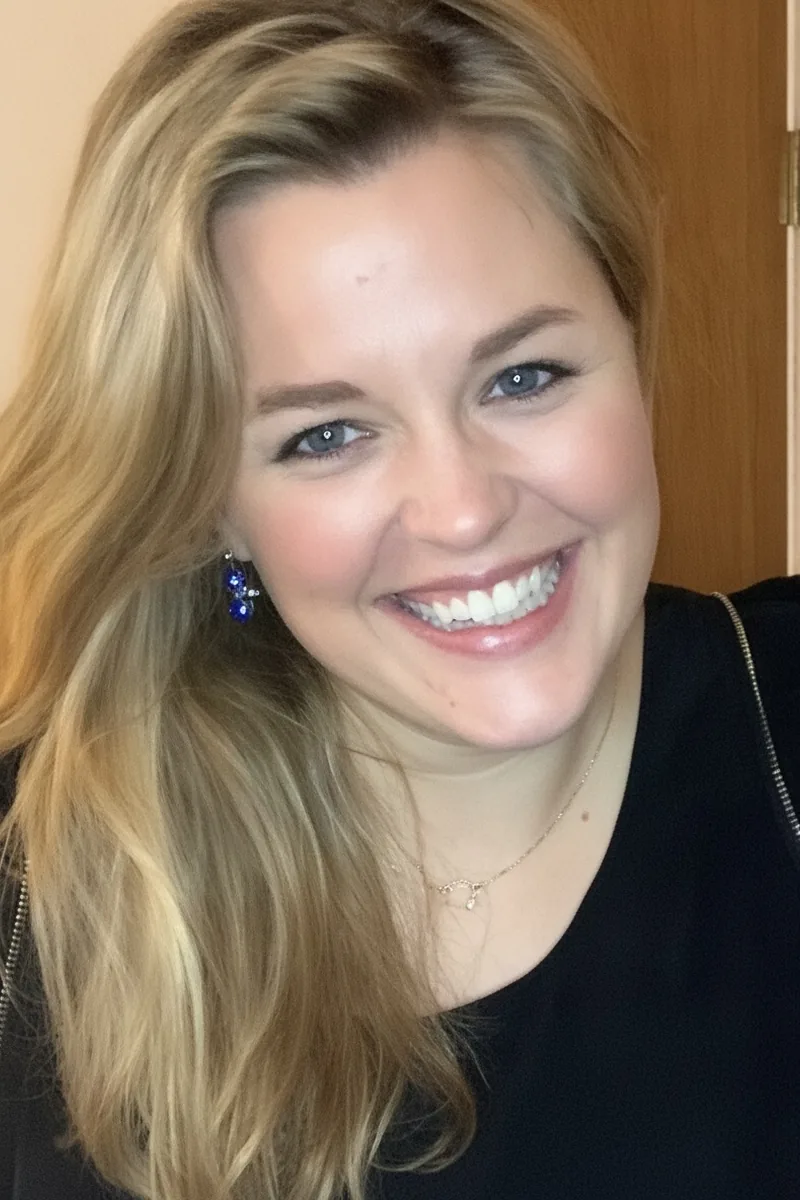
Comparative literature at Princeton isn't a math degree, so Sash is straightforward that calculus sits outside his primary training. That said, a 1560 SAT demonstrates real quantitative ability, and his literary background — dissecting layered arguments, tracing how one idea builds on another — maps surprisingly well onto walking through the logic of limits and early derivative concepts where understanding the reasoning matters more than grinding through formulas.
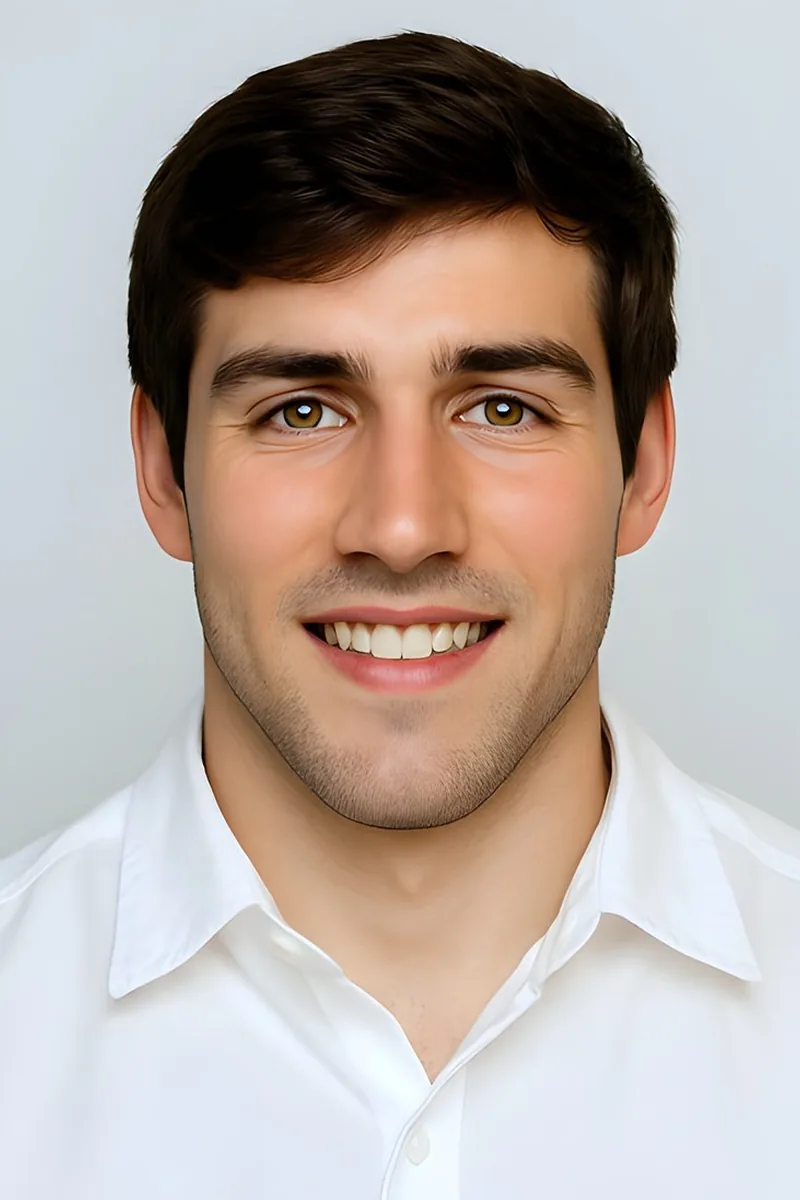
From epsilon-delta definitions of limits to integration techniques like substitution and parts, calculus demands both conceptual understanding and mechanical skill. James has tutored college students through calculus courses at Harvard for years, often connecting abstract ideas — like why the chain rule works — back to tangible applications in chemistry and the physical sciences. That dual perspective makes dense material more intuitive.
Frances's psychology background at Duke involved statistical modeling and data analysis — work that builds directly on the calculus concepts of rates of change and area under a curve. She teaches early calculus by connecting derivatives and integrals to the kind of quantitative reasoning she used in research, making notation feel purposeful rather than arbitrary. Rated 4.6 by students.
Limits, derivatives, and integrals all click faster when a student sees the underlying logic instead of just memorizing formulas. Brian studied math and economics at Caltech, where calculus wasn't just a course but the daily language of nearly every discipline — so he teaches it with an emphasis on why the chain rule or integration by parts works, not just when to apply it.
Anthropology and human evolutionary studies might not scream calculus, but Victoria's coursework involved quantitative modeling of population dynamics and morphological change over time — territory where rates of change and accumulation aren't abstract concepts but tools for answering real questions. Her 1520 SAT confirms strong quantitative chops, and she brings that same analytical rigor to breaking down derivatives and integrals into steps that actually make sense.
Computer science at Stanford means David didn't just take calculus — he relied on it, using derivatives for gradient descent in machine learning and integrals for probability distributions in algorithms courses. That ongoing dependence on calculus as a working tool gives him a practical fluency with the material, and his 1570 SAT confirms the quantitative chops to back it up.
An MIT math degree followed by PhD work in Operations Research at Georgia Tech means Isabella has used calculus as a daily tool — optimization problems, convergence proofs, and the kind of rigorous analysis where understanding integration techniques and multivariable derivatives isn't optional. She's TA'd college-level math courses and taught gifted middle and high school students, so she can adjust the depth from first encounters with limits all the way through series and differential equations. Rated 5.0 by students.
Philosophy at Northwestern trained Emily to dissect complex arguments into their smallest logical steps — a skill that maps surprisingly well onto the sequential reasoning calculus demands, especially when unpacking what a limit definition actually says or why the chain rule works the way it does. Her legal career sharpened that precision further, since building a case and building a proof share the same demand: every step must follow inevitably from the last.
Three BS degrees including one in Finance means Matt has worked through the calculus that underpins financial modeling — present value derivations, marginal cost optimization, and the continuous compounding formulas that rely on limits and exponentials. His 1530 SAT confirms the quantitative chops to back that up, and he teaches the material by connecting each rule to the business logic that makes it worth learning.
Keith's academic path runs through political science and law, not mathematics, so he's upfront that calculus is well outside his core expertise. His tutoring experience across multiple math levels means he can support students navigating early concepts like limits and basic derivatives, bringing the same structured, logical thinking that earned him a 1560 SAT and admission to Cornell Law.
Mechanical engineering grad work is essentially applied calculus — Aaron uses derivatives to model thermal systems, integrals to analyze fluid flow, and differential equations to predict how structures respond to stress, every single day. That daily fluency means he can teach integration techniques or the chain rule by connecting them to problems where the math is doing real physical work. Rated 5.0 by students.
Comparative literature trains you to hold multiple complex systems in your head simultaneously and trace how they interact — a skill that maps surprisingly well onto the conceptual side of early calculus, where understanding what a limit *means* matters more than grinding through computation. Jacob's 1550 SAT confirms strong quantitative chops, and his teaching background at UC Berkeley means he knows how to break down intimidating new notation for students encountering it for the first time.
Testimonials
Because the right Calculus tutor makes all the difference.
Average Session Rating – Based on 3.4M Learner Ratings
Other Anchorage Tutors
Related Math Tutors in Anchorage
Frequently Asked Questions
Varsity Tutors matches Anchorage students with expert Calculus tutors for 1-on-1 instruction. We pair each student with a tutor based on their specific needs, learning style, and goals.
Whether you need homework help, exam prep, or want to get ahead, our Calculus tutors are ready to help.
Common challenges include gaps from earlier material, difficulty with specific concepts, and trouble applying learning to new problems. These issues can snowball quickly in Calculus.
A tutor identifies where you're stuck, fills in gaps, and provides targeted practice. The 1-on-1 format means you get help exactly where you need it.
Tutors work with your student's actual coursework—homework assignments, class notes, and upcoming tests. This keeps tutoring directly relevant to what's happening in the classroom.
When you share information about your student's school and curriculum, we can match you with a tutor who has relevant experience.
All tutors complete background checks, credential verification, and teaching evaluation. Many of our Calculus tutors hold advanced degrees or have years of teaching experience.
You can review tutor profiles to find someone with the right background for your student's level and needs.
Many students see improved grades within a few weeks, along with better understanding of Calculus concepts and more confidence tackling challenging material.
Tutors track progress and adjust their approach to ensure continued improvement.
Most students benefit from 1-2 sessions per week. More frequent sessions help if your student is significantly behind or has an important exam coming up.
Your tutor can recommend a schedule based on your student's specific situation and goals.
Tutoring is purchased in packages of hours, with rates varying by tutor experience. Varsity Tutors offers several options to fit different budgets and needs.
You can discuss pricing during your consultation to find what works best.
Your tutor will assess where your student is, discuss goals, and start working on priority areas. Most students bring current homework or upcoming test material to focus on.
By the end, you'll have a clear sense of how the tutor can help and a plan for moving forward.
Let’s find your perfect tutor
Answer a few quick questions. We’ll recommend the right plan and match you with a top 5% tutor.