Award-Winning AP Physics C: Mechanics Tutors
serving Huntsville, AL
AP Physics C: Mechanics
Tutors in Huntsville
Private 1-on-1 tutoring, weekly live classes for academic support, test prep & enrichment, practice tests and diagnostics, and more to elevate grades and test scores.
Based on 3.4M Learner Ratings
UniversitiesSchools & Universities
DeliveredHours Delivered
ProficiencyGrowth in Proficiency
Who needs tutoring?
No obligation. Takes ~1 minute.

I am an aerospace engineering student. I am very passionate about teaching math, physics, and chemistry. I realized tutoring was my calling while working as a tutor at my school. Seeing students gain a greater understanding of the subject was the highlight of my day while working there.
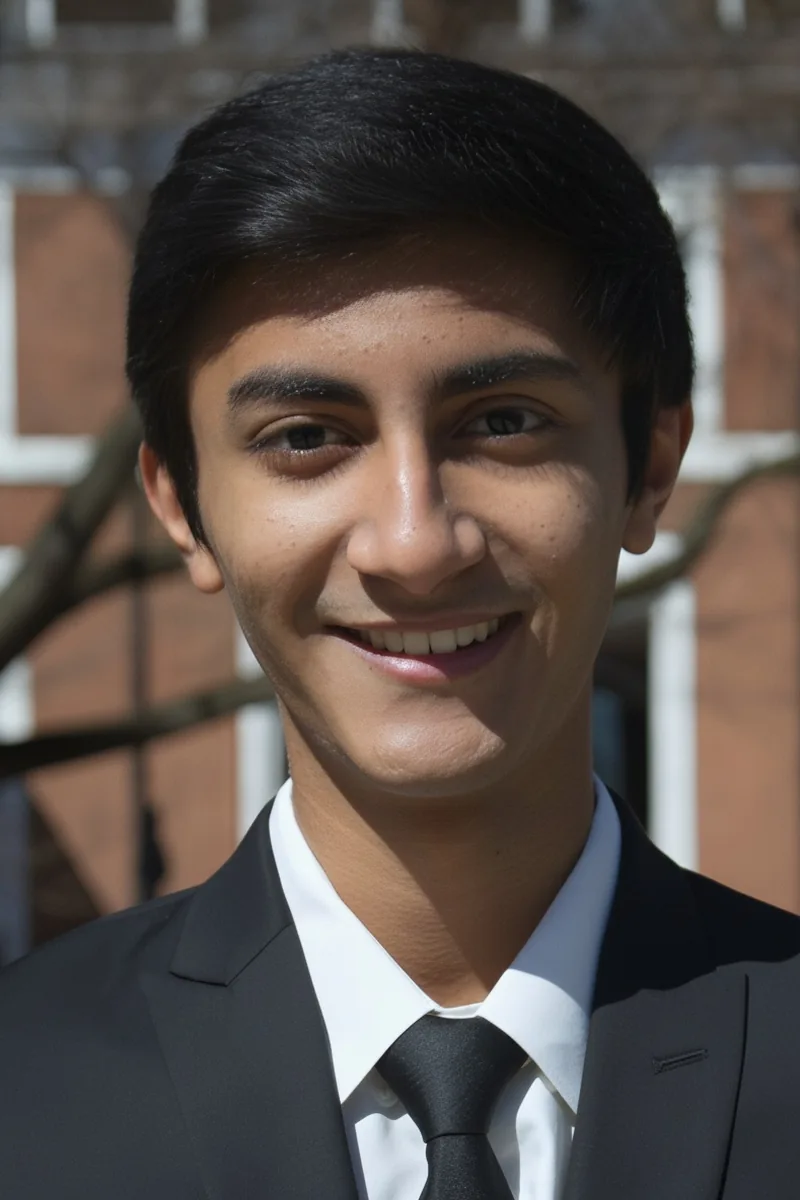
Bidyut's biomedical engineering coursework at Johns Hopkins fuses calculus-based mechanics with real physical systems — analyzing forces on prosthetic joints, modeling fluid dynamics in arteries — so the Newtonian mechanics and rotational problems on the AP Physics C exam feel like simplified versions of what he already does daily. He scored a 36 ACT and holds a 5.0 tutoring rating, and he's particularly sharp at showing students how to translate a word problem into the correct integral or differential equation before touching any numbers.
Biophysics at Rice means Aadith solves mechanics problems where the calculus isn't optional — modeling forces on protein structures, analyzing torque in molecular motors, applying Newton's laws to systems most students never picture in a physics classroom. That cross-disciplinary lens gives him a knack for teaching students how to read a physical scenario and decide whether to reach for an energy integral or a force-based differential equation. His 1590 SAT underscores the mathematical precision he brings to every free-response setup.
Darren is midway through his physics degree at Northwestern, which means he's actively taking the upper-division mechanics courses that build directly on everything AP Physics C tests — and he still remembers exactly where the conceptual jumps from kinematics to rotational dynamics tripped him up the first time. He zeroes in on free-body diagrams and getting the calculus setup right before students ever touch a number, treating each problem as a reasoning exercise rather than a formula hunt. Rated 5.0 by students.
Scoring a 5 on both AP Physics C: Mechanics and AP Calculus BC while taking 16 AP courses total, Derek built the habit of connecting calculus tools to physical intuition under real exam pressure — and he brings that same efficiency to tutoring. His computer science major at Harvard sharpens his approach to mechanics problems: decompose the system, identify constraints, then execute the math cleanly, much like debugging code. Rated 4.9 by students, he's particularly effective at teaching the structured problem-solving that turns rotational dynamics and variable-force scenarios into manageable steps.
Corrina's mechanical engineering degree means she's solved the calculus-based force, torque, and energy problems in AP Physics C: Mechanics not as exam prep but as daily coursework — and her 1580 SAT reflects the quantitative precision that makes the difference on tricky free-response integrations. She zeroes in on the transition from linear to rotational dynamics, where most students lose points by misapplying familiar formulas instead of building the physics from the differential equation up.
Emergency medicine demands snap physics intuition — understanding how forces transfer through a body, how momentum changes in a collision, how energy dissipates on impact — and Victoria built that intuition through her pre-med physics coursework before medical school at Boston University. She teaches AP Physics C: Mechanics by grounding each calculus setup in a concrete physical scenario, making sure students can articulate *why* they're integrating a force over a displacement before they ever pick up a pencil. Her math-and-physics double focus across 25 tutoring subjects means she catches the exact moment a student's confusion shifts from the mechanics to the calculus.
Vaughn's physics degree and 1590 SAT mean the calculus-based problem-solving AP Physics C: Mechanics demands — setting up Newton's second law as a differential equation, computing work done by variable forces — is squarely in his wheelhouse. He zeroes in on dimensional analysis and unit tracking as a way to catch errors before they cascade through multi-step free-response problems, a habit that pays off especially in rotational dynamics where signs and reference frames get tricky.
Richard holds both a B.S. in Math and a B.S. in Physics, which means the calculus and the mechanics aren't two separate languages for him — they developed together, and he teaches AP Physics C that way, treating the math as inseparable from the physical reasoning rather than an add-on. His graduate work in atmospheric sciences demanded constant modeling of force systems and fluid dynamics, so problems involving variable forces or energy conservation across complex scenarios are second nature. He can also tutor entirely in Spanish for bilingual students who think more clearly in their first language.
Studying Mechanical & Aerospace Engineering at Princeton, Nicolas solves calculus-based mechanics problems daily that go well beyond what the AP exam asks — rigid body dynamics, energy methods for complex systems, and the vector calculus behind rotational motion. That depth lets him quickly pinpoint whether a student's mistake lives in the physics reasoning or the integral setup, and fix the actual gap. Rated 5.0 by students.
Working as a postdoctoral researcher at Brookhaven National Laboratory while teaching university physics at Hofstra, Lindamulage lives in the world of Newtonian mechanics and calculus-based dynamics daily — not as textbook exercises, but as tools for active research. That depth shows when tackling AP Physics C: Mechanics topics like rotational inertia derivations or variable-force work integrals, where real-life examples from the lab make abstract setups feel grounded. Students get someone who can explain why a conservation law works the way it does, not just how to apply it on exam day.
Three years of tutoring introductory physics students while completing dual bachelor's degrees in physics and mathematics — followed by a PhD in Computational Mathematics — means Justin has taught the calculus-based mechanics in AP Physics C from both sides of the chalkboard. He digs into the spots where students typically stall, like setting up angular momentum problems or knowing when a scenario calls for energy methods versus force analysis, and walks through the underlying math until the physics clicks. Rated 5.0 by students.
Cornell pre-med students rarely double down on calculus-based physics, but Pratik tutors AP Physics C: Mechanics alongside AP Chemistry and AP Biology — giving him a cross-disciplinary lens that's especially useful when mechanics problems involve biological or chemical systems in free-response scenarios. His 35 ACT confirms the quantitative fluency needed to walk students through setting up torque equations or integrating variable forces without losing sight of the underlying physics.
Testimonials
Because the right AP Physics C: Mechanics tutor makes all the difference.
Average Session Rating – Based on 3.4M Learner Ratings
Practice AP Physics C: Mechanics
Free practice tests, flashcards, and AI tutoring for AP Physics C: Mechanics
Nearby AP Physics C: Mechanics Tutors
Other Huntsville Tutors
Related Science Tutors in Huntsville
Frequently Asked Questions
Varsity Tutors matches Huntsville students with expert AP Physics C: Mechanics tutors for 1-on-1 instruction. We pair each student with a tutor based on their specific needs, learning style, and goals.
Whether you need homework help, exam prep, or want to get ahead, our AP Physics C: Mechanics tutors are ready to help.
Common challenges include gaps from earlier material, difficulty with specific concepts, and trouble applying learning to new problems. These issues can snowball quickly in AP Physics C: Mechanics.
A tutor identifies where you're stuck, fills in gaps, and provides targeted practice. The 1-on-1 format means you get help exactly where you need it.
Tutors work with your student's actual coursework—homework assignments, class notes, and upcoming tests. This keeps tutoring directly relevant to what's happening in the classroom.
When you share information about your student's school and curriculum, we can match you with a tutor who has relevant experience.
All tutors complete background checks, credential verification, and teaching evaluation. Many of our AP Physics C: Mechanics tutors hold advanced degrees or have years of teaching experience.
You can review tutor profiles to find someone with the right background for your student's level and needs.
Many students see improved grades within a few weeks, along with better understanding of AP Physics C: Mechanics concepts and more confidence tackling challenging material.
Tutors track progress and adjust their approach to ensure continued improvement.
Most students benefit from 1-2 sessions per week. More frequent sessions help if your student is significantly behind or has an important exam coming up.
Your tutor can recommend a schedule based on your student's specific situation and goals.
Tutoring is purchased in packages of hours, with rates varying by tutor experience. Varsity Tutors offers several options to fit different budgets and needs.
You can discuss pricing during your consultation to find what works best.
Your tutor will assess where your student is, discuss goals, and start working on priority areas. Most students bring current homework or upcoming test material to focus on.
By the end, you'll have a clear sense of how the tutor can help and a plan for moving forward.
Let’s find your perfect tutor
Answer a few quick questions. We’ll recommend the right plan and match you with a top 5% tutor.