Award-Winning Physiology Tutors
serving Houston, TX
Physiology
Tutors in Houston
Private 1-on-1 tutoring, weekly live classes for academic support, test prep & enrichment, practice tests and diagnostics, and more to elevate grades and test scores.
Based on 3.4M Learner Ratings
UniversitiesSchools & Universities
DeliveredHours Delivered
ProficiencyGrowth in Proficiency
Who needs tutoring?
No obligation. Takes ~1 minute.
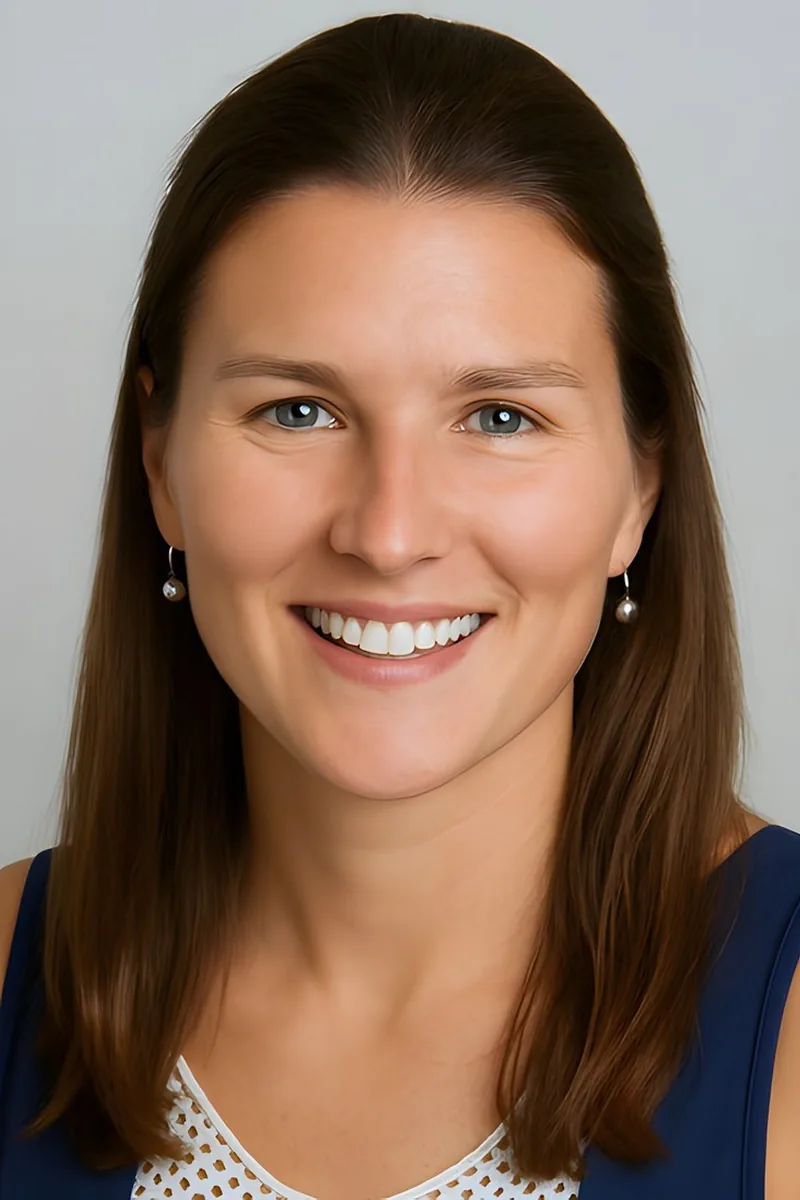
Working in a research lab at UTHealth, Emily deals with biochemistry and cell biology daily — which means she can teach physiology from the molecular level up, connecting what's happening inside the cell to what's happening in the organ system. That's especially useful for topics like membrane transport, signal transduction, or how enzymatic cascades drive processes like blood clotting or hormonal response. Her coursework in microbiology and chemistry adds another layer when students need to understand the biochemical machinery underneath physiological function.
Understanding physiology means tracing cause and effect across organ systems — why a drop in blood pH triggers faster respiration, or how the nephron maintains electrolyte balance through filtration and reabsorption. Casey's bioengineering degree required deep fluency in these mechanisms, and she explains them by building each pathway step by step rather than presenting finished diagrams to memorize. She's especially strong at connecting cellular-level processes to whole-body function.
Completing premed coursework at NYU while earning a finance degree gave Hanna an unusual double fluency — she thinks about the body's regulatory systems with the same rigor she'd apply to financial models, tracing inputs, outputs, and feedback the way she'd track capital flows. That analytical habit pays off in physiology topics like hormonal feedback loops, cardiac cycle timing, and renal clearance, where students who can follow the logic outperform those who just memorize the steps. Her subsequent classroom teaching experience also means she's practiced at breaking a dense process into smaller, sequenced pieces that actually stick.
Studying neuroscience at the undergraduate level means Christopher spent years immersed in physiology — from membrane potentials and action propagation to cardiac output and renal filtration. He teaches organ-system physiology by linking structure to function at every level, so students can reason through unfamiliar scenarios on exams instead of relying on rote recall.
I'm a recent Rice University graduate who grew up in Corpus Christi and Houston. I am tutoring a variety of subjects, and I first started tutoring in high school for middle and high school students in my school district. My favorite subject in high school was history, but in college I became interested in psychology and biology. Thus, I have a lot of academic interests and can help out in subjects ranging from the humanities to math and science! I have also had plenty of experience with standardized test taking, and I can help you figure out the best strategy to be confident on the test and succeed. I am easygoing and patient and will personalize my tutoring style so that I can help each student to the best of my ability. I believe in active, not passive learning, and will not give up on you! I will be attending medical school in the fall of 2012.
I am a great tutor, because I am able to craft and implement lesson plans designed for individual students, as well as facilitate group sessions. I have experience teaching Supplemental Instruction at Auburn University, where in addition to lecture materials, I provided study skills and academic success strategies to my students. I am a National Merit and National Hispanic Scholar, and I received a full Academic Presidential Scholarship plus stipends at Auburn. I consistently score well on standardized tests, and I am able to use and share my test-taking skills and strategies.
I am here to facilitate that experience. My tutoring interests are mostly focused on Neuroscience, Psychology, Biology, Anatomy and Physiology, and Test Prep. Outside of academia, I am involved in pediatrics research, local volunteering, and spending time with my dog.
I'm a Registered Dietitian pursuing my Integrative and Functional Medicine Certified Practitioner license. I was always interested in health sciences and am grateful for the opportunity to revisit these subjects with current students and help them understand why these classes are so important.
As a passionate educator with a Doctorate in Medicine and Surgery from Jordan University of Science and Technology, I am dedicated to fostering a supportive and engaging learning environment. My experience in subjects such as Anatomy , Physiology, Microbiology, and Pharmacology allows me to connect with students on various levels, tailoring my approach to meet their unique needs. I believe in the importance of building confidence and encouraging curiosity, which motivates my students to excel academically. I am excited to share my knowledge and help students navigate their educational journeys, ensuring they not only grasp complex concepts but also develop a love for learning.
Understanding physiology means seeing the body as an integrated system — how cardiac output affects renal filtration, or why a drop in blood pH triggers a respiratory response. Thomas earned his MD and MPH, which means he teaches organ-system physiology with the clinical context that makes abstract mechanisms click. His 5.0 rating speaks to how well that approach lands with students.
Studying physiology in a Physician Assistant program means Joyce doesn't just know how the cardiac cycle or nephron filtration works on paper — she sees these systems in clinical patients every week. That real-world context turns dense topics like action potentials, endocrine feedback loops, and gas exchange into stories with clear cause-and-effect logic.
Understanding how the body maintains homeostasis — cardiac output adjusting to exercise, nephrons filtering blood, hormones triggering cascading feedback loops — requires thinking in systems, not just memorizing organ names. Devon pairs her anatomy knowledge with a process-driven approach that walks students through each physiological mechanism step by step.
Understanding physiology means tracing cause and effect across organ systems — how a drop in blood pressure triggers the renin-angiotensin pathway, or why decreased ventilation shifts the oxygen-hemoglobin dissociation curve. Salman's master's work in pathology gave him a detailed command of normal versus disrupted function, which he uses to walk students through mechanisms rather than isolated facts. Rated 4.8 by past clients.
Understanding physiology means tracing cause and effect through the body — how a drop in blood pressure triggers the renin-angiotensin system, or why cardiac output changes during exercise. Emily is deep into her biology degree at UT Dallas and breaks down organ system functions by connecting structure to mechanism, so concepts like membrane potentials and hormonal feedback loops actually click.
I am currently a Master's student at Cornell University. I graduated with my Bachelor's of Science from Cornell in 2016 and I plan to attend medical school in the fall of 2017. I am really excited to be tutoring for Varsity tutors because I really enjoy helping students with subjects that gave me trouble in school. I hope that my time spent developing strategies to learn and absorb the tough material can help you succeed.
I am most passionate about biology and chemistry. I am a firm proponent of education, believing it to be absolutely necessary for an improved quality of life, and I try to impart this appreciation to all of my students.
I am third year medical resident in Family Medicine and was born and raised in a family of teachers and educators. I really enjoy learning and teaching and the process of deconstructing things down to their most digestible parts. I am a big advocate of making things fun and trying to bring the material to life. I have experience tutoring all ages, and in a wide range of disciplines. I look forward to helping you or you child meet your goals in whatever way I can!
I'm Alyssa! I graduated from Texas Christian University in 2021 with a Bachelor's degree in Kinesiology and a minor in Psychology (with Honors and a 4.0 GPA!). I am a current Doctorate of Physical Therapy student at Texas Woman's University, continuing my education in Kinesiology and related subjects.
I am currently a medical student at the University of Texas Southwestern. I completed a major in Biology with a triple minor focus in Chemistry, Sociology, and Medicine and Society. During my undergraduate career, I tutored hundreds of students through my work with the American Chemical Society, LAUNCH, and Scholars Enrichment Program. While I tutor a broad range of subjects, I am most passionate about Chemistry and Organic Chemistry. I have recently taken my MCAT and I would love to help you prepare for that especially if you need help with Chemistry based questions. In my experience helping struggling students prepare for Standardized Tests such as the ACT and the MCAT, I always find new ways to engage my students and make testing strategies more accessible to them. I believe the best way to learn is to teach. Therefore, my main teaching strategy will be filling any knowledge gaps and allowing you the opportunity to re-explain material in order to ensure you will remember it.
I am so excited at the prospect of working with you! I will be graduating with a Health B.S. degree from the University of Houston this upcoming May 2024. Afterward, I will be pursuing a doctoral degree in occupational therapy. With experience private tutoring elementary and middle school students for over 2 years, I specialize in refining grammar, writing, English, and reading comprehension skills. In the past, I prepared my own lesson plans, sight words, spelling quizzes, and reading books to motivate my students in their educational journey. From acting as lead mentor for a STEM and coding camp for over 4 years, I am also confident in building a close yet safe learning environment. For high school students, I teach test-taking strategies, SAT, ACT, Algebra I and II, and Anatomy and Physiology.
I'm a graduate from the University of Texas at Dallas with double Bachelors Degrees in Computer Science and Cognitive Science. I have explored the intersection of technology, medicine, and public policy throughout my academic career. I'm an industry-trained computer scientist with experience at Microsoft and the National Institute of Health.
I am a second year medical student in the new MD program at Nova Southeastern University. I began tutoring students on a volunteer basis when I was in high school and was employed by a tutoring agency while in college. I have experience working with students in Math, Sciences (Biology & Chemistry), and Spanish and have experience tutoring students in Elementary, Middle, and High School as well as college. I also have experience with SAT and ACT prep as I obtained high scores on those standardized tests as well as the MCAT (medical school admissions exams).
I am a certified English teacher in the state of Oklahoma, though I moved to Texas for a non-teaching job at Baylor Orthopedic and Spine Hospital. I'm a strong proponent of life-long learning, and I aim to help my students appreciate learning as much as I do. I believe education should be equal and available to all and I strive to do my part to reach the underserved.
I am determined and willing to put in the work to accomplish this goal.
I am an honors student at Texas State University woking toward a BS in Forensic Anthropology with minors in Mathematics and in Sociology. I have been tutoring friends and peers in various subjects since high school, though the bulk of my ability and expertise lies in essay, paper, and speech writing/editing, non-calculus based statistical analysis, basic algebra, and in test prep skills. My ultimate desire is not only to help students understand subjects that they may be struggling with, but to help them cultivate a interest in and passion for the material itself. Understanding and ability in a subject is great, but a true desire for knowledge outside of the classwork itself creates a student driven by curiosity and interest instead of just wanting to pass the class. In my free time, I work at the Osteological Research and Processing Laboratory at the Forensic Anthropology Center at Texas State University. I also enjoy reading, watching documentaries, and finding new places to explore.
I am also fluent (reading/listening/writing) in Cantonese and mandarin Chinese because of my upbringing. Half of my childhood education was received in Hong Kong and the other half was in Australia.
Clinical internships at a transplant institute and abroad in Tanzania gave Eric firsthand exposure to how organ systems function — and malfunction — in real patients. He teaches physiology concepts like cardiac output, renal filtration, and neuronal signaling by grounding them in the chemistry and physics that explain why the body works the way it does.
Rachel's approach to physiology leans on breaking down the overlap between systems — showing, for example, how the muscular and nervous systems coordinate during a reflex arc, or how respiratory adjustments compensate for metabolic acidosis. Her biology and anatomy teaching background means she can scaffold unfamiliar material by anchoring it to structures and processes students already know. That knack for organizing intersecting ideas into a clear sequence is what makes dense physiology content manageable.
Kelly's cancer biology PhD at Cornell involved deep study of how cells signal, divide, and maintain homeostasis — the same organ-system physiology that dominates undergraduate coursework. She digs into membrane transport, cardiac function, and endocrine feedback loops with the precision of someone who's spent years researching how these systems break down in disease.
Understanding physiology means thinking in feedback loops — how the renal system adjusts to maintain blood pressure, or why the Frank-Starling mechanism governs cardiac output. Zachary's molecular biology background lets him explain these organ-level processes by tracing them down to the cellular and biochemical events driving them, which gives students a much deeper command of the material.
Understanding physiology means tracing cause and effect across organ systems — how a drop in blood pH triggers respiratory compensation, or how ion channels generate an action potential. Amin's biophysics PhD and clinical research at MGH ground his teaching in the molecular mechanisms behind each physiological process, making it easier to reason through unfamiliar scenarios on exams.
Studying physiology in dental school meant mastering everything from cardiac output equations to nerve signal propagation in the trigeminal system. Daniel unpacks organ system functions by tying each mechanism back to a clinical scenario — how the kidneys regulate blood pressure, why the sympathetic nervous system triggers specific responses — so the logic behind each process becomes memorable.
Preparing for PA school means Jennifer lives and breathes physiology — cardiac output equations, nephron function, the mechanics of gas exchange across alveolar membranes. She teaches organ system physiology by connecting structure to function at every level, so students can reason through unfamiliar scenarios instead of relying on rote recall.
Studying therapies for Alzheimer's and Parkinson's disease as a research scientist, Anthony encounters organ-system physiology daily — from neuronal signaling cascades to cardiovascular regulation. He teaches concepts like action potentials, renal filtration, and endocrine feedback loops by connecting textbook diagrams to what actually happens in a working lab.
Studying kinesiology at Rice meant Tori lived in physiology — muscle contraction cascades, cardiac output regulation, renal filtration, respiratory gas exchange — for four years. She teaches these systems by tracing cause and effect through feedback loops, so students can predict what happens when one variable changes instead of memorizing isolated facts. That systems-level thinking is exactly what physiology exams reward.
Understanding physiology means thinking in systems — how a nerve impulse triggers muscle contraction, how the nephron filters blood, how cardiac output adjusts during exercise. Shayan's pre-health training at Penn gives him a clinical lens on these mechanisms, and he teaches each system by walking through what happens when it breaks down, which makes normal function far more intuitive.
Preparing for an Occupational Therapy doctorate means Alex has spent years inside physiology — not just memorizing organ systems but understanding how cardiac output, respiratory mechanics, and renal filtration actually behave in living patients. That clinical lens turns dense material like action potentials and hormonal feedback loops into stories about how the body maintains homeostasis under stress.
Understanding physiology means tracing cause and effect across organ systems — why a drop in blood pH triggers faster breathing, or how the nephron maintains electrolyte balance. Paul's pre-med biology training at Brown gave him a systems-level view of the human body, and he teaches each mechanism by linking structure to function rather than treating chapters as isolated units.
Testimonials
Because the right Physiology tutor makes all the difference.
Average Session Rating – Based on 3.4M Learner Ratings
Nearby Physiology Tutors
Other Houston Tutors
Related Science Tutors in Houston
Frequently Asked Questions
Physiology requires students to understand how body systems work together—which means connecting concepts across anatomy, chemistry, and cellular biology simultaneously. Many students struggle with visualizing dynamic processes like blood flow, nerve impulses, or hormone regulation, and memorizing facts without understanding the underlying mechanisms often leads to poor retention. Personalized instruction helps break these complex topics into manageable pieces, building conceptual understanding rather than relying on rote memorization.
In Houston's 45 school districts, Physiology is typically taught as an advanced science elective in high school (grades 10-12) or as part of AP Biology, IB Biology, or pre-AP pathways. Some students encounter it in dual-credit college courses offered through Houston's community colleges. The course emphasizes both foundational concepts—like cellular respiration and homeostasis—and organ system integration, preparing students for college-level biology, health sciences, or pre-med programs.
In a classroom of 20+ students, teachers must move at a standard pace, which means some students miss critical connections between concepts. Personalized 1-on-1 instruction allows a tutor to identify exactly where your understanding breaks down—whether it's ion channels, cardiac cycles, or gas exchange—and rebuild that foundation before moving forward. This targeted approach typically results in faster progress and deeper comprehension than classroom review alone, especially for complex visual and conceptual material.
Your first session focuses on assessment and goal-setting. A tutor will review your current coursework, identify specific topics causing difficulty, and understand your learning style—whether you learn best through diagrams, analogies, or hands-on problem-solving. From there, you'll develop a personalized plan targeting your priorities, whether that's mastering a unit before an exam, improving lab report writing, or preparing for AP/IB assessments.
Many students notice improved clarity and confidence within 2-3 sessions, especially when a tutor helps them reorganize concepts they've already learned. For significant grade improvement or exam score gains, most students benefit from consistent tutoring over 4-8 weeks, depending on the scope of material and your starting point. The key is regular practice between sessions—tutors typically assign targeted practice problems that reinforce what you've learned.
Yes. Varsity Tutors connects you with tutors experienced in AP Biology, IB Biology, and college-level Physiology courses. They understand exam formats, high-yield topics, and common misconceptions—and can design targeted review sessions that focus on your weak areas rather than reteaching material you already know. Whether you need help with free-response questions, multiple-choice strategy, or lab practical preparation, personalized instruction significantly improves test readiness.
Absolutely. Physiology labs involve everything from analyzing heart sounds and lung capacity to interpreting blood work and nerve conduction studies. Tutors can help you understand the underlying physiology behind lab procedures, interpret your results correctly, and develop clear lab reports that demonstrate your conceptual understanding. This is especially valuable for students in honors or AP courses where lab work significantly impacts grades.
Varsity Tutors connects you with tutors who have strong backgrounds in Physiology—including those with degrees in biology, exercise science, nursing, medicine, or related fields. Many have taught Physiology, worked in healthcare, or earned high scores on AP/IB exams themselves. During the matching process, you'll be paired with someone whose expertise and teaching style align with your needs and learning goals.
Let’s find your perfect tutor
Answer a few quick questions. We’ll recommend the right plan and match you with a top 5% tutor.