Award-Winning Geometry Tutors
serving Nashville, TN
Geometry
Tutors in Nashville
Private 1-on-1 tutoring, weekly live classes for academic support, test prep & enrichment, practice tests and diagnostics, and more to elevate grades and test scores.
Based on 3.4M Learner Ratings
UniversitiesSchools & Universities
DeliveredHours Delivered
ProficiencyGrowth in Proficiency
Who needs tutoring?
No obligation. Takes ~1 minute.
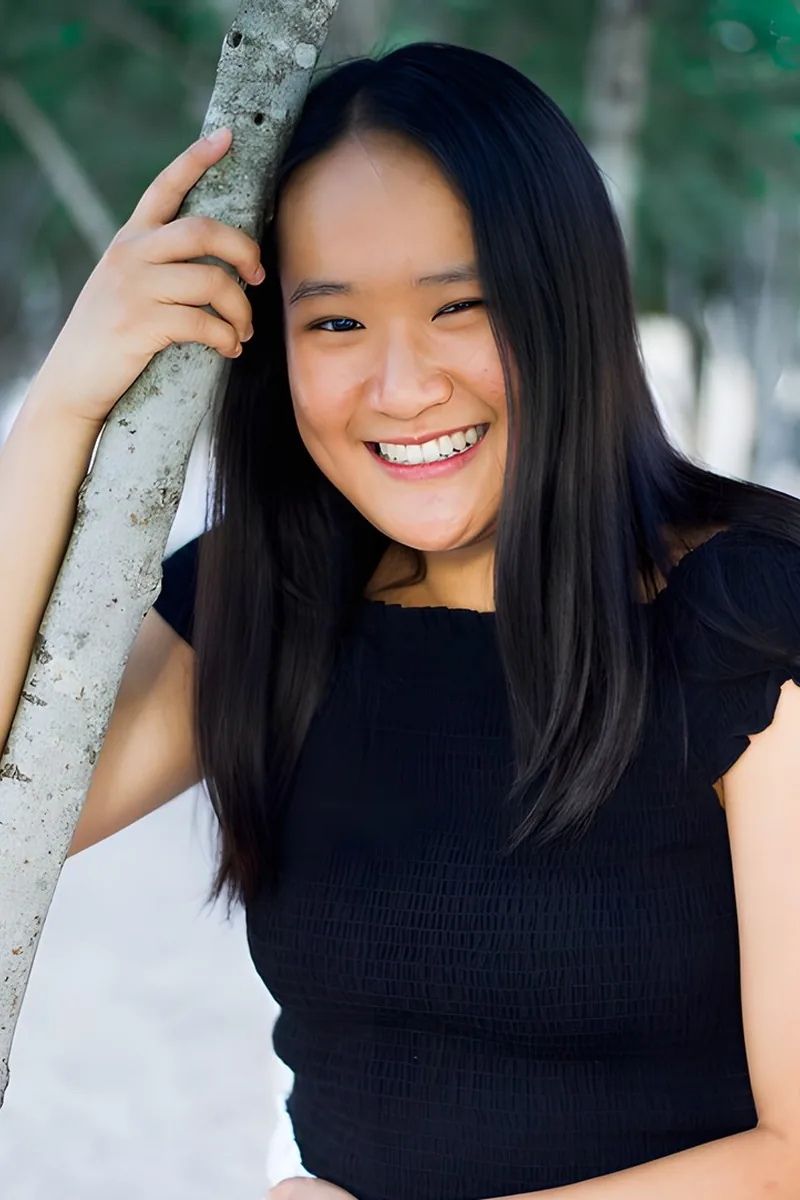
Proofs are usually the part of geometry that makes students want to quit, so Eileen spends real time unpacking the logic behind each theorem instead of rushing to the next formula. She also tackles coordinate geometry and circle theorems with a visual, diagram-heavy approach that makes spatial reasoning click.

Proofs are usually where geometry students hit a wall, because suddenly math requires written logical arguments instead of just computation. Lisa approaches proof-writing as a form of structured reasoning — something her sociology and anthropology training reinforced through building evidence-based arguments in a different context. She also covers triangle congruence, circle theorems, and coordinate geometry with an emphasis on visualizing each problem before solving.
Proofs are usually the first place Geometry students hit a wall, because suddenly math asks them to justify every step in writing. Rhamy, a TJ Science and Technology grad, breaks proof logic into the same structured if-then reasoning he uses in programming — an approach that makes congruence and similarity arguments feel systematic instead of mysterious.
I'm a 24 year old student of life that graduated from Vanderbilt University in 2014. My first experience with tutoring came 5 years ago when I opened a branch of ACT prep tutoring for Revolution Prep. At that time, I taught small classes of 5-9 students and also worked as a private tutor. I absolutely love to learn and am fulfilled by guiding students to reach their maximum potential.
Proofs are usually the first place Geometry students feel lost — the leap from computing answers to constructing logical arguments is genuinely new. Megan walks through each proof type by treating it like an engineering problem: identify what you know, figure out what you need, and build a path between them. She also covers the computational side, from triangle congruence shortcuts to circle theorems and coordinate geometry.
Proofs are where most geometry students get stuck — moving from "I can see it's true" to writing a logical chain of reasoning feels like a completely different skill. Jamie breaks down two-column and paragraph proofs into a step-by-step process, connecting each theorem about angles, triangles, or parallel lines back to why it makes geometric sense. Rated 4.9 by students, she makes the visual-to-logical leap feel manageable.
Proofs are usually the moment Geometry stops feeling like math and starts feeling like a logic puzzle, which throws students who were comfortable with computation. Grant tackles proofs by teaching students to map out their reasoning step by step, treating each theorem like an argument that needs evidence. He applies that same structured thinking to coordinate geometry and triangle congruence problems.
Running a neuroscience journal club for undergraduates taught Tristan how to break complex logical chains into digestible steps — the same skill that makes geometric proofs accessible, especially when students need to connect postulates about parallel lines or triangle congruence into a coherent argument. His PhD-level statistical training also means he's comfortable with the measurement and calculation side, from working with arc lengths to applying the distance and midpoint formulas in coordinate geometry problems.
An English major might seem like an unlikely geometry tutor, but Meredith's 33 ACT composite proves she's sharp across disciplines — and her writing background means she's unusually good at teaching the one topic most math-oriented tutors gloss over: proof writing. She treats two-column and paragraph proofs as persuasive essays with a specific audience, breaking each argument into a claim-evidence structure that makes logical chains feel less alien.
Proofs are usually where geometry students panic, but they're really just structured arguments about shapes. Matthew teaches students to read a diagram like a puzzle — identifying congruent triangles, parallel-line angle relationships, or circle theorems — and then translate that visual logic into a written chain of reasoning. He's rated 5.0 across his students.
Proofs are where most geometry students panic, and Rachel's approach is to teach them as logical arguments rather than mysterious two-column rituals. With a BA in Mathematics, she's comfortable moving between the visual side of geometry — constructions, angle relationships, similarity — and the formal reasoning that ties it all together. She rated 4.8 across her students, many of whom came in convinced they "weren't proof people."
Triple-majoring in math and computer science means Teo has spent years thinking about geometric concepts from both a pure math and a computational perspective — which shows up most clearly when he teaches coordinate geometry proofs, where algebraic manipulation and spatial intuition have to work together. He unpacks problems by asking students to identify the geometric structure first, then choose the right tool (distance formula, slope, midpoint) instead of guessing at formulas.
I am able to get back to my passion of teaching students.
Teaching himself math through homeschooling gave Matthew something most tutors don't have — firsthand experience figuring out geometric concepts from scratch, which means he knows exactly where self-study breaks down on topics like circle theorems, triangle inequality, and properties of quadrilaterals. His mathematics major at Lipscomb adds formal rigor to that intuition, especially when it comes to understanding why a theorem holds rather than just applying it mechanically. He also brings years of experience from Mathnasium tutoring students across every grade level, so he adjusts explanations on the fly depending on what clicks.
Proofs trip up most geometry students because they require a completely different kind of thinking — building logical chains from postulates and theorems instead of just computing answers. Kelly teaches students to map out proof strategies before writing a single statement, treating each one like a mini engineering problem with constraints and a clear goal.
Proofs are usually the first place geometry students get stuck — the leap from calculating angles to constructing logical arguments is genuinely different from anything they've done before. Michelle's dual background in computer science and sociology at Duke means she's spent years building rigorous arguments from axioms, whether in formal logic or research methods, and she teaches students to think through geometric proofs the same way.
Proofs are usually the part of Geometry that makes students want to quit — the jump from calculating angles to constructing logical arguments feels enormous. Monika, who tackles formal proof-writing in her own graduate research, teaches students to build geometric arguments step by step using postulates and theorems they already know. She also covers coordinate geometry and transformations with the same emphasis on reasoning over rote steps.
Studying both chemistry and English at Vanderbilt means Lawrence spends his days toggling between two very different kinds of precision — molecular structures and literary arguments — and geometry sits right at that intersection of visual reasoning and logical proof. He's particularly strong on the proof-writing side, where his comfort building structured arguments translates directly to two-column proofs involving congruence and angle relationships. Rated 4.7 by students.
Proofs are usually the first time a math student has to explain *why* something is true, not just compute an answer — and that shift can be disorienting. Joshua walks through each proof by identifying the given information, the goal, and the logical steps connecting them, turning what feels abstract into a structured process. He also covers the computational side, from triangle congruence and similarity to circle theorems and coordinate geometry.
Years of illustration work gave Brennan an unusually strong sense of spatial relationships — angles, symmetry, transformations, and how shapes behave when you manipulate them. He brings that visual intuition to geometry, teaching students to see proofs and theorems as logical stories rather than disconnected rules to memorize.
Proofs are usually where geometry students panic, but Maggie treats them as puzzles — each theorem is a tool, and the challenge is figuring out which ones to pull out and in what order. Her biology background also means she's comfortable connecting geometric reasoning to real-world structures, from molecular shapes to cross-sections in anatomy.
Proofs are where most geometry students hit a wall, because suddenly math asks you to argue logically rather than just compute. Lawton teaches proof-writing as a structured skill: identifying givens, choosing the right theorem, and building each step so it follows inevitably from the last. He also covers the spatial reasoning side — area, volume, similarity, and circle theorems — with an emphasis on sketching and visualization.
Proofs trip up a lot of geometry students because they require a completely different kind of thinking than computation. Sarah approaches them as logical arguments: identify what you know, figure out what connects to what, and build the chain step by step. Her math degree gave her years of practice with exactly that reasoning style.
Proofs are usually where geometry students start to panic, because suddenly math requires structured logical arguments instead of just calculations. Elizabeth approaches proofs the same way she learned to build scientific arguments in her genomics coursework: identify what you know, state your reasoning clearly, and connect each step to a defined rule. That analytical framework makes even two-column proofs feel methodical rather than mysterious.
I'm a graduate student in Applied Statistics with experience in general math and computer programming to boot. I currently have a PhD in Applied Statistics with experience in data analytics. I've had the opportunity to do some math and statistics work for hospitals and research facilities, and I enjoy getting to share my passion for math with others to assist them in their education.
Proofs are where most geometry students get stuck — the leap from calculating angles to constructing logical arguments feels like a completely different subject. Charlotte breaks that transition down by teaching students to identify given information, spot congruence patterns, and build each proof step by step. Her 5.0 rating speaks to how well that structured approach clicks.
A history degree might seem unrelated to geometry, but Matthew's legal training — building arguments step by step, where each claim must follow logically from the last — maps directly onto two-column proofs and deductive reasoning about angle relationships and congruent triangles. His JD and MBA background means he approaches geometric logic the way a lawyer approaches a case: identify what you know, determine what you need to prove, and build the chain connecting them.
Engineering students live in geometry — every assistive device Chad designs at LeBonheur Children's Hospital starts with spatial constraints, angle tolerances, and precise measurements. That hands-on experience with real physical dimensions gives him a practical vocabulary for teaching concepts like similarity, surface area, and geometric modeling that textbook-only tutors often lack.
Proofs are usually the sticking point in Geometry — students can calculate an angle but freeze when asked to justify why it works. Aubrey approaches geometric reasoning as a structured argument, teaching students to chain together postulates and theorems the same way she builds logical frameworks in her engineering coursework at the University of Tennessee.
I am currently a Junior at The University of Alabama pursuing degrees in both Mathematics & Economics. After I graduate, I intend to stay at Alabama to get an M.A. in Economics. I have been tutoring both Math and ACT Prep since I was a Sophomore in High School. After 4 years of experience, I continue to enjoy tutoring these subjects, and the constant challenge of improving my abilities and techniques. I get a great sense of satisfaction in helping those I tutor improve their grades, test scores, and overall understanding of the subjects I am teaching them. Not only do I focus on the subject matter being taught, but I also focus on helping students develop the study skills and habits that are imperative to success later in their academic careers. Through my four years of tutoring, I have developed the ability to mold my tutoring style around however the student learns best whether that be visually, through examples, etc. This allows me to provide an individualized tutoring session to each person I tutor. I believe no two students should be tutored the same was; every student has different learning methods and I view it as my responsibility to modify my tutoring style to fit each individual student.
I'm from New Jersey and of Italian decent, so I naturally love cooking and all things pizza. My favorite childhood book is The Giver by Lois Lowry, and favorite high school class was physics (rockets, easy winner). I enjoy playing guitar and ride my bicycle on a sunny day.
Proofs trip up a lot of Geometry students because they require a completely different kind of thinking — constructing logical arguments instead of just computing answers. Michelle approaches proofs and spatial reasoning the way she approaches scientific problems: systematically, breaking each claim into smaller pieces until the conclusion becomes obvious.
Dennis's research into quasicrystals and aperiodic tilings — like Penrose tilings of rhombuses — is geometry at its most fascinating, exploring how shapes fit together under unusual symmetry rules. That deep spatial intuition carries directly into high school Geometry, where he teaches proofs, congruence, and circle theorems by encouraging students to reason visually before writing anything formal.
Most geometry struggles aren't about the shapes — they're about constructing logical arguments. Writing a two-column proof or reasoning through circle theorems requires a style of thinking that Justin, trained in mathematical proof at both the undergraduate and doctoral level, breaks down into concrete steps. He treats each theorem as a claim that needs defending, which builds reasoning skills students carry into every future math class.
In biomedical engineering, Ingrid regularly works with geometric concepts that most students only see in textbooks — calculating cross-sections, modeling curved surfaces, and reasoning about spatial relationships in 3D-printed structures she designs as president of her university's 3D printing club. That constant hands-on application gives her a practical vocabulary for teaching circle theorems, arc length, and solid geometry that connects the abstract to something students can actually visualize.
A chemistry major at Harvard, James is used to thinking in three dimensions — molecular geometries, orbital shapes, bond angles — which gives him a natural fluency with the spatial reasoning geometry requires. He tackles circle theorems and polygon properties by encouraging students to sketch, label, and reason through diagrams before jumping to formulas, building the kind of geometric intuition that makes even multi-step problems feel manageable. Rated 4.9 by students.
A biology major from Rice with a 1570 SAT, Perry approaches geometry problems the way he approaches lab work — by breaking complex diagrams into discrete, manageable pieces and reasoning through each relationship step by step. He's especially effective at teaching circle theorems and polygon properties, where students often know the individual rules but freeze when a problem layers several together. Rated 5.0 by students.
Proofs are usually where geometry students start to struggle, because the logic feels completely different from arithmetic. Judah approaches each proof as a puzzle, teaching students to identify the given information, spot congruence or similarity relationships, and build an argument step by step. He's patient enough to let the reasoning click on its own.
Most geometry struggles come down to proofs: students can identify that two triangles look congruent but can't articulate why in a logical chain. Sam's engineering and statistics background trained him in rigorous argumentation, and he applies that same structured thinking to walk through two-column and paragraph proofs until the reasoning clicks.
An MIT math major doing research in Spectral Graph Theory, Enrico brings a deep comfort with spatial structures and relationships that makes geometry's core ideas — congruence, similarity, transformations — feel like natural extensions of logical thinking rather than a pile of disconnected rules. He emphasizes building intuition around definitions so that when a problem asks students to prove two triangles congruent or reason about angle bisectors, the right approach surfaces on its own. Rated 5.0 by students.
Testimonials
Because the right Geometry tutor makes all the difference.
Average Session Rating – Based on 3.4M Learner Ratings
Practice Geometry
Free practice tests, flashcards, and AI tutoring for Geometry
Nearby Geometry Tutors
Other Nashville Tutors
Related Math Tutors in Nashville
Frequently Asked Questions
Many students struggle with the transition from algebra to geometry because it requires both visual reasoning and logical proof-writing. Common pain points include understanding why geometric properties work (not just memorizing them), tackling multi-step proofs, applying theorems to word problems, and visualizing 3D shapes. Personalized tutoring helps students move beyond procedural memorization to see the underlying patterns and connections that make geometry click.
Your first session is about understanding where you are and where you want to go. A tutor will assess your current understanding of geometric concepts, identify specific areas causing frustration (whether it's proofs, coordinate geometry, or spatial reasoning), and learn your learning style. From there, they'll create a personalized plan that targets your gaps while building confidence in the concepts you're ready to master.
Proofs are challenging because they require both understanding geometric properties and learning how to construct logical arguments. Tutors break this down by teaching you to identify what you know, what you need to prove, and which theorems connect them. Through guided practice and strategic questioning, you'll develop the reasoning skills to approach any proof with confidence rather than anxiety.
Word problems require you to translate language into geometric diagrams, apply the right theorems, and communicate your solution clearly—multiple skills at once. Tutors teach you a systematic approach: identifying what's given, sketching the situation, selecting relevant theorems, and showing your work step-by-step. This breaks the problem into manageable pieces and builds the problem-solving strategies you'll use throughout geometry and beyond.
Yes. Varsity Tutors connects you with tutors who are familiar with the textbooks and approaches used across Nashville's five school districts. Whether your school uses a traditional proof-heavy curriculum or a more integrated approach, tutors can align their instruction with what you're learning in class while providing the personalized support that a 18.3:1 student-teacher ratio sometimes can't offer.
Absolutely. Math anxiety often stems from feeling lost or rushing through concepts without truly understanding them. Personalized tutoring creates a low-pressure space where you can ask questions, work at your own pace, and experience small wins that rebuild confidence. As you start seeing the logic and beauty in geometric reasoning, anxiety naturally decreases and your ability to tackle challenging problems grows.
Spatial reasoning is a skill that improves with guided practice and the right tools. Tutors use diagrams, sketches, and sometimes physical models or interactive visualizations to help you build mental images of 3D shapes and their properties. By connecting abstract concepts to concrete examples and encouraging you to draw and manipulate shapes yourself, you'll develop the spatial intuition that makes 3D geometry less intimidating.
Getting started is simple. Tell us about your geometry goals—whether you're working toward a strong grade, preparing for a test, or building foundational understanding—and we'll match you with a tutor who fits your needs. Your first session is a chance to see if it's the right fit, and from there you'll work together on a personalized plan tailored to your learning style and pace.
Let’s find your perfect tutor
Answer a few quick questions. We’ll recommend the right plan and match you with a top 5% tutor.