Award-Winning Biology Tutors
serving Arlington, VA
Biology
Tutors in Arlington
Private 1-on-1 tutoring, weekly live classes for academic support, test prep & enrichment, practice tests and diagnostics, and more to elevate grades and test scores.
Based on 3.4M Learner Ratings
UniversitiesSchools & Universities
DeliveredHours Delivered
ProficiencyGrowth in Proficiency
Who needs tutoring?
No obligation. Takes ~1 minute.
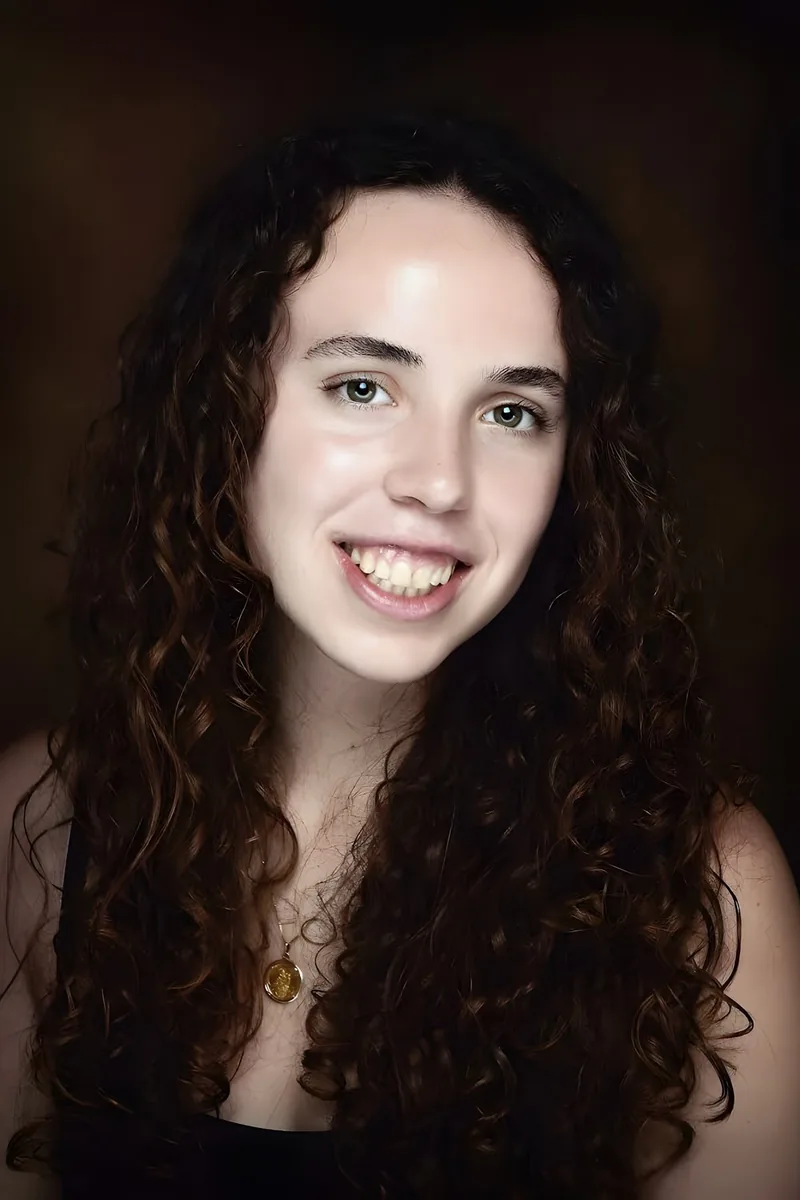
Studying biology and Spanish simultaneously in college means Amanda is actively learning the material she teaches — she knows which topics in genetics, ecology, and cell biology trip students up because she's recently worked through them herself. That proximity to the coursework makes her especially effective at breaking down processes like mitosis or energy flow in ecosystems into clear, logical steps that stick.
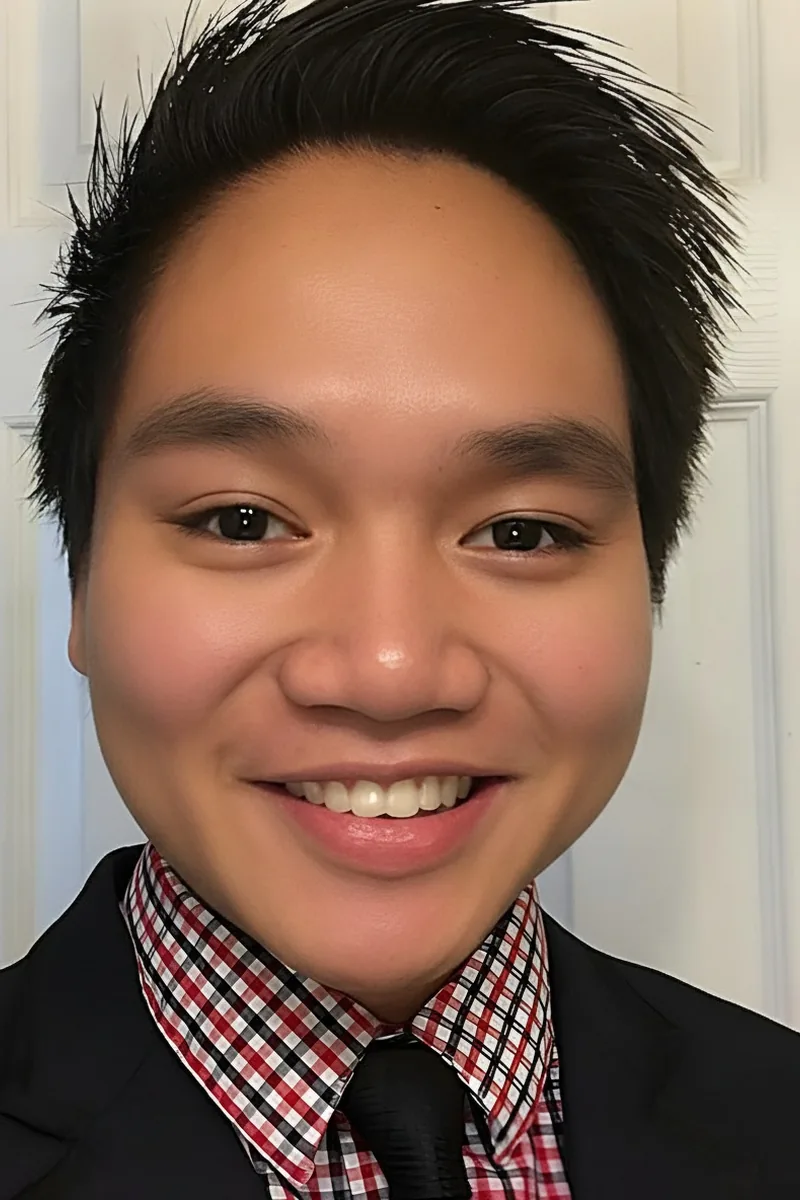
Joel's biochemistry degree means biology isn't a separate subject for him — it's the foundation everything else builds on. He's especially sharp on cell biology, metabolism, and molecular genetics, the areas where biology and chemistry overlap and where students often need someone who can explain both sides of the equation. His 5.0 student rating backs that up.
From cell signaling cascades to Mendelian genetics to ecological energy flow, biology covers an enormous range — and Bhumi has seen it from both the undergraduate and medical school side. She unpacks complex processes like the Krebs cycle or DNA replication by walking through each step with clear cause-and-effect logic, so students understand the system rather than just labeling a diagram.
From cell structure to organ systems, biology rewards students who can organize large amounts of information into clear mental models. Christianna's design training makes her especially good at creating diagrams, flowcharts, and visual summaries that turn dense textbook chapters into something a student can actually retain and apply on exams.
Being in a guaranteed medical admissions program means Roshni doesn't just know biology from a textbook — she's actively building on it every semester, from cell signaling pathways to ecology and genetics. She breaks down dense topics like DNA replication or membrane transport by tying them to the bigger picture of how living systems actually function.
Genetics, ecology, evolution, cellular respiration — biology covers enormous ground, and Sanam ties it all together through the biomedical perspective she's built across an engineering degree and medical school. She's particularly strong at teaching students how to interpret experimental data and diagrams, a skill that shows up on nearly every biology exam. Rated 5.0 by her students.
From photosynthesis and cellular respiration to genetics and evolutionary theory, biology rewards students who can see how individual facts link into bigger systems. Kara is earning her biology degree at UVA while also directing a youth science mentoring program, so she's practiced at explaining everything from DNA replication to ecological interactions at whatever level a student needs.
I am currently a lead preschool teacher. I received my Bachelor's in Psychology from VCU and am looking to return to school to further my education. While in college, I worked as a Supplemental Instruction leader, teaching general biology and anatomy. I have also worked in an after school program with elementary age children, but I have my fondest memories volunteering as a counselor for Camp Kesem. In my own experience, I loved school and now I love teaching even more at all age levels! I especially enjoy the challenge of getting creative to discover what approach and mediums work best for each student. I am available for in person as well as online tutoring.
As a fourth-year medical student, Braveen lives inside biology every day — from cellular respiration and genetics to organ-system physiology. He unpacks complex processes like signal transduction or the immune response by walking through each step with clear cause-and-effect logic, drawing on the clinical context that made these concepts stick for him.
Allison earned her biochemistry degree while also spending years working with special needs students, which gave her a knack for explaining dense biological concepts in more than one way. She digs into topics like cell signaling, gene expression, and metabolic pathways with the molecular-level detail her coursework demanded — then translates that detail into language that actually clicks.
Studying both biology and bioinformatics means Shahad tackles everything from cell structure and genetics to ecology with a data-driven perspective that most biology tutors can't offer. She's especially strong on molecular biology and genomics, where she connects classroom concepts like DNA replication and protein synthesis to the computational research she does at VCU's Honors College.
Shona earned her bachelor's degree in Biology from Virginia Commonwealth University while also completing a chemistry and psychology minor — giving her an unusually broad view of how biological systems connect to chemical processes and behavior. She digs into topics like cell signaling, genetics, and ecology with the kind of detail that comes from someone actively preparing for medical school. Whether it's sketching out mitosis or tracing energy through metabolic pathways, she makes the material concrete.
As a biology major on the pre-med track, Monika has taken the full sequence — cell biology, genetics, ecology, physiology — and knows which details professors and standardized tests actually care about. She teaches topics like mitosis, Mendelian inheritance, and enzyme kinetics by building visual models that make memorization far less painful.
Raksha's biochemistry major at Pitt means she's simultaneously learning biology from two directions — the organismal scale in her biology coursework and the molecular scale in her chemistry labs — which gives her a practical sense for how topics like enzyme function or gene expression connect across levels. She also draws on her psychology background to explain biological concepts like neurotransmitter signaling and hormonal feedback in ways that bridge the gap between brain and body, making those systems feel less like separate chapters and more like one continuous story.
I'm a current medical student at VCU School of Medicine, and a graduate of Johns Hopkins University. I received my Bachelor of Science in Molecular and Cellular Biology. I've had the pleasure of tutoring a diverse range of students for 5 years; while I tutor a broad set of subjects, I'm most passionate about biology, psychology, and chemistry. I'm a big proponent of ensuring understanding over memorization and teaching concepts that last for years to come (particularly for other students interested in medicine!) In my free time, I love to write poetry, edit essays, and gush about game writing with friends.
I am a recent graduate of Virginia Commonwealth University, where I earned a Bachelors of Science in Biology. Throughout my three years of undergrad, I have been a preceptor for Cell Biology and Genetics. In addition, I was a supplemental instruction leader in CHEM 101 and CHEM 102. I am currently a Medical Scribe, but I will be attending VCOM for medical school starting Fall 2018.
I am currently and undergraduate student at Virginia Commonwealth University. I am a Pre-Medicine student that is working on a double major in Biology and Economics along with a minor in Chemistry. I am currently a tutor at VCU as well and have a thorough understanding of the subjects I have listed for tutoring. While I tutor a broad range of subjects, I am most passionate about Math and Science related subjects, specifically Chemistry and Biology. In my spare time, I tend to lift and play sports, specifically basketball and soccer and I love to read as well. I am here to help you with what you struggle with and will do my best to provide a comfortable learning environment for you!
I'm passionate about science and math, and I want to help students understand them so they can share in that excitement! With teaching experience at the undergraduate, high school, and middle school levels, I want to use my skills to guide and inspire confidence in students from many different backgrounds.
Kevin's master's work in Stanford's Biocomputation track sits at the intersection of biology and computer science, which means he thinks about molecular biology, genetics, and cellular processes through a quantitative lens. He's especially sharp on topics like gene expression, protein structure, and the logic of metabolic pathways. That computational perspective often gives students a clearer framework for understanding how biological systems actually function.
Jessica's cancer biology coursework at the University of Chicago means she's studying topics like tumor suppression, cell cycle regulation, and gene expression in their most consequential context — which sharpens how she teaches the fundamentals those concepts rest on. She's especially strong at connecting ecology and microbiology back to core cellular processes, making the kind of links that turn a sprawling subject into something coherent for students preparing for exams.
Three biology-adjacent degrees give Garrett an unusual breadth — he's studied the subject from general principles through the organic chemistry and physiology that sit alongside it, which means he can explain how a concept like enzyme kinetics connects to both the chemistry driving it and the body systems it regulates. That cross-disciplinary fluency is especially useful for students who understand individual facts but struggle to see how cellular processes, organ systems, and biochemical reactions fit into one coherent picture.
Judah is a biology major at Washington University in St. Louis on a pre-med track, which means he's currently immersed in the subject at the college level while the introductory material — ecology, genetics, cell structure — is still fresh enough to teach clearly. His 1580 SAT reflects sharp reading and analytical skills that translate well to biology's demand for interpreting experiments, parsing dense passages, and connecting cause to effect across biological systems.
Tony earned his biology degree at Yale and is headed to Columbia's medical school, so he's spent years immersed in everything from molecular genetics to ecological systems. He breaks down dense material — signal transduction pathways, Mendelian inheritance, cellular respiration — by linking each concept to a bigger biological story rather than treating them as isolated facts.
Chemical engineering at Cornell meant Rahul had to master biology's molecular underpinnings — enzyme kinetics, metabolic pathways, cellular transport — as working tools for reactor design and bioprocess modeling, not just exam material. That engineering mindset makes him especially effective at teaching students to think through biological systems as logical, step-by-step processes rather than lists of vocabulary to memorize. Rated 4.9 by students.
Dennis's Masters in Chemical and Physical Biology from Vanderbilt means he's spent years studying life at the molecular level — protein interactions, metabolic regulation, signal transduction — and can zoom out to show how those mechanisms drive the organ-system and ecological concepts that fill most introductory biology courses. His graduate research experience also makes him especially effective at teaching experimental design and data analysis, the parts of biology that trip students up precisely because they can't be memorized. Rated 5.0 by students.
From cell respiration pathways to genetics crosses, biology rewards students who can organize large amounts of interconnected information rather than memorize isolated facts. Asta's University of Chicago training in research and analytical writing translates directly to how she teaches students to map relationships between biological systems — linking, say, DNA replication to protein synthesis to gene expression in a coherent chain.
Students who find biology's vocabulary overwhelming often do better when someone shows them the logic underneath the terms. Dennis approaches topics like cell respiration, DNA replication, and membrane transport by connecting each process to the energy and chemistry driving it — a perspective that comes naturally from his physics background and makes the material easier to retain.
JF's math and computer science training at Stanford might seem unrelated to biology, but it actually sharpens how he teaches the subject — genetics problems become probability exercises, population ecology clicks through mathematical modeling, and enzyme kinetics suddenly makes sense when you treat it like a rate equation. That quantitative lens gives students a second way into topics that feel overwhelming when approached through pure memorization alone. Rated 5.0 by students.
As a former middle school science teacher and curriculum chair in Philadelphia, John built his biology teaching around making processes like ecological cycles and cellular organization land for students who'd never encountered them before — a skill that translates directly to any introductory-level learner. His history training at the undergraduate level also means he naturally frames biology as a narrative, connecting concepts like natural selection or population dynamics to the story of how living systems change over time. Rated 5.0 by students.
A Cornell biological engineering degree means Mary didn't just study biology — she applied it, working at the intersection of living systems and quantitative analysis. She's especially strong on cell biology, genetics, and molecular mechanisms because her coursework demanded deep fluency in all three. Whether the goal is acing an exam or genuinely understanding how DNA replication works, she connects the details to the bigger picture.
Testimonials
Because the right Biology tutor makes all the difference.
Average Session Rating – Based on 3.4M Learner Ratings
Practice Biology
Free practice tests, flashcards, and AI tutoring for Biology
Other Arlington Tutors
Related Science Tutors in Arlington
Frequently Asked Questions
Varsity Tutors matches Arlington students with expert Biology tutors for 1-on-1 instruction. We pair each student with a tutor based on their specific needs, learning style, and goals.
Whether you need homework help, exam prep, or want to get ahead, our Biology tutors are ready to help.
Common challenges include gaps from earlier material, difficulty with specific concepts, and trouble applying learning to new problems. These issues can snowball quickly in Biology.
A tutor identifies where you're stuck, fills in gaps, and provides targeted practice. The 1-on-1 format means you get help exactly where you need it.
Tutors work with your student's actual coursework—homework assignments, class notes, and upcoming tests. This keeps tutoring directly relevant to what's happening in the classroom.
When you share information about your student's school and curriculum, we can match you with a tutor who has relevant experience.
All tutors complete background checks, credential verification, and teaching evaluation. Many of our Biology tutors hold advanced degrees or have years of teaching experience.
You can review tutor profiles to find someone with the right background for your student's level and needs.
Many students see improved grades within a few weeks, along with better understanding of Biology concepts and more confidence tackling challenging material.
Tutors track progress and adjust their approach to ensure continued improvement.
Most students benefit from 1-2 sessions per week. More frequent sessions help if your student is significantly behind or has an important exam coming up.
Your tutor can recommend a schedule based on your student's specific situation and goals.
Tutoring is purchased in packages of hours, with rates varying by tutor experience. Varsity Tutors offers several options to fit different budgets and needs.
You can discuss pricing during your consultation to find what works best.
Your tutor will assess where your student is, discuss goals, and start working on priority areas. Most students bring current homework or upcoming test material to focus on.
By the end, you'll have a clear sense of how the tutor can help and a plan for moving forward.
Let’s find your perfect tutor
Answer a few quick questions. We’ll recommend the right plan and match you with a top 5% tutor.