Award-Winning German Tutors
serving Cincinnati, OH
German
Tutors in Cincinnati
Private 1-on-1 tutoring, weekly live classes for academic support, test prep & enrichment, practice tests and diagnostics, and more to elevate grades and test scores.
Based on 3.4M Learner Ratings
UniversitiesSchools & Universities
DeliveredHours Delivered
ProficiencyGrowth in Proficiency
Who needs tutoring?
No obligation. Takes ~1 minute.

Sean's background is in political science and writing rather than Germanic studies, so he's upfront that German isn't his deepest subject — but he does teach it alongside a broad range of humanities and language-adjacent subjects like grammar, literature, and essay writing. That cross-disciplinary lens means he's especially useful for students who need help reading German texts closely or building written compositions where grammar and meaning work together.
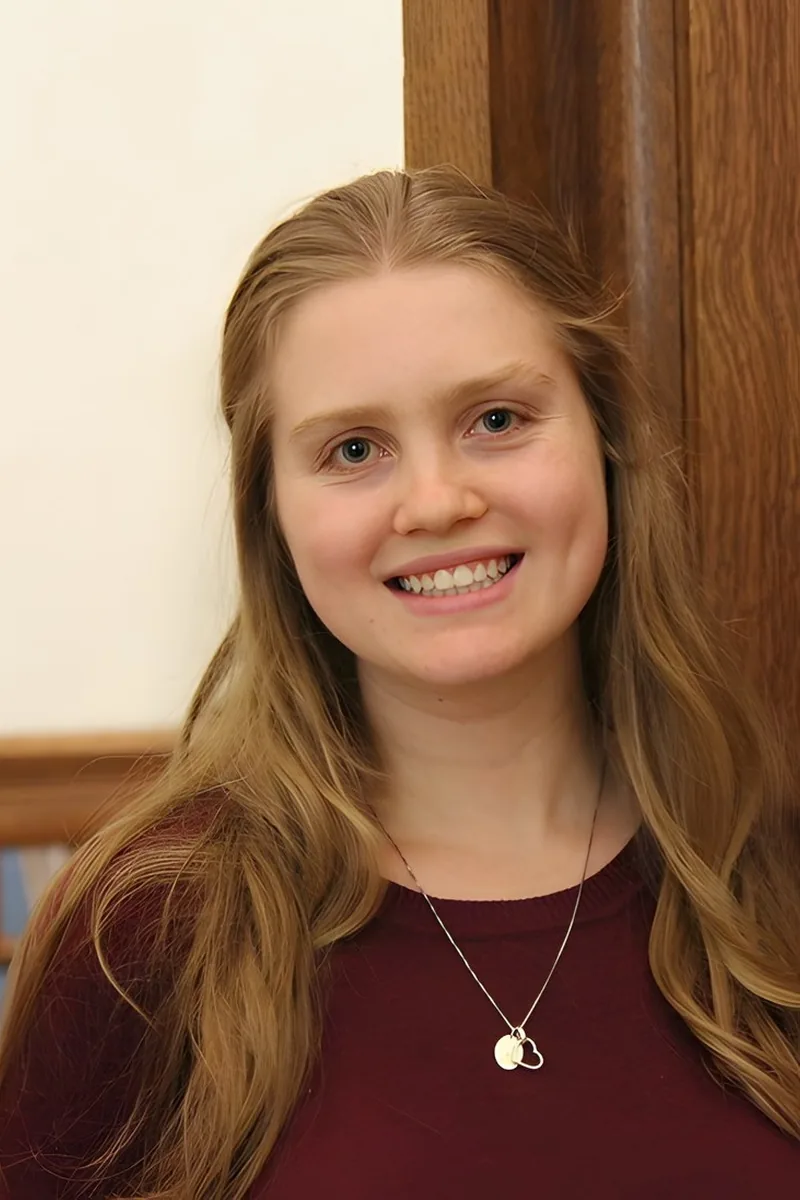
Ariel teaches German 1 and German 2 alongside a broad mix of subjects including Hebrew — meaning she's comfortable switching between language systems with very different alphabets, grammars, and logic. That cross-linguistic awareness sharpens how she explains German-specific hurdles like gendered nouns and accusative vs. dative cases, since she can draw comparisons that monolingual approaches miss.
German's case system and word order trip up almost every learner at some point — accusative versus dative, verb placement in subordinate clauses, adjective endings that seem to follow no pattern. Jhanelle, who holds a degree in German Studies, breaks these grammar rules into logical systems and builds conversational confidence alongside them so students can actually use what they learn.
Cognitive science trains you to think about how people actually learn — how memory encodes new information, why certain practice patterns stick and others don't — and Megan applies that lens directly to picking up German vocabulary and grammar. She's not a German major, but her adaptive, learner-first approach means she tailors drills, mnemonics, and visual aids to how each student's brain best absorbs a new language. Rated 5.0 by students.
German's case system and verb placement rules trip up most English speakers, but they follow a logic that becomes intuitive once someone lays it out clearly. Ardis teaches all levels of German — from navigating der/die/das and accusative vs. dative cases to constructing complex subordinate clauses — building grammatical understanding that holds up in both writing and conversation.
Having studied German as a full undergraduate major, Thomas brings a depth that goes well beyond tourist-level vocabulary — he digs into case systems, subordinate clause word order, and the grammatical gender patterns that trip up English speakers most. Whether a student is working through Konjunktiv II or learning to decode compound nouns, he connects the rules to how the language actually sounds and reads in practice.
Nicholas's primary expertise is in mathematics and statistics, not German — but he's conversational in the language and brings the same structured, analytical thinking that defines his math tutoring to learning grammar rules and vocabulary. For students who respond better to logical pattern-based explanations of things like case endings and verb placement, his approach can be a surprisingly good fit.
Learning German means wrestling with case endings, separable verbs, and sentence structures that put the verb in unexpected places. Anuj breaks these grammar puzzles into logical patterns, drawing on his CLEP German background and his psychology training to tailor explanations to how each student actually processes new language. He pairs grammar drills with reading and listening practice so the rules stick in context.
Morgan speaks three languages — Russian, Spanish, and German — which means she's internalized the process of learning a new grammar system from scratch more than once. That multilingual perspective is especially useful for German, where she can draw parallels between Russian's case system and German's four cases to make declensions feel less arbitrary. Rated 4.7 by students.
A pre-med student at UNC with minors in chemistry and biology, Dimitry also carries German through the advanced level — an uncommon combination that means he's used to toggling between technical and linguistic precision. He approaches German grammar with the same diagnostic thinking he brings to the sciences, making case systems and verb conjugation feel less like arbitrary rules and more like solvable puzzles. Rated 4.9 by students.
A full exchange year in Germany through the CBYX scholarship gave Clive the kind of immersive fluency that's hard to replicate in a classroom — navigating bureaucracy, university lectures, and daily life entirely in German. He teaches grammar concepts like case endings and verb conjugation through practical context that makes the rules stick.
Studying German at Carleton College means Amanda uses the language daily — in coursework, in conversation, and in reading original texts. She walks students through everything from noun cases and gendered articles in German 1 to more complex subordinate clause structures in German 2, building each lesson around practical usage so grammar rules actually stick.
Joshua teaches German across three levels, with particular attention to case systems and verb conjugation patterns that trip up English speakers. His approach connects grammar rules to the underlying logic of the language, drawing on the same analytical rigor he developed studying philosophy.
A year living in Germany gave Richard the kind of fluency that textbooks can't replicate — intuitions about word order, case endings, and the subtle differences between written and spoken registers. He teaches German grammar systematically while weaving in the cultural context that makes vocabulary and idioms easier to internalize.
Testimonials
Because the right German tutor makes all the difference.
Average Session Rating – Based on 3.4M Learner Ratings
Other Cincinnati Tutors
Related Languages Tutors in Cincinnati
Frequently Asked Questions
In a typical classroom with an 18.4:1 student-teacher ratio, students get limited opportunities to practice speaking. With personalized 1-on-1 instruction, you get dedicated conversation practice in real time, allowing tutors to correct pronunciation, model natural speech patterns, and build your confidence speaking German. This focused speaking time is one of the biggest advantages of tutoring for developing fluency.
German verb conjugation can feel overwhelming with multiple tenses and cases to master, but tutors break it down systematically—starting with high-frequency verbs and patterns before moving to irregular forms. The key is combining rule-based learning with plenty of practice in context, so grammar becomes intuitive rather than just memorized. Personalized tutoring lets tutors identify which conjugation patterns trip you up most and focus there.
Vocabulary sticks best when you encounter words in meaningful contexts and use them repeatedly over time—a principle called spaced repetition. Tutors can teach you strategies like connecting new words to existing knowledge, using them in sentences you create, and revisiting them across multiple lessons. This beats cramming, which leads to quick forgetting.
Yes—pronunciation is one of the biggest benefits of working with a tutor one-on-one. Tutors can model authentic German sounds, listen to your speech in real time, and give immediate feedback on tricky sounds like the German 'ü' and 'ö' vowels or the guttural 'ch' sound. With consistent practice and correction, you'll develop a more natural accent and feel more confident speaking.
Language and culture are deeply connected, and many tutors weave cultural context into lessons—discussing German traditions, media, literature, and regional differences to help you understand not just how to speak German, but how it's used in real German-speaking communities. This cultural immersion makes learning more engaging and helps you communicate more authentically.
Tutors working with Cincinnati students are familiar with local school curricula and can align their instruction with what you're learning in class. Whether you're working toward proficiency levels, preparing for AP German, or building conversational skills, tutors customize lessons to match your school's expectations and your specific goals.
Your first session is an assessment and planning conversation. The tutor will ask about your current level, what you're studying in school, your goals (like passing an exam or becoming conversational), and which skills need the most work. From there, they'll create a personalized plan and start building your confidence with targeted instruction right away.
Effective German tutoring develops all four skills in an integrated way. You might listen to authentic German audio, discuss what you heard, write about the topic, and then practice speaking your thoughts aloud. This approach mirrors real-world language use and helps each skill reinforce the others, rather than treating them as separate subjects.
Let’s find your perfect tutor
Answer a few quick questions. We’ll recommend the right plan and match you with a top 5% tutor.