Award-Winning Chemistry Tutors
serving Concord, NC
Chemistry
Tutors in Concord
Private 1-on-1 tutoring, weekly live classes for academic support, test prep & enrichment, practice tests and diagnostics, and more to elevate grades and test scores.
Based on 3.4M Learner Ratings
UniversitiesSchools & Universities
DeliveredHours Delivered
ProficiencyGrowth in Proficiency
Who needs tutoring?
No obligation. Takes ~1 minute.
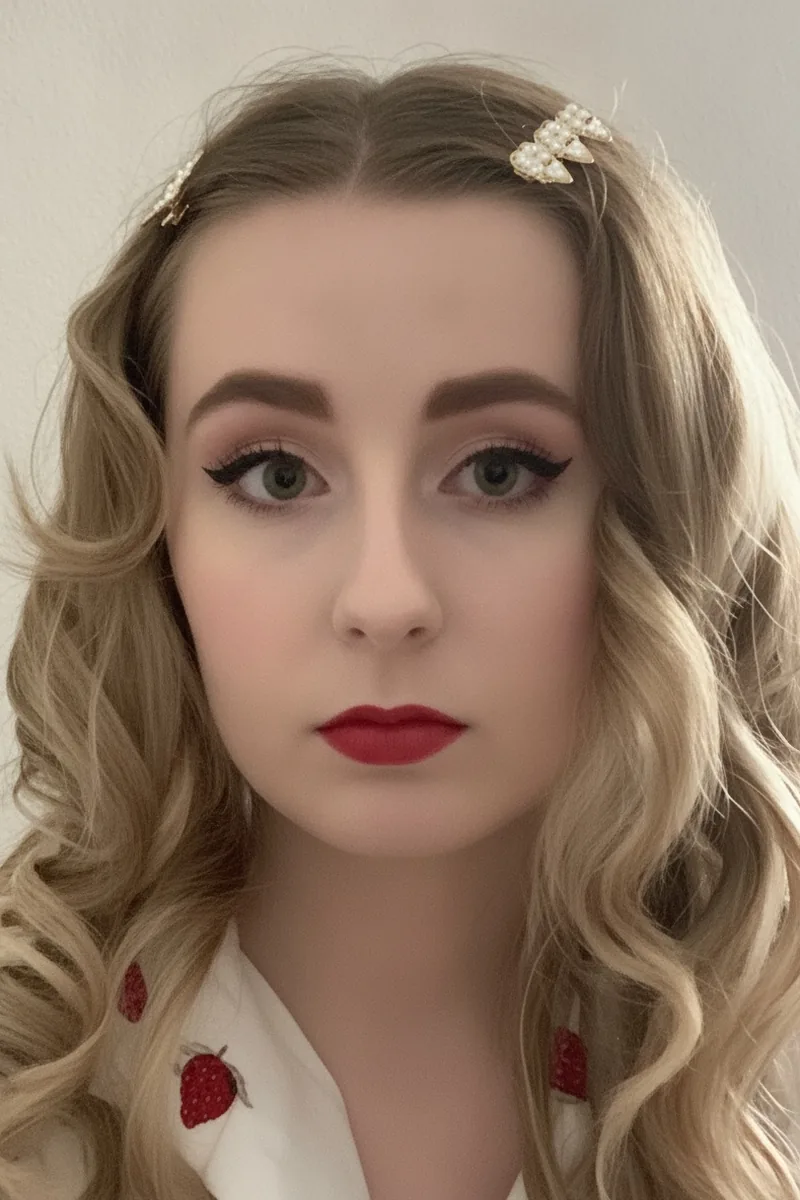
Stoichiometry, equilibrium, acid-base reactions — chemistry rewards students who can think in ratios and relationships, not just memorize formulas. Sydny's triple-science undergraduate background and medical training mean she can explain why a reaction behaves the way it does at the molecular level, then connect that understanding to the math on the page.

A biochemistry degree plus medical school means Tammy has taken more chemistry courses than most tutors — general, organic, analytical, and beyond. She unpacks tricky topics like stoichiometry, equilibrium, and thermodynamics by connecting abstract formulas to the molecular-level story of what's actually happening in a reaction.
I am a freshman at Vanderbilt University currently pursuing a B.S. in Biochemistry. My inquisitive nature has fostered a love for mathematics, the natural sciences, and how they interact to produce the world we experience every day. This extends to my teaching strategy, where I emphasize the importance of conceptual understanding rather than pure memorization of equations and steps. My recent experience in a wide variety of Advanced Placement courses lends me insight to recent changes in course objectives and exam formatting.
Balancing equations, understanding molarity, and navigating acid-base chemistry all become more intuitive when you see how they play out in real clinical settings. Emmanuel's respiratory therapy background required deep fluency in blood gas chemistry and pharmacological interactions, giving him a practical lens on chemistry concepts that most tutors can't offer.
Stoichiometry trips up a lot of students because it requires translating between grams, moles, and molecules in a single problem. Devin, a chemical engineering major studying quantitative chemistry at the college level, teaches a systematic approach to dimensional analysis and reaction balancing that turns multi-step calculations into a repeatable process.
Studying biological and physical sciences at Cornell means Katrina uses chemistry daily — from balancing redox reactions to understanding thermodynamic principles in lab settings. She breaks down tricky topics like stoichiometry, equilibrium, and acid-base chemistry by connecting them to real applications she's encountered in her coursework.
Three semesters as a TA and a chemistry minor at UNC gave Dimitry an unusually detailed understanding of where students get stuck — whether it's balancing redox equations, applying stoichiometry, or connecting molecular geometry to polarity. He walks through each concept with enough repetition and variation that students build real intuition, not just formula recall. Rated 4.9 by students.
A solid grasp of Chemistry comes down to seeing patterns — why certain elements behave similarly, how bond polarity drives molecular interactions, what makes a reaction actually proceed. Hunter studied Biochemistry at Boston College and tackles Chemistry by linking abstract ideas like electronegativity or Le Chatelier's principle to concrete examples students can visualize. He holds a 5.0 rating from past students.
Balancing equations, stoichiometry, and thermodynamics all showed up repeatedly in Elisa's engineering curriculum, so she teaches chemistry with a practical edge that connects molecular behavior to large-scale outcomes. She unpacks problems step by step, making sure unit conversions and mole ratios make logical sense before moving on to more complex reaction analysis.
During her time as a tutor in Wake Forest's Chemistry Department, Taylor noticed that most struggling students weren't lacking effort — they were missing one or two foundational ideas that made everything else confusing. She pinpoints those gaps quickly, whether the topic is stoichiometry, molecular geometry, or thermochemistry, and explains them in concrete, visual ways that produce genuine understanding.
Julia's cellular and molecular biology training means she didn't just take chemistry — she used it daily, from understanding buffer systems in cell culture to analyzing molecular interactions through spectroscopy. She applies that practical fluency to topics like stoichiometry, equilibrium, and acid-base reactions, explaining not just the how but the why behind each calculation. Students who feel lost in a sea of formulas tend to find her approach grounding.
Balancing equations, stoichiometry, and electron configurations all make more sense when you can picture what atoms are actually doing. Madison creates diagrams and visual breakdowns for each concept, an approach rooted in her biology coursework at Guilford College where chemistry is foundational. Her 5.0 student rating shows that making the invisible visible really works.
Stoichiometry, electron configurations, acid-base equilibria — Cailee covered all of it during her pre-med chemistry courses at Michigan and again while preparing for the MCAT. She explains reactions by building up from atomic structure so students understand the 'why' behind balancing equations and predicting products.
The jump from understanding what atoms are to predicting how they bond, react, and rearrange trips up a lot of chemistry students. Nicole approaches the subject through pattern recognition — teaching students to read the periodic table like a map rather than a list of facts. Her biology coursework gives her a practical lens on chemical concepts, from acid-base equilibria to organic functional groups.
Balancing equations and stoichiometry are where most chemistry students first feel lost, and Ian tackles those head-on by grounding every calculation in what's actually happening at the molecular level. His background across both sciences and humanities means he's used to explaining abstract concepts in plain, concrete language.
Stoichiometry, equilibrium expressions, and electron configurations each demand a slightly different kind of thinking, and chemistry courses pile them on fast. Kathleen approaches the subject with a quantitative mindset shaped by her math and statistics background, which is especially useful when students hit topics like thermodynamics calculations or rate law problems that blur the line between chemistry and applied math.
Kelsey is pursuing a chemistry minor alongside her public health major at UNC Charlotte, so she's deep in the subject right now — from atomic structure and bonding through reaction kinetics and thermochemistry. She also tutors through the university's academic excellence center, which gives her daily practice explaining tough concepts to students at different levels.
Stoichiometry, equilibrium, and gas laws all follow patterns that become predictable once a student sees the underlying logic. Matthew approaches chemistry the way he learned it as an engineering student — quantitatively and systematically, connecting mole ratios and reaction balancing to problem-solving habits that carry through the entire course.
Balancing equations, predicting reaction products, working through stoichiometry — chemistry demands both conceptual understanding and careful quantitative reasoning. Bria approaches each topic by first making sure the underlying logic is clear, then layering in the math. Her pre-med background means she knows which chemistry concepts matter most for students heading into biology or health sciences.
Mole conversions, stoichiometry, and balancing redox reactions are where most general chemistry students first feel lost — not because the ideas are hard, but because the problem-solving sequence isn't obvious yet. As a chemistry major, Amanda teaches a consistent method for dissecting word problems into dimensional-analysis chains so students can set up unfamiliar calculations on their own.
Studying chemistry as his major at Stetson University, Finnegan lives in this material every day — from balancing redox equations to working through thermodynamic calculations. He breaks down abstract concepts like molecular orbital theory and equilibrium by tying them to concrete, visual examples. That daily immersion means he knows exactly where the common stumbling blocks are and how to get past them.
A lot of Chemistry frustration comes from the math hiding inside it — balancing equations, mole conversions, dimensional analysis. Jaela's biology degree required extensive chemistry coursework, and she approaches the subject by making sure the quantitative skills are solid before layering on the conceptual material. Students rated her 4.8 out of 5.0.
I am currently a student at Duke University studying Biomedical Engineering and Economics. Just a little bit about me and some of my interests. Some of my favorite academic interests include memoirs and modern classics. I think Catcher in the Rye is still one of my all time favorite books but Percy Jackson, a modern classic, is up there too. Beyond academics, I take great guilty pleasure in watching TV shows such as Westworld, Sherlock, How I Met Your Mother, and even The Bachelorette when I'm at a low point.
I am currently in my fourth year of medical school at the University of Tennessee Health Science Center. Learning science is my passion, but I also enjoy running, trying new food, and reading classic books. I would love to be part of your journey by helping you love mastering the task at hand. No doubt, you will see your best results once you have learned to enjoy the grind of becoming an expert of the material placed before you. Together, we can learn to enjoy the process as well as enjoy the results you will achieve. Whether you are working through upper-level science courses to complete a pre-med degree, taking the MCAT before applying to medical school, or studying for the USMLE Step 1 or 2 exams to get into the residency of your dreams, I can help you achieve your goal. With whatever content we are mastering together, we will work to be as organized and planned as possible. "Those who fail to plan, plan to fail!"
I am eager to help other students in related subjects. In my free time, I like to run, play basketball, spend time at the shore, and cook.
As a dedicated tutor pursuing a Bachelor's in Biomedical Engineering from Duke University, I have over 5 years of experience in helping students excel in mathematics, including subjects like Algebra, Calculus, and Differential Equations. My teaching approach centers on fostering a supportive learning environment where students feel encouraged to explore concepts at their own pace. I believe that every student has the potential to succeed, and I strive to connect with each learner by tailoring my methods to their unique needs and learning styles. My passion for tutoring stems from witnessing my students' growth and confidence as they overcome challenges in math. Outside of tutoring, I enjoy being active and spending time with friends.
I am an English major and potential Secondary Education minor at Boston College. I hope to concentrate on creative writing, so naturally it is my favorite subject to tutor. In assisting students with writing at Boston Latin, I have found that some students have a natural turn for writing essays and need little more than encouragement and editing. With most students, however, writing is not a skill they can effortlessly pick up, and creativity is not instantly fluid. Bearing that in mind, I use a Socratic method to draw out ideas and key words and phrases when helping students come up with responses to creative writing essay questions, i.e., the kind given on SATs, ACTs and on college essays. Usually, by the end of the session, they find out that they need a lot less help than they thought! I have also done a fair amount of math and science tutoring with middle and high school students, which is almost easier, since full comprehension can be immediately and clearly demonstrated. I generally design some sort of worksheet in order to walk the student through the process of figuring out the general concept in a unique way; for example, I will use an angle maze to teach geometric angle theorems. I am a proponent of the mindset that learning to learn is much more important than learning pure information, so I always focus more on the process than the outcome. I love to teach, and I hope to work in a high school some day!
I am an undergraduate student at Wofford College pursuing a major in biology with a minor in business. In addition, I am a nationally certified and state certified Emergency Medical Technician and work sporadically throughout the year. I have three years of experience tutoring students in a wide array of subject areas. I have a true passion for learning and I am extremely excited to share that passion with the students I have the privilege to help succeed.
I am a freshman at the University of Pittsburgh looking to pursue the pre-med track as a Neuroscience major. In my free time, I enjoy playing tennis, playing the piano, writing, reading, listening to music, etc.
I graduated from the University of North Carolina at Chapel Hill with a Bachelor of Science in Physics. I work with students in a variety of subjects, including Math, Physics, and Chemistry. I have experience working with students on the Autism spectrum and with ADHD.
I am extremely passionate about teaching and I am considering becoming a professor of Chemistry. Don't ever hesitate to ask me questions! I'll be more than happy to answer them!
I'm passionate about. I also believe in the value of education, more than as a means to an end (career and income), but as an end in itself. Education is its own reward!
I am a chemist having majored in Organic chemistry for my BS degree and environmental chemistry for my MS degree, in my career as an analytical chemist both in Research and development in a plastics industry and analytical chemist in environmental health laboratories, I have been a lifetime student of organic chemistry and chemistry in general. My passion has always been to help student excel in chemistry, especially organic chemistry which has endless applications in the present word. I started by tutoring my own children in high school and helped my daughter graduate with a BS in chemical engineering at North Carolina State University and my son as an electrical engineer from the same college. Organic chemistry bogs down students if they are behind in some basic principles such as understanding the periodic table and why the elements are arranged in specific patterns, i.e. periods and groups. They must be very clear about the filling of electrons in various shells and orbitals. A basic understanding of this will open doors to many aspects of the bonding theory, hybridization of carbon and its tetrahedral nature and the ability of carbon to infinitely bond with itself to make long chains and many complex derivatives. Chemical reactions take place at the outermost, also referred to as the valency shell and therefore understanding the orbitals in the outer shell helps the student tell what a sigma or a Pi bond is and other characteristics of a bonded atom such as lone pair of electrons which plays important roles in reactions and ligand chemistry. My favorite hobby is soccer and football. I love music so I usually play my guitar for leisure. I spend a lot of time studying interesting topics in organic chemistry on the internet.
Alec started his teaching career running problem-solving sessions as a general chemistry TA at Cornell, walking students through stoichiometry, equilibrium, and thermochemistry. That hands-on experience taught him exactly where students lose the thread — often at the jump from conceptual understanding to quantitative problem-solving — and he's been closing that gap ever since. Rated 4.8 by students.
Whether it's balancing redox reactions or figuring out why gases behave the way they do, chemistry clicks once students stop treating it as memorization and start seeing the patterns. Aditi unpacks topics like mole conversions, periodic trends, and acid-base chemistry by tying each one back to a few core principles. Her premed track at Rice means she's working through advanced chemistry herself right now.
Having designed and optimized light filters for optical-electronic multiplexers, Dennis understands chemical bonding, molecular geometry, and spectroscopy from a hands-on engineering perspective. He tackles tricky chemistry topics — stoichiometry, reaction balancing, periodic trends — by grounding them in the physical principles that explain why atoms behave the way they do.
Stoichiometry, equilibrium, and thermodynamics all share one thing in common: they reward students who understand the "why" behind each calculation. Bidyut's biomedical engineering training at Johns Hopkins required deep chemistry coursework, and he draws on that background to explain concepts like reaction kinetics and molecular bonding with precision. He's especially good at walking through dimensional analysis and unit conversions until they become second nature.
Stoichiometry, molecular bonding, and reaction mechanisms are the backbone of Aimee's entire academic career in chemical engineering. She explains concepts like mole ratios and electron configurations by grounding them in the lab and industrial processes she's studied at Georgia Tech, which gives students a concrete anchor for material that can otherwise feel purely theoretical. Rated 4.9 by students.
General chemistry is Elijah's self-described favorite subject, and his biochemistry degree means he's constantly building on core concepts like equilibrium, acid-base chemistry, and intermolecular forces in his own coursework. He teaches the reasoning behind each problem setup — why a reaction favors products, how electronegativity shapes molecular polarity — so the logic carries forward instead of resetting every chapter. Rated 5.0 by students.
Testimonials
Because the right Chemistry tutor makes all the difference.
Average Session Rating – Based on 3.4M Learner Ratings
Practice Chemistry
Free practice tests, flashcards, and AI tutoring for Chemistry
Other Concord Tutors
Related Science Tutors in Concord
Frequently Asked Questions
Varsity Tutors matches Concord students with expert Chemistry tutors for 1-on-1 instruction. We pair each student with a tutor based on their specific needs, learning style, and goals.
Whether you need homework help, exam prep, or want to get ahead, our Chemistry tutors are ready to help.
Common challenges include gaps from earlier material, difficulty with specific concepts, and trouble applying learning to new problems. These issues can snowball quickly in Chemistry.
A tutor identifies where you're stuck, fills in gaps, and provides targeted practice. The 1-on-1 format means you get help exactly where you need it.
Tutors work with your student's actual coursework—homework assignments, class notes, and upcoming tests. This keeps tutoring directly relevant to what's happening in the classroom.
When you share information about your student's school and curriculum, we can match you with a tutor who has relevant experience.
All tutors complete background checks, credential verification, and teaching evaluation. Many of our Chemistry tutors hold advanced degrees or have years of teaching experience.
You can review tutor profiles to find someone with the right background for your student's level and needs.
Many students see improved grades within a few weeks, along with better understanding of Chemistry concepts and more confidence tackling challenging material.
Tutors track progress and adjust their approach to ensure continued improvement.
Most students benefit from 1-2 sessions per week. More frequent sessions help if your student is significantly behind or has an important exam coming up.
Your tutor can recommend a schedule based on your student's specific situation and goals.
Tutoring is purchased in packages of hours, with rates varying by tutor experience. Varsity Tutors offers several options to fit different budgets and needs.
You can discuss pricing during your consultation to find what works best.
Your tutor will assess where your student is, discuss goals, and start working on priority areas. Most students bring current homework or upcoming test material to focus on.
By the end, you'll have a clear sense of how the tutor can help and a plan for moving forward.
Let’s find your perfect tutor
Answer a few quick questions. We’ll recommend the right plan and match you with a top 5% tutor.