Award-Winning Chemistry Tutors
serving Kalamazoo, MI
Chemistry
Tutors in Kalamazoo
Private 1-on-1 tutoring, weekly live classes for academic support, test prep & enrichment, practice tests and diagnostics, and more to elevate grades and test scores.
Based on 3.4M Learner Ratings
UniversitiesSchools & Universities
DeliveredHours Delivered
ProficiencyGrowth in Proficiency
Who needs tutoring?
No obligation. Takes ~1 minute.
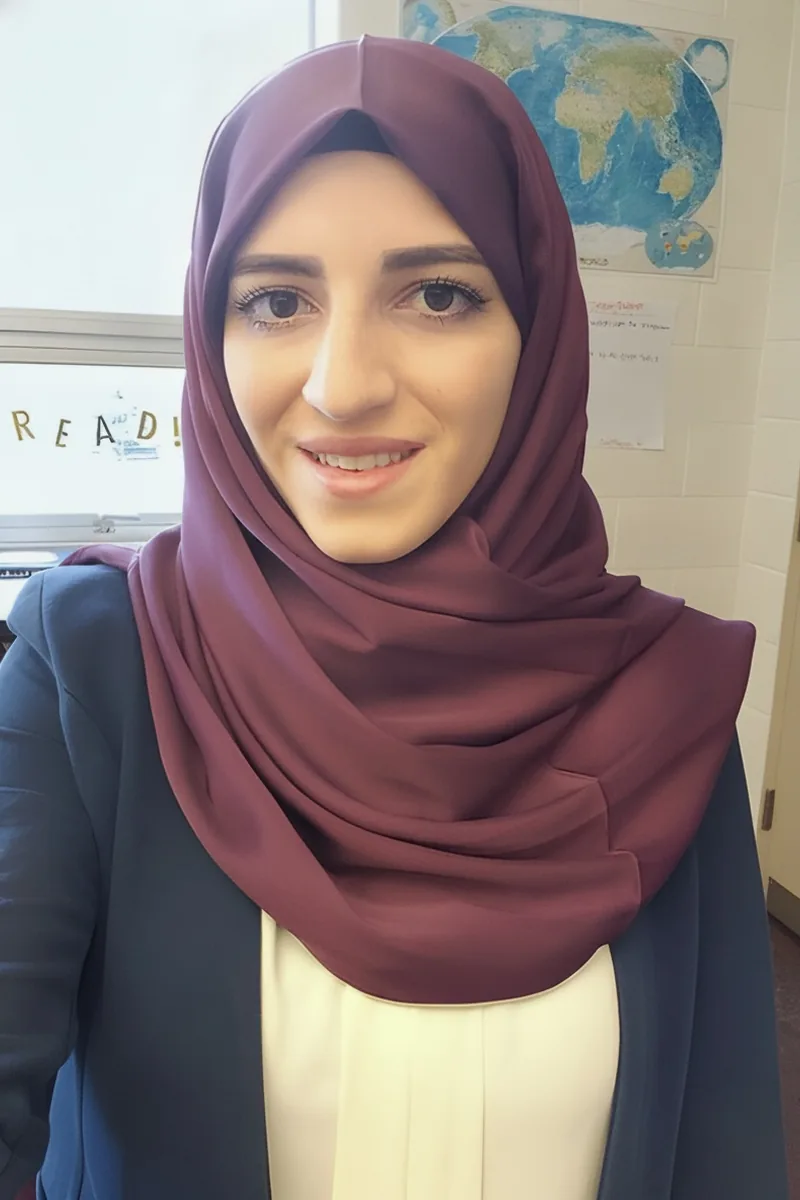
Certified to teach chemistry at the secondary level, Israa digs into everything from stoichiometry and mole conversions to equilibrium and thermodynamics. She approaches problem-solving by teaching students to read chemical equations as stories — tracking what's conserved, what's transformed, and why energy changes matter. Her Master's in Education sharpened her ability to adapt explanations on the fly when a concept isn't landing.
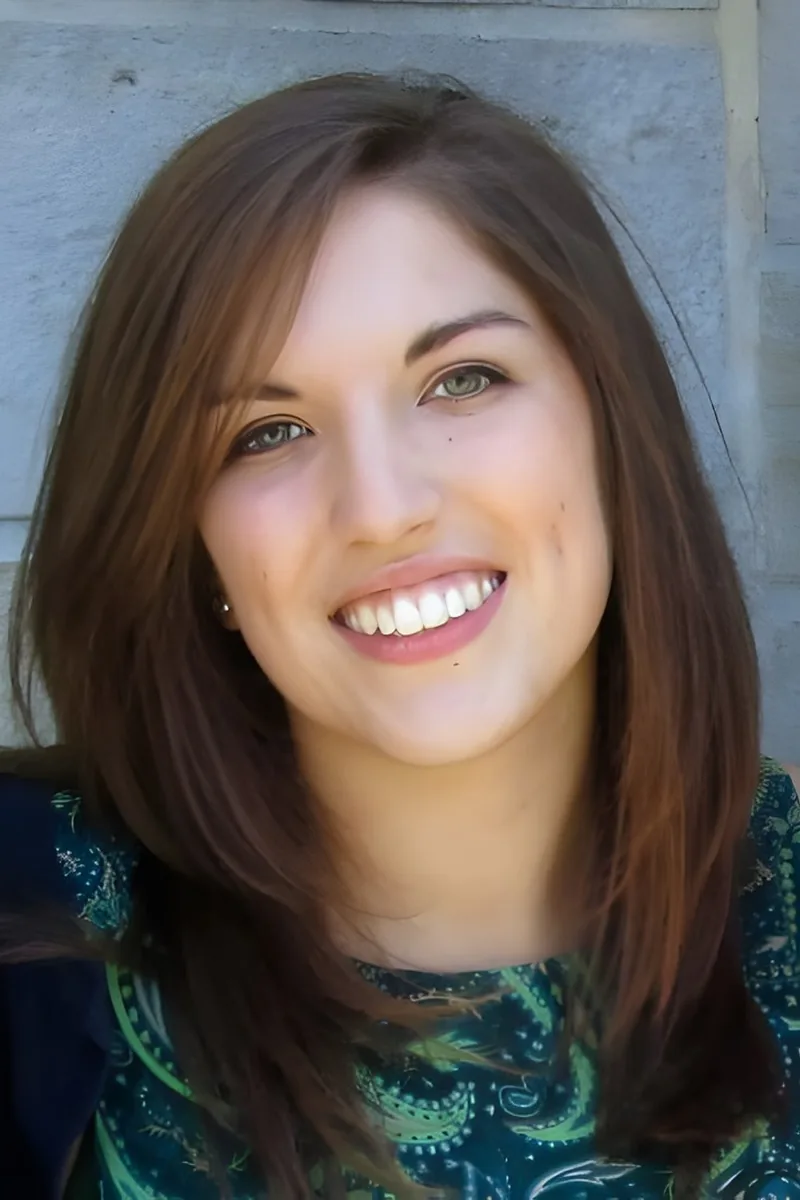
Balancing equations, predicting reaction products, understanding molarity — chemistry builds on itself fast, and gaps in early concepts snowball quickly. Suzie earned her degree in chemical and biological engineering and is now pursuing an MD/PhD at Michigan Medical School, so she's spent years applying chemistry at the molecular level rather than just studying it for exams.
Holding a bachelor's degree in chemistry, David doesn't just remember how to balance redox equations or predict molecular geometry — he understands the underlying principles well enough to explain them multiple ways. He's especially sharp on stoichiometry and equilibrium, two areas where students often memorize steps without grasping why the math works. His engineering background adds a practical dimension that makes abstract concepts like enthalpy and electron orbitals more concrete.
Stoichiometry, equilibrium, acid-base reactions — chemistry builds each unit on the last, so one shaky concept can cascade into confusion for months. Pratik catches those gaps early. A premed biology major at Cornell who tutors chemistry at both the high school and college level, he walks through each reaction type with enough molecular-level detail that students understand what's actually happening, not just how to balance the equation.
Sreya is a chemistry major at the University of Michigan who genuinely lives this subject — from balancing redox half-reactions to mapping out molecular orbital diagrams. She teaches problem-solving strategies that transfer across topics, so a student who masters stoichiometry with her already has the reasoning tools to tackle equilibrium and thermodynamics.
I am a undergraduate freshman of the University of Michigan, studying business at the Ross School of Business. Working together with students and having a good time while seeing steady improvements has proven to provide me great joy. I believe that communication and relationship building is crucial for students to open up about their struggles and also for me to identify problems they don't realize they can improve on, so this is a key aspect of all of my lessons. During my free time, I enjoy playing sports or snacking on desserts while binge-watching Friends!
Balancing equations is mechanical; understanding why a reaction proceeds — that's where chemistry gets interesting and where most students need the most support. Arianna tackles stoichiometry, acid-base equilibria, and electron configuration by building each idea from the atomic level up, drawing on the rigorous chemistry training she completed as part of her Dartmouth science curriculum. Her approach turns abstract concepts like orbital hybridization into something students can actually visualize.
Microbiology lab work at Barrett Honors College meant Surina was constantly applying chemistry — buffer calculations, reaction kinetics, acid-base titrations — in contexts where getting it wrong had real consequences. That hands-on grounding shows up in how she teaches topics like solution chemistry and molecular interactions: she connects the abstraction to something tangible. Rated 5.0 by students.
Mole conversions, balancing redox reactions, predicting products — chemistry has a way of making each chapter feel like a completely different subject. Phil ties those threads together by showing how atomic structure and bonding principles keep reappearing in every new unit. He lets students steer each session toward the problems that actually confuse them, turning tutoring into focused practice rather than a rehash of class notes.
Stoichiometry, electron configurations, acid-base equilibria — chemistry asks students to toggle between math and abstract models constantly, which is exactly where most confusion lives. Uchenna graduated magna cum laude in biochemistry and now applies chemical principles daily in her medical research at the NIH, so she explains reactions and bonding with the kind of depth that turns rote formulas into ideas that actually make sense. Rated 4.9 by students.
Stoichiometry, balancing redox reactions, periodic trends — Krisha tackles these by building intuition for how atoms actually interact rather than relying on rote memorization of rules. As a biology major at Michigan, she uses chemistry constantly and knows which foundational concepts matter most for students who need the subject to click.
Teaching chemistry since 2011 across undergraduate, master's, and PhD levels, Alaaeddeen has an unusually deep well of examples ready for any topic — whether it's balancing redox reactions, predicting molecular geometry, or working through stoichiometry. He emphasizes understanding the logic behind each concept so that new problems feel solvable, not foreign. His research stints at Windsor and Cornell keep that knowledge sharp and current.
Whether it's balancing redox reactions, predicting molecular geometry with VSEPR, or working through stoichiometry problems, Kirby approaches chemistry by building up from the atomic-level reasoning rather than handing students a set of rules to memorize. Her University of Michigan biochemistry degree gave her years of daily chemistry practice across general, organic, and physical chem. Rated 4.9 by students.
Understanding chemistry means building a mental model of what atoms are actually doing — why ionic compounds dissolve, how electron orbitals shape molecular geometry, what drives a reaction forward. Tyler is pursuing his doctorate in chemistry at the University of Michigan and tackles these ideas by connecting abstract theory to tangible examples students can visualize. Rated 5.0 by students.
Studying neuroscience at Michigan means Vikhyathi encounters chemistry from the biological side first — how ion channels depend on electrochemistry, how pH shifts alter protein folding, how thermodynamics drives cellular reactions. That perspective is especially useful for teaching topics like acid-base chemistry, intermolecular forces, and reaction energetics, because she can ground abstract concepts in what they actually do inside living systems.
Working as a research assistant in transplant surgery at Johns Hopkins, Jonathan deals with the biochemistry of organ preservation, tissue compatibility, and physiological reactions — all grounded in chemistry fundamentals like solutions, pH, and molecular interactions. That hands-on lab context gives him a concrete way to explain topics like molarity, acid-base equilibria, and reaction types, since he can point to exactly where they matter in a real research setting. Rated 5.0 by students.
Vazrik holds a B.S. in Chemistry and is currently pursuing a doctorate in Materials Science at the University of Michigan, so concepts like stoichiometry, equilibrium, and periodic trends are woven into his daily research. He teaches chemistry by anchoring abstract ideas — electron configurations, thermochemical equations, solution dynamics — to tangible examples from materials and engineering applications.
Biomedical engineering forced Adam to learn chemistry as a tool for understanding how materials interact with living tissue — corrosion behavior of implants, polymer degradation, and drug delivery all hinge on concepts like reaction kinetics, molecular polarity, and pH chemistry. That applied background means he teaches topics like stoichiometry and intermolecular forces by grounding them in problems where the chemistry actually matters. Rated 4.9 by students.
I'm working towards a B.S. in Physics at Michigan State University with a minor in Computational Mathematics, Science, and Engineering. I've made the Chancellor's List every semester and am a member of my university's Honors College. I've worked with students as young as 11 and as old as 25 for the past couple of years, both online and in-person. Since I'm still a student myself, I can relate to clients and teach in a way that creates a comfortable and safe space. I tutor a broad range of subjects and would love to help you!
Stoichiometry, equilibrium, and electron configurations each demand a different kind of thinking — quantitative precision, conceptual reasoning, and spatial visualization. Krishanu tackles chemistry by sorting out which type of thinking a problem requires before diving into calculations. His science and math background means he can bridge the gap between the math-heavy and concept-heavy sides of the course without losing students on either end.
I am passionate about. Throughout my education, even in elementary school, I would love helping my friends do better in their schooling, whether that be by just answering a few questions they had, some one-on-one time, or a group study session.
I am eternally grateful! I minored in Chemistry after getting interested in the inner workings of organic chemistry. While going to college I earned money by tutoring classes I had already taken. I also offered "supplemental instruction" which were informal classroom question and answer sessions. I worked in a research lab after earning an undergraduate research fellowship and explored Physiology at the School of Medicine. Then went on to study Toxicology at the University of Wisconsin, Madison. While there a decision appeared clear between focusing on research or teaching. I like teaching better. I truly enjoy spreading knowledge about Biology and Chemistry and finding fun ways to introduce people to these (often difficult) subjects.
I am in the 8-year direct med program at Virginia Commonwealth University. I plan to receive a major in Bioinformatics and a minor in Mathematics. I have a plethora of experience tutoring elementary school students in math and reading as well as high school students in AP Chemistry, ACT, and college admission essays. I am most passionate about helping students learn content, tips, and tricks needed for them to excel on the ACT as well as about helping kids establish a strong foundation for their pre-algebra skills. I hope I have the opportunity to get to know all of you and help you succeed in your endeavors!
I am a current undergraduate at the University of Michigan. I am a Biochemistry major and Philosophy minor, with years of experience tutoring students. Through high school, I tutored kids in the ACT, math, science, literature, and debate. My favorite subject to tutor is Chemistry, as I have taken Chemistry Honors, AP Chemistry, and Organic Chemistry(1 and 2). I believe that tutoring is a two way street, with the student learning about the material, but the teacher learning about how the student interacts with the material. Due to this, I am a very hands-on tutor who is always available for a text/call outside of class. Outside of academia, I am a singer and have been for 13 years now - a choir singer for 7 years and now in a premier acapella group at the University of Michigan.
I am a second year medical student at Wayne State University. I graduated from Grand Valley State University with two bachelor's degrees in Biomedical Sciences and Classics with a minor in Chemistry. I have been tutoring for four years in various subjects, but my favorites are Chemistry and Latin. I have experience tutoring from middle school to college age students and enjoy working with them one on one to identify their weaknesses and create a plan to rectify them. I believe that each student learns differently and finding the best strategies for them will lead to their success.
From balancing redox reactions to interpreting phase diagrams, chemistry asks students to think at both the molecular and mathematical level simultaneously. Morgan's chemical engineering training at UW-Madison gave her deep comfort moving between these scales, and she uses real-world examples — like how stoichiometry governs industrial reactions — to make abstract concepts tangible.
I am 26 years old born and raised in Seattle Washington, University of British Columbia graduate and current 3rd year medical student. You may look at my accomplishments and assume I must have had a very consistent successful education process. This is not necessarily true, I struggled throughout high school with coursework and was slowly falling behind my peers. I was working very hard but was not getting the academic results that I wanted. I also reached out to academic tutors to help me understand core concepts in various subjects that my peers were not having any trouble with. Even during my undergraduate degree, I reached out to various academic tutors to give me an extra viewpoint on various difficult subjects and concepts. I understand what it is like to need extra help with coursework, I understand growing curious minds and the concepts that give many trouble because I have been through it. I am now a dean's list student at the top of my class in Medical school, and I can truly see how possible it is for any student to reach their academic goals no matter where you have come from. I believe the most intelligent individuals are the ones who can identify their weakness and seek help from others to succeed.
I am a University of Michigan College of Pharmacy and will be graduating this April with my Doctor of Pharmacy degree. One of the reasons I chose to go into pharmacy school was so that I could make a difference in people???s lives, no matter how big or small. That is also why I have a passion for tutoring, something I have been doing since 2012. I absolutely love seeing a student???s face light up with understanding and seeing him/her improve as time goes by. I think the best way to tutor is to find the root of the issue whether it???s time management, difficulty in understanding the material, or difficulty in applying the material; and then using different strategies to really address that issue in a collaborative manner in order to really help the student improve. As someone currently in graduate school, I have seen my peers struggle with subjects and struggled myself. Through this and my past experiences tutoring, I have come up with many different strategies for learning and ways to address a student???s different learning style as well. During my spare time, I love trying new things, completing jigsaw puzzles (my current challenge is a 2000 piece puzzle!), learning how to sew and make my own clothes, and just being outside and exploring the area.
Balancing equations is one thing; understanding why a reaction actually proceeds is another. Carly teaches chemistry by connecting mole ratios, stoichiometry, and reaction types to the underlying logic of atomic structure, so students can predict outcomes instead of memorizing templates. Her engineering education required years of applied chemistry, giving her a practical fluency that translates well to high school and introductory college courses.
I am a senior in the Mechanical Engineering Department at Eastern Michigan University, and I have been tutoring for about five years, from middle school to early college age students. My hobbies are painting/drawing, playing piano and guitar, and playing with my pet rats and my cat!
Understanding chemistry means seeing the invisible — picturing how atoms rearrange in a reaction or why a solution changes color when you add a few drops of acid. Raha built her entire academic career on chemistry, starting with a chemical engineering degree and continuing through graduate research that depends on reaction kinetics and material properties. She explains concepts like mole conversions, bonding, and acid-base equilibria by grounding each one in a concrete, observable phenomenon.
I'm Yanti, a USC award-winning writing instructor, an emergency medicine continuing educator, and a biology major with a chemistry minor. For 36 years, I've taught students how to master difficult concepts across a very wide range of subjects. While I focus on professional licensing and standardized exam test prep, I've taught most major subjects at every level and ability. I love teaching, not lecturing. You will get information and techniques in any way that works for you: color-coded charts, visual mind maps, easy-to-memorize songs. Whatever the format, I break complex ideas into clear, doable steps that make sense to you. No fluff. No jargon. Just clarity, confidence, and even some fun. In our sessions, you get structure, support, and a coach who makes learning enjoyable and easy again. If you're ready to succeed, laugh a little, and learn a lot, please book a lesson. I'd love to work with you. Thank you!
I am currently a senior studying pre-medicine at the University of Michigan.
Having completed high school chemistry with High Honors and now heading into Michigan State's science curriculum, Shobhna is close enough to first-year chemistry struggles to remember exactly what makes topics like mole conversions, naming compounds, and balancing equations confusing the first time around. She breaks complex problems into smaller, concrete steps — building from what a student already understands rather than jumping straight to the formula. That recent-student perspective means she catches the specific gaps that trip people up before frustration sets in.
I'm Gurbani, and I am a current fourth-year medical student that would love to give back to other students and help them get into a position like I am today.
A chemistry degree from MIT gives Max fluency across the discipline — thermodynamics, equilibrium, electrochemistry, kinetics — but what makes him effective is his habit of letting students arrive at conclusions themselves rather than handing them answers. He sets up problems so that the logic of stoichiometry or periodic trends reveals itself step by step, building real understanding that holds up on exams.
As a pre-med student at Duke, Camille completed a full chemistry sequence — general through organic — and knows firsthand how abstract concepts like stoichiometry and electron configuration can feel before they finally click. She unpacks each topic by connecting molecular-level ideas to tangible examples students can actually visualize.
Stoichiometry, mole conversions, and balancing redox reactions all come down to careful, methodical problem-solving — exactly the skill set Ravnoor sharpens as a computer science student at Cornell. He walks through each type of calculation step by step, building the kind of practice repetition that turns confusion into confidence.
Stoichiometry, equilibrium, and acid-base reactions all require a kind of disciplined reasoning that Jessica developed through years of medical training, where chemistry underpins everything from pharmacology to metabolic pathways. She breaks down each problem type into a clear sequence of decisions rather than a wall of formulas to memorize.
David approaches chemistry by anchoring every new idea to something tangible: stoichiometry becomes a recipe problem, electron orbitals explain why molecules have specific shapes, and equilibrium constants predict which direction a reaction actually goes. That habit of connecting abstract rules to observable outcomes comes from his neuroscience training at Yale, where chemistry was the foundation for everything else.
Testimonials
Because the right Chemistry tutor makes all the difference.
Average Session Rating – Based on 3.4M Learner Ratings
Practice Chemistry
Free practice tests, flashcards, and AI tutoring for Chemistry
Other Kalamazoo Tutors
Related Science Tutors in Kalamazoo
Frequently Asked Questions
Varsity Tutors matches Kalamazoo students with expert Chemistry tutors for 1-on-1 instruction. We pair each student with a tutor based on their specific needs, learning style, and goals.
Whether you need homework help, exam prep, or want to get ahead, our Chemistry tutors are ready to help.
Common challenges include gaps from earlier material, difficulty with specific concepts, and trouble applying learning to new problems. These issues can snowball quickly in Chemistry.
A tutor identifies where you're stuck, fills in gaps, and provides targeted practice. The 1-on-1 format means you get help exactly where you need it.
Tutors work with your student's actual coursework—homework assignments, class notes, and upcoming tests. This keeps tutoring directly relevant to what's happening in the classroom.
When you share information about your student's school and curriculum, we can match you with a tutor who has relevant experience.
All tutors complete background checks, credential verification, and teaching evaluation. Many of our Chemistry tutors hold advanced degrees or have years of teaching experience.
You can review tutor profiles to find someone with the right background for your student's level and needs.
Many students see improved grades within a few weeks, along with better understanding of Chemistry concepts and more confidence tackling challenging material.
Tutors track progress and adjust their approach to ensure continued improvement.
Most students benefit from 1-2 sessions per week. More frequent sessions help if your student is significantly behind or has an important exam coming up.
Your tutor can recommend a schedule based on your student's specific situation and goals.
Tutoring is purchased in packages of hours, with rates varying by tutor experience. Varsity Tutors offers several options to fit different budgets and needs.
You can discuss pricing during your consultation to find what works best.
Your tutor will assess where your student is, discuss goals, and start working on priority areas. Most students bring current homework or upcoming test material to focus on.
By the end, you'll have a clear sense of how the tutor can help and a plan for moving forward.
Let’s find your perfect tutor
Answer a few quick questions. We’ll recommend the right plan and match you with a top 5% tutor.