Award-Winning AP US History Tutors
serving Lexington, KY
AP US History
Tutors in Lexington
Private 1-on-1 tutoring, weekly live classes for academic support, test prep & enrichment, practice tests and diagnostics, and more to elevate grades and test scores.
Based on 3.4M Learner Ratings
UniversitiesSchools & Universities
DeliveredHours Delivered
ProficiencyGrowth in Proficiency
Who needs tutoring?
No obligation. Takes ~1 minute.

I am no longer needed.
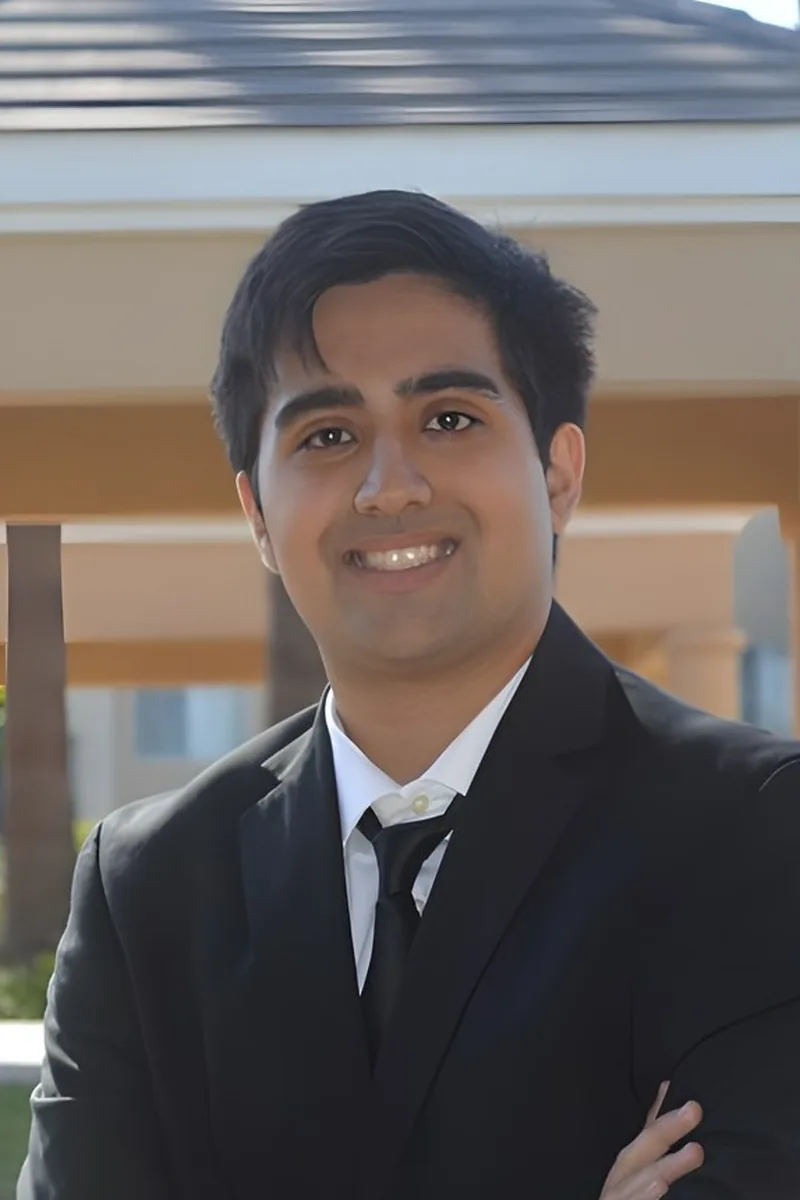
As a first-generation college student who graduated cum laude from UCLA with a biology degree and Asian Languages minor, Abrahim brings an outsider's analytical eye to American history — he learned to question assumptions rather than take narratives at face value. That mindset translates well to APUSH's emphasis on sourcing and contextualization, where students need to interrogate *why* a document was created, not just what it says. Rated 5.0 by students, he approaches each historical period as a puzzle to decode rather than a list to memorize.
The AP US History exam tests a student's ability to construct document-based arguments under pressure, not just recall dates. Samantha tackles DBQ and LEQ writing head-on, teaching students to identify historical context, weigh evidence, and write essays that earn synthesis and complexity points. Her background in English gives her a particular edge on the writing-heavy portions of the exam.
Jake's marketing degree might seem like an odd fit for APUSH, but marketing is fundamentally about understanding how audiences are persuaded — the same skill students need when analyzing primary sources for purpose, context, and intended effect on the DBQ. He pairs that rhetorical instinct with strong SAT-level reading and writing chops (1580 composite) to drill the thesis construction and evidence integration that separate high-scoring essays from ones that just retell history. Rated 4.9 by students.
Michelle's history degree means she actually studied the primary source analysis and periodization thinking that APUSH tests — not just the content, but the discipline's methods for constructing arguments from evidence. She zeroes in on the essay skills that trip students up most, like turning a stack of DBQ documents into a coherent thesis instead of a chronological summary. Rated 5.0 by students.
A Government major at Harvard, Richard spends his coursework dissecting the same constitutional debates, policy battles, and institutional power shifts that dominate APUSH's most heavily tested periods — from federalism disputes through Civil Rights-era legislation. That political science lens means he teaches students to analyze primary sources for political context and intent, building the kind of causation arguments the DBQ and LEQ actually reward. His perfect 1600 SAT and 36 ACT speak to the timed analytical precision the exam demands.
Studying economics and public policy at the University of Chicago means Ethan spends his coursework analyzing the same forces — tariff debates, fiscal policy, institutional power shifts — that APUSH tests across every period from Hamilton's economic plan through Great Society legislation. That policy-analysis training makes him especially sharp on the causation and continuity-and-change reasoning the exam's essays demand, since he's used to tracing how one political decision cascades through decades of consequences. His 1550 SAT reflects the timed reading and argumentation stamina the DBQ requires.
Kristin's University of Chicago BA required the kind of intensive primary source analysis and argumentative writing that APUSH essays directly test — she spent years constructing evidence-based claims under the school's famously rigorous Core Curriculum. Her philosophy minor adds a layer of logical precision to thesis construction, particularly on LEQs where students need to sustain a causal or comparative argument across multiple periods without losing the thread. Rated 5.0 by students.
Studying both biology and philosophy at Boston College means Andrew spends his days toggling between empirical evidence and argumentative reasoning — the exact combination APUSH essays demand when students must marshal specific historical evidence into a persuasive thesis. He's particularly strong on causation and contextualization questions, where his philosophy training kicks in to untangle why events unfolded as they did rather than just when. Rated 5.0 by students.
A master's degree in Chinese politics means Elizabeth spent years analyzing how governments consolidate power, manage dissent, and navigate foreign relationships — the same analytical framework that unlocks APUSH's toughest comparative and causation questions, from Cold War containment policy to debates over executive authority. Her 1500 SAT and government coursework ground her in the primary-source reasoning and argumentative writing the DBQ demands. Rated 5.0 by students.
Architecture school at Columbia trains you to research how buildings, cities, and spaces reflect the political and economic forces of their time — a habit of thinking that maps surprisingly well onto APUSH's emphasis on causation and contextualization across periods. Andrew brings that design-history lens to document analysis, teaching students to read sources for intent and audience the way an architect reads a site for constraints and possibilities. His 4.9 rating speaks to how well that cross-disciplinary approach clicks.
Scoring a 4 or 5 on the AP US History exam comes down to writing sharp DBQs and LEQs under time pressure — not just knowing the content. Alex breaks down the rubric so students understand exactly how to contextualize documents, build a defensible claim, and earn synthesis points. His deep knowledge of American religious and social history adds particular depth to periods like the Great Awakenings and the Civil Rights movement.
Theater training builds a surprisingly useful APUSH skill — Amber knows how to read a text for subtext, audience, and intent, which is exactly what document-based questions ask students to do with political speeches, editorials, and propaganda. Her 1570 SAT and 35 ACT reflect the kind of timed analytical performance the exam rewards, and her casting background means she's practiced at quickly sizing up what someone is really trying to communicate. Rated 5.0 by students.
Testimonials
Because the right AP US History tutor makes all the difference.
Average Session Rating – Based on 3.4M Learner Ratings
Practice AP US History
Free practice tests, flashcards, and AI tutoring for AP US History
Nearby AP US History Tutors
Other Lexington Tutors
Related Social Studies Tutors in Lexington
Frequently Asked Questions
Varsity Tutors matches Lexington students with expert AP US History tutors for 1-on-1 instruction. We pair each student with a tutor based on their specific needs, learning style, and goals.
Whether you need homework help, exam prep, or want to get ahead, our AP US History tutors are ready to help.
Common challenges include gaps from earlier material, difficulty with specific concepts, and trouble applying learning to new problems. These issues can snowball quickly in AP US History.
A tutor identifies where you're stuck, fills in gaps, and provides targeted practice. The 1-on-1 format means you get help exactly where you need it.
Tutors work with your student's actual coursework—homework assignments, class notes, and upcoming tests. This keeps tutoring directly relevant to what's happening in the classroom.
When you share information about your student's school and curriculum, we can match you with a tutor who has relevant experience.
All tutors complete background checks, credential verification, and teaching evaluation. Many of our AP US History tutors hold advanced degrees or have years of teaching experience.
You can review tutor profiles to find someone with the right background for your student's level and needs.
Many students see improved grades within a few weeks, along with better understanding of AP US History concepts and more confidence tackling challenging material.
Tutors track progress and adjust their approach to ensure continued improvement.
Most students benefit from 1-2 sessions per week. More frequent sessions help if your student is significantly behind or has an important exam coming up.
Your tutor can recommend a schedule based on your student's specific situation and goals.
Tutoring is purchased in packages of hours, with rates varying by tutor experience. Varsity Tutors offers several options to fit different budgets and needs.
You can discuss pricing during your consultation to find what works best.
Your tutor will assess where your student is, discuss goals, and start working on priority areas. Most students bring current homework or upcoming test material to focus on.
By the end, you'll have a clear sense of how the tutor can help and a plan for moving forward.
Let’s find your perfect tutor
Answer a few quick questions. We’ll recommend the right plan and match you with a top 5% tutor.