Award-Winning AP Physics C: Mechanics Tutors
serving Rockford, IL
AP Physics C: Mechanics
Tutors in Rockford
Private 1-on-1 tutoring, weekly live classes for academic support, test prep & enrichment, practice tests and diagnostics, and more to elevate grades and test scores.
Based on 3.4M Learner Ratings
UniversitiesSchools & Universities
DeliveredHours Delivered
ProficiencyGrowth in Proficiency
Who needs tutoring?
No obligation. Takes ~1 minute.

Sanjana's applied math studies at Harvard and her role as a Course Assistant for introductory calculus mean she's fluent in the exact differential and integral techniques that AP Physics C: Mechanics layers onto every force, torque, and energy problem. She's especially effective at bridging the gap when students grasp the physics intuitively but struggle to translate a scenario — say, a block on a spring with friction — into the correct differential equation and solve it cleanly. Rated 5.0 by students.
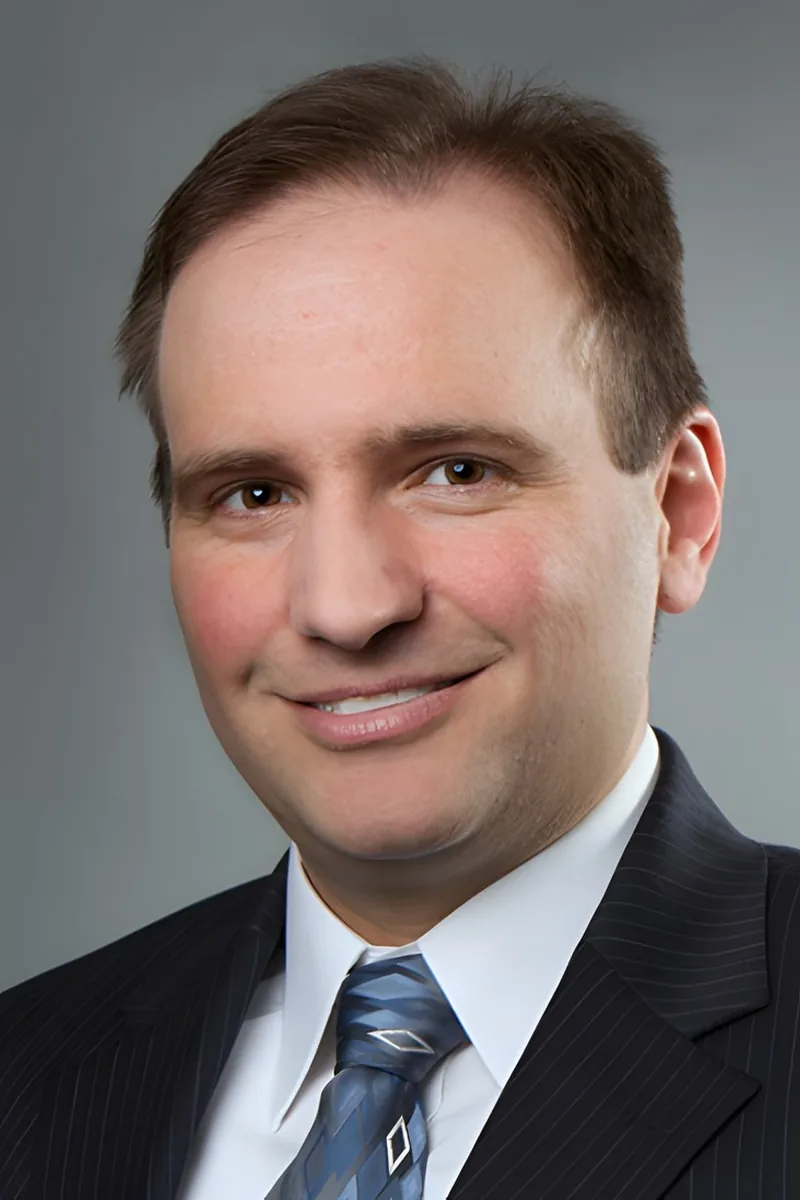
Jonathan earned his PhD in physics, which means the calculus-based mechanics in AP Physics C — from deriving equations of motion for coupled oscillators to setting up torque integrals for non-uniform rigid bodies — is territory he's navigated at a research level. His teaching fellowship during graduate school had him running students through exactly these problems, building intuition for when to apply Newton's second law in differential form versus jumping straight to energy methods. Rated 5.0 by students.
I am a graduate of Cornell University's College of Arts and Sciences. I received my Bachelor of Arts in Chemistry with Distinction in 2015. Since graduation, I was a physics/chemistry teacher and soccer coach at a private school in Virginia for a year, where I led the soccer team to an undefeated season. Before teaching and coaching professionally, I was a Teaching Assistant for the Cornell Math and Physics Departments, where I taught many subjects including calculus, mechanics, electromagnetism. Throughout my time at Cornell and as a teacher, I tutored subjects ranging from the SAT to AP Physics and Algebra II, which is where my true talents lie: in small group or one-on-one settings where I can give students the full attention they deserve and tailor my approach specifically to their learning styles. This is why I am now pursuing tutoring as a part-time occupation at Varsity Tutors. I embrace teaching all math and science subjects, especially physics and calculus, at both the college and high school level and will go above and beyond to make sure all of my students succeed, according to their definition of success. In my spare time, I enjoy playing league soccer, basketball, tennis and guitar, and also like to travel and see as much of the world as I can.
Rice's physics program throws Will into calculus-based mechanics every day — working through Lagrangian setups, variable-force integrations, and the rotational dynamics problems that make AP Physics C's free-response section so demanding. His approach starts with the underlying physical principle, then builds the math around it piece by piece, so students internalize the reasoning instead of pattern-matching to memorized solutions.
Designing control systems for Northwestern's solar car means Michael applies Newtonian mechanics, rotational dynamics, and energy conservation principles daily — the exact topics AP Physics C: Mechanics tests. He teaches students to translate word problems into free-body diagrams and then into the calculus-based equations that earn full marks on free-response questions.
Darren is midway through his physics degree at Northwestern, which means he's actively taking the upper-division mechanics courses that build directly on everything AP Physics C tests — and he still remembers exactly where the conceptual jumps from kinematics to rotational dynamics tripped him up the first time. He zeroes in on free-body diagrams and getting the calculus setup right before students ever touch a number, treating each problem as a reasoning exercise rather than a formula hunt. Rated 5.0 by students.
A physics degree means Eitan has spent years inside the calculus-based mechanics framework — not just applying Newton's laws but deriving them from first principles, working through Lagrangian setups, and building physical intuition for when a problem calls for energy methods versus force analysis. He's particularly sharp on free-body diagrams that involve variable forces, where students often know the physics but stumble on setting up the correct integral bounds. Rated 5.0 by students.
Unlock your academic potential with a tutor who bridges the gap between elite performance and foundational mastery. As a National AP Scholar with advanced coursework in Multivariable Calculus and Data Structures, I bring high-level expertise to your studies. Whether you are tackling complex algorithms or advanced math, I provide the precise guidance you need to excel. My experience at Kumon and Mathnasium taught me that even the most complex goals start with strong basics. I believe in both individual learning as well learning through guided practice, so whatever your way to learn I can accomodate to help you do the very best.
Brian's mechanical engineering master's and physics bachelor's mean he's solved thousands of problems involving variable-force integrals, rotational kinematics, and Lagrangian mechanics — the exact material AP Physics C: Mechanics throws at students. He teaches the course by building each problem from a physical scenario to a mathematical model, so students learn to derive rather than memorize. Rated 5.0 by students, he's especially sharp on energy methods and oscillatory systems.
I am a Northwestern University graduate and received my Bachelor of Science in Mechanical Engineering with a concentration in Robotics. I have an extensive background tutoring middle and high school students in Standardized Tests as well as helping incoming freshmen acclimate to the college environment as a Peer Advisor. Due to my concentration in STEM, I am well-adept in teaching Math and Physics, though am open to tutoring outside those subjects. I believe that working on one's education outside of regular school hours shows a strong initiative to learn, and I want to encourage this drive for learning in my students.
Computer engineering at UIUC means Ash is building circuits and writing code on top of the same calculus-based mechanics — free-body diagrams, work-energy integrals, Newton's laws in differential form — that AP Physics C tests every May. That engineering context gives him a practical read on problems involving pulleys, inclined planes, and variable forces, since he's already applying those principles to real systems in his coursework. Rated 4.8 by students.
Hi! I'm Palmer Blackstock, a passionate tutor with a Bachelor's degree in Physics from the University of Chicago and over two years of experience in tutoring high school and college students. My primary focus is on Physics at both introductory and advanced levels, with an additional focus in math subjects like Algebra, Pre-Calculus, and AP Calculus. In my past tutoring I've helped students grasp complex concepts in mechanics, waves, and electromagnetism, as well as math concepts in trigonometry and calculus. I believe in a collaborative, student-centered approach, where I'll ask the student what they know, what they don't know, and what they want to get out of our tutoring sessions. I always tailor my lessons to meet a student's individual needs. I'm dedicated not only to enhancing a student's understanding of math and science concepts but also fostering a love of science by providing engaging content and real-world examples. In addition to my passion for education, I also love writing and journalism, especially finding engaging methods for science communication. I enjoy reading books and listening to science podcasts. But I'm also an avid video game and board game player.
A mechanical engineering degree means Amol didn't just study AP Physics C: Mechanics topics — he applied them, running free-body diagrams through actual design constraints where getting the torque or moment of inertia wrong has real consequences. His 35 ACT confirms the quantitative chops, and he's especially effective at teaching students to read a mechanics scenario and decide whether to reach for Newton's laws, energy conservation, or momentum before writing a single equation.
Currently studying mechanical engineering, Grant is solving the same calculus-based kinematics, force analysis, and energy problems that AP Physics C: Mechanics tests — except his coursework in statics, dynamics, and engineering applications pushes them further than the exam ever will. His 1490 SAT confirms the quantitative chops, and his daily immersion in these concepts means he can quickly spot whether a student's free-response struggle is a physics misread or a calculus execution error.
Nick's industrial engineering coursework puts him through the same calculus-based mechanics — force analysis, energy methods, kinematics — that AP Physics C tests, and his 1580 SAT and 35 ACT suggest the quantitative fluency to handle the exam's trickiest multi-step problems. He also tutors AP Calculus BC and AP Physics 1, so he's used to diagnosing whether a student's stuck on the derivative or the physics behind it. Rated 5.0 by students.
Engineering coursework at Michigan means Zain is solving calculus-based mechanics problems — variable-force kinematics, work-energy integrals, Newton's laws in differential form — as part of his actual degree, not just for an exam. He pairs that with tutoring experience across AP Calculus BC and AP Physics 1, so when a student's stuck on a free-response problem, he can tell whether the breakdown is in the physics setup or the calculus execution and address the right one.
A PhD in Physics from Notre Dame means Nathan has taught and researched mechanics at a level where the calculus isn't a tool bolted onto the physics — it *is* the physics, from Lagrangian formulations down to the force integrals that show up on the AP exam. He's especially sharp at diagnosing whether a student's free-response mistake is a conceptual misread of the physical system or a calculus execution error, then targeting exactly that gap. Over five years of tutoring across middle school through college levels gives him an unusual read on which foundational holes cause the biggest problems in a calculus-based course.
I'm pursuing a double major in Mathematics and English at Vanderbilt University. I have been tutoring math since High School and have native proficiency in Mandarin Chinese. I am dedicated to helping students explore the study methods that will fit their individual needs.
Twenty-five years teaching physics in Massachusetts public schools means Jacques has watched thousands of students hit the same walls on AP Physics C — and he knows exactly how to dismantle them, particularly around variable-force problems and the calculus of rotational inertia. His Princeton chemical engineering degree built the mathematical backbone, but it's the decades of classroom reps that sharpened his ability to explain why you set up the integral that way, not just how to evaluate it. Rated 4.8 by students.
Biochemistry might seem unrelated to mechanics, but Shira's coursework in physics and calculus — plus a 1550 SAT — means she's built the quantitative chops to handle the kinematics, force analysis, and integration problems that define AP Physics C. She approaches mechanics the way she approaches lab work: isolate the variables, set up the math carefully, then check whether the answer makes physical sense. Rated 4.9 by students.
Data analytics trains you to model systems mathematically and interpret what the numbers actually mean — skills Vishank applies directly when tackling AP Physics C: Mechanics problems that require setting up kinematic equations or integrating variable forces. His coursework in calculus through linear algebra, combined with tutoring across both math and science, means he can diagnose whether a student's struggle on a free-response problem is a physics misunderstanding or a calculus execution error. Rated 4.9 by students.
Studying Mechanical & Aerospace Engineering at Princeton, Nicolas solves calculus-based mechanics problems daily that go well beyond what the AP exam asks — rigid body dynamics, energy methods for complex systems, and the vector calculus behind rotational motion. That depth lets him quickly pinpoint whether a student's mistake lives in the physics reasoning or the integral setup, and fix the actual gap. Rated 5.0 by students.
Decades of chemical engineering work gave Steven a particular fluency with the calculus-based mechanics that AP Physics C demands — he's applied Newton's laws, energy methods, and differential equations to real industrial systems, not just textbook scenarios. He explains each concept multiple ways, layering physical intuition with worked examples until the connection between the physics and the integral clicks. Rated 4.9 by students.
Kimanthi's biomedical engineering degree from Duke required the same calculus-heavy mechanics — torque on prosthetic joints, force integrals through fluid systems, energy methods applied to biomechanical models — that AP Physics C tests in a more abstract form. That background means she can ground rotational dynamics and work-energy problems in tangible physical scenarios, giving students an intuitive hook before the math gets dense. Rated 5.0 by students.
Leading Carmel High School's Science Olympiad team to back-to-back Nationals appearances meant Satvik was coaching peers through mechanics problems — projectile motion, rotational inertia, energy conservation — long before he started his aerospace engineering degree at Georgia Tech. Now, as an undergraduate TA in computing who scored a perfect 36 ACT and earned a 5 on both AP Physics C exams, he brings a rare combination: recent memory of exactly where the exam's calculus-based free-response questions trip students up, plus the engineering rigor to show how each derivative or integral connects to the physical system. Rated 5.0 by students.
Biomedical engineering at Rice means Aurnab regularly applies calculus-based mechanics to biological systems — modeling forces on skeletal structures, analyzing motion in prosthetic designs — so the kinematics and Newton's laws on the AP Physics C exam map directly onto problems he's already solving in his coursework. His 36 ACT and 1590 SAT point to the mathematical precision that matters most when students need to cleanly set up a work-energy integral or differentiate a position function under exam time pressure. Rated 4.9 by students.
A math degree gives Dalila the calculus fluency that separates AP Physics C from the algebra-based course — she's comfortable setting up the integrals and derivatives that underpin variable-force problems, work-energy applications, and kinematics beyond constant acceleration. She also tutors AP Physics 1, AP Physics 2, and both SAT Math Subject Tests, so she understands how to scale her explanations depending on whether a student needs help with the underlying physics concepts or specifically with translating a free-body diagram into a solvable differential equation.
A PhD in Chemical and Biomolecular Engineering from Buffalo built on a nuclear engineering foundation means Sabry has spent years solving the calculus-heavy mechanics problems — work-energy integrals, rigid body torque derivations, variable-force differential equations — that AP Physics C tests in compressed form. He co-instructed both undergraduate and graduate physics and mechanics courses during his doctoral program, so he knows exactly where students confuse the physical setup with the mathematical execution and can address each independently.
Scoring a 5 on both AP Physics C: Mechanics and AP Calculus BC while taking 16 AP courses total, Derek built the habit of connecting calculus tools to physical intuition under real exam pressure — and he brings that same efficiency to tutoring. His computer science major at Harvard sharpens his approach to mechanics problems: decompose the system, identify constraints, then execute the math cleanly, much like debugging code. Rated 4.9 by students, he's particularly effective at teaching the structured problem-solving that turns rotational dynamics and variable-force scenarios into manageable steps.
Testimonials
Because the right AP Physics C: Mechanics tutor makes all the difference.
Average Session Rating – Based on 3.4M Learner Ratings
Practice AP Physics C: Mechanics
Free practice tests, flashcards, and AI tutoring for AP Physics C: Mechanics
Nearby AP Physics C: Mechanics Tutors
Other Rockford Tutors
Related Science Tutors in Rockford
Frequently Asked Questions
Varsity Tutors matches Rockford students with expert AP Physics C: Mechanics tutors for 1-on-1 instruction. We pair each student with a tutor based on their specific needs, learning style, and goals.
Whether you need homework help, exam prep, or want to get ahead, our AP Physics C: Mechanics tutors are ready to help.
Common challenges include gaps from earlier material, difficulty with specific concepts, and trouble applying learning to new problems. These issues can snowball quickly in AP Physics C: Mechanics.
A tutor identifies where you're stuck, fills in gaps, and provides targeted practice. The 1-on-1 format means you get help exactly where you need it.
Tutors work with your student's actual coursework—homework assignments, class notes, and upcoming tests. This keeps tutoring directly relevant to what's happening in the classroom.
When you share information about your student's school and curriculum, we can match you with a tutor who has relevant experience.
All tutors complete background checks, credential verification, and teaching evaluation. Many of our AP Physics C: Mechanics tutors hold advanced degrees or have years of teaching experience.
You can review tutor profiles to find someone with the right background for your student's level and needs.
Many students see improved grades within a few weeks, along with better understanding of AP Physics C: Mechanics concepts and more confidence tackling challenging material.
Tutors track progress and adjust their approach to ensure continued improvement.
Most students benefit from 1-2 sessions per week. More frequent sessions help if your student is significantly behind or has an important exam coming up.
Your tutor can recommend a schedule based on your student's specific situation and goals.
Tutoring is purchased in packages of hours, with rates varying by tutor experience. Varsity Tutors offers several options to fit different budgets and needs.
You can discuss pricing during your consultation to find what works best.
Your tutor will assess where your student is, discuss goals, and start working on priority areas. Most students bring current homework or upcoming test material to focus on.
By the end, you'll have a clear sense of how the tutor can help and a plan for moving forward.
Let’s find your perfect tutor
Answer a few quick questions. We’ll recommend the right plan and match you with a top 5% tutor.