Award-Winning College Chemistry Tutors
serving St. Petersburg, FL
College Chemistry
Tutors in St. Petersburg
Private 1-on-1 tutoring, weekly live classes for academic support, test prep & enrichment, practice tests and diagnostics, and more to elevate grades and test scores.
Based on 3.4M Learner Ratings
UniversitiesSchools & Universities
DeliveredHours Delivered
ProficiencyGrowth in Proficiency
Who needs tutoring?
No obligation. Takes ~1 minute.
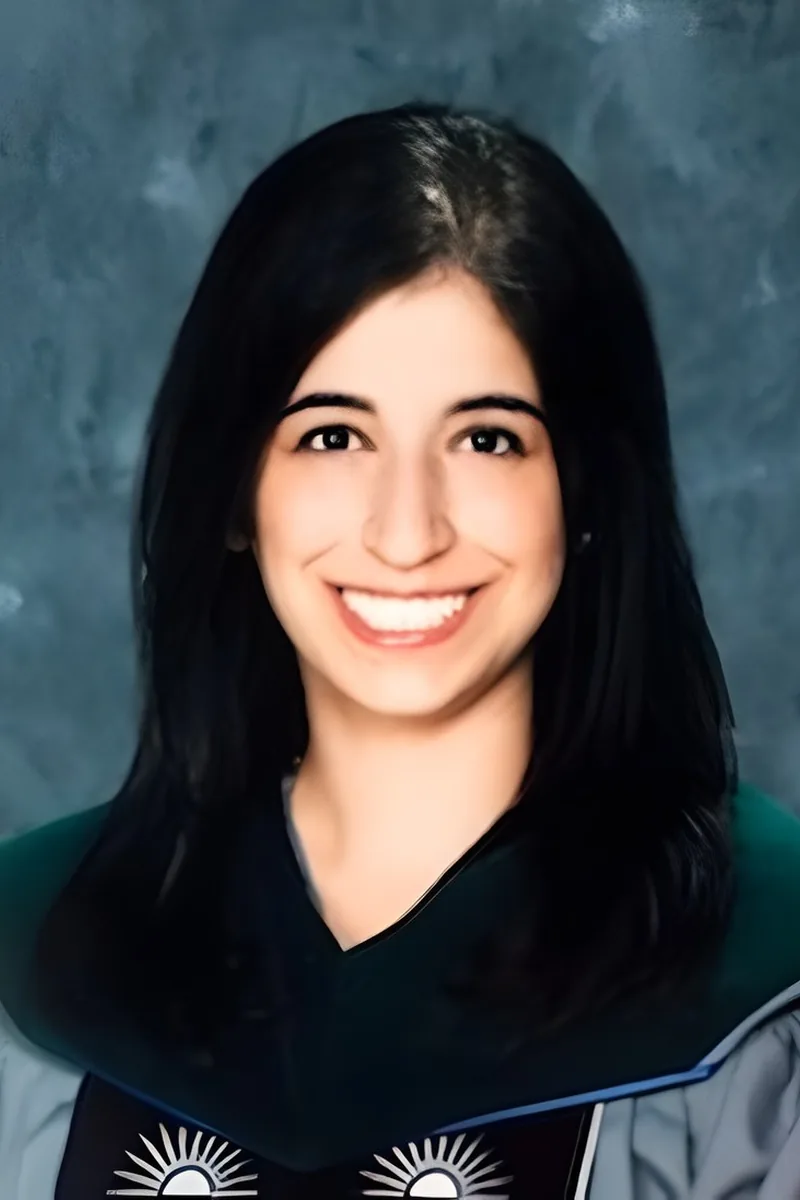
Going from a Penn undergrad to medical school means Jessica sat through college chemistry twice — once as a prerequisite and again when biochemistry and pharmacology demanded she actually internalize concepts like reaction energetics, acid-base equilibria, and molecular interactions at a deeper level. That second pass gave her a clear sense of which gen chem topics students need to truly own versus merely survive, and she teaches accordingly. Rated 4.8 by students.
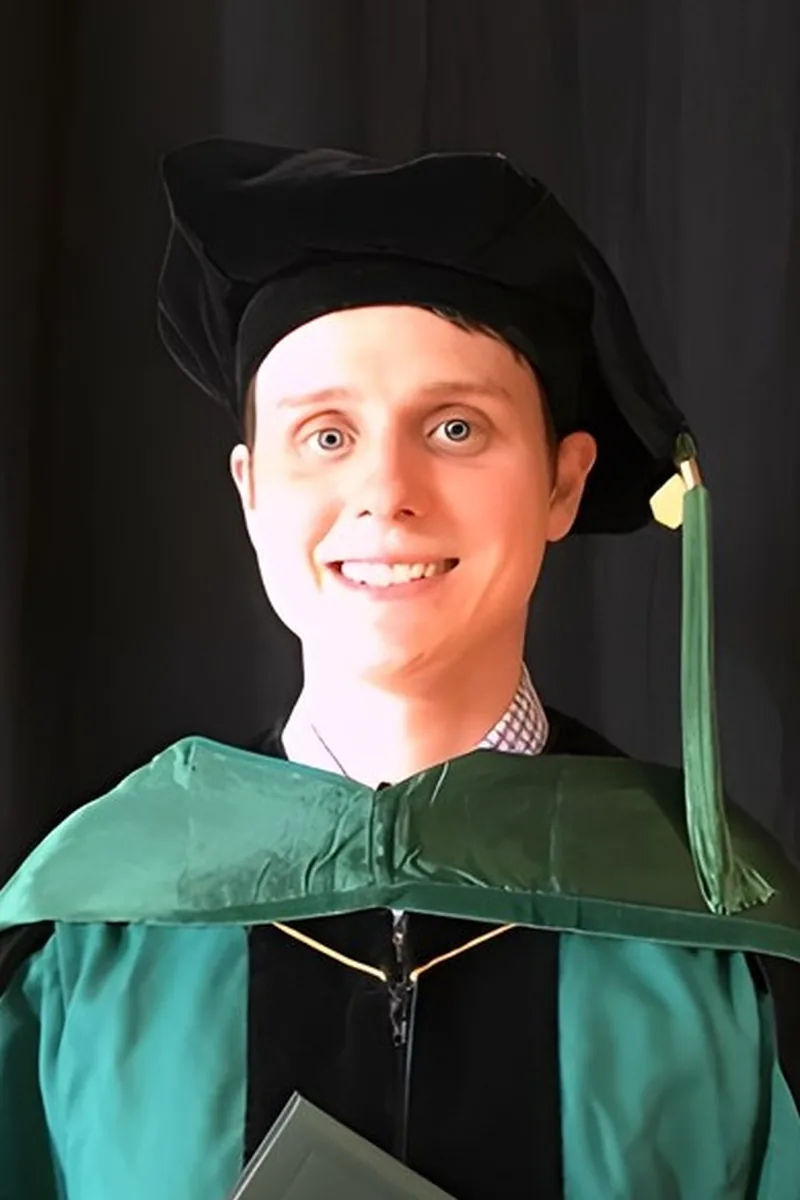
Pursuing a Doctorate of Physical Therapy means James encounters chemistry in a context most gen chem tutors don't — understanding how buffer systems maintain blood pH, how electrolyte concentrations drive cellular processes, and how thermodynamic principles govern metabolic reactions. His economics background also gave him strong quantitative reasoning, so he's comfortable walking through the math-heavy side of topics like stoichiometry and gas laws without losing sight of what the numbers actually represent. Rated 4.9 by students.
General college chemistry often trips students up at the transition from qualitative concepts to quantitative problem-solving — balancing thermodynamic equations, working through equilibrium expressions, or interpreting kinetics data. As a pre-med student at the University of Chicago, Emerson recently navigated these same courses and knows which conceptual gaps tend to snowball into bigger problems on exams. He breaks down each calculation by first making sure the underlying chemistry makes sense.
Graduate statistics teaching at USF means Matthew has spent serious time showing students how to work through quantitative problems step by step — a skill that transfers directly to the calculation-heavy side of college chemistry, from stoichiometry to equilibrium expressions. His private tutoring background in chemistry stretches back to his Johns Hopkins days, so he pairs that mathematical precision with genuine content knowledge of reaction logic, gas laws, and solution chemistry.
I grew up in the Boston area and now live in Citrus County, Florida. I graduated from MIT in chemical engineering and worked for many years as a chemical process engineer, so I have a strong background in math and science, especially chemistry and thermodynamics. I've also been granted six U.S. patents. When the pandemic hit us, I moved to Florida and did part-time work as a chess tutor, then became a substitute teacher in the middle and high schools in our district. I enjoyed working with the students, many of whom had difficulty learning in big classes with many disruptions. I found that I could best help these students by using real-world examples to teach difficult concepts in a new way. Often, then, the student would come away with a new perspective and a much better understanding of the concept. I was happy to be able to help. These days as a VT tutor, I continue to use, whenever possible, real-world examples in my own material in chemistry and thermodynamics.
Kelsey's science background comes from the St. John's Great Books lab sequence, where students engage with chemistry through original scientific texts and hands-on experimentation rather than a conventional lecture format. For college chemistry topics like thermodynamics or equilibrium, she unpacks the logic behind each concept so students can reason through unfamiliar problems instead of relying on formula sheets.
Surviving college chemistry means mastering thermodynamics, kinetics, and equilibrium at a pace that doesn't leave much room for confusion to linger. Tara spent her graduate years immersed in the chemical side of biological research — running reactions, interpreting spectra, calculating concentrations — so she teaches these topics as practical tools rather than abstract theory.
Between her biology degree and teaching IB Chemistry at both SL and HL levels, Sidra has spent years working through the full gen chem toolkit — electron configurations, stoichiometry, chemical kinetics — from multiple angles and at multiple depths. She tackles the spots where college chemistry gets dense by slowing down the reasoning inside each step, especially in multi-concept problems where students lose track of which principle they're actually applying.
Biotechnology coursework at UCF's Burnett Medical Scholars Program means Priya has pushed well past introductory gen chem — applying concepts like reaction thermodynamics, solution chemistry, and acid-base equilibria in upper-level biology and pre-clinical contexts where getting the fundamentals wrong has real consequences. She tackles problem sets by pinpointing whether the confusion is conceptual or computational, then addresses that specific gap instead of re-explaining the entire topic. Rated 4.8 by students.
College-level gen chem moves fast, and topics like molecular orbital theory, thermochemistry, and kinetics demand more mathematical rigor than most students expect. Daniel's chemistry degree from the U.S. Naval Academy means he learned these concepts at the same depth his students are encountering them now. He's been tutoring chemistry since 2017 and is especially sharp at connecting lecture material to the quantitative problem-solving that dominates exams.
Being on the BS/DO dual admission track at Nova Southeastern means Esha is taking college chemistry with real stakes — every gen chem concept, from electron configurations to solution stoichiometry, feeds directly into the organic chemistry and biochemistry she needs for medical school. That proximity to the material gives her a sharp sense of which topics students underestimate early and regret later, especially when Lewis structures and VSEPR theory quietly become the backbone of everything in second semester. Rated 5.0 by students.
Pursuing nursing after completing a biology degree with a chemistry minor, Jessica has taken college chemistry from the prerequisite side and the applied side — she knows which gen chem concepts like molarity, gas laws, and solution stoichiometry actually resurface in upper-level coursework. She teaches the quantitative problem-solving by slowing down at the exact step where students lose the thread between the chemistry and the algebra. Rated 5.0 by students.
Thermochemistry, equilibrium, and acid-base chemistry demand more than plugging into equations — they require understanding why a reaction favors products or how a buffer actually resists pH change. Kevin digs into these concepts with students using the same frameworks he relied on through his UCSD science coursework and MCAT preparation. His 4.9 rating speaks to his ability to make dense material feel approachable even at the college level.
As a biochemistry teaching assistant at the University of Florida, Rangish regularly breaks down the toughest general chemistry concepts — equilibrium expressions, thermodynamics, and electrochemistry — for students encountering them at the college level. That TA experience means he knows exactly where students get stuck on problem sets and how to reframe the logic behind stoichiometry and reaction kinetics so it actually clicks.
Between a biology degree and coursework spanning biochemistry, microbiology, and molecular biology, Michelle has looped back through gen chem concepts like electron configuration, chemical bonding, and reaction thermodynamics more times than most — each pass deepening her understanding of why those foundational ideas keep resurfacing. She tackles college chemistry problems by connecting the abstract (orbital theory, periodic trends) to the tangible lab and life-science applications that make them stick. Rated 4.9 by students.
Undergraduate thesis work in a nanotechnology lab means Harrison has handled college chemistry concepts like thermodynamics, molecular interactions, and reaction kinetics under conditions where getting the details wrong ruins months of research. That lab intuition carries into how he teaches gen chem — he digs into the reasoning behind equations like Gibbs free energy or rate laws so students understand what's actually happening at the molecular level, not just which numbers to plug in. Rated 4.9 by students.
Organic reaction mechanisms, thermodynamics, and molecular orbital theory all click faster when someone can tie them back to why they matter in a lab. Jason's molecular and cellular biology concentration at the University of North Florida means he uses chemistry daily in his own coursework, so he teaches it as a living toolkit rather than an isolated set of rules. He holds a 5.0 rating from students.
Pursuing a B.S. in Chemistry at the University of Central Florida means Qiwei is currently immersed in the same material — gen chem through upper-level coursework — so she knows exactly which topics like electron configurations, VSEPR theory, and solution stoichiometry are actively tripping students up right now. She tackles problems by slowing down at the conceptual step most students skip, making sure the reasoning clicks before moving to the calculation.
Physical chemistry and biochemistry sit at the core of Nicholas's graduate research, which means college-level topics like thermodynamics, kinetics, and molecular orbital theory are part of his daily thinking. He breaks down problem sets by identifying which principles actually apply, then teaches students to reason through the math rather than hunt for a matching example in the textbook.
Having taken IB and college-level chemistry alongside her physics degree, Payal understands the quantitative backbone of gen chem — gas law derivations, enthalpy calculations, electron configuration logic — from a physicist's perspective, which means she naturally emphasizes the 'why' behind formulas instead of treating them as things to memorize. She breaks down topics like atomic structure and chemical bonding by connecting them to the physical principles students rarely see in a chemistry classroom. Rated 5.0 by students.
Being a biology major means Viral has taken college chemistry under the same conditions most pre-med and life science students face — fast-paced lectures, cumulative exams, and labs where concepts like solution prep and titration technique actually have to work. He tackles topics like electron configurations, chemical bonding, and reaction stoichiometry by tying them back to the biological systems where they resurface, which makes the material stick instead of evaporating after the midterm. Rated 4.9 by students.
Interning at the CDC gave Jake firsthand exposure to the chemical principles behind laboratory protocols — from solution preparation and molarity to reaction stoichiometry — so he teaches college chemistry with a practical sense of how textbook concepts play out at the bench. He's especially effective at translating dense material into plain language, a skill he sharpened tutoring University of Florida student-athletes through rigorous academic content where clarity wasn't optional.
Two things that have always been embedded in my soul has been my desire to learn and my desire to share that knowledge with those around me. Throughout my undergraduate, I squeezed in as many extra curriculum classes and worked in several research labs alongside working as a lead STEM tutor at my university's learning center while obtaining my Biomedical Engineering degree. Despite being done with school, I continue my pursuit of knowledge working in different labs and spending free time continuing to read, and I know it'll be a continual lifelong pleasure to help others connect with their own intrinsic knowledge as well! Looking forward to helping you succeed in your academic endeavors!
Thermodynamics, equilibrium constants, and molecular orbital theory all demand a level of conceptual thinking that pure memorization can't sustain. Roy's college science training at UF — where he took advanced chemistry coursework alongside his Microbiology and Cell Science major — gave him a working fluency with these topics that translates directly into clear, structured explanations.
Hello! My name is Siddhi Deshmukh. I graduated from UCF with a degree in biomedical sciences in December 2023. I have a wide range of tutoring experience rating from elementary school to college level subjects. I have worked as a volunteer tutor for high school, middle school, and elementary school students. I also worked as a Mathnasium tutor and Chemistry teaching assistant while in college. I also have tutored for standardized exams like the SAT. Working with students, addressing their weak areas and watching them progress as we go along is what keeps me motivated! Looking forward to working with you!
Though political science was her major at the University of Chicago, Asta's tutoring work across both chemistry and quantitative subjects means she's spent real time breaking down the conceptual hurdles in gen chem — balancing equations, working through mole conversions, and making sense of reaction types. Her 5.0 rating speaks to an approach that's honest about meeting the material on its own terms rather than pretending expertise she doesn't have, which students in a tough prerequisite course tend to trust more, not less.
Decades of work as a PhD chemical engineer mean Steven has used gen chem concepts like reaction thermodynamics, equilibrium, and stoichiometry as professional tools — not exam topics he learned once and moved on from. He tackles tough problems by explaining the idea one way, then reframing it from a different angle, and grounding it with a practical example so the concept sticks from multiple directions. Rated 4.9 by students.
Having scored 1580 on the SAT and completed AP Chemistry coursework, Kendall brings sharp quantitative instincts to the trickiest parts of gen chem — the unit conversions buried inside equilibrium problems, the logarithmic reasoning behind pH calculations, the algebra hiding inside rate law expressions. She also knows that college chemistry often overwhelms students not because the concepts are impossibly hard, but because the pace is relentless, so she zeroes in on the specific spots where understanding broke down rather than re-teaching entire chapters. Rated 4.9 by students.
Sung earned his B.S. in Chemistry, which means he can unpack topics like thermodynamics, equilibrium constants, and molecular orbital theory with real depth rather than surface-level definitions. He connects abstract concepts — like why Gibbs free energy determines spontaneity — to concrete problem-solving strategies that stick. Rated 5.0 by students.
Thermodynamics, equilibrium constants, and reaction kinetics demand more than memorizing formulas — they require thinking about why a reaction proceeds the way it does. Garrett's coursework in physical chemistry and organic chemistry means he can unpack the energy landscapes and molecular interactions behind each concept. He connects general chemistry principles to their applications in biochemistry and physiology, which makes abstract ideas click faster.
Organic reaction mechanisms, thermodynamic versus kinetic control, and multi-step synthesis problems demand more than memorization — they require a framework for thinking through electron movement and molecular behavior. Maggie studied Molecular, Cellular, and Developmental Biology as an undergraduate and now applies that foundation daily in her Stanford medical program. She unpacks each mechanism by tracing exactly why electrons move where they do, making complex transformations feel logical.
Dental school entrance exams and a microbiology degree meant Daniel had to master gen chem twice — once as an undergrad learning the fundamentals, and again at a higher level when topics like acid-base chemistry, solution concentration, and molecular interactions became the foundation for clinical science. That repetition gives him a sharp sense of which concepts students need to truly internalize versus which ones they can reference, and he teaches accordingly — spending more time on the reasoning behind equilibrium and bonding than on memorizing formulas that won't stick.
Second-year med student at Baylor College of Medicine, Michelle still remembers exactly which gen chem concepts — electron orbitals, buffer systems, reaction thermodynamics — became non-negotiable once biochemistry and physiology started building on them. Her Rice biochemistry degree means she learned college chemistry at a place where the coursework was rigorous enough to expose every shortcut that doesn't hold up, and she teaches accordingly: precise on the fundamentals so nothing collapses later.
Two years as a pre-med molecular biology major at Princeton meant Laura took college-level chemistry seriously — stoichiometry, thermodynamics, equilibrium, and organic reaction mechanisms were part of her daily life before she pivoted to history. That scientific foundation, combined with a Montessori-rooted instinct to let students discover concepts through exploration rather than rote drill, makes her especially effective at breaking down abstract chemistry problems. Rated 5.0 by students.
Pursuing a dual degree in biostatistics and public health at Brown, Joyce has worked through college chemistry with the quantitative rigor that comes from living in both the biology and statistics sides of STEM — so she's comfortable with the molarity calculations, reaction stoichiometry, and equilibrium expressions that overwhelm students who expected a purely conceptual course. She tackles problems by clarifying the chemical logic first, then showing how the math follows naturally from it.
Eric holds a master's degree in inorganic chemistry, which means he can teach college chemistry topics like thermodynamics, electrochemistry, and coordination compounds from genuine research experience rather than rote textbook knowledge. He breaks down complex equilibrium and kinetics problems into logical steps that make the math feel manageable. Rated 5.0 by students.
General chemistry at the college level demands comfort with both conceptual reasoning and quantitative problem-solving — balancing redox half-reactions one day, then interpreting molecular orbital diagrams the next. Kate's master's work in environmental engineering required deep fluency in chemical thermodynamics and kinetics, and she brings that applied perspective to topics like enthalpy calculations, acid-base equilibria, and electrochemistry.
Testimonials
Because the right College Chemistry tutor makes all the difference.
Average Session Rating – Based on 3.4M Learner Ratings
Nearby College Chemistry Tutors
Other St. Petersburg Tutors
Related Science Tutors in St. Petersburg
Frequently Asked Questions
Varsity Tutors matches St. Petersburg students with expert College Chemistry tutors for 1-on-1 instruction. We pair each student with a tutor based on their specific needs, learning style, and goals.
Whether you need homework help, exam prep, or want to get ahead, our College Chemistry tutors are ready to help.
Common challenges include gaps from earlier material, difficulty with specific concepts, and trouble applying learning to new problems. These issues can snowball quickly in College Chemistry.
A tutor identifies where you're stuck, fills in gaps, and provides targeted practice. The 1-on-1 format means you get help exactly where you need it.
Tutors work with your student's actual coursework—homework assignments, class notes, and upcoming tests. This keeps tutoring directly relevant to what's happening in the classroom.
When you share information about your student's school and curriculum, we can match you with a tutor who has relevant experience.
All tutors complete background checks, credential verification, and teaching evaluation. Many of our College Chemistry tutors hold advanced degrees or have years of teaching experience.
You can review tutor profiles to find someone with the right background for your student's level and needs.
Many students see improved grades within a few weeks, along with better understanding of College Chemistry concepts and more confidence tackling challenging material.
Tutors track progress and adjust their approach to ensure continued improvement.
Most students benefit from 1-2 sessions per week. More frequent sessions help if your student is significantly behind or has an important exam coming up.
Your tutor can recommend a schedule based on your student's specific situation and goals.
Tutoring is purchased in packages of hours, with rates varying by tutor experience. Varsity Tutors offers several options to fit different budgets and needs.
You can discuss pricing during your consultation to find what works best.
Your tutor will assess where your student is, discuss goals, and start working on priority areas. Most students bring current homework or upcoming test material to focus on.
By the end, you'll have a clear sense of how the tutor can help and a plan for moving forward.
Let’s find your perfect tutor
Answer a few quick questions. We’ll recommend the right plan and match you with a top 5% tutor.