Award-Winning Math Tutors
serving Montgomery, AL
Math
Tutors in Montgomery
Private 1-on-1 tutoring, weekly live classes for academic support, test prep & enrichment, practice tests and diagnostics, and more to elevate grades and test scores.
Based on 3.4M Learner Ratings
UniversitiesSchools & Universities
DeliveredHours Delivered
ProficiencyGrowth in Proficiency
Who needs tutoring?
No obligation. Takes ~1 minute.
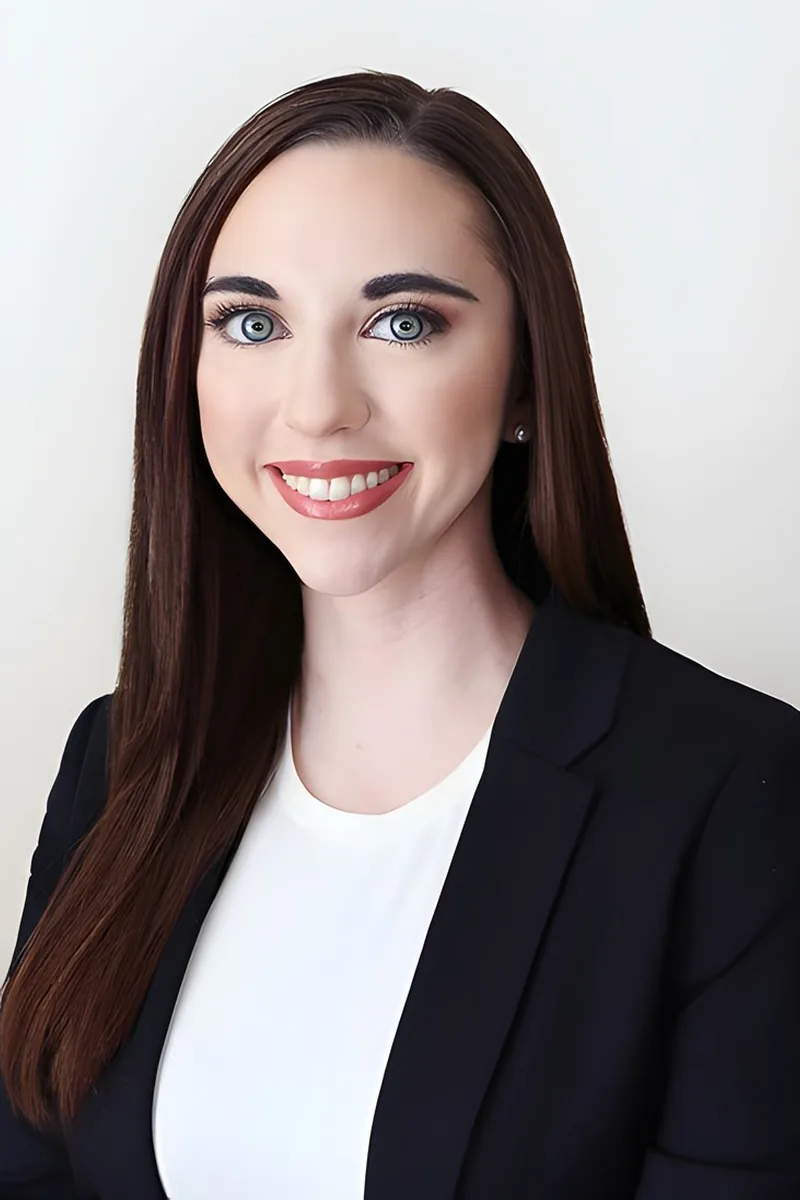
Haley's biology and chemistry research demanded constant fluency in math — from statistical analysis of genetic cross data to stoichiometric calculations in the lab. She tackles algebra through calculus with an emphasis on understanding what equations actually describe, which makes problem-solving feel less like guesswork and more like reasoning.

Joshua's Stanford Human Biology degree required more quantitative work than most people expect — biostatistics, data analysis, and the kind of mathematical reasoning that underpins any serious scientific research. His strongest instincts are in English and biology, but that cross-disciplinary training means he can connect math concepts like functions, proportions, and statistical interpretation to tangible scientific problems rather than leaving them abstract. He's especially useful for students who do better with math when they can see it applied to something real.
Too many students arrive at algebra or calculus convinced they're "not math people" because of a shaky experience years earlier. Mustafa, a mathematics major at Vanderbilt, pinpoints exactly where a concept broke down — whether that's fraction operations, proportional reasoning, or function notation — and rebuilds understanding from that specific gap forward. His 5.0 student rating comes from making math feel logical instead of arbitrary.
From long division to derivatives, Rosalyn has tutored nearly every level of math and treats each one as its own puzzle worth solving well. She's a mathematics major at Amherst College who tries multiple explanations of the same concept — visual, algebraic, verbal — until the right one lands. That flexibility is why she holds a 5.0 rating across her students.
Jennessa covers math from elementary arithmetic through algebra and calculus, and she's particularly good at slowing down on the conceptual steps that textbooks rush through — like why borrowing works in subtraction, or what a variable actually represents. Her approach is to figure out exactly where a student's understanding breaks down and rebuild from that specific point.
From fraction operations in pre-algebra to derivatives in calculus, Emma has taught math at every level and knows exactly where students tend to get stuck at each stage. Her aerospace engineering coursework at Georgia Tech means she doesn't just know the procedures — she understands why they work and can explain concepts like proportional reasoning or function behavior in ways that actually click. Rated 5.0 by students.
Elementary math concepts like place value, fractions, and basic operations become much less intimidating when a student discovers the logic behind them instead of just following steps. Nina's tutoring style leans into that discovery process, asking questions that nudge younger learners toward their own "aha" moments with numbers.
Wildlife science is surprisingly math-heavy — population modeling, statistical sampling, spatial analysis — and Darcey's bachelor's and ongoing master's work at Auburn mean she's been applying quantitative reasoning to real datasets for years. That applied background makes her especially effective at showing students how concepts like proportions, rates, and algebraic relationships actually function outside a textbook. She scored a 31 on the ACT and holds a 4.8 rating.
With a bachelor's degree in religion from Dartmouth College, I have developed a deep appreciation for the power of language and storytelling. My tutoring experience has equipped me to foster a supportive learning environment where students can flourish and express themselves authentically. I aim to guide them in seeing literature not merely as a medium but as a profound revelation of the human experience. By focusing on English Grammar and Syntax, as well as UK A Level Irish and Russian, I strive to cultivate not just academic skills but also a lifelong love for literature and learning.
As a former IB student, my love for knowledge runs deep. I majored in Biomedical Engineering at the University of Alabama at Birmingham, graduating in December 2015 with honors (BME honors and Science and Technology Honors program) and going on to earn a Master's degree in Management Information Systems from the same university in 2019. I am currently pursuing a Master of Engineering in Artificial Intelligence and Machine Learning from the University of Illinois at Chicago and hope to start a career in data science and analytics. I greatly enjoy helping others learn and tutored throughout high school and college; I love seeing the light flash on in a student's eyes when they finally understand something they had been struggling with or when they easily solve a problem. I have tutored both young children as well as high school and college students, in just about every subject. I particularly enjoy language tutoring; I am fluent in Arabic and French and I love literature and poetry. I also love to tutor math and science subjects. My tutoring style is very much student-first; I listen and observe to determine the best approach for each individual student and what methods or strategies will be most helpful for you specifically. I am not averse to making a fool of myself with song or dance if it will help! I enjoy what I do and I want the students I work with to enjoy learning as well.
I am an aerospace engineering student. I am very passionate about teaching math, physics, and chemistry. I realized tutoring was my calling while working as a tutor at my school. Seeing students gain a greater understanding of the subject was the highlight of my day while working there.
I have over 9 years of experience tutoring students preparing for teacher certification exams and hold degrees in English and Education, as well as a technical writing certification. I enjoy helping students strengthen their reading comprehension so they can break down test questions and avoid common multiple-choice mistakes. I also guide students in using exam specifications to study strategically and focus on what is most likely to appear on the test. My goal is to help every student feel confident, prepared, and calm on test day. I would love to help you achieve success.
Not every math student needs calculus-level intensity — sometimes the gap is in foundational skills like fraction operations, proportional reasoning, or translating word problems into equations. Connor identifies exactly where the disconnect is and rebuilds confidence from that point, drawing on the quantitative rigor his dual science degrees required.
Years of teaching middle school math at a Boston charter school gave Liz a toolbox of ways to break down fractions, ratios, proportions, and early algebraic thinking so they actually click. She's especially skilled at identifying where a student's understanding breaks down and rebuilding from that exact point — a strength sharpened by her special education training. Rated 4.7 by students and families.
While Victoria's primary training is in the humanities, her SAT composite of 1520 required strong quantitative performance, and she tutors foundational math concepts like proportional reasoning, basic algebra, and arithmetic fluency. She approaches math the way an anthropologist approaches fieldwork — methodically, with attention to why each step matters before moving to the next one.
Joseph's biology training at UCLA and public health graduate work at Yale both lean heavily on quantitative reasoning — biostatistics, epidemiological modeling, interpreting research data — which means he teaches math as something that actually does work in the real world, not just problem sets to get through. He covers everything from pre-algebra through calculus and is especially effective at showing students how to set up a problem correctly before solving it, the step most people rush past. He scored a 1530 on the SAT and carries a 4.9 rating.
Maya's ACT score of 34 included the math section, and her tutoring range spans algebra through calculus — but her real edge is that she came to math through writing and the humanities, which means she knows exactly how to translate abstract procedures into plain language for students who don't think of themselves as "math people." She's spent over seven years working across age groups, so she's quick to spot whether a student's struggle is conceptual or just notational confusion. Rated 5.0 by clients.
Sash's 1560 SAT required serious math performance under pressure, and her Comparative Literature training — constantly analyzing structures, patterns, and logical progressions across texts — gives her an unexpected but effective lens for tackling math problems that demand careful, sequential reasoning. She's especially useful for students who freeze up on word-heavy questions, since parsing dense language and extracting what actually matters is literally what her degree trained her to do.
Elena's approach to math leans on her test-prep background, where she learned that most students don't struggle with the concepts themselves — they struggle with translating word problems into equations or recognizing which technique a question is really asking for. She teaches pattern recognition and strategic problem-solving across arithmetic, pre-algebra, and foundational algebra, turning vague confusion into a clear decision tree. Her style is quirky and joke-filled, which tends to lower the anxiety that makes math feel harder than it is.
Rather than rushing through problem sets, Tom zeroes in on the specific step where a student's reasoning goes off track — whether that's setting up a proportion, interpreting a word problem, or choosing the right operation. His 1520 SAT score speaks to his own quantitative comfort, and his teaching style emphasizes walking through each problem until the logic clicks rather than just arriving at an answer.
A University of Chicago graduate with a 1530 SAT and 35 ACT, Asta brings sharp quantitative instincts to math topics from fractions and ratios through functions and graphing. She breaks problems into logical steps so students see the reasoning behind each procedure, not just the answer.
Between competition math experience and a Stanford cognitive science degree that included heavy quantitative coursework, David approaches math problems by teaching the reasoning behind each step — whether that's factoring polynomials or setting up related rates in calculus. His 1570 SAT speaks to the precision he brings to mathematical thinking at every level.
A Caltech economics and computer science graduate, Brian treats math as a unified subject — connecting the logic behind arithmetic patterns in middle school to the algebraic reasoning those patterns become later. His 1580 SAT and experience across competition math, calculus, and discrete math mean he can meet a problem at any level and explain it multiple ways until it clicks.
Pursuing a certificate in Statistics and Machine Learning alongside her philosophy degree at Princeton, Julie brings both computational rigor and clear logical thinking to math at every level. She breaks down problems — whether it's fraction operations or function analysis — into reasoning steps students can follow and replicate on their own. Rated 4.9 by students.
Testimonials
Because the right Math tutor makes all the difference.
Average Session Rating – Based on 3.4M Learner Ratings
Practice Math
Free practice tests, flashcards, and AI tutoring for Math
Nearby Math Tutors
Other Montgomery Tutors
Related Math Tutors in Montgomery
Frequently Asked Questions
Varsity Tutors matches Montgomery students with expert Math tutors for 1-on-1 instruction. We pair each student with a tutor based on their specific needs, learning style, and goals.
Whether you need homework help, exam prep, or want to get ahead, our Math tutors are ready to help.
Common challenges include gaps from earlier material, difficulty with specific concepts, and trouble applying learning to new problems. These issues can snowball quickly in Math.
A tutor identifies where you're stuck, fills in gaps, and provides targeted practice. The 1-on-1 format means you get help exactly where you need it.
Tutors work with your student's actual coursework—homework assignments, class notes, and upcoming tests. This keeps tutoring directly relevant to what's happening in the classroom.
When you share information about your student's school and curriculum, we can match you with a tutor who has relevant experience.
All tutors complete background checks, credential verification, and teaching evaluation. Many of our Math tutors hold advanced degrees or have years of teaching experience.
You can review tutor profiles to find someone with the right background for your student's level and needs.
Many students see improved grades within a few weeks, along with better understanding of Math concepts and more confidence tackling challenging material.
Tutors track progress and adjust their approach to ensure continued improvement.
Most students benefit from 1-2 sessions per week. More frequent sessions help if your student is significantly behind or has an important exam coming up.
Your tutor can recommend a schedule based on your student's specific situation and goals.
Tutoring is purchased in packages of hours, with rates varying by tutor experience. Varsity Tutors offers several options to fit different budgets and needs.
You can discuss pricing during your consultation to find what works best.
Your tutor will assess where your student is, discuss goals, and start working on priority areas. Most students bring current homework or upcoming test material to focus on.
By the end, you'll have a clear sense of how the tutor can help and a plan for moving forward.
Let’s find your perfect tutor
Answer a few quick questions. We’ll recommend the right plan and match you with a top 5% tutor.