Award-Winning Calculus Tutors
serving Montgomery, AL
Calculus
Tutors in Montgomery
Private 1-on-1 tutoring, weekly live classes for academic support, test prep & enrichment, practice tests and diagnostics, and more to elevate grades and test scores.
Based on 3.4M Learner Ratings
UniversitiesSchools & Universities
DeliveredHours Delivered
ProficiencyGrowth in Proficiency
Who needs tutoring?
No obligation. Takes ~1 minute.
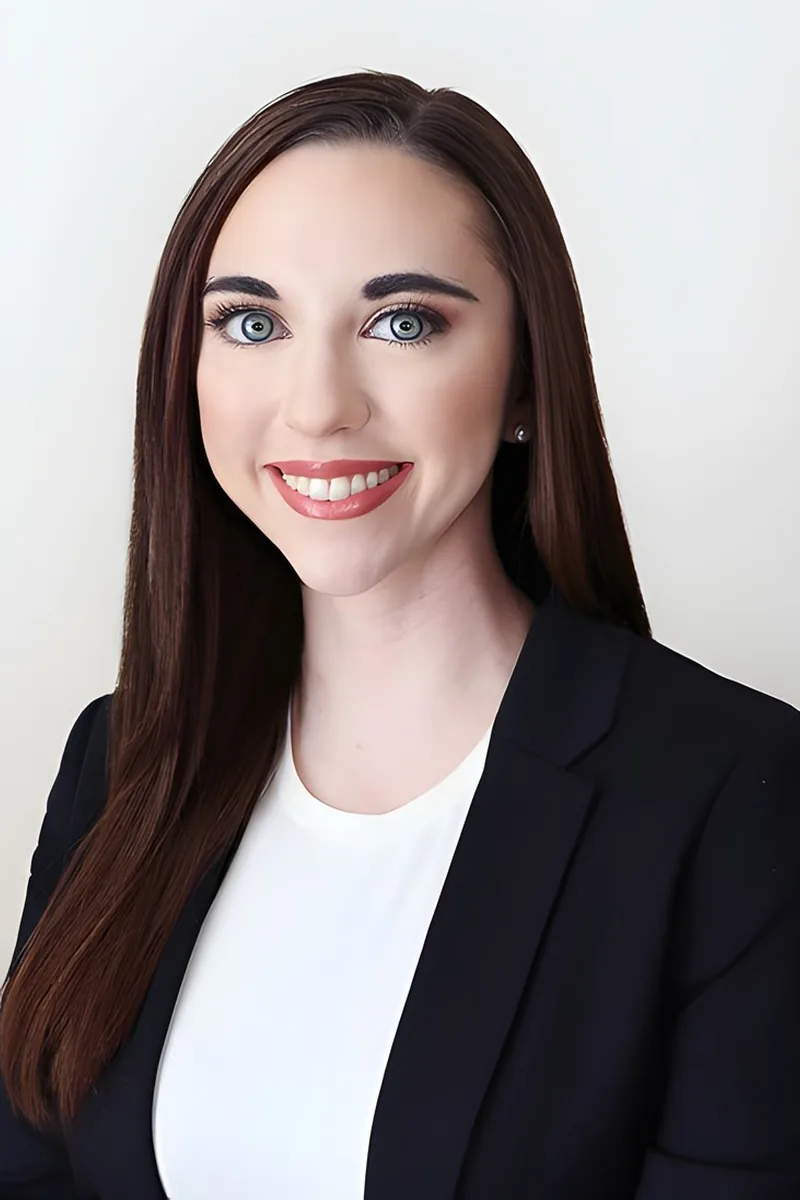
Studying malaria parasite phenotypes at Notre Dame meant Haley spent her graduate work immersed in the quantitative modeling side of biology — growth rate equations, decay functions, and the calculus that underpins how populations change over time. That hands-on experience with derivatives and integrals in a research context lets her teach the material as something with real predictive power, not just abstract symbol manipulation. Rated 5.0 by students.
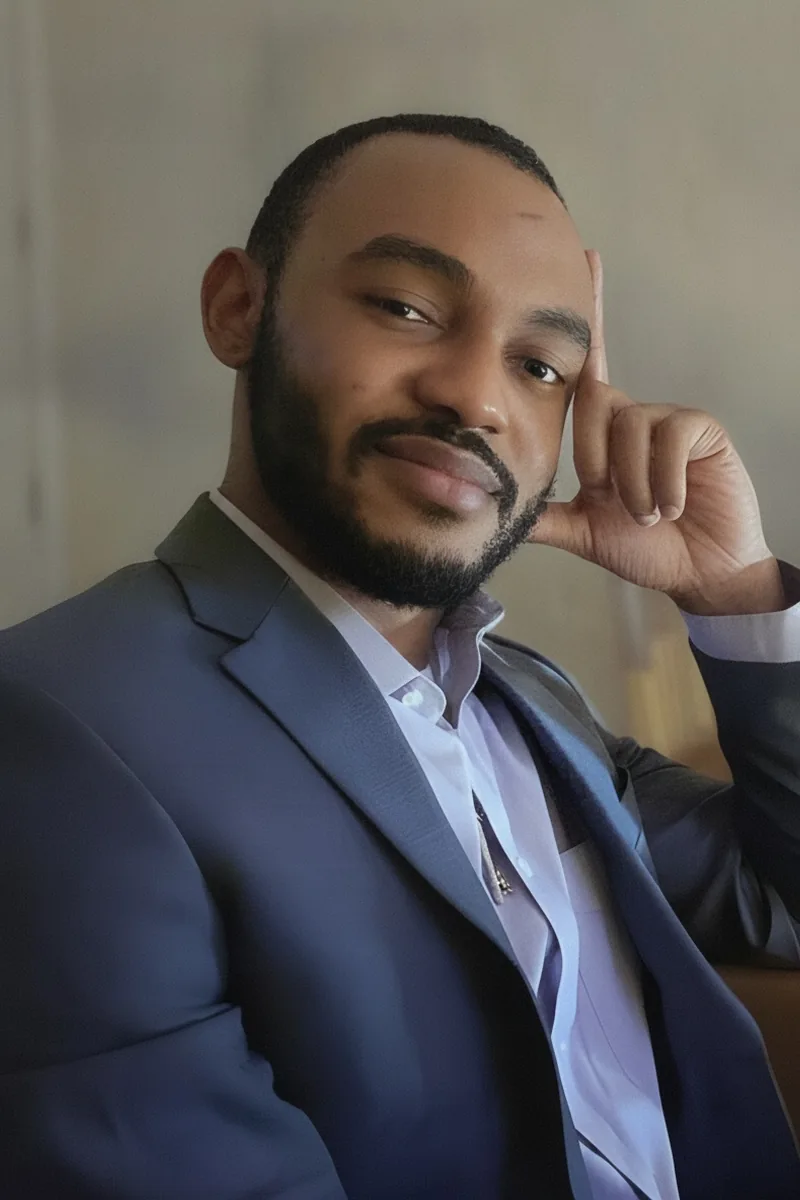
Human biology at Stanford meant Joshua's coursework leaned heavily on quantitative modeling — growth rates, concentration gradients, and the kind of applied calculus that makes biological systems quantifiable. That background gives him a way to teach derivatives and integrals as tools for describing change in systems students can actually picture, rather than as isolated rules on a worksheet.
Studying mathematics at Vanderbilt means Mustafa lives in the world of proofs and abstractions that calculus is built on. He digs into the reasoning behind derivatives and integrals — explaining why the chain rule works, not just when to apply it — so students can tackle related rates, optimization, and integration techniques with genuine understanding. That depth is what earns him a 5.0 client rating.
Studying mathematics at Amherst College means Rosalyn isn't just using calculus as a tool for another field — she's immersed in the theoretical backbone behind it, from epsilon-delta proofs to the formal logic of continuity and differentiability. When a student gets stuck on, say, the chain rule or integration by substitution, she'll rework the same problem through multiple angles until one clicks. Rated 5.0 by students.
International relations coursework might not scream calculus, but Jennessa's broad tutoring range across math and science means she's comfortable walking through the conceptual scaffolding that early calculus demands — particularly the shift from algebraic slope to instantaneous rate of change. Her 5.0 rating speaks to a teaching style that slows down at exactly the right moments, making notation and new definitions feel manageable rather than overwhelming.
Aerospace engineering at Georgia Tech means Emma lives in calculus — from integration techniques in fluid dynamics to differential equations in orbital mechanics. She unpacks concepts like the chain rule, related rates, and convergence tests by tying them to physical problems that give the math a concrete purpose. Rated 5.0 by students.
Environmental studies might seem distant from calculus, but Nina's coursework involves modeling ecological systems — growth rates, resource depletion curves, and accumulation problems that rely on derivatives and integrals. She teaches calculus by grounding abstract procedures in these kinds of tangible scenarios, making concepts like the chain rule or definite integrals feel like tools with a purpose.
Wildlife science coursework at Auburn meant Darcey had to apply calculus to real ecological problems — modeling population growth with logistic differential equations, calculating rates of habitat change, and interpreting area-under-the-curve data for species surveys. That hands-on context gives her a way to teach derivatives and integrals as tools that describe how natural systems actually shift over time, not just abstract procedures on a worksheet.
As a former IB student, my love for knowledge runs deep. I majored in Biomedical Engineering at the University of Alabama at Birmingham, graduating in December 2015 with honors (BME honors and Science and Technology Honors program) and going on to earn a Master's degree in Management Information Systems from the same university in 2019. I am currently pursuing a Master of Engineering in Artificial Intelligence and Machine Learning from the University of Illinois at Chicago and hope to start a career in data science and analytics. I greatly enjoy helping others learn and tutored throughout high school and college; I love seeing the light flash on in a student's eyes when they finally understand something they had been struggling with or when they easily solve a problem. I have tutored both young children as well as high school and college students, in just about every subject. I particularly enjoy language tutoring; I am fluent in Arabic and French and I love literature and poetry. I also love to tutor math and science subjects. My tutoring style is very much student-first; I listen and observe to determine the best approach for each individual student and what methods or strategies will be most helpful for you specifically. I am not averse to making a fool of myself with song or dance if it will help! I enjoy what I do and I want the students I work with to enjoy learning as well.
I am an aerospace engineering student. I am very passionate about teaching math, physics, and chemistry. I realized tutoring was my calling while working as a tutor at my school. Seeing students gain a greater understanding of the subject was the highlight of my day while working there.
Derivatives, integrals, and series aren't abstract math for Matthew — they're the daily language of his Mechanical and Aerospace Engineering coursework at Princeton. He tackles calculus by first making sure a student's algebra and trig foundations are solid, then walks through new concepts with worked examples before ramping up the difficulty. That layered approach keeps students from memorizing procedures they don't actually understand.
Three science degrees — including one in chemistry — mean Zosia has actually used calculus the way it was designed to be used: modeling reaction rates, solving kinetics problems, and interpreting how systems change over time. That applied fluency lets her teach derivatives and integrals as tools with purpose, connecting the mechanics of differentiation to the physical and chemical processes where they originate. Rated 4.9 by students.
Frances's psychology background at Duke involved statistical modeling and data analysis — work that builds directly on the calculus concepts of rates of change and area under a curve. She teaches early calculus by connecting derivatives and integrals to the kind of quantitative reasoning she used in research, making notation feel purposeful rather than arbitrary. Rated 4.6 by students.
Between a biology degree heavy on quantitative coursework and a perfect 36 ACT, Emily has the mathematical chops to teach calculus with real depth — not just procedure but the reasoning behind integration techniques and derivative applications. Her epidemiology training at Yale's School of Public Health meant working with rate-of-change models constantly, from disease transmission curves to survival analysis, so she can ground abstract calculus concepts in problems where the math actually drives decisions. Rated 5.0 by students.
A PhD in Education means Reid thinks deeply about *how* people learn abstract concepts — and calculus, where students must shift from computing answers to reasoning about rates and accumulation, is exactly where that expertise pays off. His sociology and math tutoring background gives him a knack for translating the conceptual leap from algebra into limits and derivatives, breaking down the notation barrier that trips up so many students encountering calculus for the first time.
Every week in his Harvard engineering courses, Christopher applies calculus to real systems — computing moments of inertia, modeling fluid flow, analyzing stress distributions. That constant use means he can unpack topics like the chain rule, improper integrals, and convergence tests with a fluency that goes well beyond textbook examples. He pinpoints the specific conceptual gaps holding a student back and addresses those directly rather than re-teaching entire chapters.
Anthropology and human evolutionary studies might not scream calculus, but Victoria's coursework involved quantitative modeling of population dynamics and morphological change over time — territory where rates of change and accumulation aren't abstract concepts but tools for answering real questions. Her 1520 SAT confirms strong quantitative chops, and she brings that same analytical rigor to breaking down derivatives and integrals into steps that actually make sense.
Philosophy at Northwestern trained Emily to dissect complex arguments into their smallest logical steps — a skill that maps surprisingly well onto the sequential reasoning calculus demands, especially when unpacking what a limit definition actually says or why the chain rule works the way it does. Her legal career sharpened that precision further, since building a case and building a proof share the same demand: every step must follow inevitably from the last.
Pre-med coursework threw Sydny into calculus with real stakes — understanding rates of change in drug concentration curves, modeling exponential decay in pharmacokinetics, and applying integration to biological systems. She breaks down limits, derivatives, and integrals by connecting each concept to a concrete problem rather than leaving students adrift in abstraction.
Art history and education aren't the usual path to calculus, and Mimi is straightforward about that — but her 1560 SAT demonstrates real quantitative strength, and her Masters in Education from Harvard means she knows how to design a learning sequence that actually builds understanding. She brings that inquiry-based instinct to early calculus, walking through what a derivative means conceptually before jumping to computation, so the rules feel like they follow logically rather than appearing out of nowhere.
Psychology and linguistics both lean heavily on statistical modeling — analyzing language acquisition curves, interpreting behavioral data over time — which gave Sherry real exposure to the calculus concepts underlying those methods during her University of Chicago coursework. Her 1600 SAT confirms she can handle rigorous quantitative reasoning, and she brings that same precision to unpacking limits and derivatives for students who need the 'why' explained clearly before the mechanics make sense. Rated 5.0 by students.
Four years of volunteering as an SAT tutor sharpened Renee's quantitative skills — her 1530 SAT confirms that — but her real strength is translating abstract notation into language that clicks, a skill she built as a Writing Consultant breaking down complex ideas for diverse learners. She applies that same clarity to early calculus concepts like limits and continuity, walking through the reasoning behind each step so the logic holds up long after the session ends.
Testimonials
Because the right Calculus tutor makes all the difference.
Average Session Rating – Based on 3.4M Learner Ratings
Nearby Calculus Tutors
Other Montgomery Tutors
Related Math Tutors in Montgomery
Frequently Asked Questions
Varsity Tutors matches Montgomery students with expert Calculus tutors for 1-on-1 instruction. We pair each student with a tutor based on their specific needs, learning style, and goals.
Whether you need homework help, exam prep, or want to get ahead, our Calculus tutors are ready to help.
Common challenges include gaps from earlier material, difficulty with specific concepts, and trouble applying learning to new problems. These issues can snowball quickly in Calculus.
A tutor identifies where you're stuck, fills in gaps, and provides targeted practice. The 1-on-1 format means you get help exactly where you need it.
Tutors work with your student's actual coursework—homework assignments, class notes, and upcoming tests. This keeps tutoring directly relevant to what's happening in the classroom.
When you share information about your student's school and curriculum, we can match you with a tutor who has relevant experience.
All tutors complete background checks, credential verification, and teaching evaluation. Many of our Calculus tutors hold advanced degrees or have years of teaching experience.
You can review tutor profiles to find someone with the right background for your student's level and needs.
Many students see improved grades within a few weeks, along with better understanding of Calculus concepts and more confidence tackling challenging material.
Tutors track progress and adjust their approach to ensure continued improvement.
Most students benefit from 1-2 sessions per week. More frequent sessions help if your student is significantly behind or has an important exam coming up.
Your tutor can recommend a schedule based on your student's specific situation and goals.
Tutoring is purchased in packages of hours, with rates varying by tutor experience. Varsity Tutors offers several options to fit different budgets and needs.
You can discuss pricing during your consultation to find what works best.
Your tutor will assess where your student is, discuss goals, and start working on priority areas. Most students bring current homework or upcoming test material to focus on.
By the end, you'll have a clear sense of how the tutor can help and a plan for moving forward.
Let’s find your perfect tutor
Answer a few quick questions. We’ll recommend the right plan and match you with a top 5% tutor.