Award-Winning AP World History Tutors
serving Milwaukee, WI
AP World History
Tutors in Milwaukee
Private 1-on-1 tutoring, weekly live classes for academic support, test prep & enrichment, practice tests and diagnostics, and more to elevate grades and test scores.
Based on 3.4M Learner Ratings
UniversitiesSchools & Universities
DeliveredHours Delivered
ProficiencyGrowth in Proficiency
Who needs tutoring?
No obligation. Takes ~1 minute.
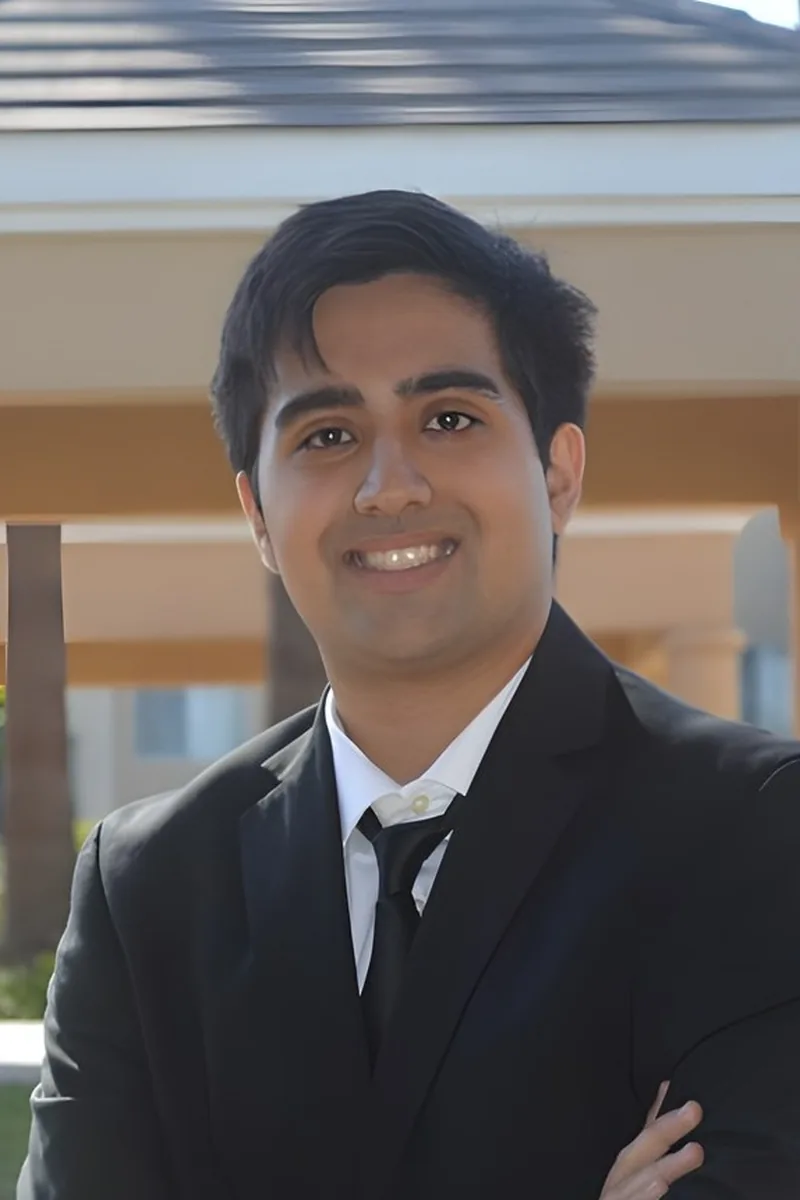
Earning a perfect score on the SAT World History subject test gave Abrahim a deep familiarity with the cross-cultural comparisons and periodization that drive AP World History. He teaches students to spot continuity-and-change patterns across civilizations and translate that analysis into high-scoring essays and short answers.

The sheer scope of AP World History — from early civilizations through globalization — overwhelms most students until they learn to think in comparative frameworks. Mark teaches students to spot patterns across regions and time periods, like how trade networks reshape cultures or how empires rise and collapse for structurally similar reasons. His international relations degree from Tufts makes those global connections second nature.
The AP World History exam covers thousands of years across every continent, which can feel overwhelming without a framework. Julia breaks the course into comparative threads — how trade networks, empire-building, and religious diffusion repeat across time periods — so students can tackle any stimulus-based question with confidence. Her background as an aspiring graduate-level historian means she genuinely enjoys digging into the connections between eras.
Years working as an educator at the Rubin Museum of Art — a collection centered on Himalayan and South Asian civilizations — gave Harry a tactile, artifact-driven way of teaching the cross-cultural encounters that AP World History's DBQ and LEQ prompts demand. His ongoing independent research trips to India studying Tibetan language and culture mean he can unpack topics like the spread of Buddhism along trade networks or Mughal-era cultural syncretism with firsthand context most tutors simply can't offer. That combination of museum pedagogy and regional immersion is especially useful for students who need to move beyond memorizing timelines and start building source-driven arguments.
Anthropology is essentially world history with the volume turned up on culture — and Jorge's Harvard degree in Social Anthropology means he reads AP World History's units on cultural diffusion, belief systems, and social hierarchies the way they were meant to be read, as interconnected human patterns rather than isolated facts to memorize. His Columbia MA in Human Rights adds a sharp lens for the exam's questions about empire, resistance, and power, especially in the post-1750 periods where human rights movements reshape the political landscape. He also tutors AP Human Geography and AP Comparative Government, so he naturally connects the geographic and political threads that earn top scores on cross-regional comparison essays.
The sheer scope of AP World History — from Mesopotamia to globalization — overwhelms students who try to memorize everything. Christie's approach zeroes in on comparative frameworks and thematic throughlines like trade networks, empire-building, and cultural diffusion, so students can tackle any prompt by drawing connections across regions and time periods. She currently teaches history at the college level and holds a 5.0 rating.
Studying philosophy at MIT trained Tim to do exactly what AP World History's essay prompts demand — construct an argument from limited evidence, weigh competing interpretations, and defend a thesis under pressure. He applies that analytical rigor to DBQ prep and the causation essays where students need to explain not just what happened but why one development in, say, Song Dynasty China reverberates through Indian Ocean trade networks centuries later. Rated 4.9 by students.
The sheer scope of AP World History — from river valley civilizations through globalization — overwhelms students who try to memorize everything. Lisa's approach, shaped by her history degree, centers on comparative frameworks: teaching students to trace themes like state-building, trade networks, and cultural diffusion across regions so they can tackle any stimulus-based question the exam throws at them.
Christopher's double major in Economics and History at UCLA means he naturally reads AP World History through the lens of trade systems, labor patterns, and resource competition — the economic engines behind empire-building, colonialism, and globalization that thread through nearly every period on the exam. That background is especially useful on LEQ and DBQ prompts where students need to explain *why* civilizations rose or fell, not just narrate the sequence. Rated 4.7 by students.
Covering ten thousand years of global history means students need frameworks, not just flashcards. Todd teaches AP World History through the recurring themes the exam actually tests — trade networks, empire-building, cultural diffusion — so students can analyze unfamiliar documents by connecting them to patterns they already understand. His University of Chicago training sharpened the kind of comparative thinking this course demands.
Cross-cultural comparison is where most AP World History students lose points, and it's where Ben's teaching shines — he breaks down how to connect developments like the Columbian Exchange, Mongol trade networks, and industrialization across regions without turning essays into vague generalizations. As a classroom history teacher who reads history for fun, he brings genuine enthusiasm to even the trickiest continuity-and-change-over-time prompts.
Covering thousands of years across every continent, AP World History overwhelms students who try to memorize everything. Maxwell zeroes in on the comparative and continuity-and-change-over-time frameworks the exam actually tests, teaching students to spot patterns — like how trade networks reshape cultures — across regions and eras. That analytical lens turns an impossibly broad course into something manageable.
Connecting civilizations across centuries requires a framework, not just flashcards. Jessica's history degree from Penn gave her deep practice in comparative analysis — exactly the skill AP World History rewards on its continuity-and-change and comparison essays. She also brings years of experience coaching students through the specific writing demands of AP free-response questions.
The sheer scope of AP World History — from river valley civilizations to globalization — overwhelms most students long before exam day. Tessa, a History major at Yale, teaches students to organize that breadth through comparative and continuity-and-change frameworks that the AP rubric actually rewards. She zeroes in on building the skill of connecting specific evidence to broader historical processes, which is where most essays lose points.
Marketing is fundamentally about understanding how ideas, goods, and influence spread through populations — which turns out to be the same analytical muscle AP World History flexes when asking about the Silk Roads, the spread of Islam, or the Columbian Exchange. Lilian's business degree with a marketing focus gives her a practical framework for teaching students how exchange networks and cultural diffusion actually work, not just what happened but why it spread. Rated 4.7 by students, she's particularly effective at helping with the continuity-and-change essays where tracing cause and effect across regions is everything.
Testimonials
Because the right AP World History tutor makes all the difference.
Average Session Rating – Based on 3.4M Learner Ratings
Practice AP World History
Free practice tests, flashcards, and AI tutoring for AP World History
Nearby AP World History Tutors
Other Milwaukee Tutors
Related Social Studies Tutors in Milwaukee
Frequently Asked Questions
AP World History spans from 1200 CE to the present, organized around six major themes: developments in processes of state formation, cultural developments and interactions, creation and interaction of economic systems, development and transformation of social structures, interaction of humans and the environment, and technological and scientific innovations. The course emphasizes historical thinking skills like periodization, comparison, causation, and contextualization—skills that are just as important as content knowledge on the exam.
The exam consists of two sections: a 95-minute multiple-choice and short-answer section (40% of your score) and a 100-minute free-response section with document-based and long essay questions (60% of your score). The exam is scored on a scale of 1-5, with a 3 or higher typically considered passing. Success requires both strong content knowledge and the ability to construct evidence-based arguments under time pressure.
Many students struggle with the sheer volume of content spanning multiple centuries and regions—it's easy to feel overwhelmed trying to memorize every detail. The bigger challenge, though, is learning to think like a historian: analyzing primary sources, making connections across time periods, and constructing arguments that go beyond simple facts. Students also often underestimate the writing component, which requires clear thesis statements, specific evidence, and proper historical reasoning.
Score improvement depends on your starting point and effort level. Students who work consistently with a tutor typically see gains of 1-2 score points by exam day, though improvement is most dramatic for students scoring 1s or 2s who develop stronger foundational skills. The key is identifying your specific weak areas—whether that's document analysis, essay structure, or content gaps in particular regions—and targeting practice there rather than reviewing material you already know well.
Effective strategies include: on the multiple-choice section, eliminating obviously wrong answers first and flagging difficult questions to return to; on the document-based question, reading the prompt and documents carefully before writing to identify the argument you'll make; and on the long essay, spending 2-3 minutes planning your thesis and evidence before writing. Time management is crucial—allocate roughly 50 minutes for multiple-choice, 40 minutes for the DBQ, and 40 minutes for the long essay to avoid rushing at the end.
A solid plan spans 2-3 months before the exam and includes: reviewing content by time period or theme in weeks 1-6, taking full-length practice tests every 1-2 weeks starting in week 4 to build stamina and identify weak areas, and spending the final 2-3 weeks doing targeted review and practicing specific question types. Spacing out your studying—rather than cramming—helps with retention. A tutor can help you prioritize which content gaps matter most and coach you through practice tests to improve both speed and accuracy.
Varsity Tutors connects you with expert tutors for students in Milwaukee who specialize in AP World History and understand both the curriculum and the exam format. When you get matched with a tutor, look for someone with strong AP exam experience, ideally someone who has taught or tutored the course before. A good fit means finding a tutor who can explain complex concepts clearly, help you develop strong essay-writing skills, and give you honest feedback on practice work.
Your first session is typically diagnostic: a tutor will assess your current knowledge, understand your goals (are you aiming for a 3, 4, or 5?), and identify your strongest and weakest areas. You might take a short practice quiz, discuss your writing process, or review a sample DBQ together. This helps your tutor create a personalized plan focused on the areas where you'll gain the most points, rather than spending time on content you've already mastered.
Let’s find your perfect tutor
Answer a few quick questions. We’ll recommend the right plan and match you with a top 5% tutor.