Award-Winning AP Computer Science Tutors
serving Milwaukee, WI
AP Computer Science
Tutors in Milwaukee
Private 1-on-1 tutoring, weekly live classes for academic support, test prep & enrichment, practice tests and diagnostics, and more to elevate grades and test scores.
Based on 3.4M Learner Ratings
UniversitiesSchools & Universities
DeliveredHours Delivered
ProficiencyGrowth in Proficiency
Who needs tutoring?
No obligation. Takes ~1 minute.

Between physics problem sets and computer science coursework at Cornell, Joel writes Java and Python to solve real computational problems — not just classroom exercises. That dual perspective is especially useful for AP Computer Science A topics like algorithm design and object-oriented programming, where understanding the logic behind the code matters as much as getting it to compile. His 35 ACT reflects the kind of precise, systematic thinking that translates directly to tracing through free-response questions.
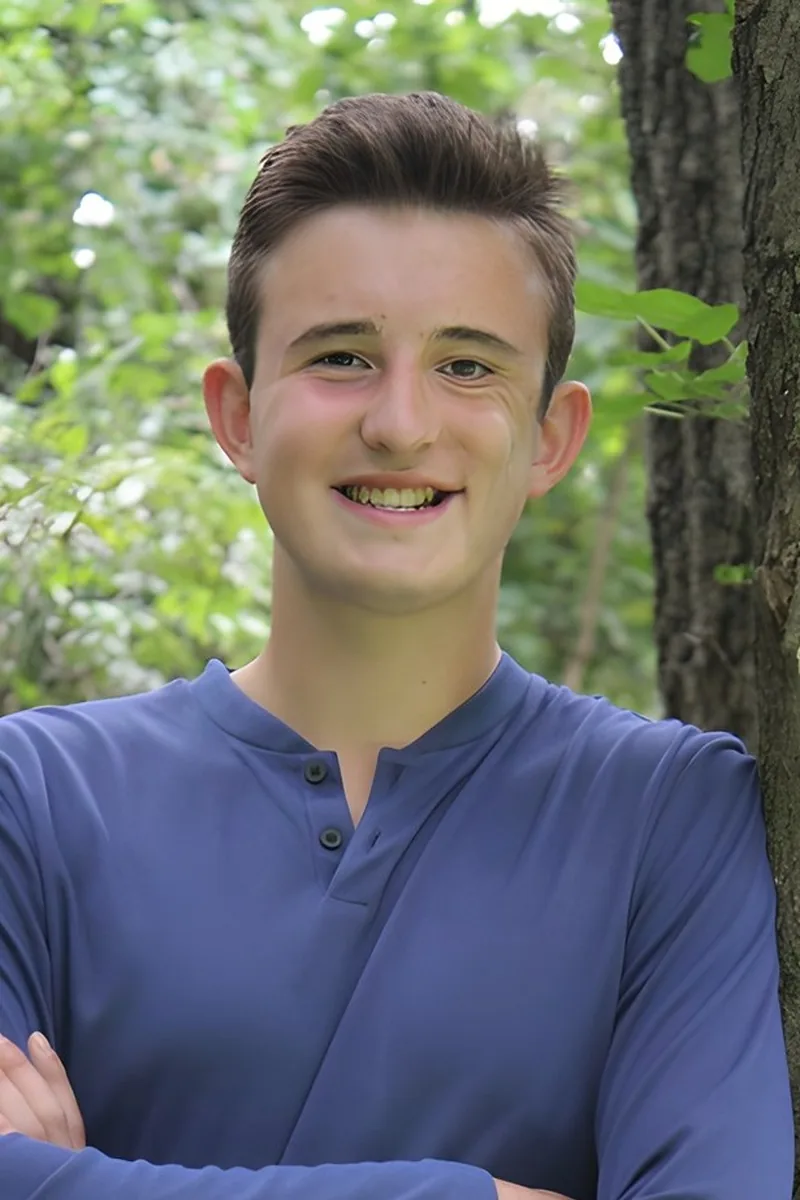
I am currently a Harvard student majoring in Computer Science with a minor in Applied Mathematics. I graduated Class Valedictorian in high school and was named National Merit Finalist. I took 16 AP classes in high school, including AP Calculus AB, AP Calculus BC, AP Computer Science A, AP Physics C : Mechanics and AP Physics 1, with a score of 5 in all of the tests. I scored a 1570/1600 in my SAT and 800 in the SAT Math Level 2 Subject Test and 790 in the SAT Physics Subject Test.
The AP Computer Science exam tests both coding fluency and the ability to trace through unfamiliar code under time pressure. Shlomo tackles both sides — drilling array manipulation, recursion, and ArrayList operations while also teaching the test-taking strategy that keeps students from burning time on free-response questions. His math background is especially useful for the algorithm-analysis problems that blend logic with computation.
I am currently an undergraduate student at Stanford University, and I recently graduated top of my class from Phillips Academy, a prestigious private boarding school in Massachusetts. For the past few years, I have tutored students of all different ages, serving as a peer tutor, faculty-nominated department tutor, and mentor for elementary school students. Although I tutor many different subjects, I am particularly passionate about Writing, Math, Physics, and Economics. My tutees and I always have a lot of fun revising essays, and academic research experience has given me a better appreciation of the other subjects. I am also well-versed in standardized test prep. My teaching philosophy is that no subject or concept is beyond the capabilities of any studentwe must only find the right teaching method. I would characterize my tutoring style as adaptable and empowering. I want to focus on not only solving the given problem or revising an essay, but also developing the skills and thinking process to apply to other assignments. For instance, one of my preferred teaching methods utilizes the Socratic method.
Engineering coursework trains you to think in systems — breaking complex problems into modular, testable pieces — which is exactly the reasoning AP Computer Science A demands when students write classes, trace through nested loops, or debug recursive methods. Wesley's biomedical engineering degree and research in biophysical chemistry mean he's been coding to solve real scientific problems, not just completing textbook exercises. That applied perspective makes abstract Java concepts feel purposeful rather than arbitrary.
The AP Computer Science exams test specific Java skills — recursive methods, sorting algorithms, 2D arrays — but they also require students to trace code under time pressure. Jake's CS coursework and strong test prep background (1540 SAT) mean he knows how to teach both the programming concepts and the exam strategy simultaneously.
Scoring a 5 on the AP Computer Science exam while simultaneously deep in calculus, biology, and chemistry APs gave William a clear picture of how CS thinking differs from other STEM disciplines — it's less about formulas and more about structuring logic step by step. His dual engineering track at Vanderbilt (biomedical and chemical) means he regularly writes code to process lab data and model systems, keeping Java concepts like iteration, array handling, and method design sharp through actual use rather than exam review alone.
As a lab assistant and grader for Rice University's Fundamentals of Computer Engineering course, Omar has seen firsthand where students stumble on AP Computer Science topics like recursion, array manipulation, and object-oriented design. He breaks down each concept by connecting it to how computers actually execute code at the hardware level — a perspective most AP prep can't offer. Rated 5.0 by students.
Most AP Computer Science A students get tripped up not on syntax but on thinking through what their code actually does — tracing a loop iteration by iteration or figuring out why a method returns the wrong value. Dennis teaches across Java, JavaScript, and web development, which means he can explain object-oriented concepts from multiple angles and show students how the same logical patterns appear across languages. Rated 5.0 by students.
I'm a sophomore at Vanderbilt University studying computer science, currently focusing on iOS and game development. I like growing as a person, but I find it much more interesting and rewarding to grow other people. Seeing a student change, not in intellect but in perspective, is fascinating. I like to focus more on concepts rather than memorization so that students will have the tools to excel in any facet of academia, beyond some random test that holds too much significance.
I am very passionate about teaching material in a way that works with each student's personal learning needs and making sure that they understand the material at its core, not just how to answer a test question. Because I majored in Neuroscience, I have expertise in a wide range of sciences, as Neuroscience is a very interdisciplinary subject. I have also had extensive experience in Computer Science. Outside of Neuroscience, I devoted a lot of time to studying the humanities. I even started a blog my junior year as an outlet to further pursue these academic interests! As a result, I also enjoy tutoring in Literature, English, and Writing.
Swarthmore's CS curriculum throws students into Java early and often, so Eric isn't just reviewing AP Computer Science A material — he's actively building on it in his own coursework every week. That proximity to the content means he can pinpoint exactly where topics like array manipulation or class hierarchy design tend to trip students up, and explain them in the clear, plain-language style his liberal arts training sharpened.
Two years writing computerized tasks for Ohio State's Clinical Neuroscience Laboratory gave Luke hands-on experience building software to solve real research problems — the kind of structured, logical coding that maps directly onto AP Computer Science A topics like control flow, method design, and class construction. His psychology training also sharpens how he explains tricky concepts, since he's attuned to where confusion actually originates rather than just what the correct answer looks like. Rated 4.8 by students.
Testimonials
Because the right AP Computer Science tutor makes all the difference.
Average Session Rating – Based on 3.4M Learner Ratings
Nearby AP Computer Science Tutors
Other Milwaukee Tutors
Related Technology and Coding Tutors in Milwaukee
Frequently Asked Questions
AP Computer Science covers two main areas: AP Computer Science Principles (broad computational thinking and real-world applications) and AP Computer Science A (Java programming fundamentals). The AP Computer Science A exam focuses on object-oriented programming, data structures, algorithms, and problem-solving. Both courses emphasize computational thinking skills that apply across industries, from software development to data science.
Score improvement depends on your starting point and how consistently you engage with tutoring. Students who work with expert tutors typically see gains by addressing specific weak areas—whether that's understanding complex algorithms, debugging code efficiently, or mastering the free-response section. Most students benefit from identifying gaps early and practicing regularly, which tutoring helps accelerate through personalized feedback and targeted problem-solving.
Many students struggle with translating problem descriptions into code, understanding inheritance and polymorphism, and managing time during the exam. The free-response section can feel overwhelming because it requires writing complete, working programs under pressure. Additionally, debugging code and understanding why a solution doesn't work—rather than just memorizing syntax—trips up students who haven't practiced enough realistic problems.
Varsity Tutors connects you with expert tutors who assess your current level and create a personalized study plan based on your goals. During sessions, tutors work through practice problems, explain challenging concepts like recursion or data structures, review your code, and help you develop test-taking strategies. Your tutor can also simulate exam conditions and provide feedback on your free-response answers to build confidence before test day.
Practice tests are essential—they help you understand the exam format, identify weak areas, and build stamina for the full three-hour exam. Taking full-length practice tests under timed conditions reveals whether you're struggling with specific topics or just need to improve your pacing. Your tutor can review your practice test results to pinpoint exactly which concepts need more work and adjust your study plan accordingly.
Most students benefit from starting preparation 2-3 months before the exam, though this varies based on your programming experience and current comfort level. If you're taking the course concurrently, consistent tutoring throughout the school year helps reinforce concepts as you learn them. Even students starting closer to test day can make meaningful progress by focusing intensively on practice problems and weak areas with expert guidance.
Confidence comes from practice and preparation—when you've solved similar problems repeatedly, test day feels less intimidating. Expert tutors help by simulating exam conditions during sessions, teaching time management strategies (like reading all questions before starting), and building your problem-solving resilience through challenging practice. Knowing you understand the material deeply, rather than just memorizing syntax, is the best antidote to exam anxiety.
Varsity Tutors connects you with expert tutors experienced in AP Computer Science who understand the exam format and curriculum. You can specify your needs—whether you need help with a specific programming concept, overall exam prep, or building coding confidence—and get matched with a tutor whose expertise fits. The process is straightforward: share your goals, get matched, and start personalized instruction tailored to your learning style.
Let’s find your perfect tutor
Answer a few quick questions. We’ll recommend the right plan and match you with a top 5% tutor.