Award-Winning AP Computer Science Tutors
serving Madison, WI
AP Computer Science
Tutors in Madison
Private 1-on-1 tutoring, weekly live classes for academic support, test prep & enrichment, practice tests and diagnostics, and more to elevate grades and test scores.
Based on 3.4M Learner Ratings
UniversitiesSchools & Universities
DeliveredHours Delivered
ProficiencyGrowth in Proficiency
Who needs tutoring?
No obligation. Takes ~1 minute.

Between physics problem sets and computer science coursework at Cornell, Joel writes Java and Python to solve real computational problems — not just classroom exercises. That dual perspective is especially useful for AP Computer Science A topics like algorithm design and object-oriented programming, where understanding the logic behind the code matters as much as getting it to compile. His 35 ACT reflects the kind of precise, systematic thinking that translates directly to tracing through free-response questions.
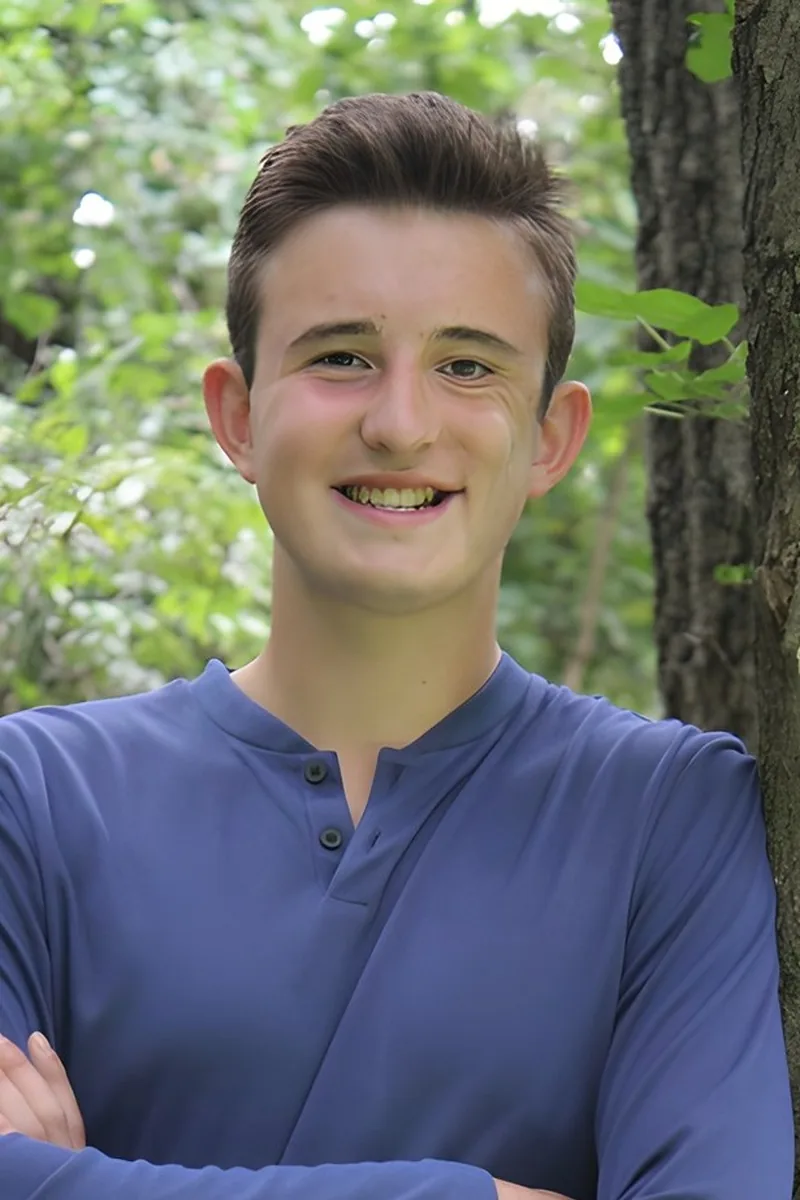
Having studied computer science at UMass Amherst through both a bachelor's and now a master's program, Milo has spent years writing Java and building software well beyond what the AP exam covers — which means he can contextualize topics like array traversal, class hierarchies, and method overloading within the bigger picture of how real programs work. Three years tutoring in UMass's tutoring center taught him exactly where students get stuck, especially on tricky free-response questions that require tracing through nested logic step by step. Rated 5.0 by students.
I'm a freshman at Stanford University pursuing a degree in mathematical and computational science. I've been tutoring students from grades 3-12 throughout high school, and I look forward to continue in college. Nothing excites me more than learning something new, and I strive to share my excitement with my tutees.
Triple-majoring in Computer Science, Mathematics, and Economics at IUPUI means Darren lives in Java and algorithmic thinking daily — not just for one class, but across disciplines that each demand rigorous logic and clean code. That cross-disciplinary perspective is especially useful for AP Computer Science A's free-response questions, where breaking a problem into smaller computational steps mirrors the same decomposition skills his math and econ coursework reinforces every week.
I am currently a Harvard student majoring in Computer Science with a minor in Applied Mathematics. I graduated Class Valedictorian in high school and was named National Merit Finalist. I took 16 AP classes in high school, including AP Calculus AB, AP Calculus BC, AP Computer Science A, AP Physics C : Mechanics and AP Physics 1, with a score of 5 in all of the tests. I scored a 1570/1600 in my SAT and 800 in the SAT Math Level 2 Subject Test and 790 in the SAT Physics Subject Test.
Robotics engineering at Penn means Mohamed writes code daily to solve real problems — sensor integration, control systems, data processing. He brings that applied perspective to AP Computer Science, teaching algorithmic thinking and program design principles through problems that show students why the concepts matter beyond the exam.
I am interested in Physics and Mathematics and working out practical problems from plumbing to electronics. I will someday go back for my Ph.D. in Physics but until then I am looking to grow as an engineer or computer programmer.
Two years as a Java teaching assistant at Illinois Institute of Technology means Muntaser has watched hundreds of students wrestle with the exact concepts AP Computer Science A tests — inheritance, loop tracing, array logic — and learned how to explain them in ways that actually land. His computer engineering degree and professional software engineering work add a layer most tutors can't: he knows how these OOP principles play out in real codebases, not just on exam day.
Jett codes in Java, Python, and C as part of his electrical and computer engineering program at UT Austin, so the AP Computer Science A curriculum — from writing classes to implementing algorithms — overlaps with work he's already doing for his degree. Where he especially shines is connecting programming logic to the underlying hardware, explaining how a for-loop or recursive call actually executes at the machine level, which makes debugging and tracing problems far less mysterious. Rated 5.0 by students.
I'm Dennis. I study physics, math, and computer science. I have done research about cosmic ray acceleration at supernova shock fronts in the Princeton University Department of Astrophysics, simulating how the turbulent plasmas push protons and ions. I have also worked at the Norfolk State University Department of Engineering, designing, simulating, optimizing, and building light filters for wavelength-division optical-electronic multiplexers. Another field I study is the mathematics of quasicrystals and aperiodic tilings, such as the Penrose tiling of rhombuses.
I'm a recent graduate of the California Institute of Technology in Economics and Computer Science. I was also accepted at Harvard, Princeton, MIT, and Stanford. I have a broad range of interests spanning science, math, engineering, social science, the humanities, the arts, and athletics (I also played on the Caltech basketball team). My background allows me to tutor general college prep, especially the SAT, ACT and the GRE. I love to teach analytical thinking, ranging from advanced Math and Physics to strategies for understanding literature and developing arguments.
Most AP Computer Science A students get tripped up not on syntax but on thinking through what their code actually does — tracing a loop iteration by iteration or figuring out why a method returns the wrong value. Dennis teaches across Java, JavaScript, and web development, which means he can explain object-oriented concepts from multiple angles and show students how the same logical patterns appear across languages. Rated 5.0 by students.
I am an incoming student at Yale University studying computer science and economics. I'm also interested in math and chemistry. My favorite area to tutor is SAT, specifically the SAT math section. In my spare time, I enjoy playing golf, cooking, and reading thriller novels. I'm excited to start working with you!
Testimonials
Because the right AP Computer Science tutor makes all the difference.
Average Session Rating – Based on 3.4M Learner Ratings
Nearby AP Computer Science Tutors
Other Madison Tutors
Related Technology and Coding Tutors in Madison
Frequently Asked Questions
AP Computer Science covers fundamental programming concepts using Java, including variables, control structures, arrays, objects, and algorithms. The course emphasizes problem-solving and computational thinking, with the exam testing both multiple-choice questions (40% of score) and free-response coding problems (60% of score). Understanding data structures, inheritance, and recursion are key topics that often challenge students, so focused preparation in these areas can significantly boost your score.
Score improvement depends on your starting point and how consistently you engage with practice problems. Students who work with a tutor typically see gains by strengthening weak areas—whether that's debugging code, understanding algorithm efficiency, or mastering object-oriented programming concepts. The key is identifying your specific gaps early and practicing similar problem types repeatedly, which personalized 1-on-1 instruction makes much more effective than studying alone.
Many students struggle with the free-response coding section, particularly under timed conditions—translating logic into correct Java syntax quickly is a skill that requires deliberate practice. Understanding inheritance and polymorphism, debugging complex code, and analyzing algorithm efficiency are also frequent pain points. Tutors can help you build confidence in these areas by walking through practice problems, teaching you efficient debugging strategies, and building your speed on exam-style questions.
Start by taking a full practice exam under timed conditions to identify your weakest topics—whether that's arrays, inheritance, or algorithm analysis. Then focus your study sessions on those specific areas with targeted practice problems before attempting another full test. A tutor can help you analyze your mistakes, teach you the underlying concepts you're missing, and develop strategies for managing time on the free-response section, where pacing is critical.
Varsity Tutors connects you with expert tutors who specialize in AP Computer Science and understand the specific challenges of the exam. When you get matched with a tutor, you can discuss your current skill level, target score, and timeline so they can create a personalized study plan. Many students in Madison benefit from tutors who can explain difficult concepts like recursion and object-oriented design in ways that click for them individually.
Your first session is typically an assessment where your tutor learns about your coding background, reviews your current understanding of key AP Computer Science topics, and identifies your strongest and weakest areas. You might work through a sample coding problem or discuss concepts that have been confusing. From there, your tutor will create a customized plan focused on your goals—whether that's reaching a 4, improving from a 3 to a 5, or building confidence before test day.
Test anxiety often stems from uncertainty about how to approach problems under pressure. A tutor helps you build confidence by practicing exam-style questions repeatedly, teaching you a systematic approach to debugging and problem-solving, and simulating timed test conditions. As you practice more and see yourself successfully solving problems, your anxiety naturally decreases—and your tutor can also share specific strategies for staying calm and managing your time during the actual exam.
The free-response section typically gives you 90 minutes for four coding problems, so you'll need to spend roughly 20-25 minutes per question. A smart approach is to read all questions first, start with the one you feel most confident about to build momentum, and save the trickiest for last if time is tight. Your tutor can help you practice this pacing strategy on full-length exams, teach you how to quickly identify what each question is asking, and develop shortcuts for common coding patterns you'll encounter.
Let’s find your perfect tutor
Answer a few quick questions. We’ll recommend the right plan and match you with a top 5% tutor.