Award-Winning College Chemistry Tutors
serving Richmond, VA
College Chemistry
Tutors in Richmond
Private 1-on-1 tutoring, weekly live classes for academic support, test prep & enrichment, practice tests and diagnostics, and more to elevate grades and test scores.
Based on 3.4M Learner Ratings
UniversitiesSchools & Universities
DeliveredHours Delivered
ProficiencyGrowth in Proficiency
Who needs tutoring?
No obligation. Takes ~1 minute.

I'm a current medical student at VCU School of Medicine, and a graduate of Johns Hopkins University. I received my Bachelor of Science in Molecular and Cellular Biology. I've had the pleasure of tutoring a diverse range of students for 5 years; while I tutor a broad set of subjects, I'm most passionate about biology, psychology, and chemistry. I'm a big proponent of ensuring understanding over memorization and teaching concepts that last for years to come (particularly for other students interested in medicine!) In my free time, I love to write poetry, edit essays, and gush about game writing with friends.
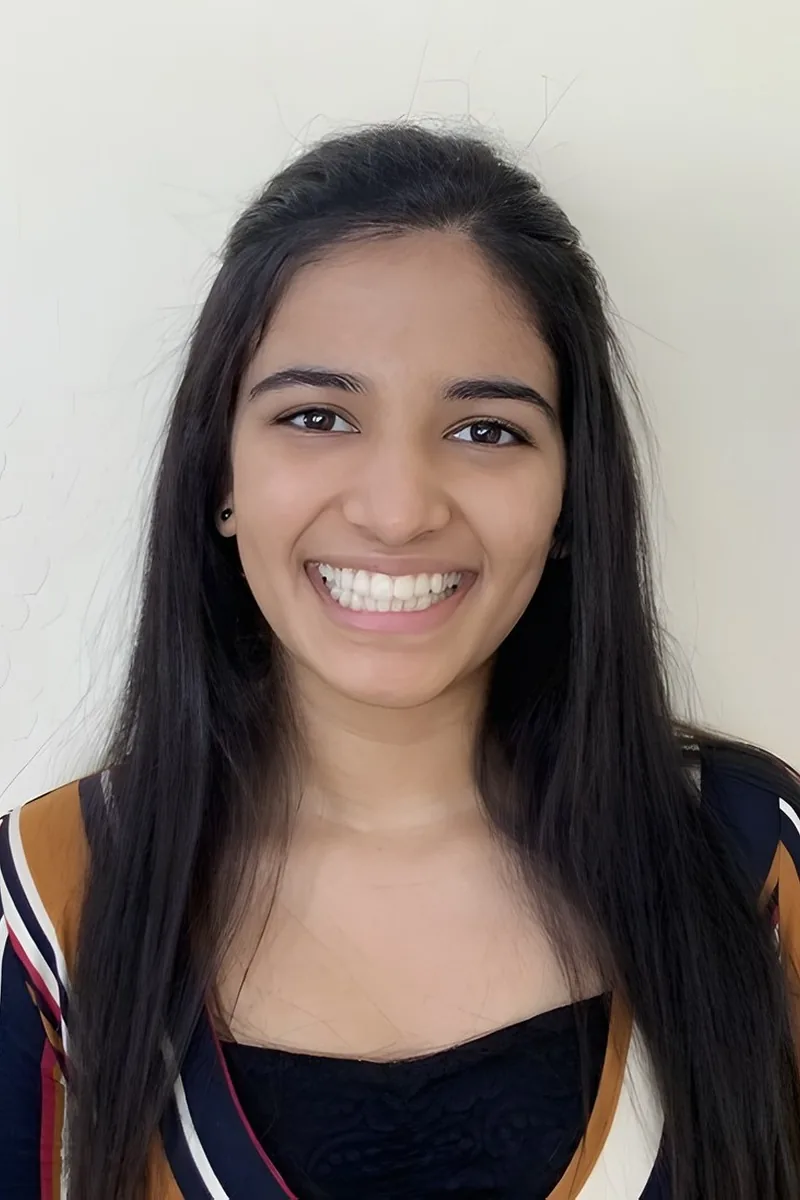
Being in VCU's BS/MD Guaranteed Admissions program means Roshni is taking college chemistry with real stakes — every gen chem concept, from electronegativity trends to buffer systems, feeds directly into the medical coursework waiting on the other side. She zeroes in on the logic behind reaction predictions and equilibrium shifts so students internalize the reasoning instead of memorizing disconnected rules. Rated 4.9 by students.
Pre-med bioinformatics coursework at VCU's Honors College means Shahad has pushed through college chemistry with a chemistry minor backing her up — she's not just recalling gen chem for tutoring, she's actively using concepts like molecular interactions, reaction energetics, and solution behavior in her biology and genomics classes right now. That real-time fluency lets her explain where each topic resurfaces and why it's worth understanding deeply the first time around. Rated 4.9 by students.
Having taken chemistry all the way through organic, analytical, and biochemistry at James Madison University, Ava knows which gen chem concepts — electron configuration, VSEPR theory, intermolecular forces — quietly become load-bearing walls for everything that follows. She zeroes in on the reasoning behind each model so students can predict molecular behavior on exams instead of scrambling to memorize exceptions.
Earning a chemistry degree at UVA means Brittany didn't just pass gen chem — she built on it through upper-level coursework where concepts like equilibrium, thermodynamics, and bonding theory get applied in increasingly complex contexts. Her IB Chemistry background adds another layer: she's familiar with both the American university approach and the IB framework, so she can translate between the two when students carry habits from one into the other. Rated 5.0 by students.
From the moment I began helping classmates in middle school study for math quizzes, I realized how much I enjoyed guiding others toward understanding. Over time, that spark grew into a genuine passion for education. What drives me most is witnessing the transformation in a student's confidencethe moment when confusion gives way to clarity, and they begin to believe in their own abilities. Tutoring, for me, is not simply about helping students achieve better grades; it's about empowering them to trust their capacity to learn and grow. My journey as a tutor began in high school, where I volunteered as a math tutor for underclassmen struggling with algebra and geometry. I worked one-on-one with students after school, helping them tackle difficult problems and build foundational skills. This early experience taught me how patience and consistent encouragement could make a lasting difference. In college, I served as a teaching assistant for general chemistry at the University of Virginia.
Engineering students don't just take college chemistry — they rely on it. Andrew's mechanical and aerospace engineering program at UVA required rigorous chemistry coursework covering thermochemistry, reaction kinetics, and electrochemistry, so he understands these topics from both a theoretical and applied standpoint. He walks through problem-solving strategies that make dense material more manageable.
Public health coursework at UT Austin meant Katherine couldn't just memorize gen chem — she had to internalize how concepts like solution chemistry, molarity, and acid-base behavior actually function in epidemiological and toxicological contexts. That applied perspective shapes how she teaches college chemistry: she grounds abstract topics in concrete scenarios first, then works backward into the calculations and notation so students understand what the numbers represent before solving for them.
Hi, my name is Inaya, and I'm so excited to be a tutor! I have been tutoring for four years and in that time I have learned many different methods of tutoring. Some student need more hands on help and others just need to be guided into working on their own. Every kid is different and that is one of the greats parts of tutoring.
Most college chemistry students don't expect a math major to be the one who makes electron configurations or equilibrium expressions click — but Tessa's mathematics training at Yale means she can cleanly separate the quantitative mechanics of a problem from the chemical reasoning, which is exactly where most gen chem confusion hides. She also scored a 36 ACT and holds a 4.9 rating, though what matters more is her knack for showing students the logical structure underneath topics that otherwise feel like pure memorization.
Forty-plus students tutored in general and AP Chemistry, a bachelor's in chemistry, and a master's in environmental toxicology — Amy has seen college-level chemical concepts from the classroom side and the research side, where sloppy equilibrium reasoning or shaky thermodynamics understanding actually costs you results. She walks through problems like calorimetry, solution preparation, and reaction stoichiometry with an emphasis on dimensional analysis and unit tracking, which is where most gen chem mistakes quietly start. Rated 5.0 by students.
Tackling college-level chemistry means juggling thermodynamics, kinetics, and equilibrium all in the same problem set. Brittany was employed at the University of Pennsylvania's Tutoring Center specifically for General Chemistry I and II, where she worked with both undergraduates encountering the material for the first time and graduate students brushing up on fundamentals. That range sharpened her ability to adjust explanations to any level of preparation.
I've been working with students for over seven years, from middle school all the way through college, across subjects like math, calculus, statistics, linear algebra, chemistry, and physics, with a lot of SAT and ACT prep mixed in. My background is perhaps a little unconventional. I have two bachelor's degrees, one in Engineering and one in Communication Studies, plus a Master's in Design. That combination means I can guide you through challenging technical material and communicate it in a way that is easy to grasp. What I care most about is helping students get to a place where they don't need me anymore. I know that sounds like a strange thing for a tutor to say, but I think it's the right goal. I'm not here to walk you through steps to copy down. I want you to understand why something works, because that's what holds up under pressure, on a test you haven't seen before. If you're ready to ace that test or prove that theorem that's been bugging you, reach out and let's work together
Medical school demands fluency in chemistry that goes well beyond introductory courses, and Abrahim brings that depth to college-level topics like thermodynamics, kinetics, and electrochemistry. He diagnoses conceptual gaps fast — if a student can balance an equation but can't explain why a reaction is spontaneous, that's exactly where the session will dig in.
Thermodynamics, equilibrium constants, and reaction kinetics demand more than memorizing formulas — they require thinking about why a reaction proceeds the way it does. Garrett's coursework in physical chemistry and organic chemistry means he can unpack the energy landscapes and molecular interactions behind each concept. He connects general chemistry principles to their applications in biochemistry and physiology, which makes abstract ideas click faster.
Studying chemical and biological engineering means Suzie has been stress-tested on gen chem material — thermodynamics, reaction kinetics, stoichiometry — in courses that demanded she actually use it to solve mass and energy balances, not just reproduce it on an exam. She's now pursuing an MD/PhD at Michigan Medical School, so she teaches college chemistry with a clear picture of how each concept threads into biochemistry, physiology, and beyond. Rated 5.0 by students.
Going from a Penn undergrad to medical school means Jessica sat through college chemistry twice — once as a prerequisite and again when biochemistry and pharmacology demanded she actually internalize concepts like reaction energetics, acid-base equilibria, and molecular interactions at a deeper level. That second pass gave her a clear sense of which gen chem topics students need to truly own versus merely survive, and she teaches accordingly. Rated 4.8 by students.
Pursuing a Doctorate of Physical Therapy means James encounters chemistry in a context most gen chem tutors don't — understanding how buffer systems maintain blood pH, how electrolyte concentrations drive cellular processes, and how thermodynamic principles govern metabolic reactions. His economics background also gave him strong quantitative reasoning, so he's comfortable walking through the math-heavy side of topics like stoichiometry and gas laws without losing sight of what the numbers actually represent. Rated 4.9 by students.
Thermodynamics, equilibrium constants, and electrochemistry all click faster when the tutor has spent years applying them in engineering contexts. Abismael earned his B.S. in Chemical Engineering, so he teaches college-level concepts through real reaction systems rather than abstract formulas. He's known for pushing students with spontaneous, exam-level questions until the material becomes second nature.
Computer science at Cornell Engineering required Ravnoor to grind through the same rigorous gen chem sequence that gates so many STEM majors — and his 5.0 rating suggests he retained more than enough to teach it. He tackles calculation-dense topics like stoichiometry and gas laws by decomposing them the way a programmer would: isolate the variables, track the units, and debug each step before moving forward.
Between equilibrium expressions, thermodynamic calculations, and orbital theory, college chemistry demands a level of abstraction that introductory courses don't always prepare students for. Amber digs into the quantitative backbone of these topics, connecting the math to the molecular-level reasoning so that concepts like Gibbs free energy or rate law derivations make sense rather than just get memorized. Her breadth across chemistry and advanced math gives her a rare versatility in tackling problem sets.
Testimonials
Because the right College Chemistry tutor makes all the difference.
Average Session Rating – Based on 3.4M Learner Ratings
Other Richmond Tutors
Related Science Tutors in Richmond
Frequently Asked Questions
College Chemistry typically covers atomic structure, bonding, stoichiometry, thermodynamics, equilibrium, acids and bases, and oxidation-reduction reactions. The course emphasizes both theoretical understanding and practical problem-solving, including balancing equations, unit conversions, and lab work. A tutor can help you connect these concepts to real-world applications—like how chemical reactions power batteries or purify water—which makes abstract ideas more concrete and memorable.
Balancing equations requires understanding stoichiometry and tracking atoms across a reaction, which can feel like solving a puzzle without clear rules. Many students struggle because they try to memorize patterns instead of grasping the underlying logic that atoms are conserved in chemical reactions. Personalized tutoring breaks down the systematic approach—starting with simple equations and building to complex ones—so you understand *why* you're adjusting coefficients, not just *how* to do it.
Tutors can help you understand the scientific method behind each experiment, interpret data accurately, and connect lab observations to theory. They can also guide you through calculations, help you write clear lab reports, and prepare you to troubleshoot when experiments don't go as expected. This deeper understanding of *why* you're doing each step—not just following instructions—builds stronger scientific reasoning skills.
Understanding concepts is far more valuable than pure memorization. When you grasp *why* the ideal gas law works or how electron configuration relates to bonding, you can solve new problems and remember information longer. That said, some formulas and constants are essential tools—the key is learning them in context. A tutor can help you build conceptual understanding first, then use formulas as tools rather than things to blindly memorize.
Unit conversions rely on dimensional analysis—treating units like numbers you can cancel out. The trick is setting up conversion factors correctly and understanding what you're converting *between* (moles to grams, liters to milliliters, etc.). Many students struggle because they rush or don't visualize what the conversion means. A tutor can teach you a systematic approach and help you practice with real problems until the method becomes automatic.
Tutors use multiple strategies to make abstract concepts tangible: drawing molecular structures, using physical models, explaining bonding through energy diagrams, and connecting concepts to observable phenomena. For example, understanding that ionic bonds form because electrons transfer between atoms explains *why* table salt dissolves in water but oil doesn't. Visual explanations combined with real-world examples help concepts stick far better than textbook definitions alone.
Varsity Tutors connects Richmond students with expert tutors who have strong backgrounds in chemistry and experience teaching at the college level. You can specify your needs—whether you're struggling with general chemistry concepts, preparing for an exam, or needing help with lab reports—and get matched with someone who fits your learning style. The first session is a great opportunity to see if the tutor's teaching approach clicks with you.
Your first session is typically focused on understanding where you are right now. The tutor will ask about your course, current struggles (balancing equations, thermodynamics, lab work, etc.), and your goals. They'll assess your understanding of key concepts and identify gaps, then work with you to create a plan. Come prepared with your syllabus, recent assignments, or specific topics you want help with so the tutor can dive in quickly.
Let’s find your perfect tutor
Answer a few quick questions. We’ll recommend the right plan and match you with a top 5% tutor.