Award-Winning German Tutors
serving Baton Rouge, LA
German
Tutors in Baton Rouge
Private 1-on-1 tutoring, weekly live classes for academic support, test prep & enrichment, practice tests and diagnostics, and more to elevate grades and test scores.
Based on 3.4M Learner Ratings
UniversitiesSchools & Universities
DeliveredHours Delivered
ProficiencyGrowth in Proficiency
Who needs tutoring?
No obligation. Takes ~1 minute.
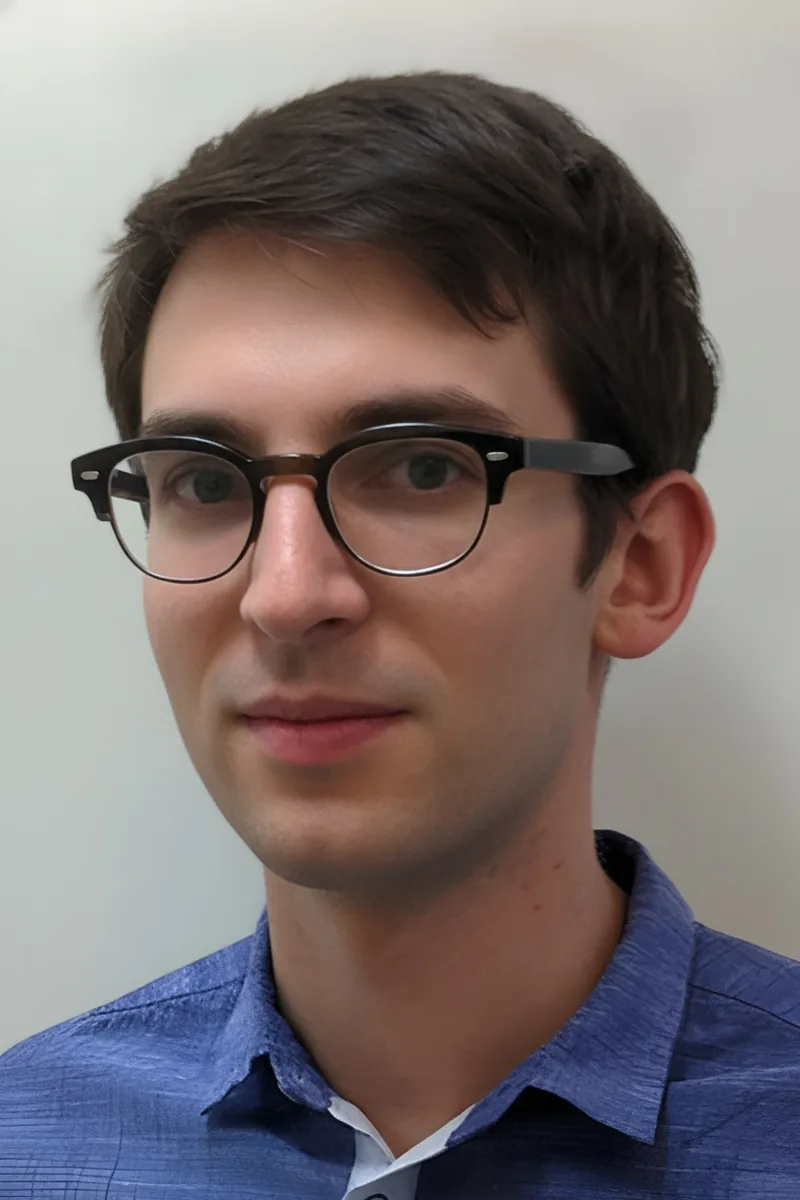
At UC Berkeley, Jacob earned an M.A. in German and received formal training in foreign language pedagogy while teaching college-level German courses. That combination of academic depth and classroom experience means he can explain tricky grammar — separable verbs, adjective endings, subjunctive mood — in ways that actually make structural sense rather than feeling like arbitrary rules.

Six months of full-immersion study in Berlin gave Daniel a feel for German that textbooks alone can't replicate — the way case endings sound natural in conversation, or how separable verbs behave in real speech versus grammar drills. He earned his B.A. in German from Duke with a focus that included twentieth-century German history and politics, which means his lessons often connect language to the culture that shapes it.
A pre-med student at UNC with minors in chemistry and biology, Dimitry also carries German through the advanced level — an uncommon combination that means he's used to toggling between technical and linguistic precision. He approaches German grammar with the same diagnostic thinking he brings to the sciences, making case systems and verb conjugation feel less like arbitrary rules and more like solvable puzzles. Rated 4.9 by students.
As a native German speaker from Austria, Silvia teaches the language the way it's actually spoken — with attention to cases, gendered articles, and verb placement that trips up English speakers most. She tutored her own son in German for four years to maintain his fluency, so she understands exactly where American students stumble with dative versus accusative or separable prefix verbs. Her 5.0 rating speaks to how naturally she makes those tricky grammar patterns stick.
Jonas teaches German with attention to the structural logic of the language — case endings, verb placement, and the way compound words build meaning from smaller parts. His background in Classical Greek means he's comfortable explaining grammatical concepts like dative versus accusative in terms that actually clarify rather than confuse. Students working through noun declensions or separable-prefix verbs get explanations rooted in how the language thinks, not just how to memorize tables.
German's case system and verb placement rules trip up nearly every beginner, but they follow a logic that becomes intuitive with the right explanations. Alice teaches German at multiple levels and breaks down concepts like accusative vs. dative usage through pattern recognition rather than rote chart memorization. Her conversational teaching style means grammar drills feel more like a dialogue than a worksheet.
Learning German grammar means wrestling with cases, gendered nouns, and a sentence structure that puts verbs in unexpected places — all of which feel overwhelming without a clear system. Nivedina teaches the underlying patterns so that accusative versus dative stops being a guessing game and starts being predictable. Her analytical mindset as a scientist turns German's notoriously rigid rules into something students can actually internalize.
Between her Northwestern coursework and studies in German-language opera repertoire — from Mozart to Strauss — Ilana developed a working fluency that goes beyond classroom German. She tackles tricky grammar concepts like case endings and separable verbs by connecting them to patterns students already recognize, making the logic of German sentence structure feel less foreign. Rated 5.0 by students.
Sabrina minors in German studies at Princeton and has done physics research at a Max Planck Institute in Germany, so her command of the language extends well beyond the classroom. She tackles everything from case endings and verb conjugation patterns to reading comprehension of authentic German texts.
Carolyn's academic training in theology and religious studies required extensive work with German-language primary texts — a tradition where precise reading comprehension and command of complex sentence structures are non-negotiable. She teaches German 1 through German 4, bringing that text-heavy background to bear on vocabulary acquisition and the grammatical logic behind cases and word order.
Nicholas's primary expertise is in mathematics and statistics, not German — but he's conversational in the language and brings the same structured, analytical thinking that defines his math tutoring to learning grammar rules and vocabulary. For students who respond better to logical pattern-based explanations of things like case endings and verb placement, his approach can be a surprisingly good fit.
Learning German means wrestling with case endings, separable verbs, and a word-order system that feels alien to English speakers. John breaks these structures down systematically, connecting grammar rules to patterns students can actually internalize rather than just memorize from a chart. His experience across every level of German coursework means he can adjust complexity on the fly.
Testimonials
Because the right German tutor makes all the difference.
Average Session Rating – Based on 3.4M Learner Ratings
Nearby German Tutors
Other Baton Rouge Tutors
Related Languages Tutors in Baton Rouge
Frequently Asked Questions
Fluency depends on your starting level and how frequently you practice. Research suggests reaching professional proficiency in German requires approximately 750-900 hours of study and practice. With personalized 1-on-1 instruction combined with consistent practice, many students progress through conversational ability within 6-12 months. A tutor can accelerate this timeline by focusing on your specific goals, whether that's conversational fluency, academic German, or exam preparation.
Speaking is often the most challenging skill to develop in a classroom setting, especially with student-teacher ratios like Baton Rouge's average of 22.4:1, where individual speaking time is limited. Personalized 1-on-1 instruction gives you dedicated conversation practice with a tutor who can correct pronunciation, model natural speech patterns, and help you build confidence speaking German. This direct feedback on your accent and conversational flow is difficult to get in group classes and is essential for developing genuine fluency.
German verb conjugation is challenging because verbs change based on person, tense, and mood—but patterns become clear with focused practice. A tutor can break down conjugation rules systematically, show you the underlying patterns, and use spaced repetition and practice testing to help you retain them. Rather than memorizing conjugations in isolation, personalized instruction connects them to real conversational contexts, making them stick better and feel more natural when you speak.
Vocabulary retention improves dramatically when words are learned in context and reviewed strategically over time. A tutor can teach you vocabulary related to your interests or goals, use retrieval practice (testing yourself repeatedly), and incorporate new words into conversation practice. This combination of contextual learning, spaced repetition, and active use is far more effective than memorizing word lists, and helps vocabulary stick in your long-term memory.
Yes. Personalized 1-on-1 instruction can create an immersion-like environment by focusing conversation entirely in German, incorporating cultural content, and building lessons around authentic materials like German news, literature, or films. A tutor can adjust the immersion intensity to match your level—starting with more English support if you're a beginner and gradually shifting to all-German conversation as you progress. This approach gives you many of the benefits of immersion without leaving Baton Rouge.
The most effective approach combines both. Understanding grammar rules gives you a framework and builds confidence, while natural usage—hearing and speaking German in context—helps you internalize how the language actually works. A tutor balances explicit grammar instruction with conversational practice, so you learn the "why" behind the rules and then practice applying them naturally in real speech. This hybrid approach helps you avoid both robotic, overly-formal speech and gaps in your grammatical foundation.
Absolutely. Whether you're in a Baton Rouge school working through German I, II, III, or AP German, a tutor can align instruction with your class curriculum, help you master challenging units, and prepare for tests and exams. Personalized tutoring fills gaps in classroom learning, gives you extra practice with grammar and conversation, and helps you move at your own pace—all of which strengthen your performance in class.
Accent and pronunciation improve through consistent modeling and feedback from a native or near-native speaker. A tutor can demonstrate proper German pronunciation, listen carefully to your speech, identify specific sounds you're struggling with (like the guttural "ch" or umlauts), and give you targeted practice. Regular conversation practice with immediate correction helps your mouth and ear adjust to German sound patterns, and over time, your accent becomes more natural and authentic.
Let’s find your perfect tutor
Answer a few quick questions. We’ll recommend the right plan and match you with a top 5% tutor.