Award-Winning Pre-Calculus Tutors
serving Baton Rouge, LA
Pre-Calculus
Tutors in Baton Rouge
Private 1-on-1 tutoring, weekly live classes for academic support, test prep & enrichment, practice tests and diagnostics, and more to elevate grades and test scores.
Based on 3.4M Learner Ratings
UniversitiesSchools & Universities
DeliveredHours Delivered
ProficiencyGrowth in Proficiency
Who needs tutoring?
No obligation. Takes ~1 minute.

Daniel's favorite trick for pre-calculus is flipping the script — once he's walked through a concept like composite functions or rational asymptotes, he asks students to teach it back to him, which exposes exactly where understanding is solid and where it's still shaky. His finance coursework keeps him actively working with the polynomial and exponential models that form the backbone of the course, so the material stays fresh rather than distant. He covers everything from trigonometric identities through sequences and series with that same explain-it-back approach.
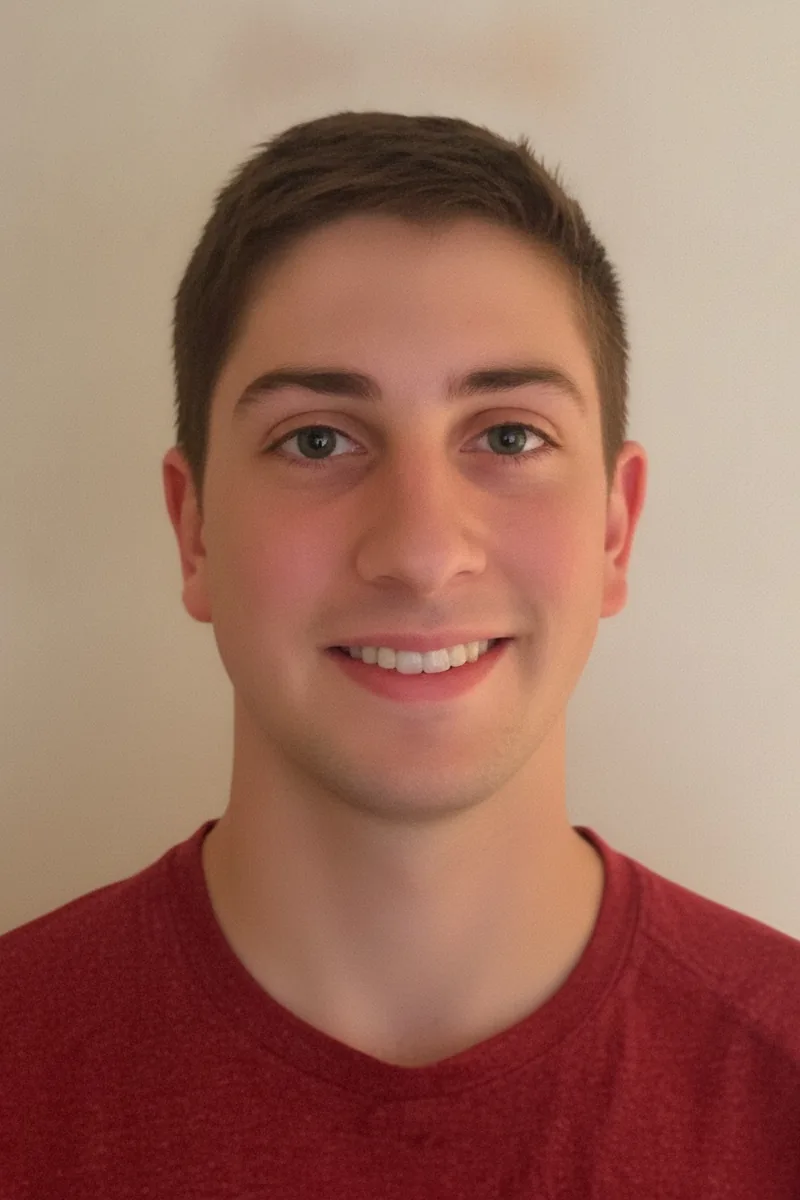
The jump into pre-calculus — trigonometric identities, limits intuition, complex rational functions — is where many students realize they can't rely on memorized shortcuts anymore. Benjamin's economics coursework at the University of Chicago keeps him immersed in the kind of rigorous mathematical thinking that pre-calc demands. He connects each new concept back to its underlying logic so students actually retain it.
Until age 16, Viktor saw math as mindless formula memorization — then a series of great teachers revealed the deeper logic underneath, and he ended up majoring in mathematics at UChicago. That conversion story shapes how he teaches pre-calculus: he digs into *why* the unit circle works or what a logarithm actually means, so students build real understanding instead of a formula sheet they'll forget by finals. His 1600 SAT and 35 ACT confirm the mathematical fluency behind that approach.
Environmental engineering coursework — modeling pollutant dispersion, watershed flow rates, decay of contaminants — runs on exactly the exponential, logarithmic, and trigonometric functions that pre-calculus introduces. Kate teaches these topics with the instinct of someone who's built real models around them through both her bachelor's and master's work, connecting each function family to the physical behavior it describes. Her 1580 SAT and 4.9 rating confirm the precision she brings to every session.
A math degree from Penn means Ben didn't just pass through pre-calculus — he built everything that came after on top of it, from linear algebra to multivariable calculus. That depth lets him teach topics like rational functions and trigonometric identities by revealing the structural logic underneath, so students carry real understanding into calculus instead of a fragile set of memorized steps. Holds a 5.0 rating.
The jump to pre-calculus is where students suddenly need to think about trigonometric identities, limits of sequences, and polar coordinates all at once. Margaret tackles each of these by connecting them back to algebraic reasoning students already have, rather than treating every unit as brand new. Rated 4.9 by students, she's especially effective at demystifying the transition into calculus-level thinking.
The jump to pre-calculus is where many students first encounter limits of their algebraic intuition — rational functions behave strangely, trigonometric identities pile up, and sequences suddenly matter. Emily tackles these topics by emphasizing the graphical and conceptual logic underneath, drawing on a math background that earned her a 1590 SAT and a 36 ACT.
Kevin's competition math background gives him an unusual edge in Pre-Calculus — he's used to attacking problems involving sequences, series, and trigonometric manipulations from angles most textbooks never cover. That depth, combined with a 35 ACT and Stanford CS coursework heavy in mathematical foundations, means he can explain why a parametric equation behaves the way it does, not just how to graph it.
Second-year medical school at Baylor means Michelle is neck-deep in the quantitative reasoning that pre-calculus builds — rate-of-change intuition for physiology, logarithmic models for acid-base chemistry, and exponential functions for everything from bacterial growth to drug clearance. Her biochemistry degree from Rice cemented the algebraic and trigonometric groundwork she now draws on daily, so she teaches these topics as someone who genuinely needed them to stick. A 1570 SAT confirms the mathematical precision behind her approach.
The jump to pre-calculus trips up a lot of students because it's the first time they need to think about functions as objects — transforming them, composing them, analyzing their behavior. Christine's engineering coursework at Johns Hopkins required fluency with trigonometric identities, polar coordinates, and limits, so she teaches these topics with the confidence of someone who uses them daily.
Running a genetics lab section at Brown taught Jessica how to break complex processes into sequential steps — the same skill that makes her effective at teaching pre-calculus topics like rational function analysis and trigonometric graphing, where students often lose track of which transformation happens in what order. Her biology training means she naturally connects mathematical models to real phenomena, turning abstract concepts like exponential growth into something students can visualize. She holds a 5.0 rating and a 1500 SAT.
Fred's aerospace engineering degree from Princeton meant living inside the math that pre-calculus students are just meeting — parametric equations describing flight paths, trigonometric models for oscillating systems, and the limit-adjacent thinking that bridges algebra to calculus. He teaches the course knowing exactly which concepts will matter most once students cross into derivatives and integrals, and he builds that forward-looking intuition into every session. His 1550 SAT confirms the quantitative depth behind the approach.
Studying molecular biology at Yale means Maxwell constantly encounters the mathematical scaffolding that pre-calculus builds — exponential models for gene expression kinetics, logarithmic scales for concentration data, and trigonometric functions underlying structural biology. He zeros in on how these function families actually behave and transform, connecting the symbolic manipulation back to intuition so students aren't just memorizing identities in isolation. His 33 ACT and 5.0 rating back that up.
Testimonials
Because the right Pre-Calculus tutor makes all the difference.
Average Session Rating – Based on 3.4M Learner Ratings
Practice Pre-Calculus
Free practice tests, flashcards, and AI tutoring for Pre-Calculus
Nearby Pre-Calculus Tutors
Other Baton Rouge Tutors
Related Math Tutors in Baton Rouge
Frequently Asked Questions
Pre-Calculus shifts from just solving equations to understanding the deeper concepts behind them—like why functions behave certain ways and how different types of functions relate to each other. You'll move from "plug in the formula" to "why does this formula work?" This conceptual jump is where many students struggle, but personalized 1-on-1 instruction helps you build that understanding step by step rather than memorizing procedures.
Word problems require you to translate real-world situations into mathematical language—identifying which functions or equations apply, setting up the problem correctly, and then solving it. The challenge isn't just the math; it's connecting the story to the concepts. Expert tutors help you develop a systematic approach to breaking down word problems and recognizing patterns, which builds confidence for test day.
Graphing in Pre-Calculus involves more than plotting points—you need to visualize how changing coefficients shifts, stretches, and flips functions. Personalized instruction lets tutors show you these transformations visually and help you connect the algebra to the graph, so you truly understand why moving a number changes the picture. This conceptual foundation makes later calculus topics much more manageable.
Absolutely—showing work helps you catch mistakes, demonstrates your reasoning to teachers, and reveals gaps in your understanding. More importantly, it forces you to think through each step rather than jumping to answers. Tutors emphasize this because it builds stronger problem-solving skills and helps you prepare for tests where partial credit depends on clear explanations of your process.
Yes. Math anxiety often comes from feeling lost or behind, but 1-on-1 tutoring removes that pressure by letting you learn at your own pace without judgment. You work through problems in a safe space, build confidence through small wins, and develop problem-solving strategies that make the material feel less overwhelming. Many students find that understanding the "why" behind concepts transforms anxiety into curiosity.
Varsity Tutors connects you with expert tutors who are familiar with common Pre-Calculus approaches and can adapt to your specific textbook and course requirements. Whether your school uses a traditional sequence or a different curriculum structure, tutors work with you to align their instruction with what you're learning in class, making tutoring sessions directly relevant to your coursework.
Your first session focuses on understanding where you are right now—what concepts you're confident about, where you're struggling, and what your specific goals are. The tutor will assess your understanding, ask about your learning style, and create a personalized plan tailored to your needs. This foundation ensures every future session builds exactly what you need to succeed.
Pre-Calculus is full of connections—how different function families relate to each other, how transformations work across types of functions, and how algebra connects to geometry. Personalized instruction helps tutors highlight these patterns and show you how concepts build on each other, transforming Pre-Calculus from a collection of isolated topics into a cohesive system you can understand and apply.
Let’s find your perfect tutor
Answer a few quick questions. We’ll recommend the right plan and match you with a top 5% tutor.