Award-Winning College Physics Tutors
serving Baton Rouge, LA
College Physics
Tutors in Baton Rouge
Private 1-on-1 tutoring, weekly live classes for academic support, test prep & enrichment, practice tests and diagnostics, and more to elevate grades and test scores.
Based on 3.4M Learner Ratings
UniversitiesSchools & Universities
DeliveredHours Delivered
ProficiencyGrowth in Proficiency
Who needs tutoring?
No obligation. Takes ~1 minute.

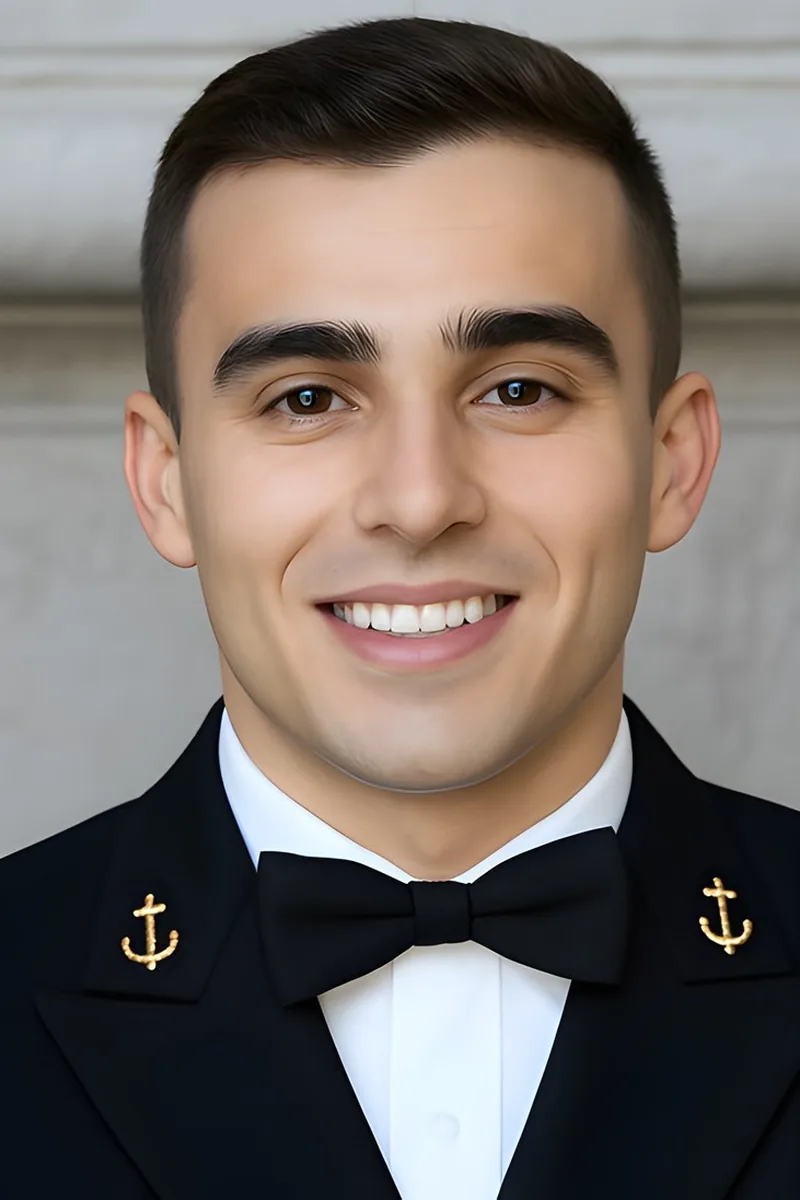
Let me tell you a little bit about myself. I have a Bachelors degree and two Masters degrees in Mathematics from the United States Naval Academy, the University of Pennsylvania, and the University of Georgia. All of my degrees were earned with at least a 3.9 GPA and I earned the honor of being named the top math major from my undergraduate institution when I graduated. I have also had the pleasure of teaching mathematics at two different colleges and started tutoring math and physics over 20 years ago. Please allow me to accompany you on the exciting journey of exploration into math and physics!
College-level physics ramps up fast, especially when courses introduce calculus-based mechanics or electromagnetism for the first time. Charles works through these topics as part of his mechanical engineering curriculum at Yale, so he can walk through derivations of torque, moment of inertia, or Gauss's law with the fluency of someone who applies them in lab and design projects regularly.
Three science-focused bachelor's degrees — including biology — meant Garrett sat through the full calculus-based physics sequence and kept coming back to it in physiology and physical chemistry, where concepts like fluid dynamics, pressure gradients, and energy transfer show up again and again. That repeated exposure across disciplines gives him an intuitive feel for when to apply conservation of energy versus momentum, or how to reason through a thermodynamics problem without getting lost in the formalism. His 1530 SAT speaks to the quantitative sharpness he brings to each session.
A chemistry degree from Yale means Zosia spent years in courses where physics does the heavy lifting — thermodynamics driving reaction spontaneity, quantum mechanics explaining atomic structure, electrostatics governing molecular interactions — so she knows these concepts from the inside out. She's particularly effective at teaching students to translate word-heavy problem statements into clean free-body diagrams or energy bar charts before touching an equation. Rated 4.9 by students.
Thermodynamics is where Rahul lights up — it was his favorite corner of Cornell's chemical engineering program, and that enthusiasm shows when he's walking someone through heat engines, entropy, or the first and second laws in a college physics context. His engineering training means he treats every problem as a physical system first and an equation second, pushing for the conceptual reasoning behind each step rather than formula-matching. Rated 4.9 by students.
Pursuing an MD at Stanford after a double major in economics and molecular/cellular biology, Maggie brings a pre-med perspective to college physics that makes topics like optics, fluid dynamics, and wave mechanics feel immediately relevant rather than abstract. She's especially sharp at teaching students to set up problems cleanly — translating a physical scenario into the right free-body diagram or energy equation before doing any math. Rated 5.0 by students.
Biomedical engineering at Yale means Ellie applies physics daily — from fluid dynamics in circulatory models to electromagnetic principles in medical imaging. She breaks down topics like torque, wave optics, and circuit analysis by connecting them to real systems she encounters in her coursework and research. Rated 5.0 by students.
Theater might not scream physics, but Amber's breadth across math and science tutoring — from calculus to chemistry to AP-level coursework — means she's comfortable with the quantitative reasoning that college physics demands, and her 5.0 rating confirms students agree. She's particularly effective at teaching the problem-setup habits that separate students who flounder from those who don't: sketching free-body diagrams, identifying conservation laws, and translating word problems into equations before plugging in numbers. Her ACT 35 reflects the kind of cross-disciplinary sharpness that keeps pace with fast-moving, concept-dense courses.
Studying computer science and applied math at Harvard means Derek uses physics constantly — from electromagnetism in circuit design to mechanics in computational modeling. He tackles college-level topics like Lagrangian dynamics and wave equations by connecting the math to physical intuition, making dense derivations feel less abstract.
Biomedical engineering at Johns Hopkins means Christine solves physics problems daily that most students only see in textbooks — fluid dynamics in blood flow, pressure gradients across membranes, mechanics of prosthetic joints — giving her a concrete, application-heavy lens for the material. She's particularly strong on the thermodynamics and mechanics portions of college physics, where her coursework overlaps most directly with standard problem sets. Holds a 5.0 rating.
Having served as a teaching assistant for Differential Equations and Mechanics at Notre Dame, Jeffrey has already spent time explaining the exact concepts — torque, oscillations, coupled systems — that trip up students in university physics courses. His mechanical engineering PhD work at Rice deepens that fluency, especially in thermodynamics and rotational dynamics where the math gets dense fast. He's rated 4.9 by students.
Molecular biology might seem like a different world from physics, but Agustin's coursework lives in the overlap — diffusion equations, fluid dynamics in cellular transport, and the thermodynamics behind protein folding all demand real physics fluency. He pairs that life-sciences perspective with strong quantitative chops (1560 SAT) to break down mechanics and energy problems in ways that click for students who think more naturally in biological terms than abstract force diagrams.
Environmental engineering is essentially physics with consequences — Kate's master's work required her to model fluid flow, heat transfer, and pressure systems in real infrastructure, which means she's solved the same types of problems that show up on college physics exams but with actual design constraints attached. That applied perspective makes her particularly effective at teaching students to set up force balances and energy equations from a physical scenario rather than reverse-engineering from a formula sheet. Rated 4.9 by students.
Testimonials
Because the right College Physics tutor makes all the difference.
Average Session Rating – Based on 3.4M Learner Ratings
Nearby College Physics Tutors
Other Baton Rouge Tutors
Related Science Tutors in Baton Rouge
Frequently Asked Questions
College Physics students often struggle with translating theoretical concepts into practical problem-solving, especially when it comes to applying Newton's laws, energy conservation, and electromagnetic principles to real-world scenarios. Many students find that memorizing formulas isn't enough—they need to understand the underlying physics principles and develop strong visualization skills for abstract concepts like forces, fields, and motion. Additionally, mastering unit conversions and dimensional analysis, combined with the mathematical rigor required for calculus-based physics, can be overwhelming without targeted support.
Personalized 1-on-1 instruction allows tutors to identify exactly where your conceptual gaps are and build understanding from the ground up, rather than having you memorize disconnected formulas. Expert tutors use visualization techniques, real-world applications, and guided problem-solving to help you see how physics principles connect—whether you're analyzing motion, energy transfer, or wave behavior. This deeper understanding makes it easier to tackle unfamiliar problems on exams because you're applying concepts, not just recalling procedures.
Yes—tutors can help you understand the scientific method behind your lab experiments, interpret data, and connect your observations back to the theoretical physics you're learning in lecture. Whether you're struggling with error analysis, graphing results, or writing lab reports that explain what your data means, personalized instruction helps you develop the scientific reasoning skills that make labs meaningful rather than just procedural exercises. This support strengthens both your experimental skills and your conceptual understanding of the physics involved.
During your first session, a tutor will assess your current understanding of key physics concepts, identify specific areas where you're struggling (whether that's kinematics, thermodynamics, or something else), and learn about your course goals and timeline. From there, you'll work together to create a personalized plan that targets your needs—whether that's rebuilding foundational concepts, mastering problem-solving techniques, or preparing for exams. This initial conversation ensures that your tutoring is tailored to your unique situation rather than following a generic approach.
Varsity Tutors connects you with expert tutors in Baton Rouge who have deep knowledge of College Physics and experience helping students master both conceptual understanding and problem-solving skills. You can specify your needs—whether you're taking algebra-based or calculus-based physics, preparing for a specific exam, or working on particular topics—and get matched with a tutor whose expertise aligns with your goals. The matching process ensures you're working with someone who understands the College Physics curriculum and can explain concepts in a way that clicks for you.
Expert tutors teach you a systematic approach to physics problems—starting with identifying what you know, drawing diagrams to visualize the situation, choosing the right concepts and equations, and checking whether your answer makes sense. Rather than showing you the solution, tutors guide you through the thinking process so you develop the reasoning skills to tackle unfamiliar problems independently. This approach builds confidence and helps you see that physics problem-solving is about applying principles logically, not memorizing specific problem types.
Absolutely—tutors can help you review key concepts, practice problems from previous exams, identify your weak areas, and develop test-taking strategies specific to physics. Whether you're preparing for a midterm, final, or standardized test like AP Physics, personalized instruction allows tutors to focus on the topics that will have the biggest impact on your score and help you manage time effectively during the exam. Many students find that targeted exam prep with a tutor significantly improves both their understanding and their performance.
Tutors support students across the full College Physics curriculum, including mechanics (kinematics, forces, energy, momentum), waves and sound, thermodynamics, electricity and magnetism, and modern physics. They also help with the mathematical tools you need—calculus applications, vector analysis, and unit conversions—so you can apply these concepts confidently. Whether you're in an introductory algebra-based course or a more advanced calculus-based sequence, tutors can target the specific topics where you need the most support.
Let’s find your perfect tutor
Answer a few quick questions. We’ll recommend the right plan and match you with a top 5% tutor.