Award-Winning High School Chemistry Tutors
serving Baton Rouge, LA
High School Chemistry
Tutors in Baton Rouge
Private 1-on-1 tutoring, weekly live classes for academic support, test prep & enrichment, practice tests and diagnostics, and more to elevate grades and test scores.
Based on 3.4M Learner Ratings
UniversitiesSchools & Universities
DeliveredHours Delivered
ProficiencyGrowth in Proficiency
Who needs tutoring?
No obligation. Takes ~1 minute.
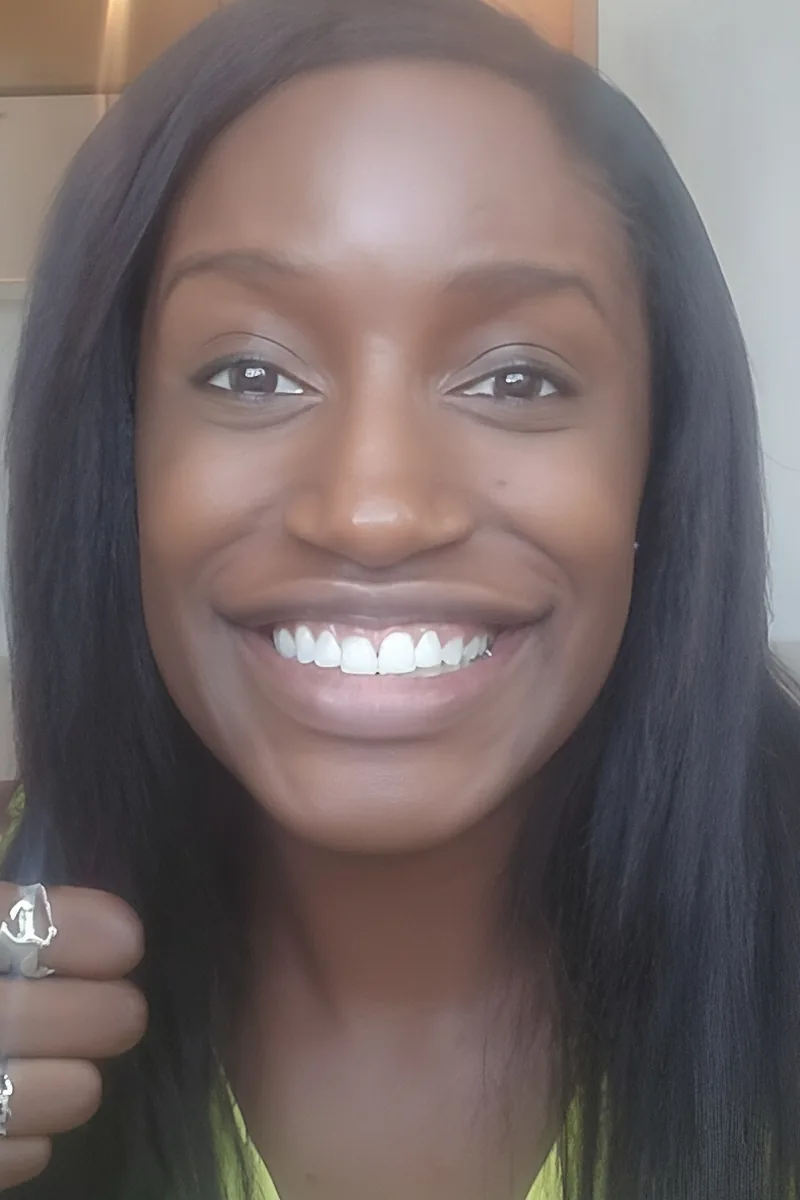
Working at UPenn's Tutoring Center, Brittany spent semesters teaching General Chemistry I and II to both undergraduate and graduate students — so she's diagnosed the exact points where topics like stoichiometry, gas laws, and chemical equilibrium tend to fall apart for learners at different levels. That hands-on repetition with real students means she can spot whether a high schooler's confusion stems from the math, the conceptual model, or just shaky notation, and adjust accordingly.

Balancing equations and stoichiometry are mechanical once you see the logic, but topics like equilibrium, thermodynamics, and acid-base chemistry require real conceptual understanding. Annie tackles these through her engineering lens, connecting abstract chemical principles to tangible applications — like how reaction kinetics govern drug delivery systems she studies in her biomedical program at Cornell.
A chemistry major at Harvard who's heading to Columbia Medical School, James teaches high school chemistry with the kind of depth that makes concepts like stoichiometry and electron configurations click on a conceptual level — not just as formulas to memorize. He connects classroom topics to real-world applications in medicine and materials science, which tends to turn chemistry skeptics into students who actually enjoy the subject.
General chemistry was the first subject Alec taught as a TA at Cornell, running problem-solving sessions where students worked through stoichiometry, equilibrium, and acid-base reactions in real time. That hands-on teaching background means he knows exactly where high schoolers get tripped up — whether it's balancing redox equations or making sense of periodic trends. Rated 4.8 by students.
Cognitive studies at Vanderbilt might not scream chemistry, but Vy's science coursework and her 35 ACT mean she's no stranger to reasoning through problems involving moles, gas laws, or balancing equations. She's especially effective at teaching students how to read what a chemistry problem is really asking — a skill she honed tutoring algebra and science in under-resourced schools where clear, patient explanation wasn't optional.
Stoichiometry, equilibrium, and acid-base reactions make more sense when a student can see where they lead. Bidyut ties high school chemistry concepts to biomedical applications he's encountered at Johns Hopkins, turning mole calculations and reaction balancing into something more tangible than textbook exercises.
Premed neuroscience coursework at Rice put Aditi through rigorous chemistry sequences where concepts like equilibrium, stoichiometry, and thermodynamics weren't electives — they were prerequisites for everything that followed. She zeroes in on the periodic table as a predictive tool, teaching students to use trends in electronegativity and atomic radius to reason through bonding and reactivity questions rather than memorize isolated facts. Rated 4.8 by students.
Stoichiometry, equilibrium, and reaction kinetics stop being abstract once a student sees how they connect to each other — and Aimee teaches those connections explicitly. Her chemical and biomolecular engineering degree from Georgia Tech required mastering these concepts at a deep quantitative level, which means she can explain not just how to balance an equation but why the math works the way it does.
Balancing equations, mole conversions, and periodic trends are the building blocks of high school chemistry, and Camille tackles each one by teaching the underlying logic rather than handing students a formula sheet. Her pre-med background at Duke means she's fluent in the problem-solving style these courses demand. Rated 5.0 by students.
Balancing equations and predicting reaction products can feel like learning a foreign language, but Eric breaks inorganic chemistry concepts down into logical steps that build on each other. His science training across biology and ecology gives him a knack for connecting chemical principles — like bonding and stoichiometry — to real-world processes students can actually picture.
Running a middle school science department in Philadelphia meant John taught chemistry fundamentals daily — building up from atomic structure and the periodic table to chemical reactions and basic stoichiometry — and his role as curriculum chair forced him to think carefully about the sequence in which those ideas need to land. That classroom experience shows when he explains topics like balancing equations or classifying reaction types, because he's already mapped out where students typically get lost. Rated 5.0 by students.
Whether it's naming ionic compounds, predicting products of a reaction, or working through gas law calculations, Ravnoor zeroes in on the specific concept causing trouble and drills it with targeted practice problems. His 5.0 rating comes from a hands-on style that keeps sessions focused on doing chemistry, not just reading about it.
Testimonials
Because the right High School Chemistry tutor makes all the difference.
Average Session Rating – Based on 3.4M Learner Ratings
Nearby High School Chemistry Tutors
Other Baton Rouge Tutors
Related Science Tutors in Baton Rouge
Frequently Asked Questions
High school chemistry requires mastering both abstract concepts and practical skills—from balancing chemical equations to understanding molecular structures you can't see. Many students struggle with unit conversions, visualizing how atoms and molecules interact, and connecting theoretical concepts to real-world applications. Personalized tutoring helps students build a solid foundation in these areas, making the transition from concrete to abstract thinking much smoother.
Lab work is essential to chemistry—it's where students move from theory to hands-on scientific reasoning and observation. A tutor can help you understand the 'why' behind experiments, guide you through the scientific method, and connect lab results back to the concepts you're learning in class. This bridges the gap between memorizing formulas and truly understanding how chemistry works in the real world.
Balancing equations requires both pattern recognition and understanding stoichiometry—it's not just memorization. Students often get stuck because they're trying to memorize rather than understanding the underlying principle that atoms are conserved in reactions. A tutor can break down the systematic approach, help you visualize what's happening at the molecular level, and build your confidence through targeted practice.
Your first session is about understanding where you are and what you need. A tutor will assess your current understanding of key concepts, identify specific areas of struggle (whether it's equations, unit conversions, or conceptual gaps), and create a personalized plan tailored to your learning style. You'll leave with clarity on next steps and a sense of how tutoring can help you succeed in your chemistry course.
Understanding always wins over memorization in chemistry. When you understand the 'why' behind concepts—like how electron configurations relate to bonding or how energy drives reactions—formulas become tools instead of random symbols. Personalized tutoring emphasizes conceptual understanding, which means you'll retain information longer, apply it to new problems, and actually enjoy chemistry more than students who just memorize.
Baton Rouge schools follow Louisiana's science standards, which cover a comprehensive chemistry curriculum from atomic structure through organic chemistry. A tutor familiar with high school chemistry can align with your specific course pace and requirements, help you master challenging units before tests, and provide the one-on-one support that classroom instruction—with an average student-teacher ratio of 22.4:1—sometimes can't offer. This personalized approach helps you stay on track and build confidence throughout the year.
Unit conversions and stoichiometry are skills that improve with guided practice and clear explanations. Many students struggle because they're treating conversions as a memorization task rather than understanding dimensional analysis—a powerful problem-solving tool. A tutor can teach you the systematic approach, help you recognize patterns in different problem types, and build your confidence through targeted practice so these skills become second nature.
Look for tutors with strong chemistry backgrounds—ideally a degree in chemistry, biochemistry, or a related field, plus experience teaching or tutoring high school students. The best tutors can explain complex concepts clearly, connect theory to real-world applications, and help you develop scientific thinking skills, not just memorize facts. Varsity Tutors connects you with expert tutors who understand both the content and how to help students truly master chemistry.
Let’s find your perfect tutor
Answer a few quick questions. We’ll recommend the right plan and match you with a top 5% tutor.