Award-Winning Algebra Tutors
serving Baton Rouge, LA
Algebra
Tutors in Baton Rouge
Private 1-on-1 tutoring, weekly live classes for academic support, test prep & enrichment, practice tests and diagnostics, and more to elevate grades and test scores.
Based on 3.4M Learner Ratings
UniversitiesSchools & Universities
DeliveredHours Delivered
ProficiencyGrowth in Proficiency
Who needs tutoring?
No obligation. Takes ~1 minute.
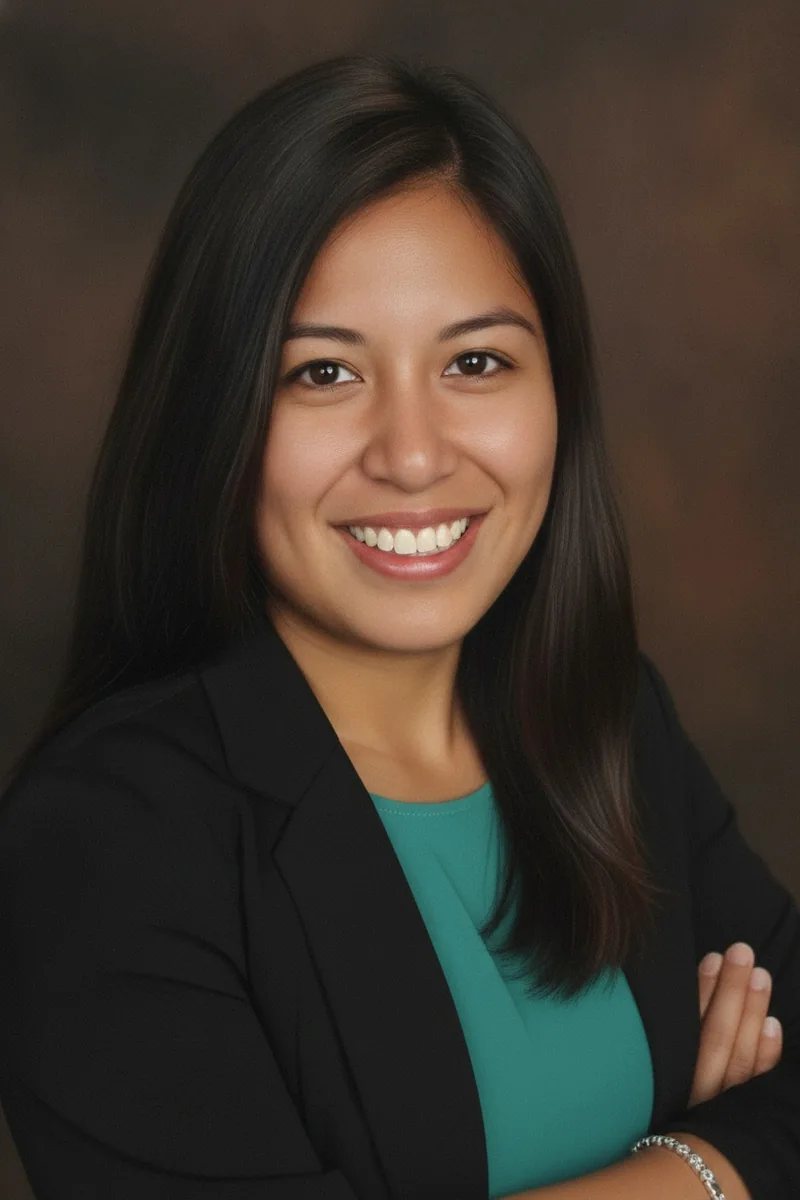
Factoring a quadratic or solving a system of equations becomes far less intimidating when a student understands *why* each step works, not just which buttons to press. Robin teaches algebra by connecting symbolic manipulation to number sense — so when a problem looks unfamiliar on a test, students have reasoning strategies instead of blank stares. She holds a 5.0 rating across her tutoring sessions.

Daniel lists algebra as one of his favorite subjects to teach, and his approach centers on a simple test: if a student can't explain a concept back clearly — why you flip the inequality sign when dividing by a negative, for instance — then it's not yet mastered. His finance studies keep him working with algebraic modeling regularly, from building out loan amortization formulas to solving for break-even points, so the techniques stay sharp and grounded in real applications.
I am an educator of the sciences. I have taught Life Science, Biology, Physical and Earth Sciences for fourteen years in grades 7-12. I trained with the Keystone Science School of Denver, Colorado, the LSU Coastal Roots Program and have earned over six hundred hours in science literacy training in many areas. Science has a very strong mathematical component and that is why I also specialize in Math tutoring.
My life's work has been and continues to be assisting students in building confidence while exploring the wonders of language and mathematics. Whether it be Algebra, ACT preparation, or English for non-native speakers, I have enjoyed my 20+ years working with students both in the U.S. and abroad (China & India). I have tutored students as young as Pre-K, but most of my experience lies with high school, university & adult students. For those seeking assistance with the ACT, I have several years of experience tutoring all subjects - content & strategies. With the changes in the ACT last year (science optional, shorter subject tests with differing times), I decided to take the new Enhanced ACT with hundreds of high school students to gain first-hand experience with how the alterations might affect test strategy and gauge any changes in content. My split focus affected the science score most (:D), but I look forward to sharing my newly gained insights with my students.
Let me tell you a little bit about myself. I have a Bachelors degree and two Masters degrees in Mathematics from the United States Naval Academy, the University of Pennsylvania, and the University of Georgia. All of my degrees were earned with at least a 3.9 GPA and I earned the honor of being named the top math major from my undergraduate institution when I graduated. I have also had the pleasure of teaching mathematics at two different colleges and started tutoring math and physics over 20 years ago. Please allow me to accompany you on the exciting journey of exploration into math and physics!
I am a dedicated tutor with a genuine passion for helping students to improve their grades and fall in love with learning. I believe that every student has the potential to succeed, and my greatest joy comes from helping them discover their own strength and confidence. I am here to provide a supportive, patient, and encouraging space for growth.
Most algebra frustration comes not from the new material itself but from shaky pre-algebra skills underneath it — and Liz, having taught middle schoolers for years, can spot those gaps fast. She zeroes in on the specific operation or concept causing the breakdown, whether it's distributing negatives, solving multi-step equations, or graphing linear functions, and rebuilds from there.
A lot of algebra clicks once a student sees the logic underneath the rules instead of just memorizing steps for solving equations. Sydny zeroes in on building that kind of reasoning, whether the topic is factoring polynomials, manipulating inequalities, or translating word problems into expressions that actually make sense.
When a student stares at a system of equations and sees only letters, Mimi reframes the problem visually — graphing lines, sketching relationships, making the algebra represent something real. Her Dartmouth and Harvard training in learner-centered education means she adapts her explanations to match how each student processes abstract reasoning.
Renee treats algebra as a language with its own grammar — variables, expressions, and equations follow rules that make sense once you see the underlying logic. Her background in linguistics and literary analysis gives her a knack for translating abstract notation into plain, intuitive explanations of topics like systems of equations and polynomial operations.
Most algebra struggles trace back to one thing: students learn to mimic steps without grasping what an equation actually represents. Isabella tackles that head-on, connecting ideas like systems of equations and quadratic functions to the logical structure underneath them. Her MIT math background and experience teaching gifted middle and high school students mean she can adjust her explanations on the fly — from concrete examples to abstract reasoning — depending on what a student needs.
Most Algebra struggles come down to one thing: students learn procedures without understanding what the symbols represent. Ingrid unpacks expressions, factoring, and systems of equations by making each step transparent — showing, for instance, why distributing actually works rather than just drilling FOIL. Her 1540 SAT score speaks to the kind of mathematical precision she brings to every session.
Before students can tackle engineering-level math, they need algebra to feel automatic — manipulating expressions, solving systems, and reasoning about functions without second-guessing each step. Jai breaks down these mechanics clearly, drawing on the rigorous mathematical training he built at Stanford's EECS program.
When a student stares at a system of equations and doesn't know where to start, the issue is usually not the procedure — it's not seeing what the equation represents. Daniel teaches algebra by making each manipulation visual and logical, whether that's graphing lines to understand slope-intercept form or unpacking what factoring actually does to a quadratic.
When variables start representing real situations — mixture problems, rate-of-change scenarios, systems with multiple unknowns — algebra stops feeling like symbol manipulation and starts requiring actual reasoning. Lauren zeroes in on that transition, building the kind of algebraic thinking that carries into higher math rather than falling apart at the next level.
A lot of algebra struggles come down to one thing: students learn steps without understanding what the symbols actually represent. Shayan tackles that head-on, using concrete scenarios to make variables, systems of equations, and inequalities feel like tools for solving real problems rather than abstract exercises. Rated 5.0 by students.
A magna cum laude Duke graduate and full-time educator, Frances teaches algebra by connecting abstract expressions to concrete reasoning — the same skill set her psychology training sharpened. She's particularly effective at walking through word problems and translating real-world scenarios into equations, where many students stall out.
A PhD in Computational Mathematics from the University of Chicago means Justin doesn't just teach algebra — he built an entire research career on top of it, from image processing algorithms to climate models that start with the same variable manipulation and equation-solving students encounter in class. He's especially good at unpacking why a technique like completing the square or distributing across parentheses works mechanically, drawing on the physicist's habit of never accepting a step without understanding the logic underneath. Rated 5.0 by students.
Testimonials
Because the right Algebra tutor makes all the difference.
Average Session Rating – Based on 3.4M Learner Ratings
Practice Algebra
Free practice tests, flashcards, and AI tutoring for Algebra
Nearby Algebra Tutors
Other Baton Rouge Tutors
Related Math Tutors in Baton Rouge
Frequently Asked Questions
Many students struggle with the transition from arithmetic to abstract thinking—understanding why we use variables and how to manipulate equations conceptually, not just mechanically. Word problems are another frequent challenge, as they require translating real-world scenarios into algebraic expressions. Multi-step equations, graphing, and understanding how different representations (equations, graphs, tables) connect often trip up students who've learned procedures without seeing the underlying patterns.
The first session focuses on understanding where you are right now. A tutor will work through a few algebra problems with you to identify specific gaps—whether it's foundational skills, conceptual misunderstandings, or just needing practice with certain problem types. From there, the tutor creates a personalized plan that targets your needs and builds toward your goals, whether that's improving your grade, preparing for a test, or finally understanding the concepts that have felt confusing.
Showing work isn't just about getting credit—it reveals your thinking process and makes it easier to catch mistakes. Tutors help you see that each step in an equation has a reason, and by writing it down, you're actually reinforcing the logic of algebra. When a tutor can see your work, they can pinpoint exactly where a misunderstanding happened, rather than just knowing the final answer is wrong. This approach builds real problem-solving skills that transfer to harder material.
Word problems require breaking down language into mathematical steps—something many students find overwhelming. Tutors teach a structured approach: identifying what you know, what you're looking for, and which operations or equations fit the situation. With practice and guided examples, students learn to recognize patterns in word problems and develop confidence in translating real-world scenarios into algebra. This skill becomes essential as math gets more advanced.
Yes. With 25 school districts across the Baton Rouge area, students use different curricula and teaching approaches. Tutors are experienced working with various textbooks and methods, so they can support you whether your class emphasizes graphing-first approaches, equation-solving, or conceptual frameworks. They'll align with what your teacher is doing while filling in gaps and reinforcing understanding in ways that make sense to you.
Absolutely. Math anxiety often comes from past negative experiences or feeling lost without understanding why. Personalized tutoring removes the pressure of a classroom setting and lets you work at your own pace, asking questions freely without judgment. As you start understanding concepts that previously felt impossible, confidence naturally builds. Many students find that one-on-one instruction transforms their relationship with math from frustration to competence.
Algebra is fundamentally about recognizing patterns—in sequences, equations, and how variables relate to each other. Tutors help you move beyond memorizing procedures to understanding the 'why' behind them. By exploring multiple representations (equations, graphs, tables, real-world contexts), you start seeing how the same relationship appears in different forms. This deeper understanding makes new topics easier to learn and helps you retain what you've learned longer.
Graphing requires connecting abstract equations to visual representations—a skill that doesn't come naturally to everyone. Tutors break this down step-by-step: plotting points, understanding slope, recognizing how changes to an equation shift a graph. With visual examples and hands-on practice, students develop intuition for how equations and graphs relate. This foundation is crucial since graphing appears throughout algebra and beyond.
Let’s find your perfect tutor
Answer a few quick questions. We’ll recommend the right plan and match you with a top 5% tutor.