Award-Winning Middle School Math Tutors
serving Baton Rouge, LA
Middle School Math
Tutors in Baton Rouge
Private 1-on-1 tutoring, weekly live classes for academic support, test prep & enrichment, practice tests and diagnostics, and more to elevate grades and test scores.
Based on 3.4M Learner Ratings
UniversitiesSchools & Universities
DeliveredHours Delivered
ProficiencyGrowth in Proficiency
Who needs tutoring?
No obligation. Takes ~1 minute.
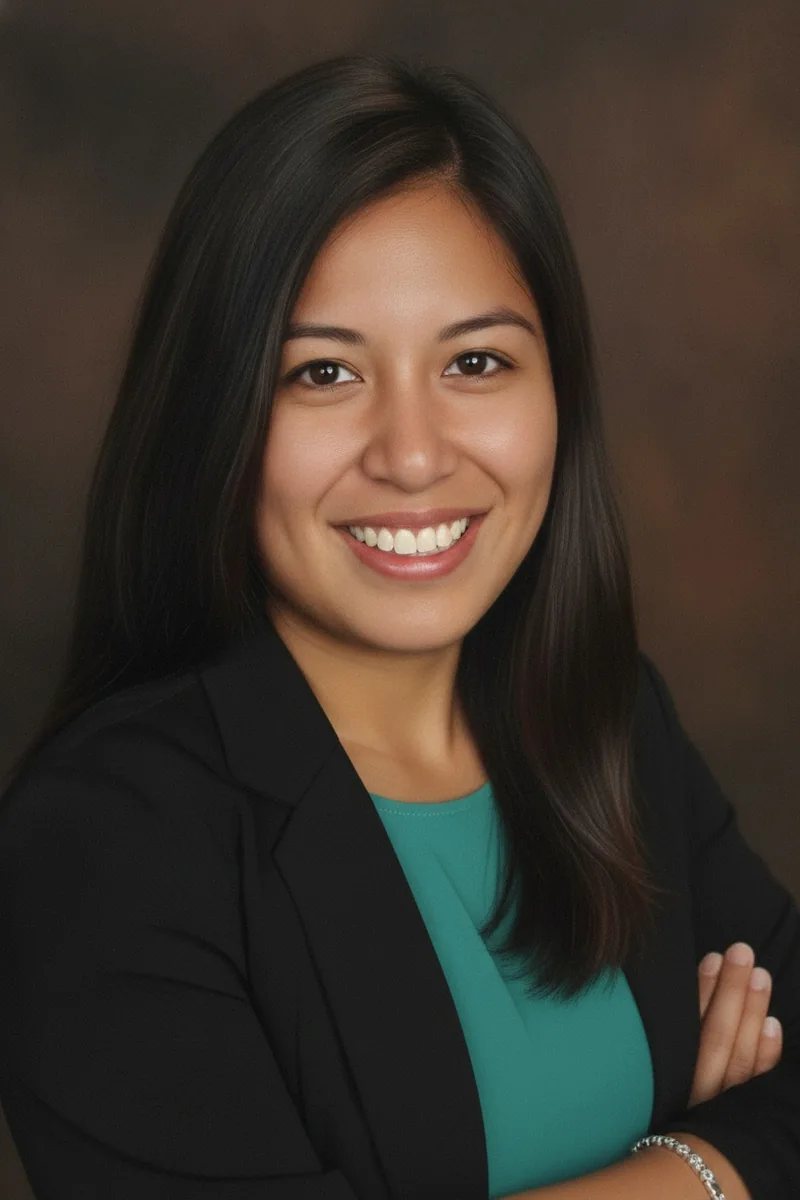
Robin's biology and medical training means she's spent years converting formulas, dosage calculations, and lab measurements into real answers — so when a middle schooler is stuck on ratios, decimals, or setting up a basic equation, she can pull from actual scenarios where getting the math right genuinely matters. Her 5.0 rating speaks to a teaching style that keeps students engaged rather than overwhelmed. She's particularly effective at bridging the gap between number-crunching and the more abstract variable work that's right around the corner in algebra.
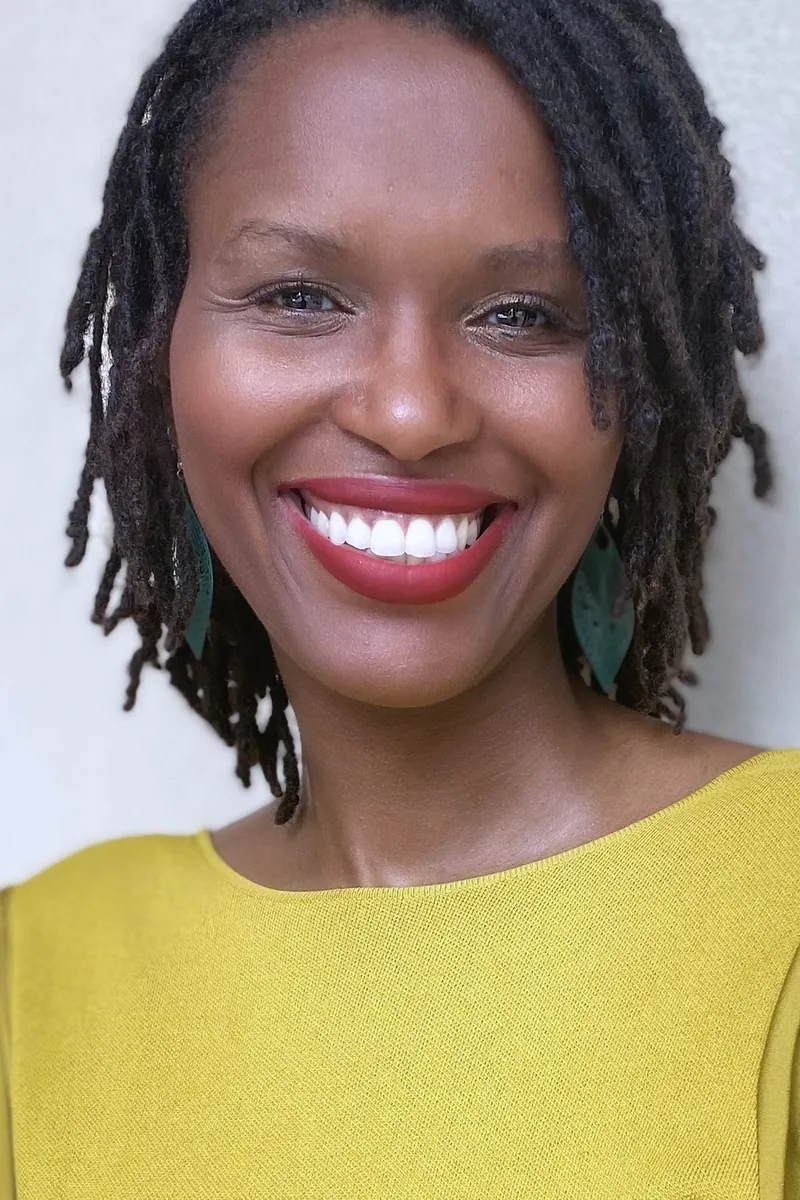
I am an educator of the sciences. I have taught Life Science, Biology, Physical and Earth Sciences for fourteen years in grades 7-12. I trained with the Keystone Science School of Denver, Colorado, the LSU Coastal Roots Program and have earned over six hundred hours in science literacy training in many areas. Science has a very strong mathematical component and that is why I also specialize in Math tutoring.
As a dedicated tutor with over 5 years of experience, I hold a Bachelor's degree in Psychology and Sociology from Tulane University, which informs my approach to understanding student needs. I specialize in subjects such as Algebra, Psychology, and American History, and I am passionate about fostering a supportive learning environment where students can thrive. My teaching philosophy centers on building strong relationships with my students, using tailored strategies that cater to their unique learning styles. I find great joy in helping students develop their executive functioning skills and confidence, enabling them to achieve academic success. Outside of tutoring, I enjoy reading and exploring new educational resources, which keeps my methods fresh and engaging.
Princeton's Mechanical and Aerospace Engineering program threw Matthew into calculus and physics from day one, but he traces his math instincts back to the fundamentals — integer operations, fraction reasoning, and the algebraic thinking that middle schoolers are just starting to wrestle with. His tutoring method is hands-on: he walks through a problem step by step, then puts a harder one in front of the student and lets their questions drive the next explanation. A 34 ACT composite backs up the depth of his mathematical fluency.
The jump from fifth-grade math to pre-algebra and early geometry catches many middle schoolers off guard, especially when proportional reasoning and negative numbers enter the picture. Asta tackles these transitional concepts by connecting them to patterns students already recognize, making ratios, percents, and coordinate graphing feel less abstract. She holds a 5.0 client rating.
Every concept in middle school math — ratios, proportional reasoning, negative numbers, basic geometry — becomes a building block for high school. Tracy pinpoints exactly which block is wobbly before stacking more on top, whether that means revisiting fraction operations or pushing ahead into linear equations. She's been tutoring students at this level since she was in middle school herself, so she understands where confusion typically hides.
Kerry's productivity coaching business is built on executive functioning — breaking big tasks into steps, managing attention, staying motivated through frustration — which is exactly what middle schoolers need when math shifts from straightforward arithmetic into multi-step problems with integers and basic variables. Her psychology training at Cornell and William James College also means she recognizes when test anxiety or attention difficulties are the real barrier, not the math itself. That combination of academic coaching and psychological insight makes her especially effective with students who have the ability but can't seem to show it on paper.
A year as a course assistant in Harvard's math department — teaching introductory calculus to undergraduates — gave Richard an unusual vantage point on middle school math: he knows exactly which arithmetic and pre-algebraic habits (especially around fractions, negative numbers, and variable expressions) need to be rock-solid before higher math stops making sense. He scored a 36 ACT and 1600 SAT, but more relevantly, he's spent time volunteering to teach a weekly course to middle schoolers through Harvard's Leadership Institute, so he's comfortable matching his explanations to how younger students actually think.
At the middle school level, math starts asking students to think abstractly for the first time — proportional reasoning, negative numbers, introductory geometry, and basic equation solving. Brian brings a calm, structured style to these topics, breaking each problem into small logical steps so younger students build genuine confidence instead of just copying procedures.
Scoring a 35 ACT and 1570 SAT means Amber has the quantitative chops to teach middle school math cold, but her theater background is what makes her especially effective — she knows how to read an audience, adjust on the fly, and make a concept land. She zeroes in on the specific spot where a student's understanding breaks down, whether that's negative number operations or setting up basic equations, and rebuilds from there. Rated 5.0 by students.
The middle school math years pile on topics fast — ratios, proportions, integer operations, basic equation solving — and gaps from one unit snowball into the next. Noah identifies exactly where a student's understanding breaks down and rebuilds from that point, keeping lessons tied to concrete examples before moving to abstraction. His 5.0 client rating speaks to how well that targeted approach works.
A year as a teaching assistant for introductory science courses at Cornell gave Annie practice explaining foundational concepts to students encountering them for the first time. She applies that same patience to middle school math topics like fractions, ratios, proportions, and early equation-solving, building the numerical reasoning skills that make algebra feel approachable when it arrives.
From fractions and ratios to early equation-solving, middle school math covers a huge range of concepts in a short time, and gaps at this stage tend to snowball. Ema has spent years tutoring students in this exact age group, breaking down each topic with real-world examples that make abstract ideas click. Her 5.0 rating speaks to how well that approach lands with younger learners.
Getting a PhD in Education at Harvard means Reid studies how learning actually works — and he brings that lens to the specific moment middle schoolers start struggling with the jump from straightforward arithmetic into algebraic thinking, variables, and multi-step problem solving. His sociology background also gives him a knack for turning word problems into stories that make sense, since he's trained to see patterns in how people and systems behave. With a 32 ACT and years teaching across math and humanities, he's comfortable switching between number sense and the verbal reasoning that word-heavy math problems demand.
Fractions, proportions, and integer operations tend to be the concepts where middle schoolers either build real momentum or start falling behind. Rachel breaks these topics into concrete steps and connects them to everyday reasoning — the kind of approach that makes pre-algebra and geometry concepts click rather than feel arbitrary. Her background in study skills and organization also means she tackles the homework-and-test-prep habits that matter just as much as the math itself.
Testimonials
Because the right Middle School Math tutor makes all the difference.
Average Session Rating – Based on 3.4M Learner Ratings
Nearby Middle School Math Tutors
Other Baton Rouge Tutors
Related Math Tutors in Baton Rouge
Frequently Asked Questions
Varsity Tutors connects you with expert tutors in Baton Rouge who specialize in middle school math. You can search by subject and location, and we'll match you with tutors who understand the specific curriculum and challenges your student faces. The process is straightforward—once matched, you can discuss your student's needs and schedule personalized 1-on-1 instruction that fits your family's schedule.
Middle school math introduces bigger conceptual jumps—students transition from basic arithmetic to understanding why mathematical rules work, not just how to apply them. Common struggles include multi-step equations, word problems that require strategic thinking, graphing and coordinate systems, and early geometry proofs. Many students also experience math anxiety during this transition, which can hold them back even when they have the ability to succeed.
Showing work helps students develop problem-solving strategies and reveals where misunderstandings happen—a tutor can spot whether a student is making a calculation error or struggling with the underlying concept. When students explain their reasoning step-by-step, they build stronger connections between procedures and the math concepts behind them. Tutors work with students to develop clear, organized approaches to problems, which builds both accuracy and confidence.
Word problems require students to translate real-world scenarios into mathematical equations—a skill that doesn't always come naturally. Tutors teach students to break problems into manageable steps: identifying what you know, what you're solving for, and which operations or strategies apply. With personalized instruction, students learn to see patterns across different problem types and develop flexible problem-solving strategies rather than memorizing isolated techniques.
Yes. Baton Rouge has 25 school districts using different textbooks and approaches, and tutors connected through Varsity Tutors are familiar with these variations. When you connect with a tutor, you can share your student's specific curriculum, textbook, and learning goals. This ensures the tutoring directly supports what your student is learning in class and reinforces the methods their teacher is using.
Absolutely. Math anxiety often stems from feeling lost or unsupported when concepts don't click immediately—personalized 1-on-1 instruction creates a safe space where students can ask questions without judgment and work at their own pace. When tutors help students understand the 'why' behind procedures and celebrate small wins, confidence builds naturally. Many students discover they're more capable than they believed once they have someone explaining concepts in a way that makes sense to them.
Middle school math is really about recognizing that different topics connect—fractions relate to decimals and percentages, equations connect to graphing, and geometry builds on understanding relationships and patterns. Expert tutors help students see these connections by exploring multiple ways to solve problems and showing how concepts build on each other. This deeper understanding makes math feel less like isolated rules to memorize and more like a coherent system, which helps material stick and transfers to new problems.
The first session is typically a get-to-know-you conversation where the tutor learns about your student's strengths, challenges, learning style, and specific goals. The tutor may review recent assignments or assessments to understand where your student is struggling and what's working well. From there, you and the tutor can develop a personalized plan that targets your student's needs—whether that's building foundational skills, preparing for a test, or tackling a specific topic like graphing or equations.
Let’s find your perfect tutor
Answer a few quick questions. We’ll recommend the right plan and match you with a top 5% tutor.