Award-Winning Calculus Tutors
serving Baton Rouge, LA
Calculus
Tutors in Baton Rouge
Private 1-on-1 tutoring, weekly live classes for academic support, test prep & enrichment, practice tests and diagnostics, and more to elevate grades and test scores.
Based on 3.4M Learner Ratings
UniversitiesSchools & Universities
DeliveredHours Delivered
ProficiencyGrowth in Proficiency
Who needs tutoring?
No obligation. Takes ~1 minute.
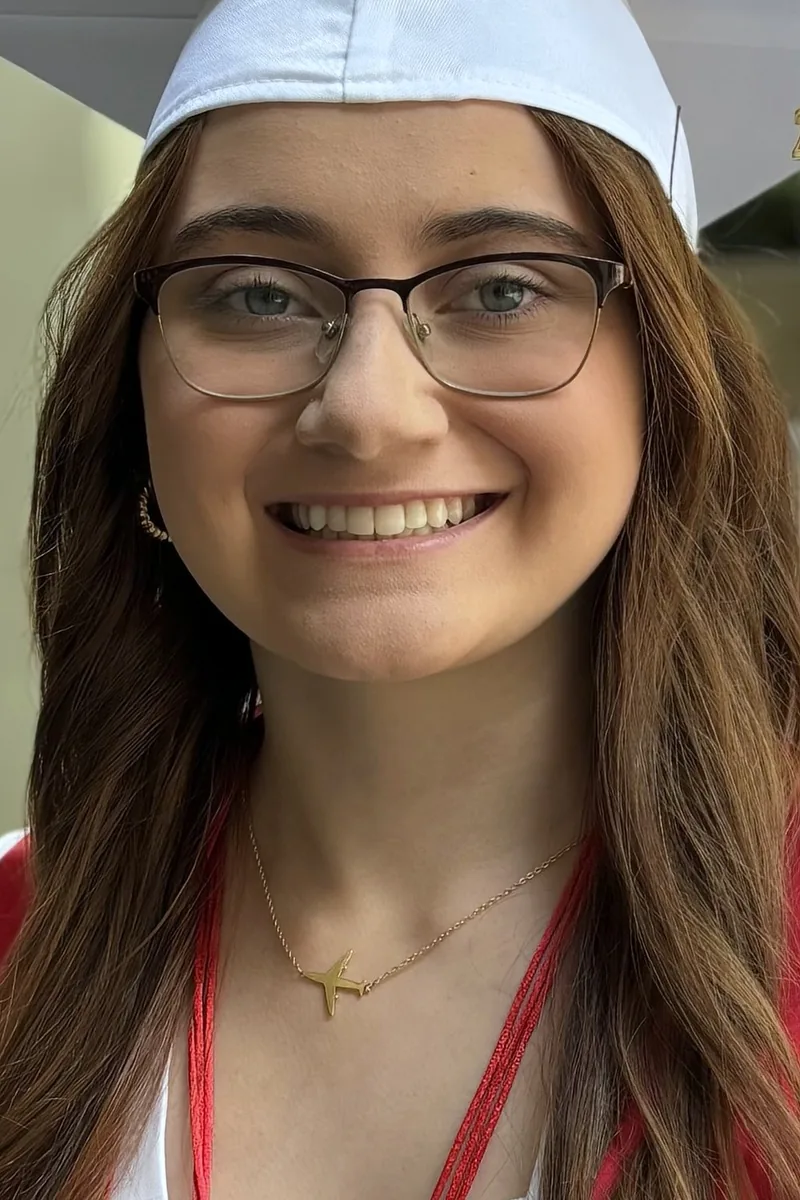
As a passionate tutor with over 2 years of experience, I am dedicated to helping students excel in subjects like AP Calculus, AP English, and ACT preparation. Currently pursuing my Bachelor's degree in Political Science at Louisiana Tech University, I integrate practical applications into my teaching, ensuring that students not only grasp concepts but also retain them. I believe in creating a supportive learning environment where students feel empowered to ask questions and deepen their understanding. My commitment to their success drives me to tailor my instruction to meet individual needs, making learning an enjoyable journey. In my spare time, I enjoy exploring aviation and delving into literature, both of which enhance my tutoring approach and foster meaningful connections with my students.
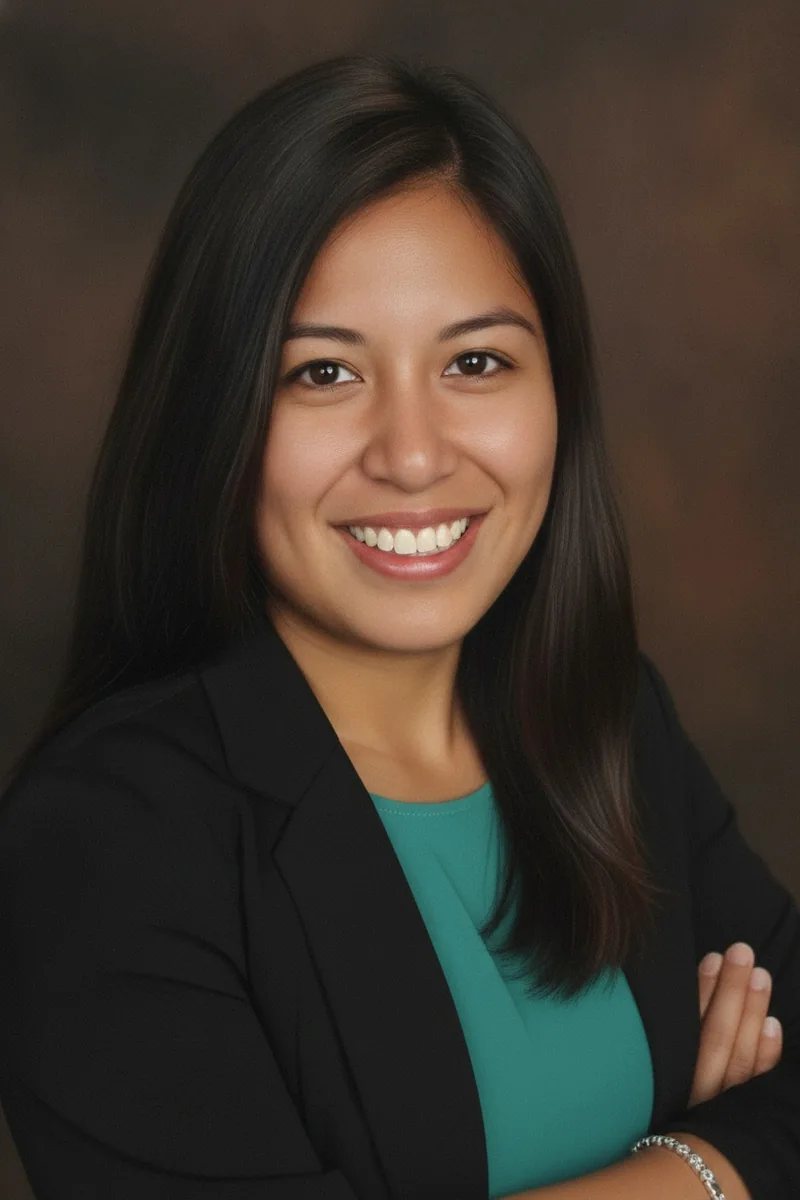
A biology and medical background might seem unusual for calculus, but Robin used differential equations and integration routinely in pharmacokinetics and physiological modeling during her medical training. She explains limits, derivatives, and integrals through real-world rate-of-change problems that give abstract notation a concrete purpose.
From the limit definition of a derivative through integration techniques like u-substitution and integration by parts, Calculus rewards students who understand the "why" behind each rule. Daniel's finance studies at the Freeman School of Business keep him applying derivatives and integrals to real optimization and accumulation problems weekly. He pushes students to explain each step back to him — a method that exposes shaky understanding before it shows up on an exam.
Let me tell you a little bit about myself. I have a Bachelors degree and two Masters degrees in Mathematics from the United States Naval Academy, the University of Pennsylvania, and the University of Georgia. All of my degrees were earned with at least a 3.9 GPA and I earned the honor of being named the top math major from my undergraduate institution when I graduated. I have also had the pleasure of teaching mathematics at two different colleges and started tutoring math and physics over 20 years ago. Please allow me to accompany you on the exciting journey of exploration into math and physics!
Mechanical engineering grad work is essentially applied calculus — Aaron uses derivatives to model thermal systems, integrals to analyze fluid flow, and differential equations to predict how structures respond to stress, every single day. That daily fluency means he can teach integration techniques or the chain rule by connecting them to problems where the math is doing real physical work. Rated 5.0 by students.
Keith's academic path runs through political science and law, not mathematics, so he's upfront that calculus is well outside his core expertise. His tutoring experience across multiple math levels means he can support students navigating early concepts like limits and basic derivatives, bringing the same structured, logical thinking that earned him a 1560 SAT and admission to Cornell Law.
Comparative literature at Princeton isn't a math degree, so Sash is straightforward that calculus sits outside his primary training. That said, a 1560 SAT demonstrates real quantitative ability, and his literary background — dissecting layered arguments, tracing how one idea builds on another — maps surprisingly well onto walking through the logic of limits and early derivative concepts where understanding the reasoning matters more than grinding through formulas.
Three BS degrees including one in Finance means Matt has worked through the calculus that underpins financial modeling — present value derivations, marginal cost optimization, and the continuous compounding formulas that rely on limits and exponentials. His 1530 SAT confirms the quantitative chops to back that up, and he teaches the material by connecting each rule to the business logic that makes it worth learning.
Three science degrees — including one in chemistry — mean Zosia has actually used calculus the way it was designed to be used: modeling reaction rates, solving kinetics problems, and interpreting how systems change over time. That applied fluency lets her teach derivatives and integrals as tools with purpose, connecting the mechanics of differentiation to the physical and chemical processes where they originate. Rated 4.9 by students.
Tackling limits, derivatives, and integrals requires building each concept on the last, and one shaky step can derail an entire semester. Kathy's quantitative training in economics at Duke kept her deep in applied calculus — optimization problems, rates of change, area under curves — and she teaches the reasoning behind each rule so students can handle problems they haven't seen before.
Limits, derivatives, and integrals all click faster when a student sees the underlying logic instead of just memorizing formulas. Brian studied math and economics at Caltech, where calculus wasn't just a course but the daily language of nearly every discipline — so he teaches it with an emphasis on why the chain rule or integration by parts works, not just when to apply it.
Economics relies heavily on derivatives and integrals — marginal cost, consumer surplus, optimization under constraints — so Simon didn't just study calculus, he applied it daily throughout his degree. He's especially sharp at explaining the logic behind limit definitions and the chain rule, the two places where most students first lose the thread. That application-heavy perspective turns calculus from symbol manipulation into something students can actually visualize.
Harvard's rigorous liberal arts curriculum gave Henry exposure to quantitative reasoning across disciplines, and his 1530 SAT confirms he can handle the math — but he's straightforward that calculus is a supporting subject rather than his wheelhouse. Where he adds value is in the conceptual scaffolding: unpacking what a derivative actually represents as a rate of change, or why the fundamental theorem ties two seemingly different operations together, using the same analytical precision he brought to his senior thesis work.
Art history and education aren't the usual path to calculus, and Mimi is straightforward about that — but her 1560 SAT demonstrates real quantitative strength, and her Masters in Education from Harvard means she knows how to design a learning sequence that actually builds understanding. She brings that inquiry-based instinct to early calculus, walking through what a derivative means conceptually before jumping to computation, so the rules feel like they follow logically rather than appearing out of nowhere.
Comparative literature trains you to hold multiple complex systems in your head simultaneously and trace how they interact — a skill that maps surprisingly well onto the conceptual side of early calculus, where understanding what a limit *means* matters more than grinding through computation. Jacob's 1550 SAT confirms strong quantitative chops, and his teaching background at UC Berkeley means he knows how to break down intimidating new notation for students encountering it for the first time.
Philosophy at Northwestern trained Emily to dissect complex arguments into their smallest logical steps — a skill that maps surprisingly well onto the sequential reasoning calculus demands, especially when unpacking what a limit definition actually says or why the chain rule works the way it does. Her legal career sharpened that precision further, since building a case and building a proof share the same demand: every step must follow inevitably from the last.
Testimonials
Because the right Calculus tutor makes all the difference.
Average Session Rating – Based on 3.4M Learner Ratings
Nearby Calculus Tutors
Other Baton Rouge Tutors
Related Math Tutors in Baton Rouge
Frequently Asked Questions
Many calculus students struggle with the shift from algebra and precalculus to conceptual thinking—especially understanding why derivatives and integrals work, not just how to compute them. Word problems, multi-step applications, and connecting graphical, algebraic, and numerical representations are frequent pain points. With Baton Rouge's average student-teacher ratio of 22.4:1, personalized 1-on-1 instruction can help you move past procedural memorization and develop the deeper understanding calculus demands.
Your first session focuses on understanding your specific needs—whether you're struggling with limits, derivatives, integrals, or applying calculus to real-world problems. A tutor will assess your current understanding, identify gaps in foundational concepts, and create a personalized plan tailored to your learning style and goals. This diagnostic approach ensures every session after that builds exactly what you need.
Expert tutors focus on building conceptual understanding by helping you see patterns, make connections between topics, and understand the 'why' behind formulas and rules. Through guided problem-solving and strategic questioning, tutoring helps you develop intuition about rates of change, accumulation, and optimization. This deeper grasp makes it easier to tackle unfamiliar problems and apply calculus in new contexts.
Word problems require you to translate real-world scenarios into mathematical language, identify what's being asked, and choose the right calculus tools—a multi-step process that trips up many students. Tutors break this down systematically: reading for meaning, sketching diagrams, setting up equations, and checking if your answer makes sense in context. With practice and feedback, you'll build confidence recognizing problem types and selecting appropriate strategies.
Yes. Calculus tutors are familiar with various curricula and textbooks used across Baton Rouge schools, whether you're using AP Calculus, IB Calculus, college-level courses, or specific textbook approaches. Tutors adapt their explanations and examples to match your course materials and teaching style, ensuring alignment with what your instructor expects while reinforcing core concepts.
Showing work is crucial in calculus—it demonstrates your reasoning, helps catch errors, and earns partial credit on exams. Tutors emphasize clear, organized problem-solving steps from the start, teaching you how to present solutions in a way that reflects your thinking. This habit not only improves grades but also reinforces your own understanding of each step in the process.
Absolutely. Math anxiety is common, and personalized tutoring creates a low-pressure environment where you can ask questions, make mistakes, and learn without judgment. By breaking calculus into manageable pieces, celebrating progress, and building competence through targeted practice, tutoring helps you shift from fear to confidence. Many students discover that understanding the concepts—rather than memorizing rules—makes calculus feel much less intimidating.
Varsity Tutors connects you with expert tutors who specialize in calculus and understand the specific needs of students in Baton Rouge. You'll work with a tutor whose expertise, teaching style, and availability align with your goals—whether you need help preparing for AP Calculus, passing a college course, or mastering specific topics. The matching process ensures you get personalized instruction from day one.
Let’s find your perfect tutor
Answer a few quick questions. We’ll recommend the right plan and match you with a top 5% tutor.