Award-Winning Physics Tutors
serving Lexington, KY
Physics
Tutors in Lexington
Private 1-on-1 tutoring, weekly live classes for academic support, test prep & enrichment, practice tests and diagnostics, and more to elevate grades and test scores.
Based on 3.4M Learner Ratings
UniversitiesSchools & Universities
DeliveredHours Delivered
ProficiencyGrowth in Proficiency
Who needs tutoring?
No obligation. Takes ~1 minute.
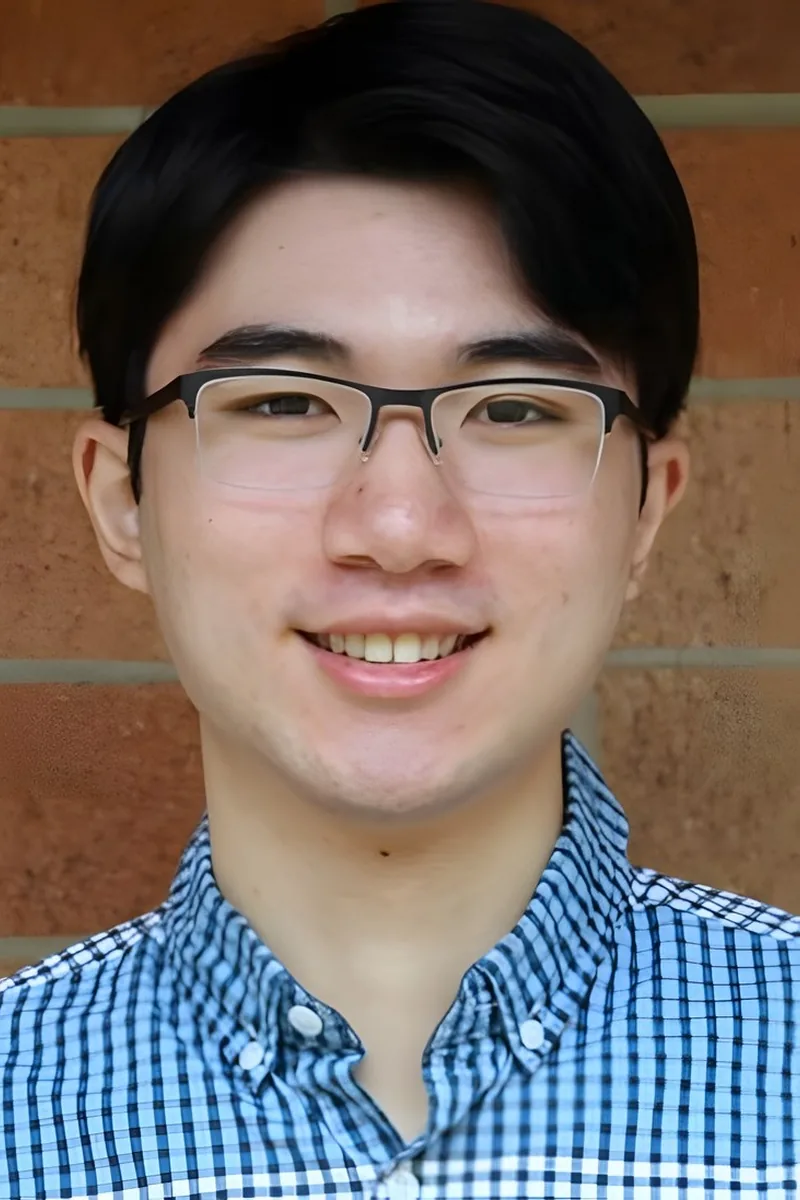
As a medical student who teaches organic chemistry recitation at the University of Kentucky, Jason regularly works at the intersection of physics and biology — understanding pressure gradients, fluid dynamics, and energy transfer in living systems. That cross-disciplinary instinct carries over when he tackles mechanics or thermodynamics problems, connecting the abstract math to concrete physical scenarios students can actually picture. Rated 5.0 by students.

Studying biochemistry at the University of Kentucky gave Jenna a working fluency with the physics that underpins molecular behavior — kinematics, forces, energy conservation, and wave mechanics all showed up in her coursework. She connects each concept to a concrete, visual scenario so that free-body diagrams and conservation equations start to feel intuitive rather than abstract.
Understanding physics means reading a real-world situation and translating it into the right equation — whether that's a free-body diagram for Newton's second law or an energy conservation setup. Logan teaches students to identify which principles apply before touching any math, which cuts through the confusion of plug-and-chug approaches. His 36 ACT composite reflects the same analytical precision he brings to problem-solving.
Biomedical engineering puts Matthew right in the thick of mechanics, wave behavior, and fluid dynamics every semester — these aren't distant prerequisites but tools he's actively using in coursework on things like biomechanical modeling and signal analysis. His 35 ACT composite reflects the kind of sharp quantitative reasoning that lets him break a messy multi-variable problem down to its core physical principle and build the solution from there.
I am no longer needed.
Hi, my name is Lawrence. I have been teaching physics and astronomy at the university level for over 20 years. I know how difficult learning physics can be. I emphasize the concepts first and then simplify the steps needed to find the correct solution to a problem. I am very patient and understanding. I am sure that I can help build you into a confident problem solver. I have experience teaching a culturally diverse student population as I have taught at several universities including the University of Alaska Anchorage and the University of Hawaii Hilo. Everyone can learn physics if they have the right work-ethic and are properly instructed. The most important key to succeeding is practice, practice, practice. You can do it! I have a PH.D. from the University of Alabama at Birmingham. My research was funded by a NASA PIDDP Grant and by the Alabama Space Grant Consortium. I have presented my research at the Lunar and Planetary Science Conference and my Dissertation "Mossbauer Spectroscopy of K-T Boundary Clays from North American and European Sites" was published in Meteoritics. Although, I loved research my dream was always to help educate students in physics which I have enjoyed doing for many years. With over 20 years' experience ,I can help you!
Graduating with a 4.0 in physics gave Mark deep fluency across the full spectrum — from Newtonian mechanics and electromagnetism through thermodynamics and into quantum theory and relativity, subjects he still teaches at advanced levels. When a student gets stuck on, say, a rotational dynamics problem, he traces the confusion back to whichever foundational idea isn't solid yet and rebuilds from there, so the fix actually lasts.
As a Yale physics major who also teaches thermodynamics, special relativity, and statics and dynamics, Ian has worked through the full arc from introductory mechanics to upper-division theory — so he knows exactly where each concept builds on the last and where students tend to lose the thread. He's particularly sharp at finding the analogy or reframing that makes a stubborn idea finally click, whether that's torque, wave superposition, or conservation laws in multi-body systems. His 1550 SAT speaks to the quantitative precision he brings to every problem.
A mechanical engineering degree from WashU means Caroline didn't just study physics — she applied it daily, from fluid dynamics to stress analysis. She teaches students to set up free-body diagrams and energy conservation problems by connecting the math to physical intuition, making kinematics and Newton's laws click rather than feel like formula hunts.
Studying mechanical engineering at Harvard means Christopher doesn't just remember physics — he's actively building on it every semester, from Newtonian mechanics and thermodynamics to electromagnetism and wave behavior. He breaks down complex problems by teaching students to draw clean free-body diagrams, identify which conservation law applies, and translate word problems into solvable equations. That systematic approach turns intimidating multi-step problems into manageable sequences.
Engineering students use physics every day, and Ava's dual degree in mechanical and energy engineering means she didn't just learn kinematics, Newton's laws, and energy conservation — she applied them to real systems. She TAed physics-related engineering courses at WashU and tutored high school physics students for several years, so she's comfortable adjusting her explanations whether someone is solving their first free-body diagram or wrestling with rotational dynamics.
Engineering is applied physics, which means Charles doesn't just remember the formulas for kinematics, energy conservation, or rotational dynamics — he uses them to solve design problems at Yale every week. That practical fluency lets him explain not just how to set up a free-body diagram but why each force matters and what happens when you change a variable. Rated across math and science subjects, he's especially sharp on real-world application problems.
Mechanical engineering grad school is essentially applied physics on repeat — Aaron solves statics, dynamics, thermodynamics, and fluid mechanics problems daily, so the concepts in introductory and AP-level courses are second nature rather than something he has to dust off. He's especially sharp at breaking down free-body diagrams and energy conservation setups, connecting the physical picture to the math so students see why an equation applies instead of guessing which one to use. Rated 5.0 by students.
Dennis doesn't just teach physics — he does it. His research at Princeton simulating cosmic ray acceleration at supernova shock fronts and his engineering work designing optical filters at Norfolk State mean he can connect textbook topics like kinematics, energy conservation, and wave behavior to real systems. That context turns abstract force diagrams and equations into something students can actually picture.
Kathleen's math background at Washington University gives her a natural advantage when teaching physics — she treats kinematics equations, force diagrams, and energy conservation as applied math problems rather than disconnected formulas. She digs into the specific step where a student gets stuck, whether that's setting up a free-body diagram or knowing when to apply Newton's second law versus conservation of momentum.
A Princeton-trained mechanical and aerospace engineer, Fred spent years solving physics problems that mattered — calculating drag forces on aircraft, modeling orbital mechanics, analyzing stress distributions in structural components. That depth lets him teach everything from Newtonian mechanics to electromagnetism with real intuition about what the equations describe physically. He unpacks the free-body diagrams, energy conservation setups, and vector decompositions that students struggle with most.
Benjamin's finance and economics training at Notre Dame runs on the same quantitative backbone that physics demands — modeling systems, isolating variables, and reasoning through multi-step problems where one misstep cascades. He brings a toolkit of computation shortcuts and pattern-recognition tricks to kinematics and energy problems that make the math faster and less error-prone. Holds a 5.0 rating from students.
Kinematics equations and free-body diagrams become far less intimidating once a student learns to read each problem as a physical story rather than a math puzzle. Garrett breaks problems into setup, diagram, and solve phases, teaching students a repeatable framework they can apply from Newton's laws through electromagnetism. His science and math background lets him bridge the conceptual reasoning and the calculations seamlessly.
Kruti's genetics and genomics training at Northwestern required working through biophysics problems — from modeling molecular forces to understanding energy states in cellular systems — so introductory mechanics and thermodynamics concepts aren't far from her daily thinking. As a medical student, she routinely applies fluid dynamics and pressure relationships in clinical contexts, which gives her concrete examples to anchor abstract physics ideas. She's especially effective at teaching students to map a word problem into a clear physical picture before reaching for any formula.
Testimonials
Because the right Physics tutor makes all the difference.
Average Session Rating – Based on 3.4M Learner Ratings
Practice Physics
Free practice tests, flashcards, and AI tutoring for Physics
Nearby Physics Tutors
Other Lexington Tutors
Related Science Tutors in Lexington
Frequently Asked Questions
Varsity Tutors matches Lexington students with expert Physics tutors for 1-on-1 instruction. We pair each student with a tutor based on their specific needs, learning style, and goals.
Whether you need homework help, exam prep, or want to get ahead, our Physics tutors are ready to help.
Common challenges include gaps from earlier material, difficulty with specific concepts, and trouble applying learning to new problems. These issues can snowball quickly in Physics.
A tutor identifies where you're stuck, fills in gaps, and provides targeted practice. The 1-on-1 format means you get help exactly where you need it.
Tutors work with your student's actual coursework—homework assignments, class notes, and upcoming tests. This keeps tutoring directly relevant to what's happening in the classroom.
When you share information about your student's school and curriculum, we can match you with a tutor who has relevant experience.
All tutors complete background checks, credential verification, and teaching evaluation. Many of our Physics tutors hold advanced degrees or have years of teaching experience.
You can review tutor profiles to find someone with the right background for your student's level and needs.
Many students see improved grades within a few weeks, along with better understanding of Physics concepts and more confidence tackling challenging material.
Tutors track progress and adjust their approach to ensure continued improvement.
Most students benefit from 1-2 sessions per week. More frequent sessions help if your student is significantly behind or has an important exam coming up.
Your tutor can recommend a schedule based on your student's specific situation and goals.
Tutoring is purchased in packages of hours, with rates varying by tutor experience. Varsity Tutors offers several options to fit different budgets and needs.
You can discuss pricing during your consultation to find what works best.
Your tutor will assess where your student is, discuss goals, and start working on priority areas. Most students bring current homework or upcoming test material to focus on.
By the end, you'll have a clear sense of how the tutor can help and a plan for moving forward.
Let’s find your perfect tutor
Answer a few quick questions. We’ll recommend the right plan and match you with a top 5% tutor.