Award-Winning Microeconomics Tutors
serving Lexington, KY
Microeconomics
Tutors in Lexington
Private 1-on-1 tutoring, weekly live classes for academic support, test prep & enrichment, practice tests and diagnostics, and more to elevate grades and test scores.
Based on 3.4M Learner Ratings
UniversitiesSchools & Universities
DeliveredHours Delivered
ProficiencyGrowth in Proficiency
Who needs tutoring?
No obligation. Takes ~1 minute.
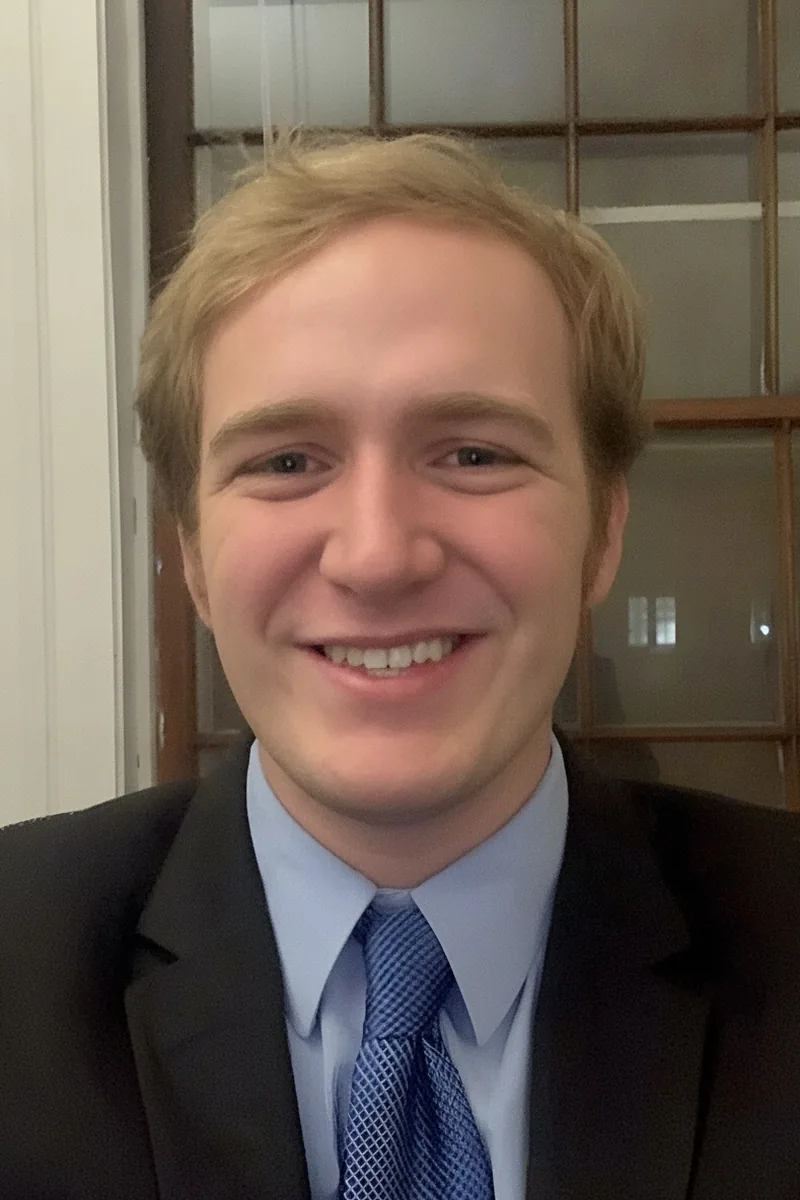
Elasticity, consumer surplus, market structures, deadweight loss — microeconomics is full of concepts that seem intuitive until you're asked to graph them or solve for equilibrium mathematically. Hans pairs his Northwestern economics training with a knack for walking through the algebra behind the graphs, making sure students understand both the visual and quantitative sides of each model. He holds a 5.0 rating.

As an economics major at Dartmouth, Eric studies microeconomic models — game theory, firm pricing strategies, consumer optimization — with the formal rigor of a top program, not just a survey-level overview. His strong quantitative background (1520 SAT, heavy calculus coursework) means he can walk through the math behind indifference curves or profit maximization while keeping the economic intuition front and center. Rated 5.0 by students.
Elasticity, marginal cost curves, market structures, welfare analysis — microeconomics is built on deceptively simple ideas that get complicated fast. Stephen's PhD research at Rice and his current teaching at Fordham keep him immersed in exactly these concepts, and his market research career means he can show students how firms actually use pricing strategy and cost analysis outside the classroom.
Being inside Michigan Ross's BBA program means Kerry encounters microeconomic thinking in nearly every class — how firms decide what to produce, why pricing strategies differ across market structures, and what drives consumer decision-making under scarcity. That daily immersion in business case analysis gives her a way of teaching concepts like elasticity and profit maximization that's grounded in how companies actually behave, not just how curves shift on a whiteboard.
Supply and demand curves are just the starting point — Zeeshan digs into the mechanics behind consumer choice theory, price discrimination, and market structures like oligopoly and monopolistic competition. His PhD research at Vanderbilt keeps him immersed in microeconomic modeling daily, so he can unpack concepts like elasticity or game theory with real-world precision.
Marginal cost curves, consumer surplus, and game theory matrices can feel abstract until someone shows you the math driving each one. Rahi tackles microeconomics by walking through the calculus behind optimization — profit maximization, utility functions, price discrimination — so students can solve problems confidently instead of memorizing graph shapes.
Most microeconomics courses lose students somewhere between indifference curves and game theory — the math feels disconnected from any decision a real person would make. Noel's public policy background lets him anchor every model in actual scenarios: why firms price-discriminate, how externalities justify a carbon tax, what happens to surplus when a city caps rent. That grounding turns problem sets from rote calculation into genuine analysis.
An economics degree from SUNY Albany means James can teach microeconomic concepts — supply and demand curves, elasticity, market structures, consumer choice theory — with the depth of someone who studied them formally. He connects abstract models like marginal utility and cost curves to real-world pricing decisions that make the logic intuitive. His 4.9 rating speaks to how clearly he breaks down graphs and mathematical relationships that trip students up.
Marginal cost curves, consumer surplus, and Cournot competition all demand comfort with derivatives and optimization — skills Romeo has sharpened through years of advanced mathematics study. He teaches microeconomics by making the math transparent: once a student can set up and solve the constrained optimization problem, the economic intuition follows naturally.
The jump from basic supply-and-demand to consumer theory, production functions, and market structures trips up a lot of students because the math and the intuition have to work together. Eric unpacks each model — indifference curves, marginal cost pricing, game theory matrices — by tying the algebra back to the economic story it tells. His Business Administration training gives him a practical lens on how firms actually make these decisions.
Supply and demand curves are just the starting point — Conor digs into the trickier microeconomic territory like elasticity calculations, consumer and producer surplus, and game theory models where students tend to struggle. As an Economics major at Yale, he's actively working through these concepts at an advanced level and can break down how firms make pricing decisions in different market structures.
Because Bailey studied economics at Duke — where the curriculum leans heavily on formal microeconomic modeling — she's worked through the full sequence: consumer and producer theory, elasticity, market structures, and the welfare analysis that ties them together. Her 3.94 GPA in that program signals she actually retained the mechanics, from setting up Lagrangians for constrained optimization to interpreting what happens graphically when a tax wedge enters a competitive market.
Testimonials
Because the right Microeconomics tutor makes all the difference.
Average Session Rating – Based on 3.4M Learner Ratings
Nearby Microeconomics Tutors
Other Lexington Tutors
Related Business Tutors in Lexington
Frequently Asked Questions
Varsity Tutors matches Lexington students with expert Microeconomics tutors for 1-on-1 instruction. We pair each student with a tutor based on their specific needs, learning style, and goals.
Whether you need homework help, exam prep, or want to get ahead, our Microeconomics tutors are ready to help.
Common challenges include gaps from earlier material, difficulty with specific concepts, and trouble applying learning to new problems. These issues can snowball quickly in Microeconomics.
A tutor identifies where you're stuck, fills in gaps, and provides targeted practice. The 1-on-1 format means you get help exactly where you need it.
Tutors work with your student's actual coursework—homework assignments, class notes, and upcoming tests. This keeps tutoring directly relevant to what's happening in the classroom.
When you share information about your student's school and curriculum, we can match you with a tutor who has relevant experience.
All tutors complete background checks, credential verification, and teaching evaluation. Many of our Microeconomics tutors hold advanced degrees or have years of teaching experience.
You can review tutor profiles to find someone with the right background for your student's level and needs.
Many students see improved grades within a few weeks, along with better understanding of Microeconomics concepts and more confidence tackling challenging material.
Tutors track progress and adjust their approach to ensure continued improvement.
Most students benefit from 1-2 sessions per week. More frequent sessions help if your student is significantly behind or has an important exam coming up.
Your tutor can recommend a schedule based on your student's specific situation and goals.
Tutoring is purchased in packages of hours, with rates varying by tutor experience. Varsity Tutors offers several options to fit different budgets and needs.
You can discuss pricing during your consultation to find what works best.
Your tutor will assess where your student is, discuss goals, and start working on priority areas. Most students bring current homework or upcoming test material to focus on.
By the end, you'll have a clear sense of how the tutor can help and a plan for moving forward.
Let’s find your perfect tutor
Answer a few quick questions. We’ll recommend the right plan and match you with a top 5% tutor.