Award-Winning AP Statistics Tutors
serving Winter Haven, FL
AP Statistics
Tutors in Winter Haven
Private 1-on-1 tutoring, weekly live classes for academic support, test prep & enrichment, practice tests and diagnostics, and more to elevate grades and test scores.
Based on 3.4M Learner Ratings
UniversitiesSchools & Universities
DeliveredHours Delivered
ProficiencyGrowth in Proficiency
Who needs tutoring?
No obligation. Takes ~1 minute.

Licensed math teacher with a bachelor's in mathematics, Jacob brings the algebraic backbone that makes AP Stats click — he knows exactly when students need a quick refresher on transformations or logarithmic properties to make sense of Normal calculations or linearizing curved data. His classroom experience with Common Core's data and statistics strands means he's already taught the conceptual groundwork that the AP exam builds on, particularly around variability, sampling, and making claims from data. Rated 5.0 by students.
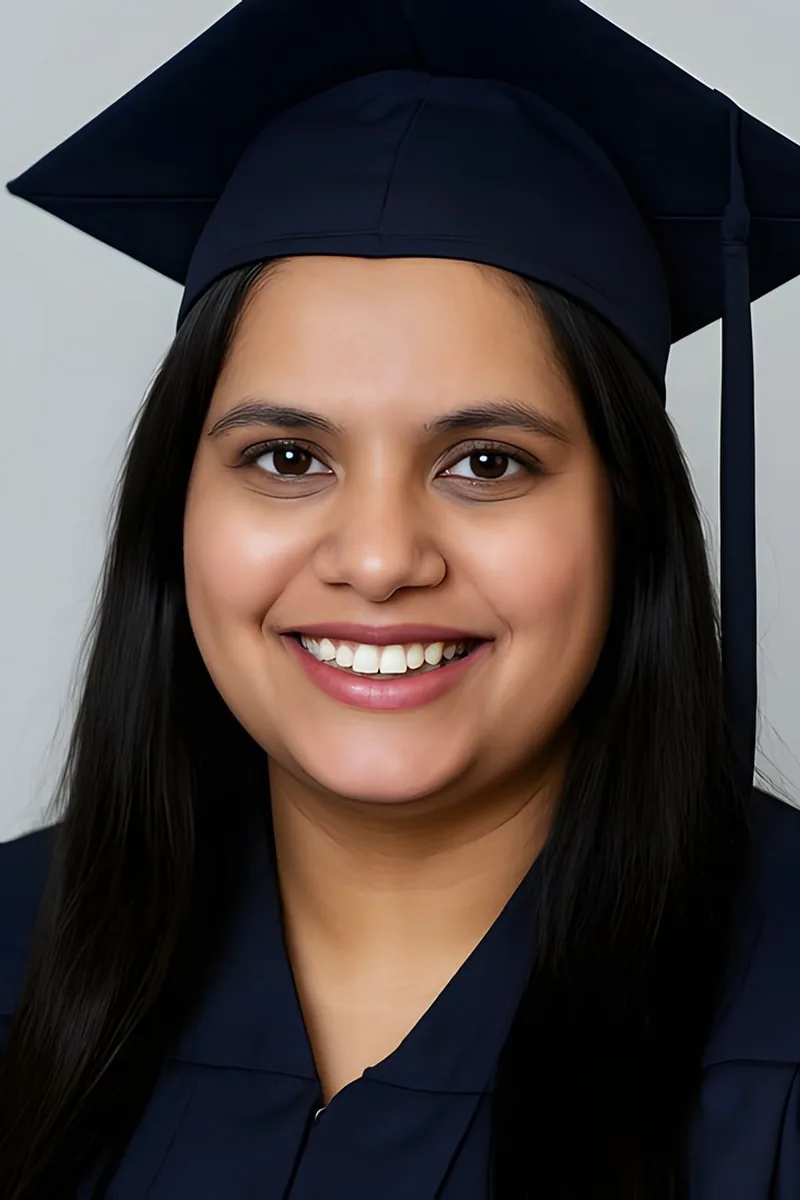
Biomedical engineering at UIC meant Apoorva was designing experiments, collecting noisy biological data, and running statistical tests to figure out whether a device prototype actually performed better than chance — which is the same inferential reasoning AP Stats builds its curriculum around. She's especially sharp on the probability and simulation units, where her engineering instinct for modeling uncertainty makes abstract concepts like sampling variability feel concrete and grounded. Holds a 4.6 rating.
Neuroscience research at Duke meant Ankit was knee-deep in experimental design before he ever opened an AP Stats textbook — controlling for confounding variables, choosing between-subjects versus within-subjects designs, and deciding whether behavioral data actually supports a hypothesis. That background makes him especially sharp on the exam's experimental design and chi-square inference questions, where understanding why you structure a study a certain way matters more than memorizing formulas. Rated 4.8 by students.
Most AP Stats students come in expecting another math class and get blindsided when the exam asks them to write — to describe distributions in context, justify a choice of test, or explain what a confidence interval actually captures. Emerson's dual background in biology and psychology means he's read and dissected dozens of studies built on exactly this kind of statistical reasoning, from clinical trial designs to behavioral research with messy human data. Rated 5.0 by students, he teaches the interpretive vocabulary and structured argumentation that turn a halfway answer into full free-response credit.
With two master's degrees in mathematics education and state teaching certification, Anthony has taught the full arc of the math curriculum — which means he knows exactly where AP Stats diverges from every other math class students have taken. He zeroes in on the reasoning behind inference procedures, teaching students to articulate why they're choosing a particular test and what their conclusion actually means in context, rather than just punching numbers into a calculator. His 34 ACT reflects the kind of disciplined, structured thinking that pays off on the exam's language-heavy free-response questions.
I like helping students. I am very patient. I have experience teaching Calculus classes at the University of Miami. I have done private tutoring for all levels of math up to Calculus, as well as Statistics, Business Math, and Math Finance. I have worked in the actuarial field. I have an undergraduate degree in mathematics from Michigan State University and a Master's degree in mathematics from the University of Miami. I worked for The Princeton Review as a tutor for the SAT. I did very well on both the SAT and ACT, and like teaching students how to do better on those. I like history, too, and always find it fun to tutor history.
Civil engineering at UF means Cavan is constantly working with data — load distributions, material strength variability, environmental sampling — where understanding standard deviation and normal models isn't abstract but determines whether a structure stands or fails. He brings that concrete grounding to the probability and sampling distribution units in AP Stats, making concepts like the Central Limit Theorem click by tying them to scenarios where the math has real stakes. Rated 5.0 by students.
Having scored a 34 ACT and earned a 5.0 rating from students, Emily brings a visual learner's instinct to a subject that's really about reading graphs, interpreting data displays, and spotting patterns — skills her MFA in Photography sharpened in unexpected ways. She teaches students to slow down on boxplots, scatterplots, and residual plots the way an artist reads an image: noticing what's actually there before jumping to conclusions about what it means. That habit pays off on AP Stats free-response questions, where describing distributions and justifying conclusions in precise language is worth more than any formula.
Most AP Stats students come in expecting another formula-driven math class, then hit a wall when the exam asks them to explain *why* they chose a particular test or *what* a confidence interval actually captures in context. Javier, whose finance background means he's used statistical reasoning to evaluate real financial data, zeroes in on that interpretive shift — particularly teaching students to write the kind of clear, context-specific justifications that earn full credit on free-response questions.
I am listening to and learning about him or her as an individual. I can also discover what motivates the student during this conversation and plan for how to frame future tutoring sessions in terms of what the student already knows and enjoys.
Most AP Stats students can punch a hypothesis test into their calculator but freeze when the free-response asks them to justify their conditions check or interpret a p-value in context — that's the gap Jenna zeros in on. Her psychology background means she's read and critiqued dozens of studies built on chi-square tests, correlation claims, and sampling methods, so she teaches the statistical reasoning behind the procedures rather than just the keystrokes. Rated 5.0 by students.
Biology research generates the kind of data AP Stats is built around — sample sizes, variability, and the question of whether an observed difference is real or just chance. Hanna's biology coursework and research minor at Nova Southeastern mean she's already navigated experimental design and statistical inference in lab settings, so she teaches concepts like sampling distributions and hypothesis tests through the lens of actual studies rather than abstract formulas. Rated 5.0 by students.
A physics degree means Payal has spent years propagating uncertainties, fitting curves to experimental data, and deciding whether a result is real or just statistical noise — skills that translate almost one-to-one into AP Stats concepts like inference, regression, and normal distribution modeling. She's especially sharp on the probability units, where her comfort with combinatorics and conditional reasoning from physics problem sets gives students a more intuitive way into topics that feel abstract without concrete examples. Rated 5.0 by students.
IB Mathematics and accounting coursework gave Elizabeth a dual fluency — she's comfortable with both the computational side of statistics and the kind of contextual interpretation that IB's analysis-heavy approach demands. That combination is particularly useful for the AP Stats units on confidence intervals and chi-square tests, where students need to move fluidly between calculator output and explaining what the numbers mean in context. Rated 4.9 by students.
Computational mathematics at Rice means Vinson doesn't just know the formulas behind normal distributions and chi-square tests — he understands the underlying theory well enough to explain why a particular inference procedure works, not just when to use it. That mathematical depth is especially useful for the AP Stats units on sampling distributions and probability, where students with strong computational instincts often struggle to shift into the interpretive, context-driven reasoning the exam actually scores on. Rated 4.8 by students.
Neuroscience research at Brown means Oladele has spent semesters analyzing behavioral data, interpreting variability in experimental results, and deciding whether observed effects in the brain are real or just random noise — skills that map directly onto AP Stats concepts like hypothesis testing and inference. He zeroes in on the thinking-through-the-problem side of the course, teaching students to reason about why a particular test applies to a given scenario instead of just memorizing which calculator function to press. His 1430 SAT and role as head math coach for a college prep program speak to how naturally he breaks down quantitative reasoning for others.
Most AP Stats students come in expecting another formula-driven math class, then hit a wall when the exam asks them to explain *why* a normal model applies or *what* a 95% confidence level actually means in context. JF's math and CS background at Stanford means he thinks in both precise computation and logical argumentation — exactly the combination the free-response section rewards. Rated 5.0 by students.
Most AP Stats students come in expecting another calculation-heavy math class, then hit a wall when the exam asks them to explain *why* a normal model applies or *what* a 95% confidence level actually means in context. Alexander's math and CS background at UBC — where his statistics major means he's knee-deep in probability theory and data analysis daily — gives him the language and intuition to bridge that gap. Rated 5.0 by students.
Cognitive science at Rice meant Adam spent semesters immersed in experimental design, hypothesis testing, and statistical inference — the exact skills AP Statistics demands. He teaches students to think through probability distributions and confidence intervals the way a researcher would, connecting each concept to the logic behind the test rather than just the formula sheet.
Biostatistics coursework during her Master's in Biotechnology gave Rithi hands-on experience designing experiments, running statistical tests on biological data, and interpreting whether results actually mean something — which is the exact reasoning cycle AP Stats builds its curriculum around. She's especially sharp on the probability and sampling distribution units, where her neuroscience research background makes concepts like normal approximations and variability in sample means feel concrete rather than abstract. Rated 4.9 by students.
Neuroscience research at Vanderbilt means Blake regularly encounters experimental design, data interpretation, and statistical inference in contexts like brain imaging studies and behavioral experiments — the same reasoning AP Stats tests on every free-response question. He's especially strong on the conceptual side, walking through why a particular test applies and how to communicate conclusions about p-values and confidence intervals with the precision the rubric demands. Rated 5.0 by students.
Most AP Stats students walk in expecting another formula-driven math class, then hit a wall when the exam asks them to explain *why* a particular sampling method could introduce bias or *what* a 95% confidence level actually means in context. Jake's 1580 SAT and 4.9 rating point to the kind of precise, structured communication skills that make the difference on those language-heavy free-response questions. He breaks down the interpretive reasoning behind inference procedures and experimental design so students learn to write answers that match the rubric's expectations, not just punch numbers into a calculator.
Twenty-five years teaching science in Massachusetts public schools means Jacques has walked hundreds of students through the messy reality of collecting lab data, spotting outliers, and deciding whether results actually mean something — which is the interpretive core of AP Statistics. His Princeton chemical engineering training leaned heavily on statistical modeling and differential equations, giving him a quantitative backbone that makes concepts like normal distributions and expected value click in context rather than in isolation. Rated 4.8 by students.
A physics PhD requires living inside probability distributions, error analysis, and hypothesis testing — Jonathan has spent years determining whether experimental results are statistically significant or just noise, which is the exact reasoning AP Stats builds its entire free-response section around. He unpacks the logic behind confidence intervals and chi-square tests by grounding them in real data scenarios, making the interpretive leaps feel intuitive rather than formulaic. Rated 5.0 by students.
Inference tests trip up most AP Statistics students not because the math is hard, but because choosing between a t-test, a chi-square, and a z-interval requires careful attention to context. Sharan's quantitative training in Human Biology at Cornell means she regularly interprets data distributions and p-values — and she breaks down the logic behind each test so students can identify the right approach on exam day.
Crony's dual degrees in Neuroscience and Economics from Brown meant constant exposure to both experimental design and data modeling — two threads that converge neatly in the AP Stats curriculum. He breaks down the normal distribution and z-score reasoning that underpins so much of the course by connecting it to real research contexts, like determining whether a drug trial's results are meaningful or just random variation. Rated 4.6 by students.
Testimonials
Because the right AP Statistics tutor makes all the difference.
Average Session Rating – Based on 3.4M Learner Ratings
Practice AP Statistics
Free practice tests, flashcards, and AI tutoring for AP Statistics
Nearby AP Statistics Tutors
Other Winter Haven Tutors
Related Math Tutors in Winter Haven
Frequently Asked Questions
Varsity Tutors matches Winter Haven students with expert AP Statistics tutors for 1-on-1 instruction. We pair each student with a tutor based on their specific needs, learning style, and goals.
Whether you need homework help, exam prep, or want to get ahead, our AP Statistics tutors are ready to help.
Common challenges include gaps from earlier material, difficulty with specific concepts, and trouble applying learning to new problems. These issues can snowball quickly in AP Statistics.
A tutor identifies where you're stuck, fills in gaps, and provides targeted practice. The 1-on-1 format means you get help exactly where you need it.
Tutors work with your student's actual coursework—homework assignments, class notes, and upcoming tests. This keeps tutoring directly relevant to what's happening in the classroom.
When you share information about your student's school and curriculum, we can match you with a tutor who has relevant experience.
All tutors complete background checks, credential verification, and teaching evaluation. Many of our AP Statistics tutors hold advanced degrees or have years of teaching experience.
You can review tutor profiles to find someone with the right background for your student's level and needs.
Many students see improved grades within a few weeks, along with better understanding of AP Statistics concepts and more confidence tackling challenging material.
Tutors track progress and adjust their approach to ensure continued improvement.
Most students benefit from 1-2 sessions per week. More frequent sessions help if your student is significantly behind or has an important exam coming up.
Your tutor can recommend a schedule based on your student's specific situation and goals.
Tutoring is purchased in packages of hours, with rates varying by tutor experience. Varsity Tutors offers several options to fit different budgets and needs.
You can discuss pricing during your consultation to find what works best.
Your tutor will assess where your student is, discuss goals, and start working on priority areas. Most students bring current homework or upcoming test material to focus on.
By the end, you'll have a clear sense of how the tutor can help and a plan for moving forward.
Let’s find your perfect tutor
Answer a few quick questions. We’ll recommend the right plan and match you with a top 5% tutor.