Award-Winning Mandarin Chinese Tutors
serving San Antonio, TX
Mandarin Chinese
Tutors in San Antonio
Private 1-on-1 tutoring, weekly live classes for academic support, test prep & enrichment, practice tests and diagnostics, and more to elevate grades and test scores.
Based on 3.4M Learner Ratings
UniversitiesSchools & Universities
DeliveredHours Delivered
ProficiencyGrowth in Proficiency
Who needs tutoring?
No obligation. Takes ~1 minute.
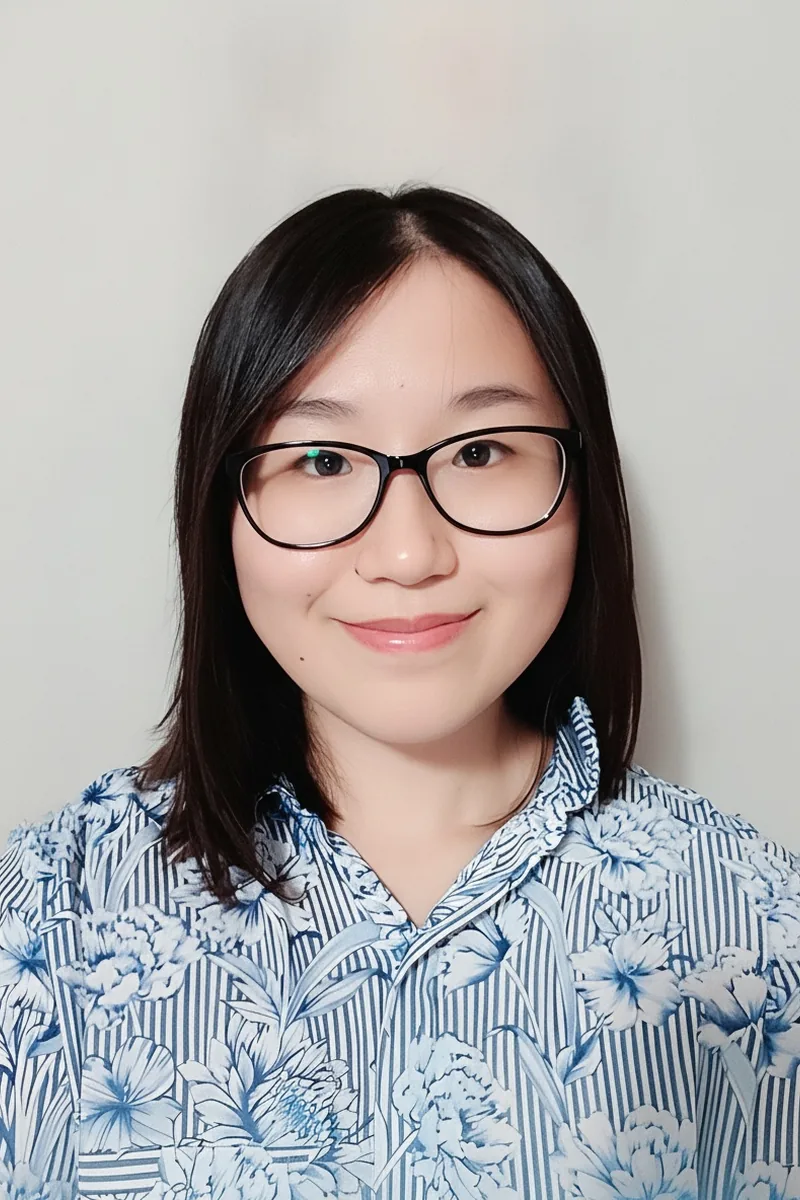
Learning Mandarin means juggling tones, character recognition, and a grammar system that works nothing like English — and Patricia tackles all three without overwhelming students. She sequences lessons so that new vocabulary and sentence patterns build on what a student already knows, making the jump from pinyin to characters feel manageable. Her experience teaching beginners through more advanced learners means she can calibrate to whatever stage a student is in.

As a Mandarin speaker, Jessy tackles the aspects of the language that trip up English-speaking learners most — tonal pronunciation, character stroke order, and the logic behind measure words and sentence structure. She uses a mix of conversation practice and written drills to build both spoken fluency and reading recognition simultaneously.
As a Mandarin speaker comfortable with both conversational and academic Chinese, Jennifer teaches tonal pronunciation, character recognition, and sentence structure in a way that builds practical fluency. She connects new vocabulary to real contexts — ordering food, describing daily routines, reading simple news articles — so the language sticks beyond flashcard drills.
Mandarin's tonal system and character-based writing can feel overwhelming at first, but Si — who teaches both Mandarin 1 and 2 — breaks it into manageable pieces, starting with pinyin pronunciation and tone drills before layering in character recognition and basic sentence structure. His multilingual background means he understands how to bridge the gap between English-language thinking and Mandarin expression.
Eight years of teaching Chinese language and culture across K-12 levels means Amanda has built curriculum for every stage — from introducing tones and pinyin to beginners through drilling stroke order, radicals, and reading comprehension for advanced learners. She developed a full K-12 Mandarin curriculum and knows exactly where students tend to stall, whether it's character recognition or navigating measure words. Rated 5.0 by students.
Mandarin's tonal system and character-based writing can feel overwhelming without a clear learning structure. Daniel tackles the language systematically — building from pinyin and tone pairs to sentence patterns and reading comprehension — so students develop real fluency instead of scattered vocabulary lists.
Sarah teaches Mandarin with an emphasis on conversational fluency — tones, sentence patterns, and the high-frequency vocabulary that lets students start communicating quickly. She pairs speaking practice with character recognition drills so learners develop both oral and written skills in parallel.
After completing a year of intensive Mandarin study in Taiwan and then backpacking through China, China developed the kind of conversational fluency and cultural context that textbooks alone can't provide. She teaches tones, character recognition, and sentence structure by grounding them in real situations — ordering food, navigating directions, reading signs — so students build practical communication skills alongside formal grammar.
As a native Mandarin speaker who studied at The Chinese University of Hong Kong, Yuanxin teaches tones, stroke order, and sentence structure with the intuition of someone who grew up inside the language. She covers everything from pinyin fundamentals and character recognition through reading comprehension and formal writing conventions.
As a native Mandarin speaker, Rita knows exactly where English speakers stumble — tonal pronunciation, measure words, character stroke order, the logic behind sentence particles like 了 and 过. She teaches the language as a living system with its own internal patterns, not a pile of disconnected vocabulary lists. Rated 4.6 by students, she makes a notoriously intimidating language feel approachable from the very first session.
Mandarin's tonal system and character-based writing make it unlike any other language most students encounter, and early habits matter enormously. Thomas teaches through all three levels of Mandarin and emphasizes tone accuracy and radical recognition from the start, building the kind of structural understanding that prevents bad habits from compounding. His experience as a multilingual tutor across Spanish and Mandarin gives him a clear sense of where English speakers specifically struggle with Chinese grammar and syntax.
Michael's Asian Studies degree included dedicated Mandarin Chinese coursework, giving him both linguistic skill and cultural context that enriches vocabulary and conversation practice. He breaks down tonal pronunciation, character stroke order, and sentence structure in ways that make the language feel systematic rather than overwhelming.
As a native speaker who taught Mandarin to American and European children at MTI International School in Tianjin, Hua knows exactly where English speakers stumble — tonal pronunciation, measure words, and character stroke order. She structures lessons around these common sticking points, building reading and writing skills alongside spoken fluency.
I'm Jay! I'm currently going to college at the University of Texas at Austin. I am majoring in fine arts and I am also in the pre-medical program. Even though I'm not done with college, I have already published papers in the field of epigenetics since my freshmen year of college. Even though I consider myself to have an expertise in languages, I decided to teach areas in the field of natural sciences because those are the subjects that I am most passionate about.
Jackson is pursuing Chinese Language and Culture as a core part of his Asian Studies degree, with plans to continue Mandarin study at the graduate level. That long-term commitment means he understands the progression from tonal pronunciation and stroke order through reading comprehension and conversational fluency — and he knows exactly where each stage trips students up. Rated 5.0 across his tutoring sessions.
I am also fluent (reading/listening/writing) in Cantonese and mandarin Chinese because of my upbringing. Half of my childhood education was received in Hong Kong and the other half was in Australia.
Learning Mandarin means juggling tones, character writing, and a grammar system that works nothing like English — and Rachel tackles all three from the start rather than letting any one slip. She teaches across beginner through advanced levels and emphasizes conversational practice alongside structured reading and writing so students can actually use the language, not just recognize it on a page.
As a Mandarin speaker who teaches all four levels of the language, Bonita walks students through tonal pronunciation, character stroke order, and sentence structure from the ground up. Her analytical mindset — sharpened by her physics and math studies at UT Austin — brings unusual clarity to explaining Mandarin grammar patterns that often trip up English speakers.
Lillian taught beginning Mandarin Chinese during her time at UT Austin and has continued working with learners navigating tones, pinyin, and character recognition. She approaches character writing as a system of radicals and patterns rather than rote copying, which makes retention far more manageable. Her lessons build from pronunciation fundamentals through basic sentence structures so students gain confidence speaking and reading simultaneously.
As a native Mandarin speaker, I believe language learning should feel practical, encouraging, and enjoyable. I tailor lessons to my students' goalswhether you want to build a strong foundation, improve conversation skills, or gain confidence using Mandarin in real-life situations. I also speak English fluently, and it will help our lessons go smoothly. No matter your starting level, I am here to support you step by step on your Mandarin learning journey.
As a native Shanghai speaker and ICA-certified Mandarin instructor with formal accreditation in teaching Chinese as a foreign language, Angela tackles everything from tonal pronunciation and stroke-order writing to classical grammar structures. She designs lessons around how English speakers actually struggle with Mandarin — distinguishing tones, parsing measure words, and building sentence patterns that don't map neatly onto English syntax.
Fluent in Mandarin since childhood and bilingual in Cantonese, Carolynne brings native-level pronunciation and an intuitive grasp of tonal distinctions that textbook audio can't replicate. She breaks down character structure, measure words, and sentence patterns in ways that make the logic of the language visible to English-speaking learners.
From elementary basics through advanced coursework, Leanna teaches Mandarin Chinese across four levels and knows exactly where students tend to plateau — usually around tonal accuracy and character recognition. She approaches vocabulary and grammar structures systematically, connecting new characters to radicals students already know so that memorization doesn't feel like starting from scratch every lesson.
Tackling Mandarin means mastering tones, radicals, and measure words all at once, and June breaks each of these down systematically rather than expecting students to absorb them through repetition alone. Her engineering mindset at Brown carries over: she treats character memorization as a pattern-recognition problem, grouping radicals and phonetic components so new vocabulary builds on what students already know.
Bryan teaches Mandarin Chinese across multiple levels, covering tonal pronunciation, character recognition and stroke order, and conversational sentence structures. His systematic approach — breaking the language into repeatable patterns — makes the leap from pinyin to reading characters feel less overwhelming for students just starting out or pushing into intermediate fluency.
Native fluency makes a real difference when learning Mandarin's tonal system, character stroke order, and measure words — all areas where textbooks only get you so far. Christine grew up speaking and writing Mandarin in Shanghai and has taught across age groups, so she adjusts naturally between pinyin-based beginners and students ready to tackle paragraph-level composition. She holds a 4.7 rating from the families she's tutored.
Learning Mandarin from a linguist is a different experience than learning it from someone who simply speaks it. Wei's research in language acquisition means she understands exactly why tonal distinctions trip up English speakers, how to build character recognition systematically, and when to push conversational fluency versus grammatical accuracy. Her 5.0 rating speaks to how well that approach works.
Martin's anthropology fieldwork required deep engagement with Mandarin Chinese — not just vocabulary lists but tonal precision, character recognition, and the cultural logic behind the language. His PhD-level research background means he can explain how Mandarin grammar structures thought differently than English, making concepts like measure words and aspect markers click for learners at any level.
Cindy teaches Mandarin across four course levels, from introductory pinyin and tone work through more advanced reading and conversation — so she can match instruction to wherever a student currently stands. As a current Penn undergrad who balances Mandarin alongside her political science coursework, she brings a learner's perspective on what makes vocabulary and grammar patterns click. Rated 5.0 by students.
Learning Mandarin means juggling tones, character recognition, and sentence structures that have almost nothing in common with English. Mandy approaches each of these as a separate skill with its own practice routine — tone drills for speaking, radical-based strategies for reading characters, and pattern exercises for grammar — so progress feels concrete rather than overwhelming.
Henry is a fluent Mandarin Chinese speaker who teaches everything from tonal pronunciation and pinyin basics to more advanced character recognition and conversational fluency. His approach connects vocabulary to real-world usage — ordering food, navigating directions, discussing current events — so that new words stick in context rather than as isolated flashcard entries.
Allison teaches Mandarin with attention to the details that trip up English speakers most: tonal pronunciation, character stroke order, and the grammatical structures that have no direct English equivalent. Her approach connects vocabulary to real-world contexts — ordering food, reading signs, navigating conversations — so new words actually stick beyond the quiz.
Testimonials
Because the right Mandarin Chinese tutor makes all the difference.
Average Session Rating – Based on 3.4M Learner Ratings
Nearby Mandarin Chinese Tutors
Other San Antonio Tutors
Related Languages Tutors in San Antonio
Frequently Asked Questions
Your first session is an opportunity to connect with a tutor, discuss your current level and learning goals, and establish a personalized learning plan. The tutor will assess your strengths in reading, writing, speaking, and listening to identify where to focus, whether you're building foundational skills or preparing for advanced proficiency.
In a classroom setting, students for Mandarin Chinese in San Antonio often get limited speaking time. With personalized 1-on-1 instruction, you get dedicated conversation practice every session—your tutor responds to your speech, corrects pronunciation in real-time, and helps you build confidence speaking naturally. This consistent speaking practice is essential for developing fluency and overcoming the hesitation many learners feel.
Yes—tones and pronunciation are core strengths of personalized tutoring. A tutor can model correct tone production, listen carefully to your pronunciation, and provide immediate feedback that helps you adjust. Over time, this targeted practice trains your ear and mouth to produce tones accurately, which is difficult to develop through self-study or large classroom instruction alone.
Tutors balance character recognition with practical writing skills. They typically start by teaching stroke order, radicals, and character composition to help you understand how characters are built, then progress to writing full words and sentences. Many tutors integrate reading and writing together so you're not just memorizing characters in isolation—you're learning them in meaningful context.
The most effective approach combines both. Understanding key grammar patterns (like sentence structure, aspect markers, and measure words) gives you a framework, while natural usage through conversation and reading helps those patterns stick. A tutor can explain the 'why' behind grammar rules, then reinforce them through authentic speaking and listening practice so the language feels natural, not mechanical.
Research on language learning shows that spaced repetition and retrieval practice are key to retention. Tutors often build vocabulary study into lessons by revisiting words across multiple sessions, using them in different contexts (speaking, writing, reading), and connecting new words to words you've already learned. This approach is far more effective than cramming vocabulary lists before a test.
Many tutors weave cultural context into lessons—discussing how language reflects Chinese culture, explaining idioms and expressions rooted in history, and exploring contemporary Chinese media. This cultural foundation deepens your understanding of why the language works the way it does and makes learning more engaging and meaningful beyond just grammar and vocabulary.
Reaching conversational proficiency typically requires 600-750 hours of study according to language learning research. With consistent personalized tutoring (even 2-3 hours weekly), combined with your own practice, you can make steady progress. Your tutor will help you set realistic milestones and track your growth across all four skills—reading, writing, speaking, and listening—so you can see your advancement over time.
Let’s find your perfect tutor
Answer a few quick questions. We’ll recommend the right plan and match you with a top 5% tutor.