Award-Winning Math Tutors
serving Portland, OR
Math
Tutors in Portland
Private 1-on-1 tutoring, weekly live classes for academic support, test prep & enrichment, practice tests and diagnostics, and more to elevate grades and test scores.
Based on 3.4M Learner Ratings
UniversitiesSchools & Universities
DeliveredHours Delivered
ProficiencyGrowth in Proficiency
Who needs tutoring?
No obligation. Takes ~1 minute.
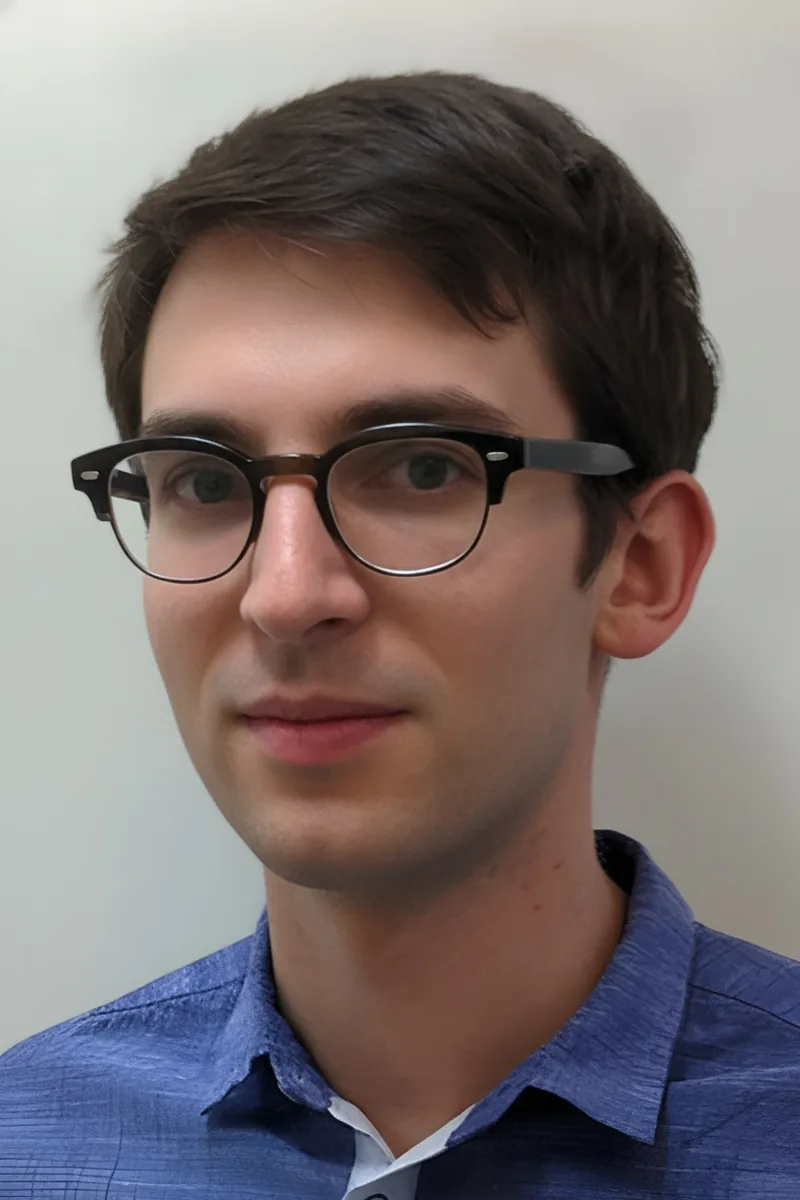
Comparative literature trains you to find structure in complex, layered texts — and Jacob applies that same analytical instinct to math, teaching students to read a problem carefully, identify what's being asked, and map out a logical path to the answer. His 1550 SAT speaks to genuine quantitative fluency, and his experience teaching at the college level means he knows how to break down a concept multiple ways until the right explanation lands.
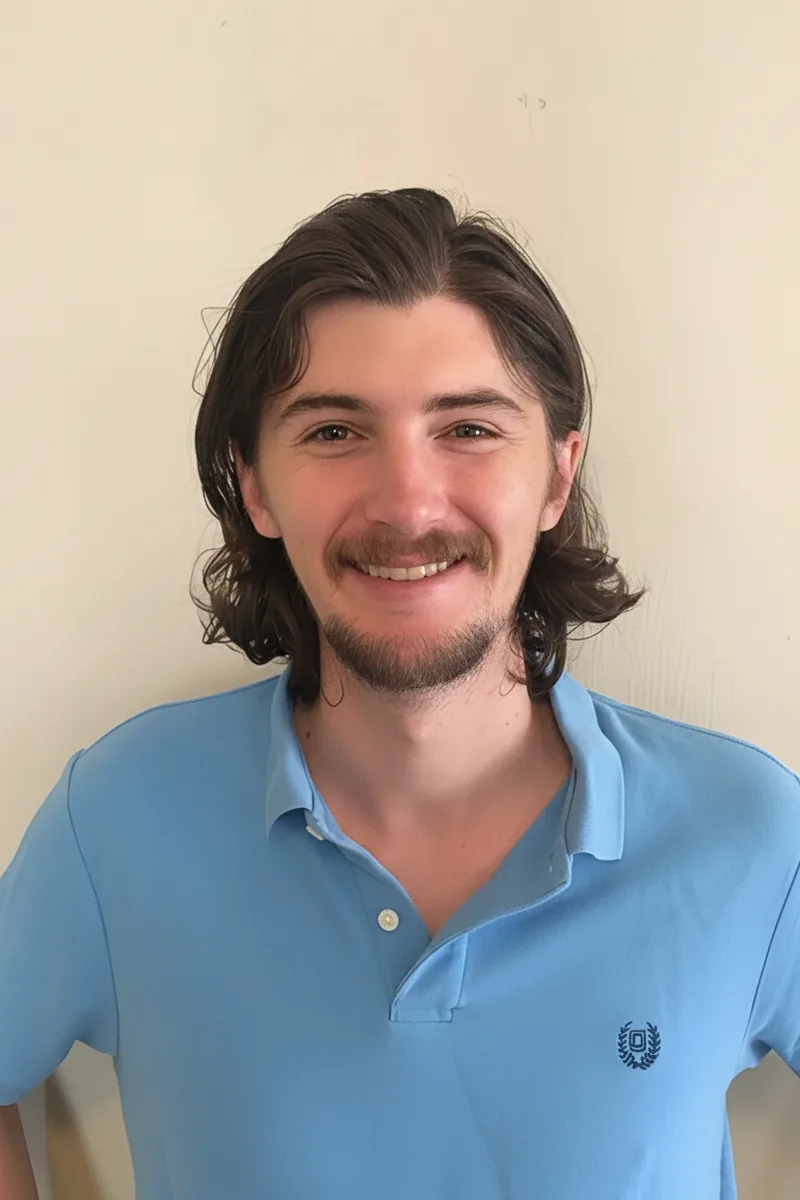
Solving a math problem often comes down to recognizing which tool fits — and Michael treats that pattern-recognition skill as something teachable, not innate. His computer science training at UCLA required heavy coursework in calculus, linear algebra, and discrete math, so he's comfortable across a wide range of topics. He teaches straightforward techniques students can reuse independently when they hit unfamiliar problems.
Three bachelor's degrees and a current philosophy graduate program have given Moya an unusual comfort with abstract reasoning, which she applies to math concepts from fractions through functions. She's especially skilled at rephrasing a problem in plain language so students can see what's actually being asked before they start calculating.
Self-described puzzle lover who genuinely lights up over word problems and mathematical challenges, Dylan covers the full K-12 math sequence from basic operations through pre-calculus and calculus. He's particularly strong at showing students how each concept builds on the last — why fraction fluency matters for algebra, why algebra matters for trig — so that gaps get filled instead of papered over. Rated 5.0 across his students.
A strong math foundation matters for everything from standardized tests to college-level science, and Owen teaches across the full range — from fraction operations and proportional reasoning up through algebraic manipulation and introductory calculus concepts. His 33 ACT composite reflects the kind of quantitative fluency he brings to breaking down problems step by step.
Cynthia approaches math by slowing down at the exact moment most students want to speed up — the transition from understanding a concept to applying it in an unfamiliar problem. She walks through arithmetic, fractions, ratios, and early algebraic thinking with an emphasis on why each step works, not just what to write next. Her patient, language-oriented style is especially effective for students who think of themselves as 'not math people.'
From arithmetic fundamentals through early calculus, Caitlyn covers a wide range of math concepts and adjusts her explanations based on where a student gets stuck. She scored a 1530 SAT and 33 ACT, so she knows how to approach math both conceptually and under timed conditions. Her emphasis on communication means she asks students to explain their reasoning back — which is often where real understanding clicks.
From fraction operations in middle school to derivatives in calculus, Andrew has taught across nearly every level of math and knows exactly where conceptual gaps tend to hide. His mechanical engineering background at Stanford means he can show students why a technique matters — not just how to execute it — which makes new topics click faster. He's especially sharp at diagnosing where a student's reasoning breaks down and rebuilding from that exact point.
Thea's primary world is writing and literature, not numbers — but her 1410 SAT required solid quantitative performance, and her English training built the kind of careful, logical reading that's essential for parsing word problems and setting up equations correctly. She's a good fit for students who struggle less with computation than with figuring out what a problem is actually asking them to do.
Architecture training at the college level means Luke spent years applying math to real structures — calculating loads, working with geometric proofs, and solving equations that had to be right or a building wouldn't stand. He brings that same precision to topics like ratios, fractions, and algebraic reasoning, connecting abstract problems to concrete situations that make the logic click.
While English is Henry's doctoral specialty, he also tutors math and brings the same patient, step-by-step approach he uses with writing. He's particularly effective with students who feel intimidated by math, walking them through problem-solving logic in a way that builds genuine comprehension rather than anxiety.
Few tutors cover math from elementary arithmetic all the way through differential equations and multivariable calculus, but Danny has been doing exactly that at PCC since 2013. That range means he understands how early concepts like fraction operations connect to later ones like integration, and he can pinpoint exactly where a gap in understanding started.
Luke's English honors degree means he spent years constructing logical arguments and dissecting complex structures — skills that map directly onto organizing multi-step math problems where losing track of your reasoning costs you the answer. He's especially effective at translating word-heavy questions into clear mathematical setups, since parsing dense language is literally what he trained to do. Rated 5.0 by students.
Whether it's fractions tripping up a fifth grader or logarithms stumping a high schooler, Maya zeros in on the specific conceptual gap causing the confusion. Her 1490 SAT score reflects strong quantitative reasoning, and she breaks problems into visual, step-by-step progressions that make abstract operations feel logical.
Breaking down word problems into smaller, manageable steps is where Sophia's teaching background really shines — her Master's in Education means she knows how to spot exactly where a student's thinking goes off track with fractions, decimals, or multi-step operations. She makes abstract concepts like variables and basic equations feel concrete by tying them to real situations students actually care about.
Ezra's math range is unusually broad — he teaches everything from arithmetic and pre-algebra through AP Calculus BC and discrete math, which means he can pinpoint exactly where a gap started and trace it forward to the concept causing trouble now. That diagnostic instinct, rated 4.8 by students, turns frustrating 'I just don't get math' moments into specific, fixable problems.
Having earned a bachelor's in mathematics from Michigan State, Jordan can trace a concept like polynomial behavior from its first appearance in algebra through its role in calculus — and explain each version in terms that match where a student actually is. His dual degree in jazz studies isn't just a fun fact; improvisation trains you to recognize patterns and adapt in real time, which is exactly what good math problem-solving looks like. He's especially effective at teaching the underlying logic of a technique so students can reconstruct it on a test instead of relying on memorized steps.
From basic operations through pre-algebra and into more abstract territory, Claire covers the full K–12 math spectrum. She's taught in four different school systems across the country, which means she's adept at diagnosing exactly where a concept broke down — whether it's fraction reasoning, integer rules, or the leap into variables — and rebuilding understanding from that point.
From pre-algebra through calculus, Mariela's geophysics background means she's used math as a daily tool — solving differential equations for wave behavior, applying linear algebra to data sets, running statistical models on field measurements. She unpacks mathematical concepts by showing what they actually do, which is especially effective for students who keep asking "when will I ever use this?" That real-world grounding makes abstract procedures easier to remember and apply.
While Robin's primary expertise is in English and writing, she also tutors math and brings a Liberal Arts generalist's instinct for making abstract concepts concrete. She's particularly effective with students who freeze up at word problems — her English background means she can teach kids to decode what a question is really asking before they ever pick up a pencil. For advanced math like calculus or upper-level algebra, she supplements procedural practice with an emphasis on understanding the logic behind each step.
Gabriel's teaching background spans calculus and algebra, so he can trace a math concept from its foundations all the way through to more advanced applications. Whether a student is stuck on fraction operations or working through systems of equations, he adjusts his explanations until the reasoning clicks — not just the procedure.
From arithmetic fundamentals through algebra and into early calculus, Gray identifies the specific gap that's holding a student back — whether it's fraction operations, variable manipulation, or graphing. His 1590 SAT score reflects deep comfort with quantitative reasoning, and he's spent eight years translating that into clear explanations for students at every level.
From basic arithmetic through calculus, Beth's teaching philosophy stays the same: connect the math to something concrete before moving to the abstract. Her Stanford human biology degree required heavy quantitative coursework, and her education training means she knows how to diagnose exactly where a student's understanding breaks down — whether that's fraction operations, variable manipulation, or limits. She's rated 5.0 by her students.
While math isn't Wyatt's primary discipline, his analytical training as a Literature major gives him a clear, logical approach to explaining concepts like algebraic manipulation and equation-solving. He's especially useful for students who think of themselves as 'English people' and need someone who can translate math procedures into plain language rather than abstract notation.
Not every math tutor comes from a traditional math background, and that's sometimes an advantage — Hallie remembers what it's like to wrestle with a concept until it finally makes sense. She's especially effective at translating word problems into equations and making abstract ideas like variables and functions feel concrete. Her 5.0 rating speaks to her ability to meet the material from a student's perspective.
An Aeronautics and Astronautics degree means Mike spent years translating real-world physics problems into math and back again. He tackles everything from fraction operations to early calculus concepts by connecting the numbers to something tangible. That engineering instinct for asking "does this answer even make sense?" is something he passes along to every student he works with.
From fraction operations in middle school to limits in calculus, Rohan has taught college-level math courses at the University of Oregon and seen where gaps from earlier years quietly derail students later. He zeroes in on the underlying concept — why you invert and multiply, what a negative exponent actually represents — so that each new topic builds on genuine understanding. Quick tricks for checking work and catching common errors are part of every session.
Heather scored a 1500 SAT and 35 ACT, which means she's comfortable across the math spectrum from fractions and ratios through algebraic reasoning. She's especially effective at translating word problems into equations — the step where most students get stuck — by teaching a consistent setup process that works whether the topic is percentages, proportions, or basic geometry.
I'm teaching is as important as understanding the subject itself.
Spanning pre-algebra through calculus, Robert's math teaching zeroes in on the transition points where students typically stall — moving from arithmetic to variable thinking, or from memorizing formulas to understanding why a derivative measures rate of change. His finance background keeps lessons grounded in real applications, so abstract concepts feel like tools rather than puzzles.
Early math confidence comes down to whether a student understands *why* a method works, not just whether they can repeat the steps. Nikita unpacks foundational concepts — place value, fractions, order of operations — in ways that make the next topic feel like a natural extension rather than a brand-new puzzle. She's 5.0-rated and has tutored students from elementary through college-level math.
Psychology majors spend more time with statistics and research design than most people realize — Rebecca's coursework meant regular work with data analysis, probability, and interpreting quantitative results. That background, combined with tutoring across subjects from algebra to calculus, gives her a practical handle on making number-heavy material feel less intimidating. She's particularly good at slowing down when a student's confidence starts to wobble and rebuilding their approach from the specific step that tripped them up.
Sammi's strongest subjects are English and literature, not math — but her 33 ACT composite means she clearly knows how to work through quantitative problems efficiently under timed pressure. She's particularly useful for students who struggle with translating word problems into equations, since her English training makes her sharp at parsing what a question is actually asking.
While her degree is in the humanities, Flavia scored a 1420 on the SAT and has a solid handle on the foundational math concepts that come up through algebra and early problem-solving. She's especially effective with students who feel intimidated by math, bringing the same clear, structured explanations she uses in writing instruction to topics like equations, word problems, and proportional reasoning.
From fraction operations in middle school to limits in calculus, Timothy has taught across the full math spectrum and knows exactly where conceptual gaps tend to hide. His background in psychology gives him a sharp read on how students process numerical reasoning, so he adjusts explanations on the fly rather than repeating the same procedure louder.
Julia's primary expertise is in writing and English, but she also tutors foundational math concepts like algebraic problem-solving and equation setup. Her composition background gives her a knack for translating word problems into mathematical language — a step that trips up many students before they even start calculating.
After teaching across seven states and multiple grade levels, Rebecca has seen nearly every way a math concept can confuse a student — and nearly every way to unstick them. She connects arithmetic, fractions, ratios, and early algebra to real scenarios students care about, turning "when will I ever use this?" into an answered question.
From basic operations to pre-calculus and beyond, Tyler has taught math at nearly every level — including a year with MN Math Corps, where he used research-based methods to rebuild confidence in middle schoolers who had fallen behind. That range means he quickly identifies where a concept broke down and can re-teach it in a way that actually makes sense. He holds a 5.0 rating from students.
Kevin earned his biology degree at Gonzaga, which required heavy quantitative coursework in calculus, algebra, and statistical analysis. He's particularly effective at connecting abstract math concepts — like function behavior or rate-of-change problems — to real-world applications that make the logic click. His 5.0 rating speaks to his ability to make math feel less like memorized procedures and more like problem-solving.
Joel earned a 1480 SAT, which required strong performance across quantitative reasoning, and he brings that same structured problem-solving approach to math tutoring. He's particularly good at translating word problems into equations and showing students the logical steps that connect a question to its solution. His psychology training gives him patience with the mental blocks that often make math feel harder than it needs to be.
Testimonials
Because the right Math tutor makes all the difference.
Average Session Rating – Based on 3.4M Learner Ratings
Practice Math
Free practice tests, flashcards, and AI tutoring for Math
Nearby Math Tutors
Other Portland Tutors
Related Math Tutors in Portland
Frequently Asked Questions
During the first session, a tutor will assess your current math level, understand your specific challenges (whether it's word problems, graphing, or multi-step equations), and learn about your learning style. This helps the tutor create a personalized plan that builds on your strengths and addresses gaps in understanding. You'll leave with clarity on next steps and what to expect moving forward.
Many students can follow steps but don't understand *why* those steps work—this is where personalized tutoring makes a real difference. Tutors help you see the patterns and connections behind the math, so you're not just memorizing formulas but truly understanding concepts. This deeper understanding makes it easier to tackle new problems and apply math in different contexts.
Word problems require translating language into mathematical equations—a skill many students find frustrating. Tutors work with students to break down problems into manageable steps, identify what information matters, and develop problem-solving strategies. With guided practice and feedback, students build confidence in approaching unfamiliar problems rather than feeling stuck.
Math anxiety often comes from past struggles or feeling rushed in a classroom setting. One-on-one instruction creates a judgment-free space where students can ask questions, make mistakes, and learn at their own pace. As students experience success and understand concepts more deeply, confidence builds naturally—and anxiety decreases.
Yes. Varsity Tutors connects you with tutors who understand different math curricula and textbooks used across Portland's school districts. Whether your student is working with traditional approaches or newer standards-based programs, tutors can align instruction with what's being taught in class while filling in conceptual gaps.
Showing work isn't just about getting points—it reveals your thinking process and helps identify where mistakes happen. Tutors emphasize clear, organized work from the start, teaching students to document their steps and reasoning. This skill is essential not only for getting credit but for developing problem-solving strategies that transfer to more complex math.
Absolutely. Proofs and graphing require both conceptual understanding and procedural fluency—areas where personalized instruction shines. Tutors break down the logic behind proofs and help students visualize relationships through graphing, making abstract concepts concrete. With targeted practice and immediate feedback, students move from confusion to confidence.
Varsity Tutors connects you with experienced math tutors in Portland who can work with your student's specific needs and learning style. You'll discuss your student's challenges, goals, and preferences, and we'll match them with a tutor who has expertise in the right areas—whether that's algebra, geometry, calculus, or test prep. The personalized approach ensures a strong fit from day one.
Let’s find your perfect tutor
Answer a few quick questions. We’ll recommend the right plan and match you with a top 5% tutor.