Award-Winning AP Biology Tutors
serving Little Rock, AR
AP Biology
Tutors in Little Rock
Private 1-on-1 tutoring, weekly live classes for academic support, test prep & enrichment, practice tests and diagnostics, and more to elevate grades and test scores.
Based on 3.4M Learner Ratings
UniversitiesSchools & Universities
DeliveredHours Delivered
ProficiencyGrowth in Proficiency
Who needs tutoring?
No obligation. Takes ~1 minute.
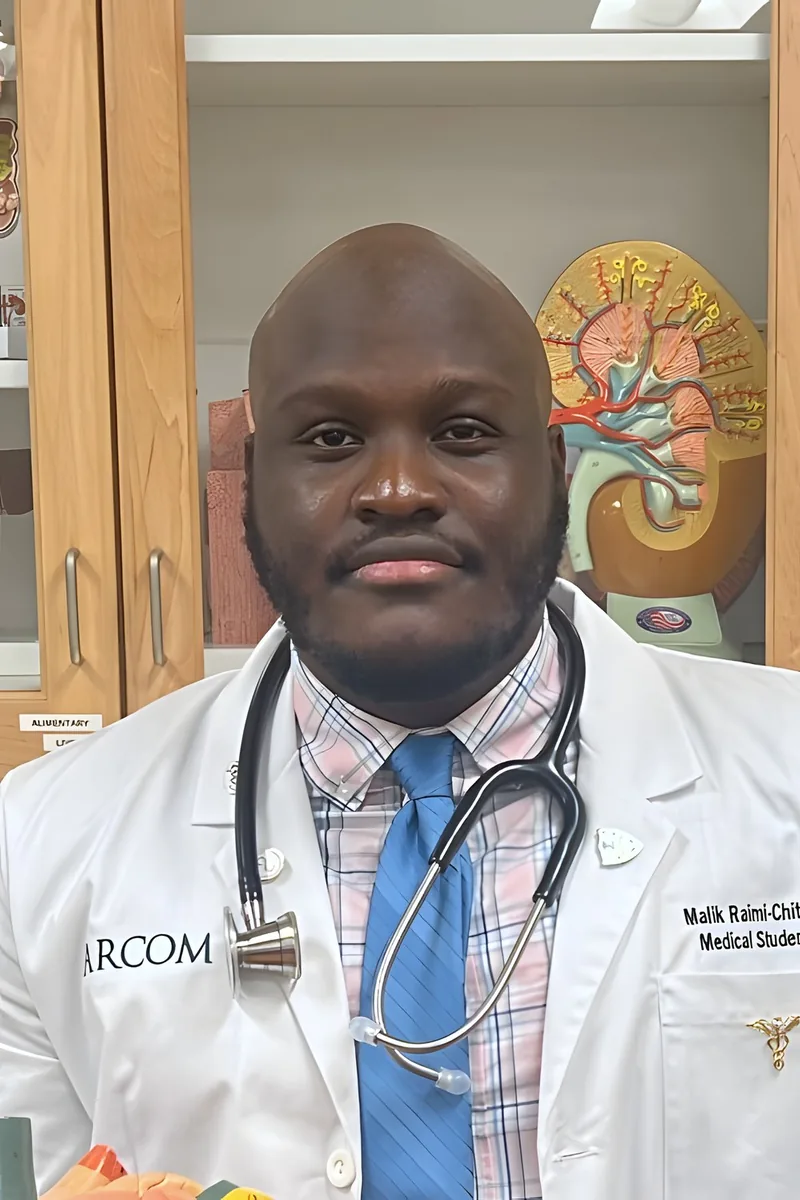
As a second-year medical student with a strong foundation in science and a passion for education, I specialize in making tough subjects easier to understand. I excel in math, biology, physics, and other challenging topics that often intimidate students and I genuinely enjoy helping others master them. My approach combines patience, clarity, and high-level understanding to break down complex ideas into manageable, confidence-boosting lessons. Whether it's reviewing homework or prepping for exams, I'm here to support and motivate students at any level below mine to reach their full academic potential. My interests include: Weightlifting and fitness training (especially strength and hypertrophy programs) Morning cardio and physical conditioning Studying medicine with a focus on anatomy, physiology, and clinical problem-solving Teaching and tutoring tough academic subjects like math, biology, and physics Watching anime as a way to relax and recharge (especially after a long day) Cooking (with a focus on high-protein, keto/carnivore meals)

Dennis's physics research — simulating turbulent plasmas at Princeton and building optical filters at Norfolk State — might seem distant from AP Bio, but it trained him to think in systems and trace energy through complex processes, which is exactly what cellular energetics and ecosystem dynamics demand. His 36 ACT and strong science foundation mean he can teach students to reason through photosynthesis and respiration as energy transfer problems, not just memorization lists, which pays off on the exam's data-analysis and free-response questions.
A UCLA biology grad with cum laude honors now pursuing his MD at the Medical College of Wisconsin, Abrahim has studied AP Bio's content at every level — from undergrad genetics and cell biology through the clinical physiology he encounters in medical school daily. He's particularly sharp at teaching students how to design and interpret experiments, a skill he honed through years of science coursework and standardized exam prep where data analysis is make-or-break. Rated 5.0 by students.
A Yale biochemistry degree plus a year of wet lab research at the NIH means Matthew knows AP Biology's toughest units — molecular genetics, cellular energetics, signal transduction — from the inside out. He teaches the exam's data-analysis questions the way a working scientist reads them: by identifying variables, controls, and what the graph is actually telling you. His 4.9 rating speaks to how well that real-world perspective translates in sessions.
Three years running a cell biology lab section at Notre Dame gave Connor a front-row seat to exactly where students stumble on AP Bio material — signal transduction pathways, gene regulation, experimental design questions. His master's work in biomedical sciences deepened that knowledge, and he teaches the course with an eye toward the free-response questions that separate 4s from 5s.
As a premed biosciences student at Rice University, Jessy is actively working through the same molecular biology, genetics, and physiology content that AP Bio covers — which means she can pinpoint exactly where textbook explanations lose students and rephrase them on the fly. She recently peer-tutored classmates through AP-level coursework in high school and earned a 34 ACT, so she understands both the science and the test-taking strategy behind interpreting data sets and constructing free-response answers. Rated 5.0 by students.
AP Biology's shift toward data analysis and experimental design catches many students off guard — it's no longer enough to memorize cell structures and metabolic pathways. Noel's policy-analysis training at the University of Chicago sharpened his ability to interpret graphs, evaluate experimental controls, and construct evidence-based arguments, which maps directly onto the AP exam's free-response demands. He pairs content review with targeted practice on the analytical skills the College Board actually tests.
Srini is studying molecular biophysics at Brown, which means AP Bio topics like cell signaling cascades, gene expression, and membrane transport aren't just exam material — they're his daily coursework. He unpacks the why behind each biological process, connecting molecular details to the big-picture themes the AP exam rewards. Rated 4.8 by students.
Few tutors bring a neuroscience specialization to AP Biology, which means Jhonatan can unpack signal transduction, membrane potentials, and nervous system physiology with a depth most students never get in the classroom. He also tackles the broader curriculum — from cellular respiration energetics to Hardy-Weinberg equilibrium — by tying each unit back to the four Big Ideas the exam is built around.
The premedicine track at Rochester means Ian has taken the full sequence of biology courses — genetics, cell biology, physiology — alongside the chemistry that makes AP Bio's trickier units on enzyme kinetics and cellular energetics click. He's especially good at unpacking how molecules actually behave during processes like photosynthesis or signal transduction, giving students the mechanistic detail that earns full credit on free-response questions. Holds a 5.0 rating.
Christina's computer science background gives her an unusual edge for AP Bio's data analysis and experimental design questions — she's comfortable with statistical reasoning, interpreting graphs, and the kind of algorithmic thinking that makes tracing metabolic pathways or gene expression cascades more systematic. Her ACT score of 34 also signals strong science reading skills, which matters for an exam where decoding dense passages and pulling evidence from figures is half the battle.
As a neuroscience major on the pre-med track at Vanderbilt, Eileen lives inside the material AP Biology tests: cell signaling, gene expression, metabolic pathways, and evolutionary mechanisms. She unpacks dense topics like the lac operon or oxidative phosphorylation by sketching out each step visually, turning overwhelming detail into a logical sequence students can actually reconstruct on exam day.
Ethan's economics and public policy studies at the University of Chicago aren't a typical path into AP Bio, but they've made him sharp at interpreting data sets, constructing evidence-based arguments, and reasoning through cause-and-effect chains — all skills the exam's free-response questions heavily reward. He's especially useful for students who struggle with the experimental design and data analysis portions of the test, where reading graphs and evaluating hypotheses matters more than memorizing vocabulary.
Testimonials
Because the right AP Biology tutor makes all the difference.
Average Session Rating – Based on 3.4M Learner Ratings
Practice AP Biology
Free practice tests, flashcards, and AI tutoring for AP Biology
Nearby AP Biology Tutors
Other Little Rock Tutors
Related Science Tutors in Little Rock
Frequently Asked Questions
AP Biology covers eight major units: chemistry of life, cell structure and function, cellular transport, cell communication and division, heredity, gene expression and regulation, natural selection, and ecology. The course emphasizes understanding core concepts and applying them to real-world scenarios rather than memorizing isolated facts. Most students spend the school year building knowledge progressively, with tutoring helping to clarify challenging concepts like photosynthesis, cellular respiration, and evolutionary mechanisms.
The impact depends on your starting point and commitment level. Students who work with tutors typically see improvements by addressing specific weak areas—whether that's understanding lab procedures, mastering free-response question formats, or connecting concepts across units. Consistent tutoring combined with practice exams and active studying often leads to score gains of 1-3 points on the 1-5 scale, though individual results vary based on your baseline and effort.
Students for students in Little Rock often struggle with three key areas: connecting molecular concepts (like photosynthesis and cellular respiration) to larger biological systems, interpreting data from lab scenarios and graphs, and managing the breadth of content across eight units. The exam also requires strong analytical skills—you need to explain not just what happens, but why and how it connects to other concepts. Tutors can help break down these interconnections and build confidence with the types of questions the exam uses.
The AP Biology exam has two sections: 60 multiple-choice questions (90 minutes) and 6 free-response questions (90 minutes). Effective pacing means spending roughly 1.5 minutes per multiple-choice question and allocating time strategically across free-response questions based on point values. Tutors can teach you to identify what each question type is really asking, practice under timed conditions, and develop a system for tackling unfamiliar scenarios—skills that significantly reduce test anxiety and improve accuracy.
Practice tests are essential—they help you identify knowledge gaps, build test-taking stamina, and get comfortable with the exam format. Taking full-length practice exams under timed conditions reveals which units need more study and whether pacing is an issue. Tutors use practice test results to create targeted study plans, focusing on your specific weak areas rather than reviewing everything equally. Regular practice combined with personalized instruction typically leads to more efficient preparation.
Look for tutors with strong science backgrounds, ideally including college-level biology or teaching experience. They should understand the AP exam format, know which topics students typically find challenging, and be able to explain complex concepts clearly. It's also valuable if they're familiar with the specific lab procedures and data interpretation skills the exam emphasizes. Varsity Tutors connects you with expert tutors who have proven success helping students prepare for AP Biology.
Ideally, you build knowledge throughout the school year in your AP Biology class. If you're looking to strengthen your score, starting tutoring in January or February gives you 3-4 months to address weak areas and practice before the May exam. However, even starting a few weeks before the test can help with exam strategy, practice testing, and last-minute concept review. The key is consistent, focused study rather than cramming—tutors can help you create a realistic study schedule that fits your timeline.
In your first session, a tutor will assess your current understanding of AP Biology concepts, identify which topics feel strongest and weakest, and learn your learning style and goals. They might review your class notes or have you work through a practice question to understand your thought process. From there, they'll create a personalized study plan targeting your specific needs—whether that's building foundational knowledge, mastering free-response writing, or test-taking strategy. This personalized approach ensures tutoring time is spent on what matters most for your score.
Let’s find your perfect tutor
Answer a few quick questions. We’ll recommend the right plan and match you with a top 5% tutor.