Award-Winning Geometry Tutors
serving Little Rock, AR
Geometry
Tutors in Little Rock
Private 1-on-1 tutoring, weekly live classes for academic support, test prep & enrichment, practice tests and diagnostics, and more to elevate grades and test scores.
Based on 3.4M Learner Ratings
UniversitiesSchools & Universities
DeliveredHours Delivered
ProficiencyGrowth in Proficiency
Who needs tutoring?
No obligation. Takes ~1 minute.
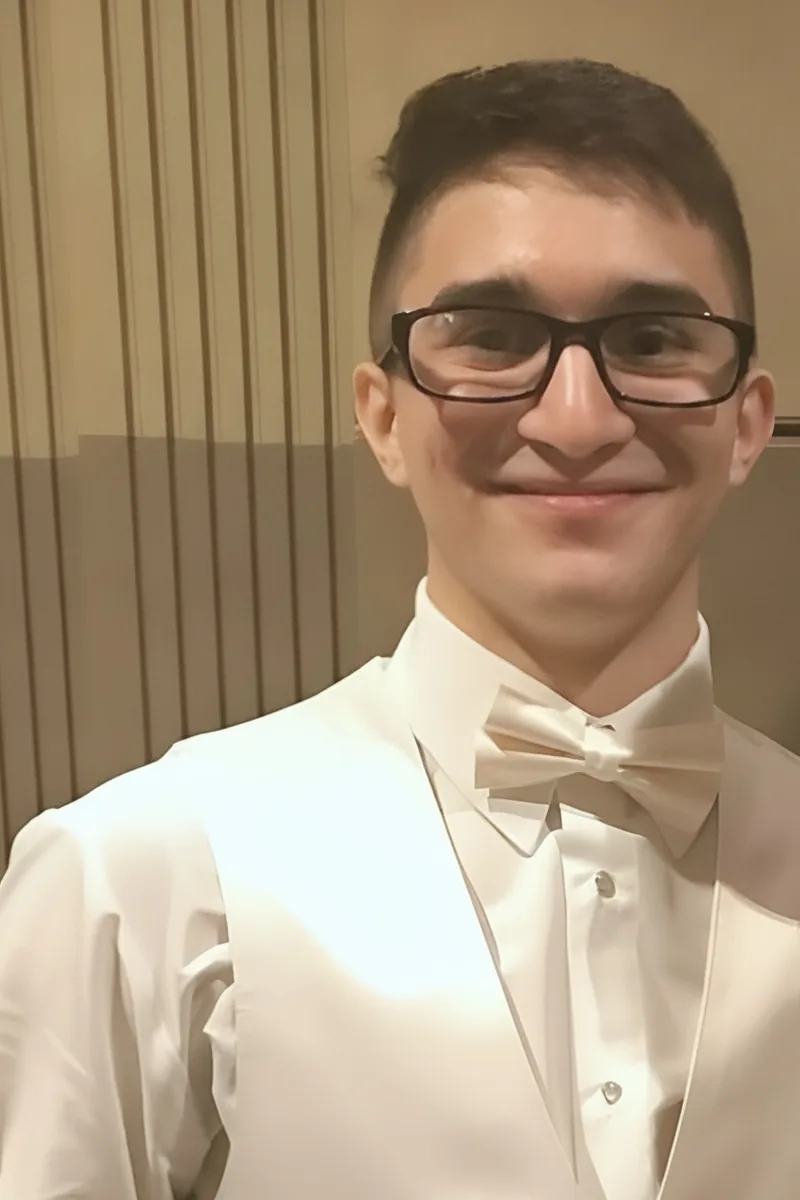
Mechanical engineering students live in a world of geometric constraints — Matt's coursework has him constantly working with cross-sections, spatial dimensions, and the precise angle calculations that show up in everything from CAD models to structural analysis. That daily practice makes him a natural fit for teaching triangle properties, angle relationships, and the measurement-heavy problems where geometry starts to feel more like real engineering than abstract math.
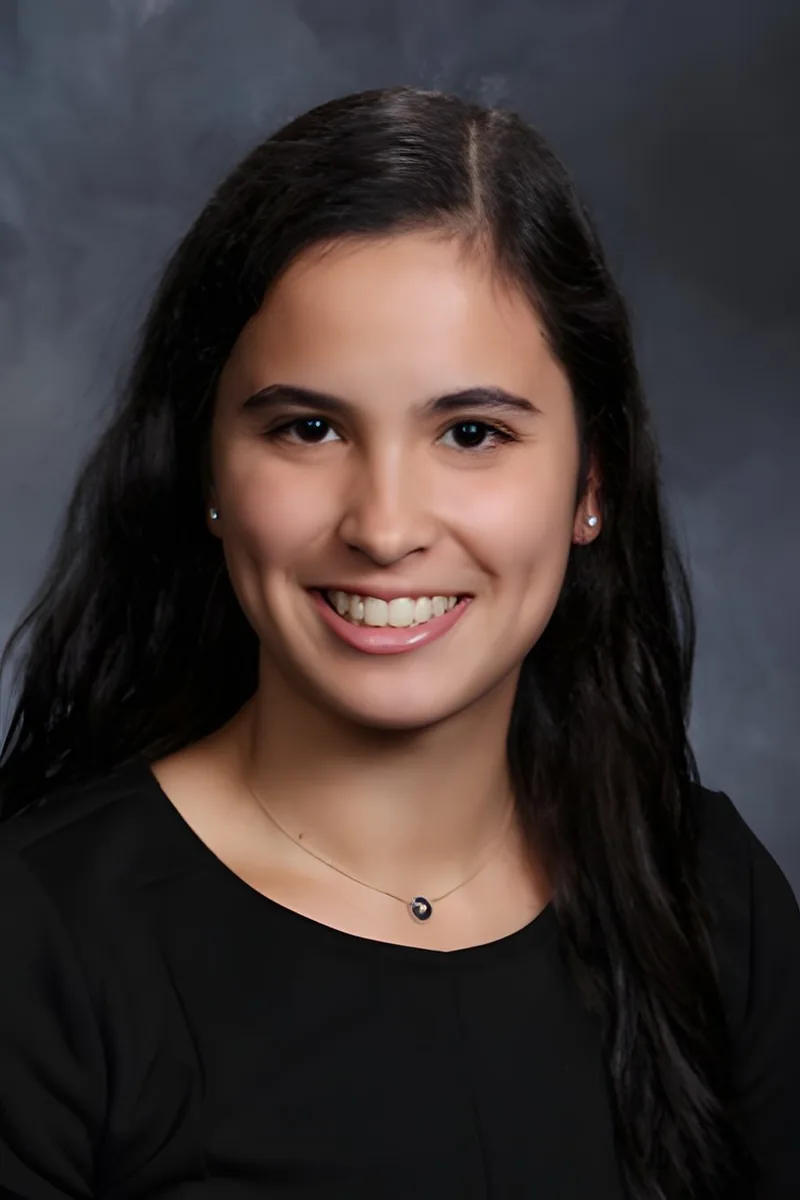
Proofs are usually where geometry students panic — the jump from calculating angles to constructing logical arguments feels like a different subject entirely. Isabella's MIT math training means formal reasoning is second nature to her, and she walks students through how to build a proof step by step, connecting geometric intuition to the structured logic on the page. She also covers coordinate geometry and triangle congruence with the same emphasis on understanding over memorization.
Proofs are usually where geometry students panic, but they're really just structured arguments — and Dane approaches them that way. Studying engineering at Duke sharpened his spatial reasoning across topics like congruence, similarity, and coordinate geometry, and he teaches students to visualize relationships before translating them into formal logic.
Kevin's Philosophy, Politics, and Economics program at Penn is essentially a training ground in structured argumentation — building claims from premises, identifying logical gaps, defending conclusions — which maps directly onto geometric proof-writing. He teaches students to treat two-column proofs the same way they'd treat a debate: state what you know, justify every step, and never skip a link in the chain. His 34 ACT composite reflects the kind of precise, methodical reasoning that makes geometry's logical demands feel manageable.
Proofs are usually where geometry goes from comfortable to confusing — suddenly students need to justify every step with logic instead of just measuring. Matt approaches geometric reasoning as a structured argument, walking through angle relationships, congruence criteria, and parallel-line theorems in a way that makes each proof feel like solving a puzzle rather than following a script.
Proofs are usually where geometry students hit a wall — the shift from calculating answers to constructing logical arguments feels like a completely different subject. Tom's background in American Studies, which is essentially built on evidence-based argumentation, gives him a unique angle on teaching students to chain geometric theorems into airtight reasoning. He also covers the computational side, from triangle congruence to circle theorems, with the same step-by-step precision.
Jackie scored a 36 on the math section of the ACT, and her coursework through AP Calculus BC and Multivariable Calculus means she's deeply fluent in the reasoning skills that underpin geometry. She breaks down topics like angle relationships, area formulas, and coordinate geometry by tying them back to the algebraic thinking students already have — making new concepts feel like extensions, not mysteries. Rated 5.0 by students.
Every proof in geometry is really an exercise in building a logical argument from a set of given constraints — a skill Jeffrey sharpened through years of engineering coursework at Notre Dame and his PhD work at Rice. He teaches students to approach triangle congruence, parallel line theorems, and circle properties as puzzles with clear reasoning chains rather than formulas to memorize.
Proofs are where most geometry students get stuck — the leap from calculating angles to constructing logical arguments feels like a different subject entirely. Jonathan breaks that transition down by teaching students to identify given information, spot congruence relationships, and build each proof step by step. His 4.9 rating speaks to how well that structured approach clicks.
Proofs are usually where geometry students panic, so Samantha teaches them as structured arguments rather than mysterious rituals — each statement earns its place with a reason. She also digs into the spatial reasoning behind congruence, similarity, and circle theorems, connecting diagrams to the algebra students already know. Her Duke science background means she's comfortable making abstract relationships concrete.
A year as a course assistant in Harvard's math department taught Richard how to break abstract reasoning into concrete steps — a skill that pays off in geometry when students need to connect definitions, postulates, and theorems into a coherent proof. His government major, which is essentially an exercise in building airtight arguments from messy evidence, reinforces the same logical sequencing that two-column and paragraph proofs demand.
Proofs are where most geometry students stall — the leap from calculating angles to constructing logical arguments feels unfamiliar. Camille's interdisciplinary training at Duke and Columbia sharpened her ability to teach that kind of structured reasoning, and she applies it to everything from triangle congruence to circle theorems. Rated 5.0 by students.
Cornell's biological engineering program threw Mary into years of modeling physical systems — fluid flow through channels, stress on biomaterials, device dimensions — all of which demand precise geometric reasoning about shapes, cross-sections, and spatial relationships. She brings that practical fluency to topics like circle theorems, properties of quadrilaterals, and area-volume calculations, making abstract definitions feel grounded in real measurement. Rated 5.0 by students.
Testimonials
Because the right Geometry tutor makes all the difference.
Average Session Rating – Based on 3.4M Learner Ratings
Practice Geometry
Free practice tests, flashcards, and AI tutoring for Geometry
Nearby Geometry Tutors
Other Little Rock Tutors
Related Math Tutors in Little Rock
Frequently Asked Questions
Many students struggle with the shift from algebra's procedural focus to geometry's emphasis on reasoning and proof. Common pain points include understanding why geometric relationships work (not just memorizing formulas), visualizing 3D shapes from 2D diagrams, and constructing logical proofs. Word problems involving multiple steps and spatial reasoning also trip up students who haven't built strong foundational understanding of angles, congruence, and similarity.
Proofs require a different mindset than computational math—students need to think like mathematicians, not just calculators. Personalized 1-on-1 instruction helps students break down proof structure, identify which theorems apply to specific problems, and build confidence in their logical reasoning. Tutors work through proofs step-by-step, showing students how to recognize patterns and connect given information to what they need to prove.
Spatial reasoning develops at different rates for different students, and geometry demands it from day one. Students who think primarily in words or numbers may find it harder to mentally rotate shapes, understand perspective, or translate between 2D diagrams and 3D objects. Personalized tutoring breaks this down using multiple approaches—drawing, manipulating shapes, and connecting visual concepts to algebraic relationships—until the connections click.
Varsity Tutors connects students with tutors experienced in the geometry standards and textbooks used across Arkansas schools. Whether your student is working with specific curriculum materials or needs general geometry support, tutors adapt their approach to match what's being taught in the classroom while filling gaps in understanding and building problem-solving confidence.
The first session focuses on understanding your student's specific challenges—whether it's proof-writing, word problems, coordinate geometry, or general confidence. The tutor will assess which concepts are solid and where gaps exist, then create a personalized plan. You'll get a clear sense of the tutor's approach and how they explain geometry concepts in a way that makes sense to your student.
Geometry anxiety often stems from feeling lost during proofs or visualizing problems. One-on-one instruction removes the pressure of a classroom setting, allowing students to ask questions without judgment and work at their own pace. As students experience success with personalized problem-solving strategies and see patterns they previously missed, confidence builds naturally—transforming geometry from intimidating to manageable.
Word problems require students to extract geometric information from text, visualize the scenario, and apply appropriate theorems or formulas. Tutors teach students a systematic approach: identifying what's given, what's being asked, drawing diagrams, and breaking multi-step problems into manageable pieces. With practice and guided problem-solving strategies, students learn to see word problems as puzzles they can solve rather than obstacles.
Varsity Tutors matches you with experienced geometry tutors who understand the challenges students face and know how to build both skills and confidence. Simply tell us about your student's needs, and we'll connect you with a tutor whose expertise and teaching style fit. You can start with a single session to see if it's a good fit, with no long-term commitment required.
Let’s find your perfect tutor
Answer a few quick questions. We’ll recommend the right plan and match you with a top 5% tutor.